News


The Apple iPhone 6s and iPhone 6s Plus Review

To be perfectly honest, this past year has been remarkably boring in the mobile segment. For whatever reason, phones have either stood still or regressed when it comes to overall quality. There are a few stand-outs that have been worth talking about like the Galaxy S6 lineup and the Galaxy Note5 lineup, but for the most part every phone I’ve reviewed this year has been disappointing in some way. I carry an iPhone 6 to make sure I stay current on changes in iOS, but my primary phone continues to be an HTC One M7. I was hoping to get a new Android phone this year, but so far nothing has really piqued my interest.

Part of the problem this year is that performance and battery life haven’t been the most impressive in a lot of cases. By this point, it’s really not a surprise that Snapdragon 810 doesn’t deliver as much performance as it needs to for the amount of power that it draws. However, even independent of SoC it seems a lot of OEMs haven’t really pushed the bar in design or attention to detail. Some phones have cameras with almost unacceptable post-processing quality, others continue to have poorly calibrated displays, and the ones that have none of those have problems with software experience or something else. In general, no Android phone I’ve seen this year really delivers everything that I’d want in a single package. There are phones that are clearly better than others, but nothing that rises to the level that I’d want before putting down a few hundred dollars.

In light of this lack of competition in the market, it’s arguable that Apple is facing less competition than before. The iPhone 6s would continue to sell quite strongly even if this year’s refresh was relatively minor as they would still end up quite strong competitively as they would be able to capitalize on momentum from previous years. If you were unfamiliar with the iPhone 6s and Apple’s iPhone launch cycle, at first you might be convinced that Apple has done exactly that. However, in general the iPhone release cycle is such that industrial design is constant for two years at a time, so every other year sees a design refresh. When the design isn’t refreshed, the phone often carries significant internal changes. In the past, the iPhone 3GS brought a better SoC, a faster modem, and a better camera. The iPhone 4S brought a new SoC, camera, and Siri. The iPhone 5s brought a new SoC, camera, and TouchID. In general, we can see a pretty clear pattern of evolution but it seems that with the 5s the refresh launches have generally brought new features as it has become insufficient to simply ship a faster SoC and possibly a modem and camera refresh to justify a new smartphone. To find out whether the iPhone 6s is justified, read on for the full review.

The Apple iPhone 6s and iPhone 6s Plus Review

To be perfectly honest, this past year has been remarkably boring in the mobile segment. For whatever reason, phones have either stood still or regressed when it comes to overall quality. There are a few stand-outs that have been worth talking about like the Galaxy S6 lineup and the Galaxy Note5 lineup, but for the most part every phone I’ve reviewed this year has been disappointing in some way. I carry an iPhone 6 to make sure I stay current on changes in iOS, but my primary phone continues to be an HTC One M7. I was hoping to get a new Android phone this year, but so far nothing has really piqued my interest.

Part of the problem this year is that performance and battery life haven’t been the most impressive in a lot of cases. By this point, it’s really not a surprise that Snapdragon 810 doesn’t deliver as much performance as it needs to for the amount of power that it draws. However, even independent of SoC it seems a lot of OEMs haven’t really pushed the bar in design or attention to detail. Some phones have cameras with almost unacceptable post-processing quality, others continue to have poorly calibrated displays, and the ones that have none of those have problems with software experience or something else. In general, no Android phone I’ve seen this year really delivers everything that I’d want in a single package. There are phones that are clearly better than others, but nothing that rises to the level that I’d want before putting down a few hundred dollars.

In light of this lack of competition in the market, it’s arguable that Apple is facing less competition than before. The iPhone 6s would continue to sell quite strongly even if this year’s refresh was relatively minor as they would still end up quite strong competitively as they would be able to capitalize on momentum from previous years. If you were unfamiliar with the iPhone 6s and Apple’s iPhone launch cycle, at first you might be convinced that Apple has done exactly that. However, in general the iPhone release cycle is such that industrial design is constant for two years at a time, so every other year sees a design refresh. When the design isn’t refreshed, the phone often carries significant internal changes. In the past, the iPhone 3GS brought a better SoC, a faster modem, and a better camera. The iPhone 4S brought a new SoC, camera, and Siri. The iPhone 5s brought a new SoC, camera, and TouchID. In general, we can see a pretty clear pattern of evolution but it seems that with the 5s the refresh launches have generally brought new features as it has become insufficient to simply ship a faster SoC and possibly a modem and camera refresh to justify a new smartphone. To find out whether the iPhone 6s is justified, read on for the full review.
ASRock Rack Launches Xeon D Motherboards

ASRock Rack Launches Xeon D Motherboards

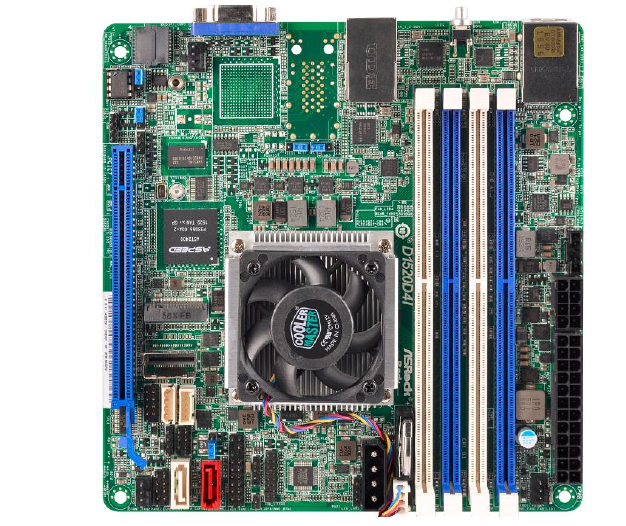
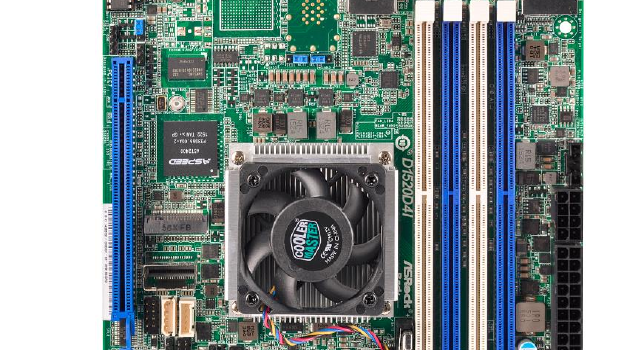
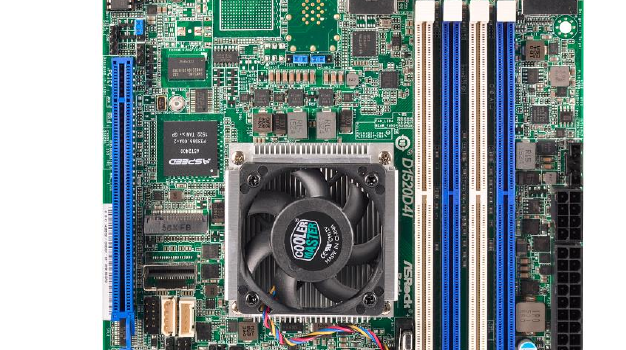
Intel’s Xeon D SiP (System-in-package) has turned out to be one of the exciting launches this year in the server CPU space. We have already analyzed Xeon D in detail in our review of the Supermicro SuperServer 5028D-TN4T. Almost all currently available Xeon D systems / motherboards are from Supermicro, but we now have another set of options from ASRock Rack.

The Xeon D family currently consists of two members:

  • Xeon D-1520 : 4C/8T Broadwell-DE x86 cores @ 2.2 GHz, 6 MB of L2 cache, 45W TDP
  • Xeon D-1540 : 8C/16T Broadwell-DE x86 cores @ 2.0 GHz, 12 MB of L2 cache, 45W TDP

ASRock Rack’s Xeon D lineup consists of one board using the Xeon D-1520 and six boards using the Xeon D-1540. Customers have the option of going with either the mini-ITX (mITX) form factor or the micro-ATX (uATX) form factor. The mITX boards are all compatible with 1U rackmount chassis.

In addition to the motherboard size, the differentiation aspects come in the form of support for different varieties of LAN ports, PCIe slot configurations, additional storage ports using the LSI 3008 HBA and different USB 3.0 port configurations. Unlike the mITX boards, all the uATX boards come with a COM port in the rear I/O.The following tables summarize the features of the various products in the ASRock Rack Xeon D lineup.

mITX Boards

  D1520D4I D1540D4I D1540D4I-2L2T
SiP Intel Xeon D-1520 Intel Xeon D-1540
RAM 4x DDR4 DIMM Slots 2133 / 1866 MHz RDIMMs (Up to 128 GB)
PCIe Expansion Slots 1x PCIe 3.0 x16
Storage Controllers 6x SATAIII 6 Gbps from integrated PCH in the Xeon D SiP
(4x via mini-SAS connector)
(1x with SATA DOM support)
1x SATAIII 6 Gbps from Marvell 9172
(via M.2 2280 interface)
LAN Controllers 2x RJ45 1GbE
(Intel i210)
2x RJ45 1GbE
(Intel i210)
2x RJ45 10GbE
(Intel X557-AT2)
Board Management Controller ASPEED AST2400
IPMI LAN Controller 1x Realtek RTL8211E
Display Output 1x D-Sub VGA
USB Ports 2x USB 3.0 Type-A (Rear I/O)


uATX Boards

  D1540D4U-2T8R D1540D4U-2O8R D1540D4U-2T2O8R D1540D4U-2L+
SiP Intel Xeon D-1540
RAM 4x DDR4 DIMM Slots 2133 / 1866 MHz RDIMMs (Up to 128 GB)
PCIe Expansion Slots 1x PCIe 3.0 x8 (x16 physical) 1x PCIe 3.0 x16
1x PCIe 3.0 x8 (x8 physical) 1x PCIe 3.0 x8
Storage Controllers 6x SATAIII 6 Gbps from integrated PCH in the Xeon D SiP
(4x via mini-SAS connector)
(1x with SATA DOM support)
8x SAS3 12Gbps from LSI 3008 HBA
(via mini-SAS HD connector)
1x SATAIII 6 Gbps from Marvell 9172
(via M.2 2280 interface)
LAN Controllers 2x RJ45 10GbE
(Intel X550)
2x 10G SFP+ Fiber 2x 10G SFP+ Fiber 2x RJ45 1GbE
(Intel i350)
2x RJ45 10GbE
(Intel X540)
Board Management Controller ASPEED AST2400
IPMI LAN Controller 1x Realtek RTL8211E
Display Output 1x D-Sub VGA
USB Ports 2x USB 3.0 Type-A (Rear I/O)
1x USB 3.0 Type-A (Internal Connector)
1x USB 3.0 Header

These boards are ideal for network and warm storage devices as well as micro-servers. Given the low power nature of the Xeon D platform, some of them can also be useful in home lab settings for experimenting with virtualization or even act as boards for high-end development machines.

ASRock Rack Launches Xeon D Motherboards

ASRock Rack Launches Xeon D Motherboards

Intel’s Xeon D SiP (System-in-package) has turned out to be one of the exciting launches this year in the server CPU space. We have already analyzed Xeon D in detail in our review of the Supermicro SuperServer 5028D-TN4T. Almost all currently available Xeon D systems / motherboards are from Supermicro, but we now have another set of options from ASRock Rack.

The Xeon D family currently consists of two members:

  • Xeon D-1520 : 4C/8T Broadwell-DE x86 cores @ 2.2 GHz, 6 MB of L2 cache, 45W TDP
  • Xeon D-1540 : 8C/16T Broadwell-DE x86 cores @ 2.0 GHz, 12 MB of L2 cache, 45W TDP

ASRock Rack’s Xeon D lineup consists of one board using the Xeon D-1520 and six boards using the Xeon D-1540. Customers have the option of going with either the mini-ITX (mITX) form factor or the micro-ATX (uATX) form factor. The mITX boards are all compatible with 1U rackmount chassis.

In addition to the motherboard size, the differentiation aspects come in the form of support for different varieties of LAN ports, PCIe slot configurations, additional storage ports using the LSI 3008 HBA and different USB 3.0 port configurations. Unlike the mITX boards, all the uATX boards come with a COM port in the rear I/O.The following tables summarize the features of the various products in the ASRock Rack Xeon D lineup.

mITX Boards

  D1520D4I D1540D4I D1540D4I-2L2T
SiP Intel Xeon D-1520 Intel Xeon D-1540
RAM 4x DDR4 DIMM Slots 2133 / 1866 MHz RDIMMs (Up to 128 GB)
PCIe Expansion Slots 1x PCIe 3.0 x16
Storage Controllers 6x SATAIII 6 Gbps from integrated PCH in the Xeon D SiP
(4x via mini-SAS connector)
(1x with SATA DOM support)
1x SATAIII 6 Gbps from Marvell 9172
(via M.2 2280 interface)
LAN Controllers 2x RJ45 1GbE
(Intel i210)
2x RJ45 1GbE
(Intel i210)
2x RJ45 10GbE
(Intel X557-AT2)
Board Management Controller ASPEED AST2400
IPMI LAN Controller 1x Realtek RTL8211E
Display Output 1x D-Sub VGA
USB Ports 2x USB 3.0 Type-A (Rear I/O)


uATX Boards

  D1540D4U-2T8R D1540D4U-2O8R D1540D4U-2T2O8R D1540D4U-2L+
SiP Intel Xeon D-1540
RAM 4x DDR4 DIMM Slots 2133 / 1866 MHz RDIMMs (Up to 128 GB)
PCIe Expansion Slots 1x PCIe 3.0 x8 (x16 physical) 1x PCIe 3.0 x16
1x PCIe 3.0 x8 (x8 physical) 1x PCIe 3.0 x8
Storage Controllers 6x SATAIII 6 Gbps from integrated PCH in the Xeon D SiP
(4x via mini-SAS connector)
(1x with SATA DOM support)
8x SAS3 12Gbps from LSI 3008 HBA
(via mini-SAS HD connector)
1x SATAIII 6 Gbps from Marvell 9172
(via M.2 2280 interface)
LAN Controllers 2x RJ45 10GbE
(Intel X550)
2x 10G SFP+ Fiber 2x 10G SFP+ Fiber 2x RJ45 1GbE
(Intel i350)
2x RJ45 10GbE
(Intel X540)
Board Management Controller ASPEED AST2400
IPMI LAN Controller 1x Realtek RTL8211E
Display Output 1x D-Sub VGA
USB Ports 2x USB 3.0 Type-A (Rear I/O)
1x USB 3.0 Type-A (Internal Connector)
1x USB 3.0 Header

These boards are ideal for network and warm storage devices as well as micro-servers. Given the low power nature of the Xeon D platform, some of them can also be useful in home lab settings for experimenting with virtualization or even act as boards for high-end development machines.