News


Update: AMD Releases Catalyst 15.9 Beta Drivers
Update: AMD Releases Catalyst 15.9 Beta Drivers

Today AMD has released AMD Catalyst 15.9 Beta as their latest driver update, with display driver version 15.201.1151. This driver provides optimizations for the upcoming Star Wars: Battlefront Beta that we will be seeing next week and for the Fable Legends DX12 benchmark that we saw last week.

Among several of the fixes a few of note are an issue with the AMD Catalyst Control Center ‘update’ option failing to download the latest driver, so users should now be able to properly update their drivers from within Catalyst Control Center. Also some BenQ 144Hz monitors were having driver issues by losing the video signal while uninstalling the driver and some BenQ 144Hz Freesync monitors would crash during DiRT Rally when launched in DirectX11 mode.

A couple of noteworthy known issues remain. For those running AMD Crossfire that are looking forward to the Star Wars: Battlefront Beta there is apparently a chance of some flickering happening, which is unfortunate. Also while booting into Windows 10 there can be issues with a black screen though the system will still continue on to the login screen. Lastly a TDR error (a.k.a. a driver crash) may happen while toggling between minimized and maximized mode while viewing 4K YouTube video content.

Those interested in reading more or installing the drivers for AMD’s desktop, mobile, and integrated GPUs can find them on AMD’s Catalyst beta download page.

Update 09/29: Thanks go to user hansmuff for pointing this out in the comments. AMD earlier this morning announced that they were aware of a memory leak that causes all video memory to be used while resizing active browser windows. With that they are asking everyone to please roll back from the Catalyst 15.9 Beta drivers until the problem is resolved.

Those interested can read their brief update on the AMD Catalyst 15.9 Beta Memory Leak page.
Update: AMD Releases Catalyst 15.9 Beta Drivers

Update: AMD Releases Catalyst 15.9 Beta Drivers

Today AMD has released AMD Catalyst 15.9 Beta as their latest driver update, with display driver version 15.201.1151. This driver provides optimizations for the upcoming Star Wars: Battlefront Beta that we will be seeing next week and for the Fable Legends DX12 benchmark that we saw last week.

Among several of the fixes a few of note are an issue with the AMD Catalyst Control Center ‘update’ option failing to download the latest driver, so users should now be able to properly update their drivers from within Catalyst Control Center. Also some BenQ 144Hz monitors were having driver issues by losing the video signal while uninstalling the driver and some BenQ 144Hz Freesync monitors would crash during DiRT Rally when launched in DirectX11 mode.

A couple of noteworthy known issues remain. For those running AMD Crossfire that are looking forward to the Star Wars: Battlefront Beta there is apparently a chance of some flickering happening, which is unfortunate. Also while booting into Windows 10 there can be issues with a black screen though the system will still continue on to the login screen. Lastly a TDR error (a.k.a. a driver crash) may happen while toggling between minimized and maximized mode while viewing 4K YouTube video content.

Those interested in reading more or installing the drivers for AMD’s desktop, mobile, and integrated GPUs can find them on AMD’s Catalyst beta download page.

Update 09/29: Thanks go to user hansmuff for pointing this out in the comments. AMD earlier this morning announced that they were aware of a memory leak that causes all video memory to be used while resizing active browser windows. With that they are asking everyone to please roll back from the Catalyst 15.9 Beta drivers until the problem is resolved.

Those interested can read their brief update on the AMD Catalyst 15.9 Beta Memory Leak page.
Apple’s A9 SoC Is Dual Sourced From Samsung & TSMC

Apple’s A9 SoC Is Dual Sourced From Samsung & TSMC

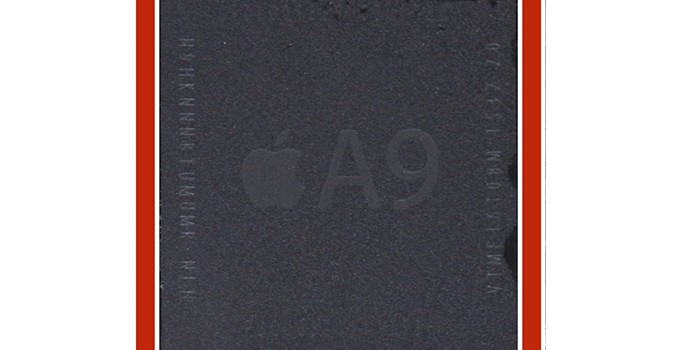
Picking up from our conversation this morning on Apple’s A9 SoC, the crew over at Chipworks has been working hard over the weekend to decap A9 and their first results are in. As it turns out, Chipworks has found chips fabbed by both TSMC and Sam…

Apple’s A9 SoC Is Dual Sourced From Samsung & TSMC

Apple’s A9 SoC Is Dual Sourced From Samsung & TSMC

Picking up from our conversation this morning on Apple’s A9 SoC, the crew over at Chipworks has been working hard over the weekend to decap A9 and their first results are in. As it turns out, Chipworks has found chips fabbed by both TSMC and Sam…

LG Steps Into The Ultrabook Ring With the LG Gram Series

LG Steps Into The Ultrabook Ring With the LG Gram Series

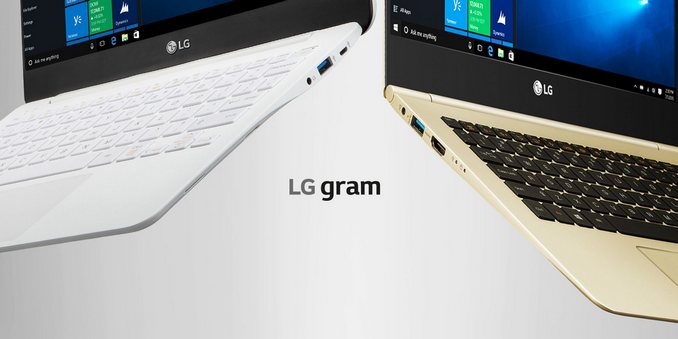
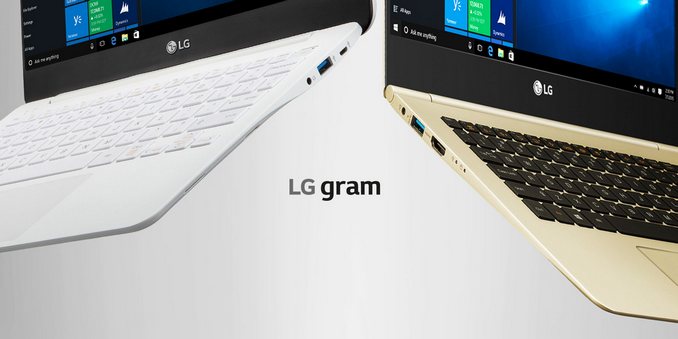
LG has announced several new Ultrabooks labelled under the Gram series. They are going for a very lightweight and portable design, hence the name. There will be two models, with a 13.3-inch and 14-inch available starting today.

Both models feature a 1920×1080 IPS display, and weigh in at just 980 grams for either model, so there is no weight penalty going with the larger device. They are just 0.5” or 12.5mm thick, so they should have no issues with portability. The chassis are made out of carbon-lithium and carbon-magnesium which should result in a pretty strong frame despite the light weight and thin dimensions. LG has also managed to go with a minimal bezel of just 7.2mm on the sides, much like the Dell XPS 13, but they have kept a top bezel in order to fit the webcam. The 13.3-inch version will be offered in white, while the 14-inch version will be gold.

LG Gram 13

Despite being very thin and light, both models will be offered with Intel’s 15w processor lineup. The base offering is the Broadwell Core i5-5200U which is 2.2 GHz and a turbo to 2.7 GHz, and the 14-inch model will also be offered with the Core i7-5500U which is 2.4 GHz to 3.0 GHz. Memory is 8 GB of DDR3L which is listed as single channel, but being soldered on it could actually be dual-channel and only hands on with the device could determine that. Storage is 128 GB of SSD, with the i7 model doubling that to 256 GB.

There is HDMI, dual USB 3.0, and a SDXC card reader as well which should be enough for most tasks, and there is also a micro USB connector which can be used with the included 10/100 Ethernet adapter. It would have been nice to see Gigabit here, but that can’t work on a micro USB port and LG must not have wanted to tie up one of the USB 3.0 ports. Wireless is provided by the Intel Dual Band Wireless AC-7260 wireless card, but I would have preferred to see the 7265 model here.

LG Gram 14

Packing all of this into a small frame, light weight, and thin device is a pretty nice feat, but the one thing that seems to have taken a hit is the battery. LG rates both models at 7.5 hours of use, but the battery is just a 35 Wh model so it has a pretty big disadvantage over other Ultrabooks.

LG Gram
  LG Gram 13 LG Gram 14
Processor Intel Core i5-5200U
2.2-2.7 GHz 14nm
15W TDP
Intel Core i5-5200U
2.2-2.7 GHz 14nm
Intel Core i7-5500U
2.4-3.0 GHz 14nm
15W TDP
Memory 8GB DDR3L
GPU Intel HD 5500 Gen 8
Display 13.3″ 1920×1080 IPS 14.0″ 1920×1080 IPS
Storage 128 GB SSD 128-256 GB SSD
I/O 1 x micro USB
1 x HDMI
1 x SDXC
2 x USB 3.0
Dimensions (mm) : 302 x 213 x 12.5
(inches) : 11.9 x 8.4 x 0.5
(mm) : 325 x 226 x 12.5
(inches) : 12.8 x 8.9 x 0.5
Weight 980 g / 2.16 lbs
Battery 35 Wh, up to 7.5 hours
Price $899 $999-$1399

Perhaps most importantly, the LG Gram series will be sold through the Microsoft Store, which means they will be sold as “Signature PCs” from Microsoft. This means that there will be no extra software installed out of the box other than necessary utilities to function with the hardware. When you see the state of some PCs sold, with so much software installed that it would take you hours to clean it all off, this is a nice benefit and well done to LG for going down this route.

The LG Gram is available starting today.

Source: LG