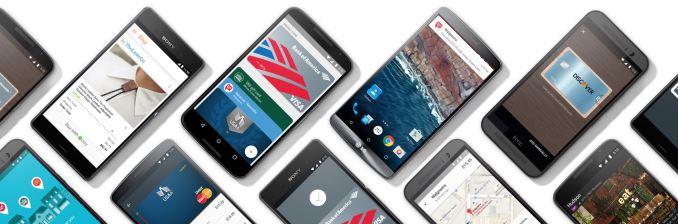
Today Google officially began the roll out of Android Pay by releasing the Android Pay application on the Google Play Store. Android Pay was announced earlier this year at Google I/O and is Google’s new NFC based payment service for Android smartphones. It’s effectively a successor to Google Wallet, although Google Wallet still exists as a service for sending P2P payments. The rollout of the new application actually began last week as an update for Google Wallet users, but today the application should be available to all users for direct download.
Android Pay will work on any smartphone running Android 4.4 KitKat or newer so long as the phone has NFC hardware. At launch the service will only be available in the United States, and will support a variety of credit and debit cards from various US banks and credit unions. There will also be support for gift cards and loyalty cards from retailers.
Google’s Android Pay website details a number of stores that support Android Pay, but since the service uses NFC it will work at any store that has tap to pay support. It will also work in Android applications that have partnered with Google to support Android Pay payments, and you can view a list of those applications along with a list of supported banks and credit unions on the Android Pay site.
Source Google Play via Engadget