
News


NVIDIA Releases GeForce Share & GameStream Co-Op Early Beta
NVIDIA Releases GeForce Share & GameStream Co-Op Early Beta

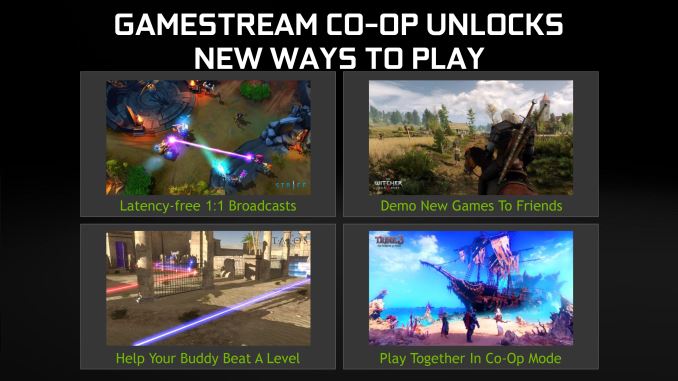
Last month alongside the release of the GeForce GTX 950, NVIDIA also announced that they would be releasing a new suite of updates for GeForce Experience called Shared. The cornerstone of this update would be GameStream Co-Op, a new GameStream feature that used the technology to allow a remote player play a local co-op game via streaming.

At the time NVIDIA announced that Share and GameStream Co-Op would be released in beta form in September, and today they’ve done just that with GeForce Experience 2.6. Curiously, NVIDIA calls this an “early access beta,” where it isn’t clear how this differs from a regular “beta.” But, I suspect, the naming is marketing driven given the success of the Steam Early Access program.

In any case, along with today’s release NVIDIA has also published a few more details about the feature. Co-op game streaming is fixed at 720p30, for which NVIDIA recommends 7Mbps of upload bandwidth. Host games by and large work so long as they’re DX9+ and run in full screen mode, though NVIDIA has a compatibility list up with their findings for major games. Meanwhile on the client side only Google Chrome is currently supported, which is accomplished via a Chrome Plug-In.

Finally, we’ve also been informed that there is a 1 hour time limit on GameStream Co-Op connections. This would appear to be in place to prevent abuse of the system for non co-op purposes, such as using the tech to stream games outright to friends as a means to avoid buying a proper copy of a game.
The Lenovo ThinkPad T450s Review: Bridging The Ultrabook

Lenovo’s ThinkPad lineup needs almost no introduction, being one of the most well known business lineups around. The T series has been around for what seems like forever, and it is the premium lined aimed at the business and enterprise segments….

The Lenovo ThinkPad T450s Review: Bridging The Ultrabook

Lenovo’s ThinkPad lineup needs almost no introduction, being one of the most well known business lineups around. The T series has been around for what seems like forever, and it is the premium lined aimed at the business and enterprise segments….

Qualcomm Announces Quick Charge 3.0: Intelligent Voltage Control

Qualcomm Announces Quick Charge 3.0: Intelligent Voltage Control

One of the other features that was announced for multiple Snapdragon SoCs at the 3G/LTE Summit in Hong Kong was Quick Charge 3.0, which will be supported on the Snapdragon 820, 617, and 430.

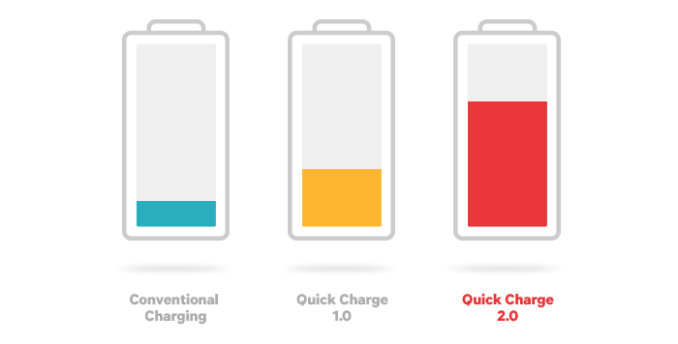
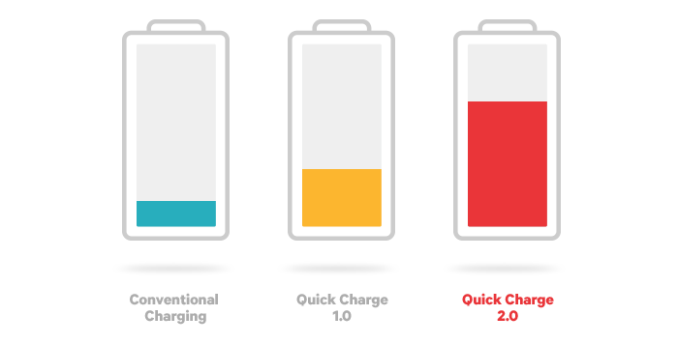
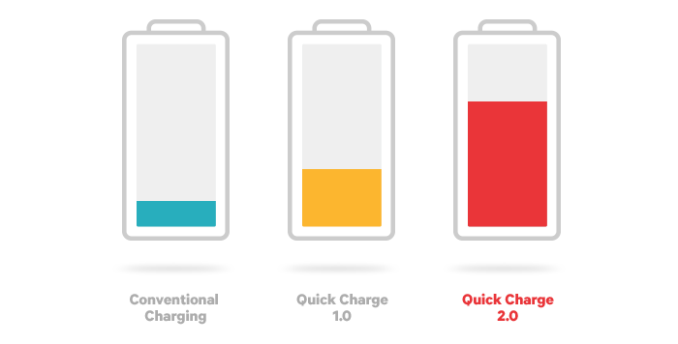
The latest iteration of Qualcomm’s rapid charging technology, Quick Charge 3.0 is said to enable up to 27% faster charging over QC 2.0 or up to 38% more efficient. Relative to QC 1.0, charge speed doubles. This is done by using an algorithm that Qualcomm calls Intelligent Negotiation for Optimum Voltage, which allows for selection of appropriate voltage for various device states while charging. Rather than a number of fixed voltage settings, QC 3.0 can scale from 3.6 to 20V in 200 mV increments and will work over USB, including new connector designs like USB Type-C as the USB protocol is not the same as physical connector design. QC 3.0 will be available for vendors to implement now, and it’s likely that we’ll see phones with support for this new fast charging standard appear early next year.

Qualcomm Announces Quick Charge 3.0: Intelligent Voltage Control

Qualcomm Announces Quick Charge 3.0: Intelligent Voltage Control

One of the other features that was announced for multiple Snapdragon SoCs at the 3G/LTE Summit in Hong Kong was Quick Charge 3.0, which will be supported on the Snapdragon 820, 617, and 430.

The latest iteration of Qualcomm’s rapid charging technology, Quick Charge 3.0 is said to enable up to 27% faster charging over QC 2.0 or up to 38% more efficient. Relative to QC 1.0, charge speed doubles. This is done by using an algorithm that Qualcomm calls Intelligent Negotiation for Optimum Voltage, which allows for selection of appropriate voltage for various device states while charging. Rather than a number of fixed voltage settings, QC 3.0 can scale from 3.6 to 20V in 200 mV increments and will work over USB, including new connector designs like USB Type-C as the USB protocol is not the same as physical connector design. QC 3.0 will be available for vendors to implement now, and it’s likely that we’ll see phones with support for this new fast charging standard appear early next year.