News


Microsoft Introduces A 128GB Version Of The Core i7 Surface Pro 3

Microsoft Introduces A 128GB Version Of The Core i7 Surface Pro 3

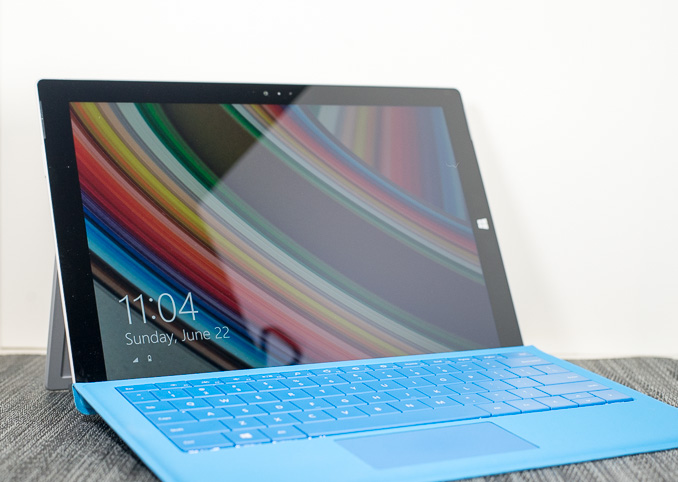
This weekend Microsoft introduced a new model of the Surface Pro 3. Like the existing two Core i7 models, this new version uses Intel’s Core i7-4650U CPU. At $1299 in the United States, the new model is significantly cheaper than the next Core i7 model, which starts at $1549. In fact, it’s the same price as the high end version of the existing Core i5 model. With this new introduction, the Surface Pro 3 lineup is now as follows.

Microsoft Surface Pro 3 Configuration Options (Core i3 Omitted)
Configuration $999 $1299 $1299 $1549 $1949
CPU Intel Core i5-4300U Intel Core i5-4300U Intel Core i7-4650U Intel Core i7-4650U Intel Core i7-4650U
TDP 15W 15W 15W 15W 15W
Cores/Threads 2/4 2/4 2/4 2/4 2/4
Frequency Base/Max Turbo 1.9/2.9GHz 1.9/2.9GHz 1.7/3.3GHz 1.7/3.3GHz 1.7/3.3GHz
GPU Intel HD 4400 Intel HD 4400 Intel HD 5000 Intel HD 5000 Intel HD 5000
GPU EUs 20 20 40 40 40
GPU Frequency Base/Max Turbo 200/1100MHz 200/1100MHz 200/1100MHz 200/1100MHz 200/1100MHz
Storage 128GB SSD 256GB SSD 128GB SSD 256GB SSD 512GB SSD
RAM 4GB 8GB 8GB 8GB 8GB

In addition to the models above, Microsoft still offers a version at $799 with an Intel Core i3-4020Y CPU, 4GB of RAM, 128GB of storage, and Intel HD 4200 graphics.

The sacrifice you make with the less expensive Core i7 model is that it only comes with 128GB of internal storage, while the Core i5 version at the same price has 256GB of storage. However, you move up from Intel’s HD 4400 graphics to HD 5000 graphics, which bumps the number of GPU EUs from 20 to 40. The Core i7 has a lower base frequency at 1.7GHz vs 1.9GHz on the Core i5, but it can turbo up to 3.3GHz which will outperform the Core i5’s 2.9GHz in bursty workloads. Moving to the Core i7 also gets you 4MB of total CPU cache, instead of the 3MB in the Core i5.

The intended audience for this new model seems to be users who want more CPU and GPU power, but are able to survive within 128GB either by leveraging cloud storage or simply by not having many programs and files that they need to store. With this new model the Surface Pro 3 line has now expanded to six different versions. While there’s still no option with 16GB of RAM, Microsoft now offers a different model to suit almost everyone’s preferences.

Microsoft Introduces A 128GB Version Of The Core i7 Surface Pro 3

Microsoft Introduces A 128GB Version Of The Core i7 Surface Pro 3

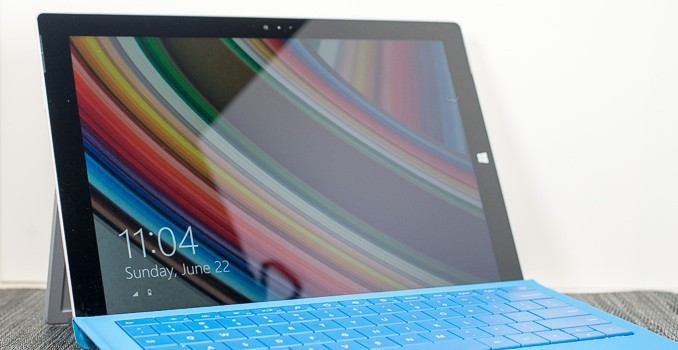
This weekend Microsoft introduced a new model of the Surface Pro 3. Like the existing two Core i7 models, this new version uses Intel’s Core i7-4650U CPU. At $1299 in the United States, the new model is significantly cheaper than the next Core i7 model, which starts at $1549. In fact, it’s the same price as the high end version of the existing Core i5 model. With this new introduction, the Surface Pro 3 lineup is now as follows.

Microsoft Surface Pro 3 Configuration Options (Core i3 Omitted)
Configuration $999 $1299 $1299 $1549 $1949
CPU Intel Core i5-4300U Intel Core i5-4300U Intel Core i7-4650U Intel Core i7-4650U Intel Core i7-4650U
TDP 15W 15W 15W 15W 15W
Cores/Threads 2/4 2/4 2/4 2/4 2/4
Frequency Base/Max Turbo 1.9/2.9GHz 1.9/2.9GHz 1.7/3.3GHz 1.7/3.3GHz 1.7/3.3GHz
GPU Intel HD 4400 Intel HD 4400 Intel HD 5000 Intel HD 5000 Intel HD 5000
GPU EUs 20 20 40 40 40
GPU Frequency Base/Max Turbo 200/1100MHz 200/1100MHz 200/1100MHz 200/1100MHz 200/1100MHz
Storage 128GB SSD 256GB SSD 128GB SSD 256GB SSD 512GB SSD
RAM 4GB 8GB 8GB 8GB 8GB

In addition to the models above, Microsoft still offers a version at $799 with an Intel Core i3-4020Y CPU, 4GB of RAM, 128GB of storage, and Intel HD 4200 graphics.

The sacrifice you make with the less expensive Core i7 model is that it only comes with 128GB of internal storage, while the Core i5 version at the same price has 256GB of storage. However, you move up from Intel’s HD 4400 graphics to HD 5000 graphics, which bumps the number of GPU EUs from 20 to 40. The Core i7 has a lower base frequency at 1.7GHz vs 1.9GHz on the Core i5, but it can turbo up to 3.3GHz which will outperform the Core i5’s 2.9GHz in bursty workloads. Moving to the Core i7 also gets you 4MB of total CPU cache, instead of the 3MB in the Core i5.

The intended audience for this new model seems to be users who want more CPU and GPU power, but are able to survive within 128GB either by leveraging cloud storage or simply by not having many programs and files that they need to store. With this new model the Surface Pro 3 line has now expanded to six different versions. While there’s still no option with 16GB of RAM, Microsoft now offers a different model to suit almost everyone’s preferences.

The Samsung Exynos 7420 Deep Dive – Inside A Modern 14nm SoC

Over the past few years it’s been somewhat expected tradition for Samsung Electronics to employ a strategy of multi-sourcing the SoC for their mobile devices. Most notably it’s on the North American and specifically CDMA markets that we saw wide usage of Qualcomm SoCs. This diversification started with the Galaxy S2 as it was offered both in versions with Samsung System LSI’s Exynos chipset as well as variants with Qualcomm’s Snapdragon offerings. On the last few generation of devices we’ve seen the average share of Exynos in Galaxy devices continually decline, as the shift to ARM’s Cortex A15 based SoCs just didn’t work out as well in terms of power consumption and thus lost design wins to better balanced Krait-based SoCs from Qualcomm. In fact the last time we’ve seen a Galaxy device make use of an Exynos throughout all its global variants was the Galaxy Note 2 back in 2012.

With the Galaxy S6 again offering a world-wide release of exclusively Samsung designed SoCs, we see an immensely contrasted situation to what we had just over a year ago. The Exynos 7420 marks a true new generation of SoCs for Samsung. The chipset is described as the company’s “most advanced application processor to date”, and today we’re going to have a deep investigation into what a modern SoC looks like, and try to put the chip through its paces through power and performance measurements.

The Samsung Exynos 7420 Deep Dive – Inside A Modern 14nm SoC

Over the past few years it’s been somewhat expected tradition for Samsung Electronics to employ a strategy of multi-sourcing the SoC for their mobile devices. Most notably it’s on the North American and specifically CDMA markets that we saw wide usage of Qualcomm SoCs. This diversification started with the Galaxy S2 as it was offered both in versions with Samsung System LSI’s Exynos chipset as well as variants with Qualcomm’s Snapdragon offerings. On the last few generation of devices we’ve seen the average share of Exynos in Galaxy devices continually decline, as the shift to ARM’s Cortex A15 based SoCs just didn’t work out as well in terms of power consumption and thus lost design wins to better balanced Krait-based SoCs from Qualcomm. In fact the last time we’ve seen a Galaxy device make use of an Exynos throughout all its global variants was the Galaxy Note 2 back in 2012.

With the Galaxy S6 again offering a world-wide release of exclusively Samsung designed SoCs, we see an immensely contrasted situation to what we had just over a year ago. The Exynos 7420 marks a true new generation of SoCs for Samsung. The chipset is described as the company’s “most advanced application processor to date”, and today we’re going to have a deep investigation into what a modern SoC looks like, and try to put the chip through its paces through power and performance measurements.