News


SFF-8639 Connector Renamed as U.2

SFF-8639 Connector Renamed as U.2

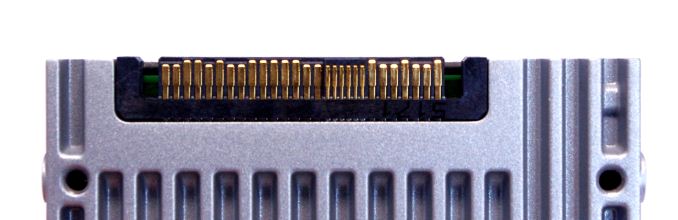
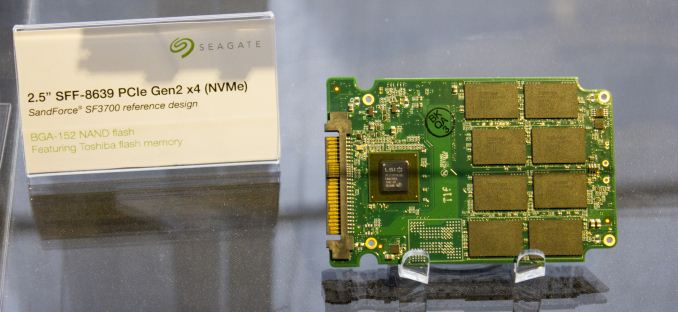
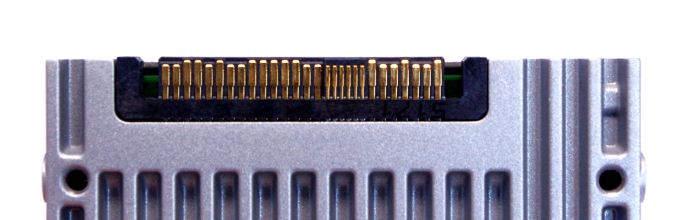
As SATA Express never took off because of the two-lane limitation, the SSD and motherboard industries have been looking for an alternative connector for connecting 2.5″ SSDs over PCIe. SFF-8639, which is essentially SATA Express on steroids with support for four PCIe lanes, has been viewed as the most potent connector because it already has industry support in the enterprise space and with the SSD 750 Intel brought the SFF-8639 connector to the client side. Given that SFF-8639 isn’t a very consumer facing name (even I’ve had trouble remembering the numbers), the SSD Form Factor Working Group has decided to rename the connector as U.2 to make it more marketable. That coincides well with M.2 that has already been used in the industry for a couple of years and more importantly both connectors now carry alike naming.

Whether U.2 and 2.5″ PCIe SSDs take off in the client space remains to be seen, though. The biggest hurdle is the expensive cabling because unlike normal SATA and SATA Express cables, the U.2 cable consists of several small, shielded cables that increase the cost. From what I have heard that is the reason why the industry came up with SATA Express in the first place because the OEMs wanted to keep the cabling cost equivalent to existing SATA cables.

I believe M.2 will be the main connector / form factor in the client space, but there is still a market for high performance and capacity 2.5″ PCIe SSDs as M.2 has more physical limitations that restrict the capacities and thermals. I can see U.2 in high-end motherboards where the connector and cable costs aren’t that big of an issue, but we’ll see what happens over the next year or two.

Source: Hardwarezone via PC Perspective

Seagate Announces SandForce SF3500 SSD Controller Series: Mass Production Expected in Q4'15

Seagate Announces SandForce SF3500 SSD Controller Series: Mass Production Expected in Q4’15

The SandForce SF3000 series has become the unicorn of the SSD industry. For the past two years there has been a lot of hype about the new controller, but Seagate/SandForce has kept missing deadlines one after the other. Initially the third generation SandForce controller was supposed to ship in mid-2014, but obviously that didn’t happen. Next we heard Q4’15, which was then changed to mid-2015 and the latest word I got at Computex is expected mass production in Q4’15, meaning that we could see first products shipping in early 2016. 

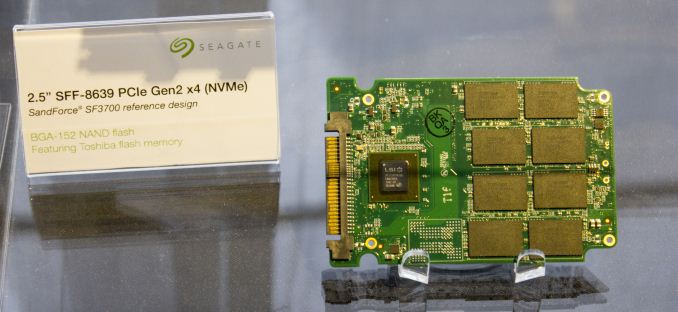
The SF3500 package is considerably smaller than the SF3700

The original paper launch back in late 2013 only included the SF3700 lineup, which was first supposed to cater all markets from entry-level client to enterprise. Last week Seagate announced that the SF3000 series has now been split into two: SF3500 for the client and SF3700 for the enterprise market. The reasoning behind the differentiation doesn’t only lie in marketing as the SF3500 and SF3700 are separate dies with the SF3500 having four NAND channels whereas the SF3700 keeps the 9-channel design as announced previously. It makes a lot of sense to build a separate die for the client space and honestly I was a little skeptical about cost efficiency because it’s practically impossible to build a silicon that is feature rich enough for the enterprise with a consumer friendly price tag. We’ve seen the client space moving towards 4-channel controller designs anyway, so I suspect introducing a smaller 4-channel controller was the only way SandForce could remain price competitive against Silicon Motion, which has taken a large share of SandForce’s old clients. 

Seagate SandForce SF3000 Series Specifications
Series SF3500 SF3700
SKU SF3514 SF3504 SF3524 SF3739 SF3759
# of NAND Channels 4 (400MT/s each) 9 (400MT/s each)
Controller Frequency 275MHz 275MHz 300MHz N/A N/A
Interface SATA 6Gbps PCIe 2.0 x2 (NVMe) SATA 6Gbps + PCIe 2.0 x2 (NVMe) SATA 6Gbps + PCIe 2.0 x4 (NVMe)
Max Capacity 1TB 2TB
NAND Support MLC, TLC MLC, TLC SLC, eMLC, MLC, TLC
Sequential Read 550MB/s 900MB/s 900MB/s 1600MB/s 1600MB/s
Sequential Write 450MB/s 525MB/s 525MB/s 670MB/s 670MB/s
4KB Random Read 100K IOPS 130K IOPS 130K IOPS 130K IOPS 130K IOPS
4KB Random Write 80K IOPS 120K IOPS 120K IOPS 80K IOPS 80K IOPS
Mixed 70R/30W Random  80K IOPS 120K IOPS 120K IOPS 100K IOPS 100K IOPS
Encryption AES-256, TCG Opal 2.0 & IEEE-1667 (eDrive) AES-256 AES-256 & TCG Entrerprise

The SF3500 series includes three SKUs and similar to the SF3700 silicon the controller supports both SATA 6Gbps and PCIe 2.0 (although only two lanes, whereas the SF3700 features four). The SF3514 and SF3504 are SATA and PCIe respectively, but the SF3524 has a switch that allows it to operate in both SATA and PCIe modes similar to the SF3700 SKUs. Unfortunately the switch isn’t user-accessible as it has to be toggled by the manufacturer, so it’s merely a feature that helps the OEMs with inventory management. The SF3524, being the high-end model, also has more supported firmware features, but Seagate isn’t disclosing any at this stage, although I was told they are more back-end related rather than concrete features that are visible to the end-user. 

Inherently the SF3500 is just a 4-channel version of the SF3700 and supports all SandForce technologies (DuraWrite, SHIELD, RAISE etc), but with one twist. The SF3500 is the first time SandForce is relying on external DRAM for caching the NAND mapping table, whereas the SF3700 and all older SandForce controllers only use the integrated SRAM. No user data is stored in the DRAM, so its function is purely to increase performance as well as reduce power up time when waking the system from sleep. 

Another separating feature is the RAISE support. Because the SF3500 is client-oriented, it only supports level-1 RAISE, which uses one NAND die for protection against single page/block failures (in small capacity drives fractional RAISE can be used as it requires less than a full die). The SF3700 has full RAISE support and can operate in either level 1 or 2 mode with level-2 protecting against a full die failure (the 9th channel is there for that reason). 

SandForce’s focus in the SF3000 series has been mixed performance from day one. While most modern drives boast excellent peak read and write performance, nearly every drive experiences notable loss in performance under mixed read/write workloads. We’ve been testing mixed performance as a part of our 2015 Client SSD Suite and I certainly agree with SandForce that it’s an area where improvement is needed, which is what the SF3000 series is promised to do. Seagate’s/SandForce’s internal tests put the SF3700 at much higher performance efficiency than the competing NVMe drive that Seagate couldn’t officially disclose (hint: the manufacturer starts with an I). 

All in all, Seagate seems to be making progress with the SF3000 series. It’s inevitably late from the original launch schedule, but on the other hand there are only a handful of client PCIe drives on the market right now, so if the new schedule sticks and the SF3000 is as good as Seagate is showing it to be, SandForce will definitely be back in the game. The Computex announcement was relatively high-level, but Seagate hinted that they will have a truckload of new details to share within the next two months, so we will stay tuned for more. 

Seagate Announces SandForce SF3500 SSD Controller Series: Mass Production Expected in Q4'15

Seagate Announces SandForce SF3500 SSD Controller Series: Mass Production Expected in Q4’15

The SandForce SF3000 series has become the unicorn of the SSD industry. For the past two years there has been a lot of hype about the new controller, but Seagate/SandForce has kept missing deadlines one after the other. Initially the third generation SandForce controller was supposed to ship in mid-2014, but obviously that didn’t happen. Next we heard Q4’15, which was then changed to mid-2015 and the latest word I got at Computex is expected mass production in Q4’15, meaning that we could see first products shipping in early 2016. 

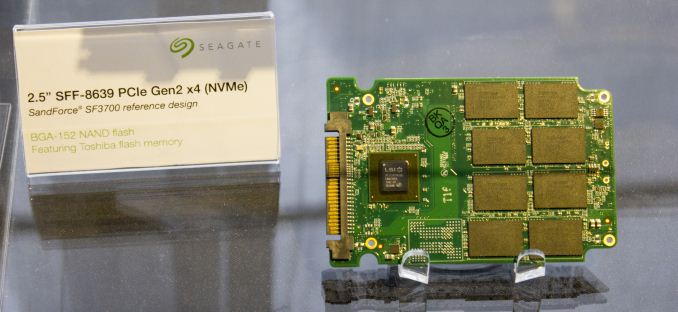
The SF3500 package is considerably smaller than the SF3700

The original paper launch back in late 2013 only included the SF3700 lineup, which was first supposed to cater all markets from entry-level client to enterprise. Last week Seagate announced that the SF3000 series has now been split into two: SF3500 for the client and SF3700 for the enterprise market. The reasoning behind the differentiation doesn’t only lie in marketing as the SF3500 and SF3700 are separate dies with the SF3500 having four NAND channels whereas the SF3700 keeps the 9-channel design as announced previously. It makes a lot of sense to build a separate die for the client space and honestly I was a little skeptical about cost efficiency because it’s practically impossible to build a silicon that is feature rich enough for the enterprise with a consumer friendly price tag. We’ve seen the client space moving towards 4-channel controller designs anyway, so I suspect introducing a smaller 4-channel controller was the only way SandForce could remain price competitive against Silicon Motion, which has taken a large share of SandForce’s old clients. 

Seagate SandForce SF3000 Series Specifications
Series SF3500 SF3700
SKU SF3514 SF3504 SF3524 SF3739 SF3759
# of NAND Channels 4 (400MT/s each) 9 (400MT/s each)
Controller Frequency 275MHz 275MHz 300MHz N/A N/A
Interface SATA 6Gbps PCIe 2.0 x2 (NVMe) SATA 6Gbps + PCIe 2.0 x2 (NVMe) SATA 6Gbps + PCIe 2.0 x4 (NVMe)
Max Capacity 1TB 2TB
NAND Support MLC, TLC MLC, TLC SLC, eMLC, MLC, TLC
Sequential Read 550MB/s 900MB/s 900MB/s 1600MB/s 1600MB/s
Sequential Write 450MB/s 525MB/s 525MB/s 670MB/s 670MB/s
4KB Random Read 100K IOPS 130K IOPS 130K IOPS 130K IOPS 130K IOPS
4KB Random Write 80K IOPS 120K IOPS 120K IOPS 80K IOPS 80K IOPS
Mixed 70R/30W Random  80K IOPS 120K IOPS 120K IOPS 100K IOPS 100K IOPS
Encryption AES-256, TCG Opal 2.0 & IEEE-1667 (eDrive) AES-256 AES-256 & TCG Entrerprise

The SF3500 series includes three SKUs and similar to the SF3700 silicon the controller supports both SATA 6Gbps and PCIe 2.0 (although only two lanes, whereas the SF3700 features four). The SF3514 and SF3504 are SATA and PCIe respectively, but the SF3524 has a switch that allows it to operate in both SATA and PCIe modes similar to the SF3700 SKUs. Unfortunately the switch isn’t user-accessible as it has to be toggled by the manufacturer, so it’s merely a feature that helps the OEMs with inventory management. The SF3524, being the high-end model, also has more supported firmware features, but Seagate isn’t disclosing any at this stage, although I was told they are more back-end related rather than concrete features that are visible to the end-user. 

Inherently the SF3500 is just a 4-channel version of the SF3700 and supports all SandForce technologies (DuraWrite, SHIELD, RAISE etc), but with one twist. The SF3500 is the first time SandForce is relying on external DRAM for caching the NAND mapping table, whereas the SF3700 and all older SandForce controllers only use the integrated SRAM. No user data is stored in the DRAM, so its function is purely to increase performance as well as reduce power up time when waking the system from sleep. 

Another separating feature is the RAISE support. Because the SF3500 is client-oriented, it only supports level-1 RAISE, which uses one NAND die for protection against single page/block failures (in small capacity drives fractional RAISE can be used as it requires less than a full die). The SF3700 has full RAISE support and can operate in either level 1 or 2 mode with level-2 protecting against a full die failure (the 9th channel is there for that reason). 

SandForce’s focus in the SF3000 series has been mixed performance from day one. While most modern drives boast excellent peak read and write performance, nearly every drive experiences notable loss in performance under mixed read/write workloads. We’ve been testing mixed performance as a part of our 2015 Client SSD Suite and I certainly agree with SandForce that it’s an area where improvement is needed, which is what the SF3000 series is promised to do. Seagate’s/SandForce’s internal tests put the SF3700 at much higher performance efficiency than the competing NVMe drive that Seagate couldn’t officially disclose (hint: the manufacturer starts with an I). 

All in all, Seagate seems to be making progress with the SF3000 series. It’s inevitably late from the original launch schedule, but on the other hand there are only a handful of client PCIe drives on the market right now, so if the new schedule sticks and the SF3000 is as good as Seagate is showing it to be, SandForce will definitely be back in the game. The Computex announcement was relatively high-level, but Seagate hinted that they will have a truckload of new details to share within the next two months, so we will stay tuned for more. 
The Corsair CS450M PSU Review

Top tier PSUs certainly are technologically interesting, yet the mainstream products undoubtedly cover the vast bulk of the market. Today we are having a look at the Corsair CS450M, a reasonably priced 450W high quality PSU targeted right at the bulk …

BitFenix Shows Massive Atlas Case & LED Light Stripes

BitFenix Shows Massive Atlas Case & LED Light Stripes

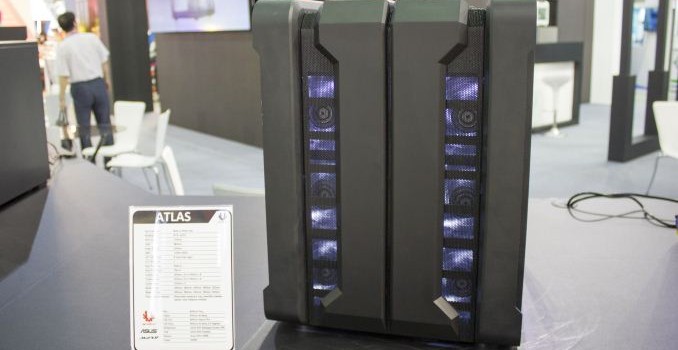
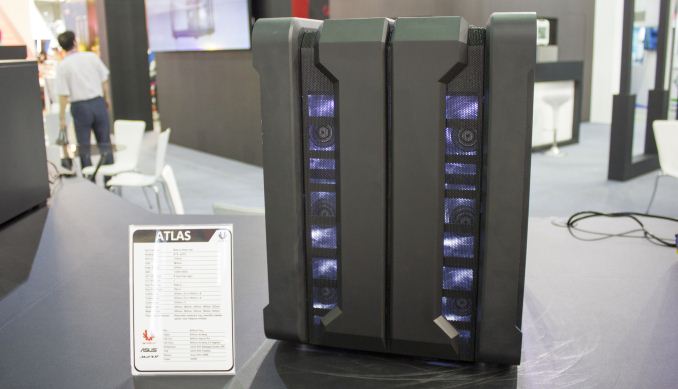
BitFenix had one new case on the show floor called the Atlas. It’s a massive “dual-chamber” design that aims to build a very clean look since the PSU, hard drives and basically all the not-so-pretty components are placed behind the motherboard. 

I’ve added more shots of the Atlas in the gallery above. One interesting detail is the screw-less hard drive bays, although in a case this huge only four bays is a little limiting. Personally I feel that Atlas mostly wastes a lot of space by focusing solely on creating a cleaner look. Nowadays there are many cases that hide the PSU fairly well and with good cable management you can achieve a clean look without twice the size. I guess the Atlas could still have a niche for users who really need a lot of space for e.g. radiators, but I feel like it’s more of a concept at this point rather than a final product.

While nothing new, BitFenix also had its Pandora mATX and ATX cases on display.

BitFenix had its own LED light stripes inside every case, which light the system up and give the user the ability to properly see the components inside. You only need two stripes for lighting the innards and obviously the stripes are available in multiple colors to fit everyone’s preference. I asked about an RGB version, but I was told that and RGB version couldn’t produce as pure colors and producing white light (which is one of the most popular models) wouldn’t be possible at all. In addition, RGB would add unnecessary cost due to a controller requirement, so at least for now BitFenix is only shipping single-color stripes.