News


HTC Pushing A Small Update To The HTC One M9 Today

HTC Pushing A Small Update To The HTC One M9 Today

Barring any unforeseen complications, HTC One M9 users in Europe, the Middle East, and Africa should be receiving an OTA update today which will bring the software to version 1.40.401.5. This update rolled out in Taiwan a coup…

Silicon Motion Displays Upcoming SM2260 PCIe 3.0 x4 NVMe Controller

Silicon Motion Displays Upcoming SM2260 PCIe 3.0 x4 NVMe Controller

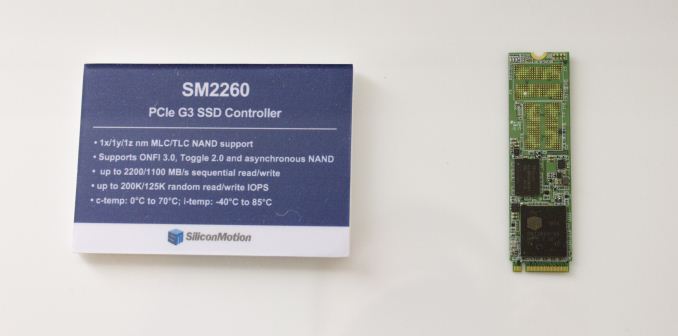
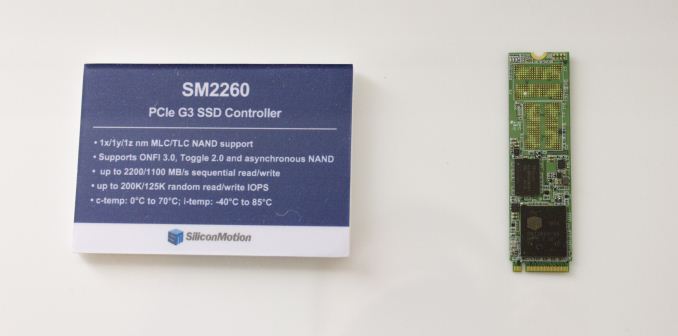
Silicon Motion has remained relatively quiet about its plans for a PCIe controller. We have known that the company is working on one (well, it would be a major surprise if it wasn’t), but until last week Silicon Motion had not shared any details. The controller is called SM2260 and it’s a PCIe 3.0 x4 design with support for NVMe. Both MLC and TLC NAND are supported at lithographies as small as 15nm, which suggests the use of LDPC error correction similar to the company’s SM2256 controller. Preliminary performance specs come in at up to 2.2GB/s sequential read and 200K random read IOPS, but I wouldn’t be surprised to see these change before the final product ships. 

Silicon Motion is still fairly early in development and the SM2260 won’t be available until sometime next year. For now the company is keeping the additional details close to its chest, but we’ll hear more once Silicon Motion has something concrete to show.

In addition to the SM2260, Silicon Motion showcased its new SM2256 controller that will be shipping in the next couple of months. It’s the first commercially available controller & firmware solution with TLC support and as a part of Computex Silicon Motion announced that it now supports Micron’s 16nm TLC NAND as well, along with all other available TLC NAND dies. ADATA already displayed its SP550 with the SM2256 inside and it will be among the first drives to ship with the new SMI controller. We have some preliminary benchmarks of a 500GB SM2256 reference design sample in our Bench section, so head there if you’re interested in taking an early look.

Another product Silicon Motion had on display was the SM2246XT, which is a DRAM-less version of the popular SM2246EN. There is a slight performance impact from the lack of DRAM cache as only parts of the NAND mapping table can be stored in the controller’s internal SRAM cache, but in return the SM2246XT offers lower cost due to a smaller die (no need for DRAM controller). Obviously the drive requires no separate DRAM either, which further reduces the cost for the assembler of the drive. SM2246XT is already used by SanDisk in the SSD PLUS and Z400s that was released a couple of weeks ago. I believe we will see the low-end market shift more towards DRAM-less designs in the next year as the race to the bottom gets tougher and with more sophisticated controllers it’s possible to have decent performance even without the DRAM cache. Currently Silicon Motion has no plans for an XT version of the SM2256, although I would personally see TLC NAND and DRAM-less controller as the ultimate value play.

Cougar Computex 2015 Booth Tour: $60 Hybrid Mechanical Keyboard

Cougar Computex 2015 Booth Tour: $60 Hybrid Mechanical Keyboard

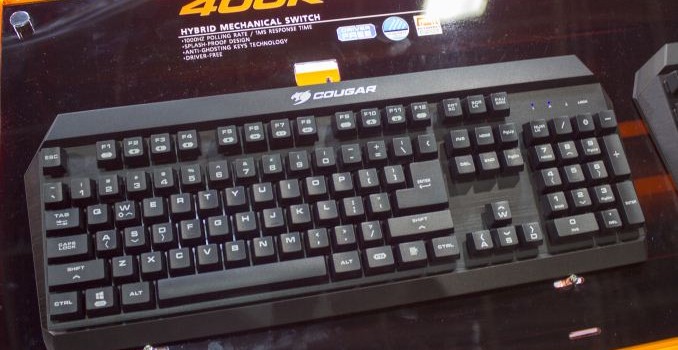
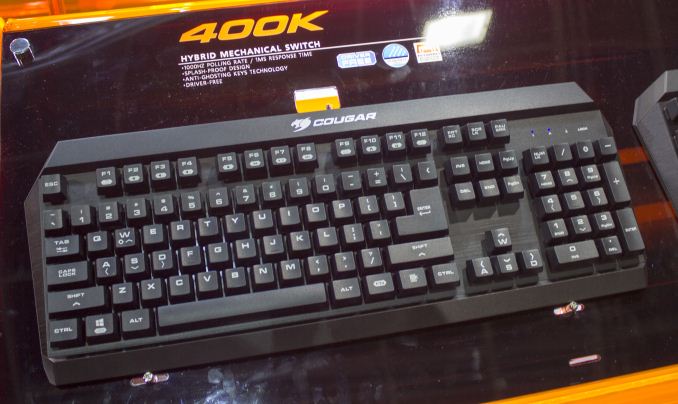
Every time I go to a trade show I come back with at least one or two highlights that really impressed me. At this year’s Computex one of my highlights was from a product category that usually I barely even follow: keyboards. I’ve been a strong advocate for mechanical keyboards ever since I got my first one a few years ago, but the obstacle I still face is that people aren’t ready to fork out close to $100 for a keyboard. Hence I was very excited when Cougar showcased its upcoming 400K and 450K hybrid mechanical keyboards with the cheaper 400K version being priced at only $60. 

What makes the 400K and 450K hybrid is the fact that the keys are ultimately membrane based, but have a mechanical-like feedback (I will save an in-depth analysis to E.). I played around with the 400K for a few minutes and I have to say I really liked the feeling of the key feedback was very close to a real mechanical keyboard, although we certainly need a longer time with the keyboard before drawing a final verdict.
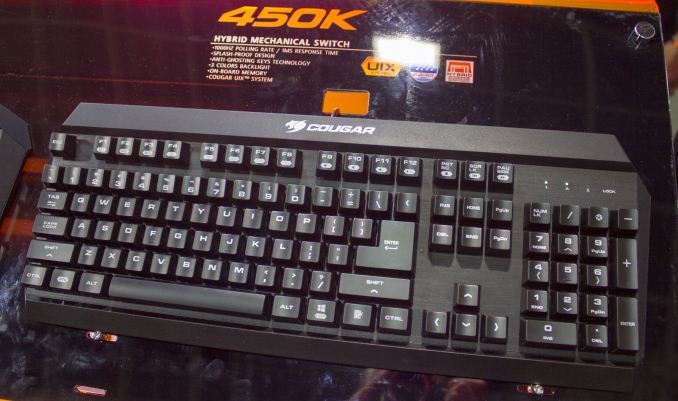
The 450K differs from the 400K by offering 3-color backlight as well as support for Cougar UIX software for custom key mapping. With such a short testing time it’s hard to say whether the 400K and 450K can truly replace a mechanical keyboard, but nevertheless Cougar at least offers a viable option to those whose budget can’t afford a proper mechanical keyboard. The 400K and 450K will be available in the next two months and we are eagerly looking forward to getting one in for review.
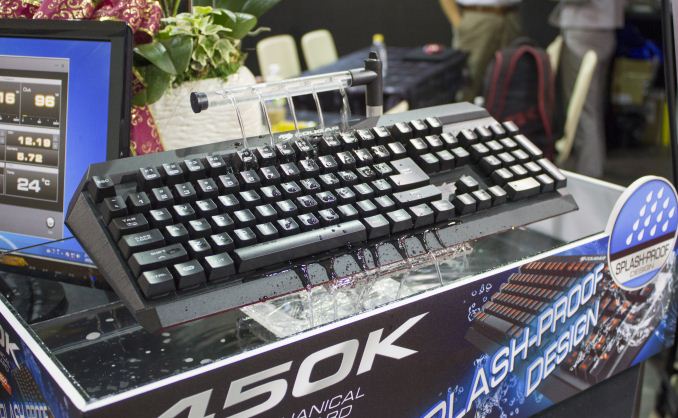
Another interesting aspect of the 400K and 450K is the splash-proof design. Since there’s a membrane between the key and PCB, the keyboard can stand a splash of liquid unlike most mechanical keyboards. That’s useful specifically for Internet cafes and other public computers, but it’s certainly a nice feature to have in home environment as well. 
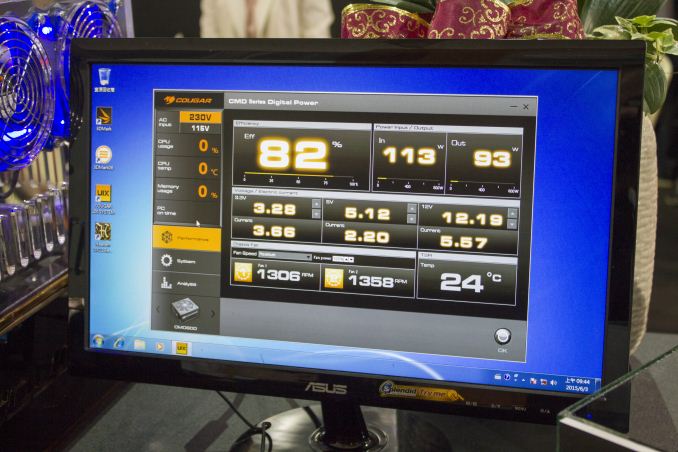
Moving on to power supplies, Cougar demonstrated its CMD Series with Digital Power feature. Basically the end-user can play around with the PSU voltages using Cougar’s software, which is a niche feature but for overclockers and others who like to tinker with their systems it can be handy. Note that the software only allows ~5% changes as per Intel’s guidelines as larger changes could potentially damage hardware in case the end-user isn’t fully aware of his doings. 
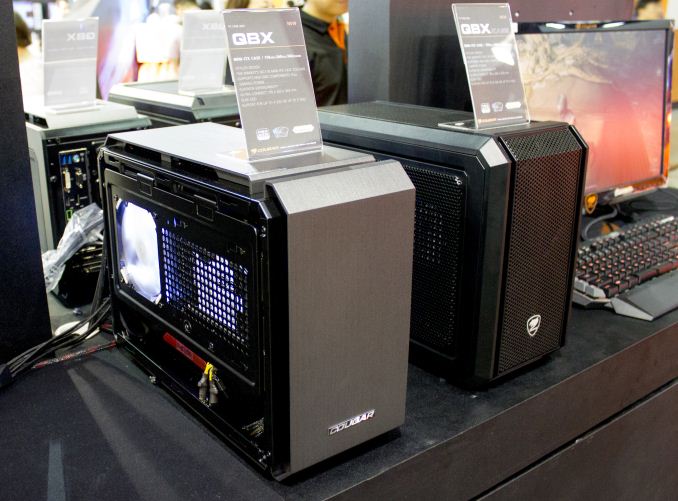
Cougar also announced a new mini-ITX case called QBX. The design is fairly neutral and stylish to my eye compared to some of the more enthusiast cases and it can fit a full size GPU for high detail gaming. 

Check out the gallery for more products. We will also have a review of the 600K mechanical keyboard and 600M gaming mouse out in a short while, so stay tuned!

G.Skill Shows Phison E7 Based Phoenix Blade X PCIe 3.0 x4 SSD

G.Skill Shows Phison E7 Based Phoenix Blade X PCIe 3.0 x4 SSD

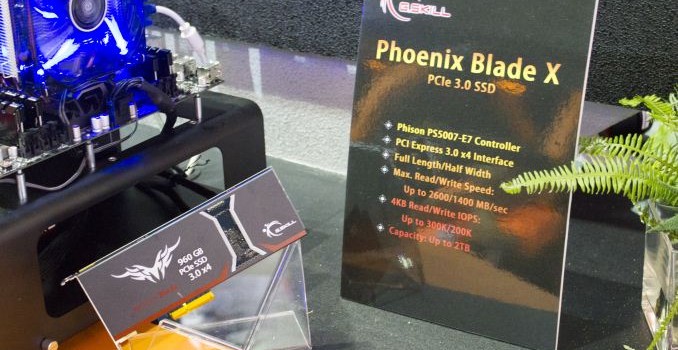
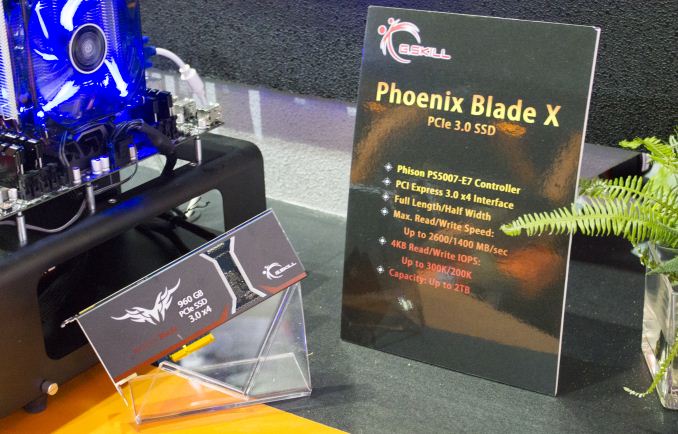
G.Skill isn’t a name that is often associated with SSDs, but the company has been making SSDs as a sort of a side product for several years. We reviewed the Phoenix Blade late last year and it actually did relatively well in our tests, although its high price made it hard to justify for many. At Computex last week G.Skill showcased the successor, which will simply be called Phoenix Blade X.

Phoenix Blade X uses Phison’s PS5007-E7 controller, which is a PCIe 3.0 x4 design that supports both AHCI and NVMe. G.Skill will be offering the drive as an add-in card in full-length/half-width form factor with capacities of up to 2TB. 

G.Skill had a live demo at its booth, but as Phison is still developing the firmware the performance is quite far from the preliminary specifications. G.Skill didn’t disclose availability, but given Phison’s schedule I would expect the Phoenix Blade X to ship some time in H2’15, likely late Q3. Pricing is TBA too, although I was told that the drive should be cheaper than its predecessor.