News


Apple Announces watchOS 2

Apple Announces watchOS 2

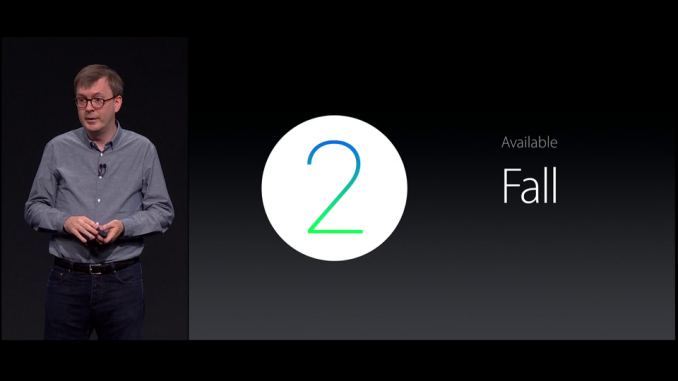
In addition to OS X El Capitan and iOS 9, Apple has announced an upcoming update to the watchOS operating system that powers the Apple Watch. This will be the first major update to hit the Apple Watch since its launch in April, and it will be called watchOS 2.

During the WWDC keynote, Apple’s VP of Technology Kevin Lynch highlighted a number of major improvements in the second iteration of watchOS. The first improvement is the addition of new watch faces. A new Photo Face has been added, where users can set a personal photo as their background. There’s also a photo gallery option, as well as a selection of timelapse watch faces that Apple has taken in cities and parks.

The next improvement in watchOS 2 is a feature called Time Travel. This makes use of the digital crown, and it allows the user to move their watch face forward and backward in time to view information and events from the past or the future. This reminds me a lot of how the interface on the new Pebble Time is designed, but with a different implementation. Unfortunately, Apple hasn’t yet found a way to make the forward in time function work with stocks.

Next up are improvements to communication. watchOS 2 enables FaceTime Audio support on the Apple Watch, so users can call other people with Macs, iPhones, iPads, and Apple Watches. Users can also reply to email using Siri for dictation, and they can use now use multiple colors in the drawings that they send to other Apple Watch users.

Since the Apple Watch will only last around a day, Apple has created a new clock mode for when the watch is laying on its side and charging. Essentially, this allows the watch to act as an alarm clock when it’s charging. Hopefully Apple has considered the potential issues with persistently displaying a clock on an OLED display.

Apple is also bringing watchOS the improvements made in iOS 9. The new transit views and directions in the maps app are available, and the improvements to Apple Pay with the new Wallet app and loyalty card support will also be included.

The last, and possibly most important improvement in watchOS 2 is the ability for developers to create native apps for Apple Watch. Apple Watch currently relies heavily on the iPhone that it’s paired to. Although it has apps, the logic for those apps is run on the iPhone rather than the Apple Watch. This makes the Apple Watch something like a remote display into an app that is really running on your phone. With watchOS 2, developers will be able to create apps that run natively on the Apple Watch. Apple is also giving developers significantly more access to the Apple Watch’s hardware, with APIs for the microphone, the digital crown, WiFi, the taptic engine, and more. 

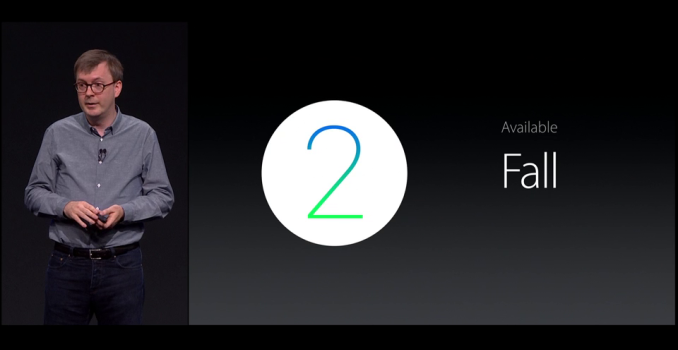
In order to put these new tools in the hands of developers as quickly as possible, Apple is making a developer beta of watchOS 2 available today. Apple has moved quickly to include new features and enable native application support, and it’s looks like watchOS may be set on the same yearly upgrade cycle as iOS and OS X. watchOS 2 will be available officially this fall.

Apple Brings Apple Pay To The United Kingdom

Apple Brings Apple Pay To The United Kingdom

Today Apple announced that their Apple Pay service is coming to the United Kingdom in July. Apple Pay was launched in October of 2014, and was originally available only with credit and debit cards issued by banks in the United States. Bringing the service to the UK marks the first expansion of Apple Pay to another country.

According to Apple, Apple Pay is launching with 8 major banks in the UK, and 70% of existing debit and credit cards will support it at launch. There will be over 250,000 locations in the UK that will support Apple Pay, with more to come in the future. A notable supporter will be the London Transportation System, with users being able to pay for transit fares using their phone. 

In addition to Apple Pay’s expansion outside the United States, Apple also announced some improvements to the service that will be rolling out along with iOS 9. The Passbook app is being renamed to Wallet, and Apple is adding support for loyalty cards from retailers.

ADATA Displays XPG SX930 SSD, Two New TLC SSDs, Several PCIe Drives & USB Type-C Products

ADATA Displays XPG SX930 SSD, Two New TLC SSDs, Several PCIe Drives & USB Type-C Products

After a long week of meetings and over a day worth of traveling, I’m finally back from Taipei. Given our hectic schedule (it was just me and Ian at Computex this year), we didn’t have time to report most of the things we saw last week, so it’s now time to start going through all the new products we saw. First up is ADATA who had numerous new, interesting SSD products to show, including TLC, PCIe and USB 3.1 solutions. 

The first product ADATA had on display was the XPG SX930, which is ADATA’s new high-end SATA SSD based on JMicron’s latest JMF670H controller. If you remember our ADATA booth tour from last year’s Computex, the SX930 was originally supposed to utilize SandForce’s SF-3000 series controller in SATA 6Gbps mode, but as the SF-3000 keeps getting delayed (I heard it’s scheduled for Q4’15 now) ADATA had to look for an alternative controller. JMicron actually sent me JMF670H reference design samples right before I left for Computex and based on my early benchmarking it seems to be a very potent controller. It’s not a Samsung challenger, but it appears to offer a healthy upgrade over the JMF667H and be competitive against other controller on the market. We will have a review of the reference designs up in the next few weeks, so stay tuned for deeper performance analysis. 

In terms of NAND ADATA is using something the company refers to as MLC+. Basically it’s just higher binned MLC NAND because ADATA does NAND binning in-house (which is in fact quite rare for a module house) and it enables the five-year warranty ADATA is offering for the SX930. I can’t remember on top of my head whether ADATA is using Micron’s 16nm or 20nm NAND, but I’ll provide an update as soon as I know more. The SX930 will be available in the next couple of months in capacities of 120GB, 240GB and 480GB.

Aside from the technical aspects, ADATA is trying to revamp its XPG branding to be more appealing to gamers. The SX930 features a new flame logo that extends to the package design and the whole XPG branding now has a new ‘Born to Battle’ slogan. While I think most of our readers buy a drive based on its performance aspects rather than the design, I still think the new branding is a good move because gamers and other PC enthusiasts certainly care about the looks when building a desktop and ADATA’s bird logo perhaps isn’t the number one choice. 

Moving on to TLC SSDs, ADATA didn’t have just one, but two TLC SSDs on display. The first one is SP550, which uses Silicon Motion’s SM2256 controller. The SM2256 is the successor to Silicon Motion’s popular SM2246EN controller and it’s the first commercially available controller platform with TLC NAND support. As a matter of fact Silicon Motion sent me reference design samples a while back and you can find some preliminary benchmarks in our Bench section, but I wanted to wait for shipping drives before doing a full review and drawing the final verdict. 

ADATA’s other TLC SSD is called SP560 and utilizes Marvell’s 88SS1074 controller that is codenamed “Dean”. Similar to the SM2256, the “Dean” also features LDPC error correction, which increases the endurance of TLC NAND by being able to fix a higher number of bit errors, although there is a slight negative impact on performance especially when the controller has to rely on software based LDPC for error correction.

ADATA hasn’t fully finalized the product specifications yet, but the company will be using 16nm TLC NAND from both Micron and SK Hynix. Micron just announced its 16nm TLC NAND last week and is already shipping to its partners, whereas SK Hynix hasn’t made much noise about its 16nm NAND that is now available. The SP550 and SP560 will both be available in capacities of 240GB, 480GB and 960GB with shipping starting in the next few months. Pricing is TBA, but should be below ADATA’s MLC drives, although I was told not to expect dramatic price cuts. 

In addition to SATA 6Gbps drives, ADATA obviously had some upcoming PCIe SSDs to show. To be more specific, ADATA had two drives, of which both were based on Marvell silicon. The SR1020 will be aimed towards the enterprise and features Marvell’s “Eldora” PCIe 3.0 x4 controller. Eldora’s aim is to compete against the SF-3000 platform as it supports both AHCI and NVMe as well as LDPC error correction, similar to the SF-3000, but it’s biggest advantage is the newer PCIe 3.0 interface with twice the available bandwidth. Again, the readers who read our ADATA booth tour a year ago might remember that the SR1020 was supposed to be based on SandForce SF-3739 controller, so it’s starting to look like ADATA has switched solely to Marvell for high-end because of the constant delays of the SF-3000 platform.


Live demo showing SR1020 at 3040MB/s sequential read

The SR1020 will come in 2.5″ form factor and use the SFF-8639 connector, which was actually officially renamed to U.2 by the Small Form Factor Working Group (SFFWG) last week. Given that SFF-8639 is gaining a lot of popularity due to it being the interface for 2.5″ PCIe SSDs, it makes perfect sense to get rid of the number monster and move to U.2, which is more marketable and goes well with the existing M.2 spec. 

As a more consumer-oriented drive, ADATA is offering a PCIe 3.0 x1 NVMe M.2 drive with Marvell’s “Artemis 2” controller. The drive is so new that ADATA doesn’t have a proper marketing name for it yet, but it’s a DRAM-less design for improved cost efficiency. ADATA will specifically target the drive for mainstream users as a SATA replacement. In a live demo the drive reached 641.7MB/s sequential read, so it should still provide a decent upgrade over SATA 6Gbps and most importantly it will be price competitive. Exact availability is still a bit open, but ADATA will be launching full-scale PCIe SSD production in the second half of this year, so we will likely see the PCIe drives enter the market either in the fourth quarter or early next year.

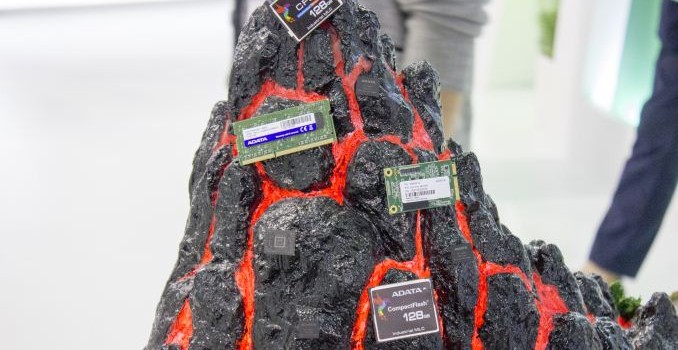
For industrial applications ADATA demonstrated its nano coating technology by operating one of its industrial SSDs inside a block of ice (I even confirmed that it is real ice, not plastic). 

ADATA also had a PCIe 3.0 x1 BGA SSD with a Marvell controller on display. It’s obviously an industrial/OEM SSD, but it’s pretty interesting that so much performance can be fit inside such a small package. I certainly hope high-end tablets will start adopting PCIe designs in the near future given that storage performance is still relatively poor in most devices, which is something that PCIe would fix. 

Last but not least, ADATA had a whole lineup of USB Type-C products. The SE730 is ADATA’s external SSD for USB 3.1 interface and Ganesh already has a sample, but we’ve been having some compatibility issues that have delayed the review. 

ADATA also had a bunch of USB Type-C adapters, which I’m sure the MacBook owners will appreciate given Apple’s pricing, although ADATA didn’t reveal the prices yet. 

All in all, ADATA had a lot to show and I’m eagerly looking forward to getting my hands on some TLC and PCIe SSD samples. I also had a chance to sit down with Kevin Chen, ADATA’s Vice President of SSD Marketing, so stay tuned for a more in-depth article of ADATA’s SSD strategy in the coming weeks!

Samsung Announces The Galaxy S6 Active

Samsung Announces The Galaxy S6 Active

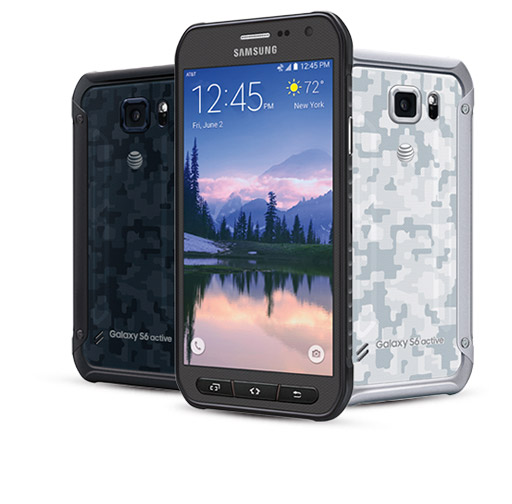
Today Samsung and AT&T announced the Galaxy S6 Active, a variant of the Galaxy S6 with a greater focus on durability and ruggedness. Releasing an Active version of their flagship Galaxy device has become a tradition for Samsung since the Galaxy S4, and it looks like this year is no exception. While it differs in its construction and design, I think people will find that its specifications are quite familiar. I’ve organized its specifications in the table below.

Samsung Galaxy S6 Active
SoC Exynos 7420 2.1/1.5GHz A57/A53
Memory and Storage 3GB LPDDR4-1552, 32GB NAND
Display 5.1″ 2560×1440 AMOLED
Cellular Connectivity 2G / 3G / 4G LTE (Category 6 LTE)
Dimensions ?
Cameras

16MP (5132 x 2988) Rear Facing

5MP Front Facing

Battery 3500 mAh (13.48Wh)
Other Connectivity 2×2 802.11a/b/g/n/ac + BT 4.1, USB2.0, GPS/GNSS, NFC
Operating System Android 5.0.2 Lollipop + Touchwiz
SIM NanoSIM

As far as its specifications go, the Galaxy S6 Active is effectively the same device as the normal Galaxy S6. It has the same 5.1″ 2560×1440 AMOLED display, the same Exynos 7420 SoC, the same cameras, and the same connectivity. Where it differs are its dimensions, and subsequently, its battery capacity. While Samsung hasn’t disclosed the size and mass of the Galaxy S6 Active, it’s safe to say based on the photos that the rugged build makes it a larger device than the normal Galaxy S6. However, the larger size and greater thickness have allowed for a substantial increase in battery capacity. While the normal Galaxy S6 ships with a 9.81Wh battery and the S6 Edge with a 10.01Wh battery, the Galaxy S6 Active has a whopping 13.48Wh battery.

The biggest difference from the original Galaxy S6 with the Galaxy S6 Active is its design. The glass back of the Galaxy S6 is gone, and the entire device is surrounded by an additional frame to protect from damage. The single home button and capacitive keys have been replaced by three hardware buttons as well. It also appears that the fingerprint sensor has been removed in order to accommodate the hardware buttons.

As a rugged device for an active lifestyle, the Galaxy S6 Active wouldn’t be complete without resistance to water and dust. Its chassis has an IP68 rating for dust and water resistance, which guarantees protection when submerged in water as deep as 1.5 meters for up to 30 minutes. The Galaxy S6 Active also meets the Mil-STD-810G standard for resistance to pressure, temperature, humidity, shocks and vibrations.

AT&T lists the Galaxy S6 Active as “Coming Soon”, and customers will be able to purchase it on June 12. It will be available in camo white, camo blue, and grey finishes. On AT&T Next the Galaxy S6 Active will cost $0 up front, with a $695 cost split into monthly payments for a 20, 24, or 30 month term.