News


ASUS Announces Two New 8 Inch ZenPad Tablets
ASUS Announces Two New 8 Inch ZenPad Tablets

ASUS is no stranger to the Android tablet market. They’ve been around since the earliest days of Android tablets with their ASUS Transformer TF101 which launched with Android Honeycomb. Since that time they’ve released a number of iterations of the ASUS Transformer Android tablet, and have also expanded to other parts of the market with tablets like the ASUS MeMO Pad. In addition to their independent endeavors, they worked with Google to design and manufacture both generations of the Nexus 7, which was beloved by Android enthusiasts.

While ASUS has been making Android tablets for a while, it has also been quite some time since we’ve seen a high end tablet come from the company. A focus on expansion into the world of Windows tablets has left the spot for a high end ASUS tablet unfilled. However, with a renewed focus on expanding their role as an Android manufacturer, and global ambitions with devices like the ZenFone 2, it was only a matter of time before ASUS brought new Android tablets to market. It also seemed inevitable that those devices would now fall under ASUS’s Zen branding, and indeed, they do. ASUS’s new Android tablets are the first in a line of tablets under the ZenPad brand.

To put things in perspective and make it easier to compare these two new tablets, I’ve organized their general specifications in the chart below. There are a few things missing at the moment as they haven’t yet been provided by ASUS, but I will update the chart and this article as soon as they are known.

  ASUS ZenPad 8 (Z380) ASUS ZenPad S 8 (Z580CA)
SoC Intel Atom x3-C3230RK
4x Silvermont @ 1.2GHz
Intel Atom Moorefield Z3580
4x Silvermont @ 2.33GHz
GPU ARM Mali 450 MP4 PowerVR G6430 @ 533MHz
RAM 1 or 2GB LPDDR3 4GB LPDDR3
NAND 8/16GB + microSDXC 16/32/64GB + microSDXC
Display 8.0″ 1280×800 IPS LCD 8.0″ 2048×1536 IPS LCD
Dimensions 209 x 123 x 8.5mm 203.2 x 134.5 x 6.68mm
Mass ? 299g
Camera 2MP Front-facing
5MP Rear-facing
5MP Front-facing
8MP Rear-facing
Battery 15.2Wh
OS Android 5.0 Lollipop with ASUS Zen UI
Other Connectivity 802.11b/g/n + BT 4.0, GNSS
Cellular LTE SKU with phone functionality WiFi Only
USB Connector Micro USB USB Type-C

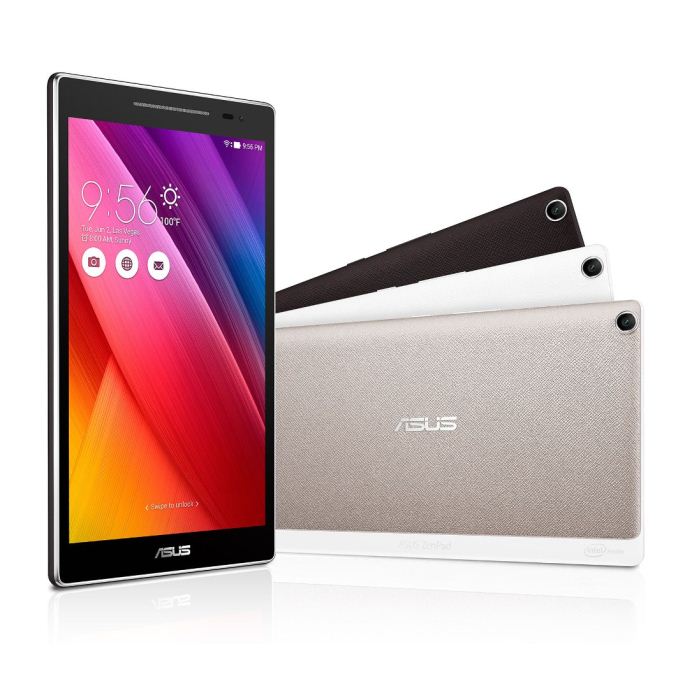
With this launch it appears that ASUS is putting devices into play at both the high end and the low end of the tablet market. The ZenPad Z380 is certainly the thicker of the two devices, and it’s slightly shorter but with a much more narrow profile. You can see the ZenPad Z380 pictured in the cover image above, and the ZenPad S Z580CA is down below. While the Z380 opts for swappable leather textured backs, the Z580CA has a non-removable metallic back, although it’s unknown if it’s actually made of metal. I’ll start by talking about the Z380 before moving onto the Z580CA.

The first thing I noticed about the ZenPad Z380 was that it uses the Intel Atom x3-C3230RK SoC. This is a very interesting chip, because the RK on the end of the name signifies that it’s a chip designed by Rockchip rather than Intel. Through their partnership, Intel licenses their architecture to Rockchip to use in the SoCs they design, and those SoCs are then fabricated on TSMC’s 28nm process. It’s a surprising collaboration of three companies.

Atom x3-C3230RK has four of Intel’s Silvermont cores and they have a peak frequency of 1.2GHz. This puts it pretty far behind Intel’s higher clocked Moorefield parts that are built on their 22nm manufacturing process when it comes to bursty workloads. However, the size of the gap between it and Moorefield will be in a sustained load when both SoCs throttle down remains to be seen. It also sports ARM’s Mali 450 GPU with four cores, although the clock speed on those GPU cores is unknown.

Moving on from the SoC, we see that the ZenPad Z380 comes with either 8GB or 16GB of internal memory, and 1GB or 2GB of RAM. According to ASUS, these specs can vary based on region, so be sure to take a look at the spec sheet if you plan on buying the Z380. It also has an 8″ 1280×800 IPS LCD which is fairly standard for a low end tablet, and a pair of 2MP and 5MP cameras on the front and back respectively.
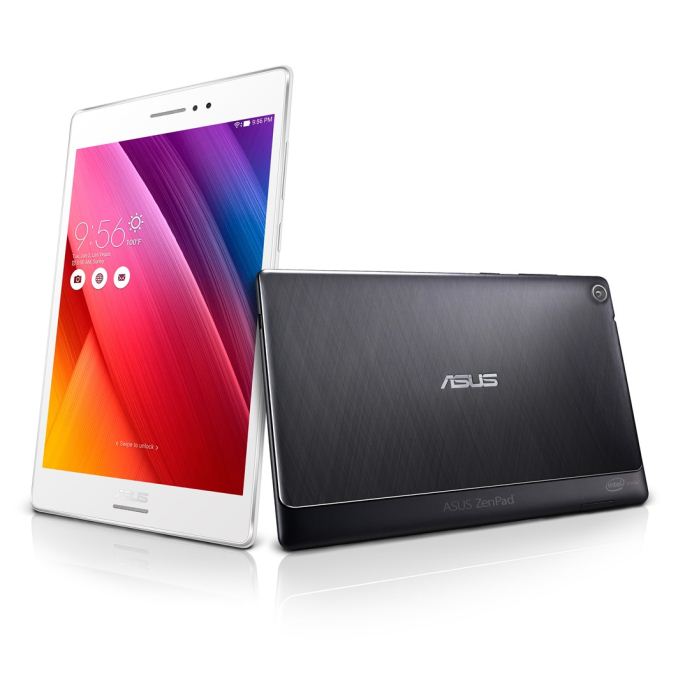
After the ZenPad Z380 comes the high end ZenPad S Z580CA, which is also a tablet with an 8″ display. However, the fact that both of these tablets have the same display size as measured from corner to corner does not mean they have the same form. This is because the ZenPad S uses an 8″ 2048×1536 IPS panel which has a 4:3 aspect ratio. ASUS is following HTC and Samsung in moving to 4:3 after many years of 16:10 Android tablets. I’m surprised that it took this long for vendors to realize that 16:10 is ill suited to many of the tasks users perform on tablets and makes a device more difficult to manage in varying orientations.

The rest of the internal specifications of the ZenPad S are very similar to those of ASUS’s ZenFone 2. It uses Intel’s Atom Z3580 SoC which is a 22nm part with four Silvermont cores that run at up to 2.33GHz, along with a PowerVR G6430 GPU at 533MHz. Other specs include up to 64GB of NAND, 4GB of LPDDR3 memory, a 5MP front camera, and an 8MP rear camera.

Both of these new ZenPads share the same battery capacity, which is somewhat concerning when one considers that the display on the ZenPad S will most likely consume more power than the ZenPad Z380. They also share the same WiFi, and in both cases it’s a very disappointing 2.4GHz 802.11n part. Although lackluster WiFi is not new to ASUS products on the laptop side with devices like the Zenbook UX305, the ZenFone 2’s 802.11ac support had me hoping that this wouldn’t extend to their mobile devices as well. While pricing for both these new tablets hasn’t been revealed, the Z580CA is clearly aimed at the high end, and when your $199 ZenFone 2 has 802.11ac your high end tablet should too.

There is one final thing that distinguishes the ZenPad S Z580CA from the Z380, as well as from almost any other tablet. It’s the use of the new USB Type-C standard for charging and data connections, with no MicroUSB port available. This is probably going to be painful for some consumers as charging cables get lost or broken and can’t be replaced with easily available MicroUSB cords, but it’s a transition that needs to happen and I applaud ASUS for beginning it sooner rather than later. Using the Type-C port for connecting peripherals or doing display output will definitely be something to investigate if we do a review of the ZenPad Z580CA in the future. When Android M rolls around it will also be interesting to see if you can use the ZenPad Z580CA to charge another device.

ASUS has also announced a range of accessories for these new tablets. The Z380 has protective cases available, and an audio cover that ASUS says enables 5.1 surround sound, powered by the ZenPad’s build in DTS codec. There’s also a power case to extend the tablet’s battery capacity, and a 1024 pressure level stylus which works with both of the new ZenPad tablets.

Overall I think ASUS has two very interesting devices on their hands. For me the ZenPad S is the most interesting of the two because of its hardware and USB Type-C connector, but the ZenPad Z380 could prove to be a formidable competitor to other inexpensive Android tablets depending on its price. Speaking of price, that’s another aspect about these tablets that is currently unknown. Much of the success of these new tablets will be based on whether they provide a good value relative to their price. ASUS has a lot of competition, but if these tablets are priced right they could have a couple of winning tablets on their hands.

ASUS Unveils The ProArt PA329Q UHD Monitor

ASUS Unveils The ProArt PA329Q UHD Monitor

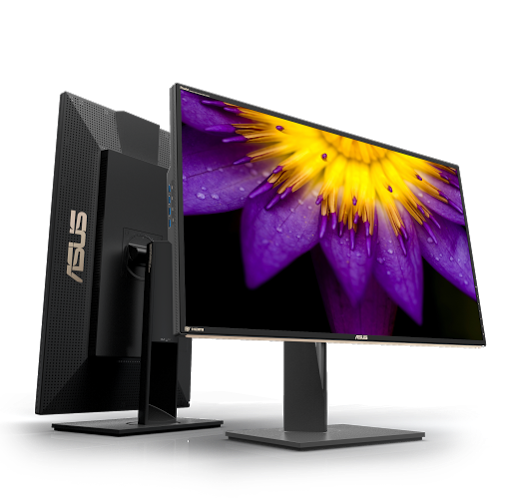
In addition to their smartphone and tablet announcements at Computex today, ASUS has also revealed a new monitor aimed at imaging professionals, photographers, and editors alike. It will be the flagship display in their line of ProArt monitors, and the most exciting monitor that I’ve seen come out of the ProArt line in a long time. It’s a 32″ UltraHD IPS panel with equally impressive specs in every other respect. You can check out its specifications below.

ASUS ProArt PA329Q
Resolution 3840×2160
Refresh Rate 60Hz
Panel Size 32″
Viewing Angle (H/V) 178° / 178°
Inputs / Outputs 1 x DisplayPort 1.2 (UHD 60Hz)
1 x Mini DisplayPort (UHD 60Hz)
1 x HDMI 2.0 (UHD 60Hz)
2 x HDMI 1.4 (UHD 30Hz)
4 x USB 3.0
Color Depth 10 Bit (1.07 Billion Colors)
Color Gamut 100% Adobe RGB
LUT  16 Bit 3D LUT

As you can see, ASUS has really gone all out in making this a display that is suitable for professional work. The panel is a true 10 bit IPS panel with full coverage of the Adobe RGB gamut, and color modes for working within sRGB, DCI-P3, and Rec. 2020, although the latter two won’t be fully covered by this display. The high bit depth panel and 16 bit internal 3D LUT will also ensure smooth gradations even when working in a wide gamut like AdobeRGB. ASUS is also guaranteeing a DeltaE average of two or less.

In addition to the high quality panel, ASUS has also made sure to cover their input ports from every angle. There’s 60Hz UltraHD support via DisplayPort 1.2 and HDMI 2.0, with 30Hz UltraHD supported on both of the HDMI 1.4 ports. The inclusion of Mini DisplayPort is also great for anyone who works off of a Mac with Mini DisplayPort or Thunderbolt ports. There’s also a four port USB 3.0 hub built in.

ASUS is yet to announce pricing or availability for the ProArt PA329Q, but hopefully we’ll know soon when it will be coming to market and how much it will cost.


ASUS Unveils The ProArt PA329Q UHD Monitor

ASUS Unveils The ProArt PA329Q UHD Monitor

In addition to their smartphone and tablet announcements at Computex today, ASUS has also revealed a new monitor aimed at imaging professionals, photographers, and editors alike. It will be the flagship display in their line of ProArt monitors, and the most exciting monitor that I’ve seen come out of the ProArt line in a long time. It’s a 32″ UltraHD IPS panel with equally impressive specs in every other respect. You can check out its specifications below.

ASUS ProArt PA329Q
Resolution 3840×2160
Refresh Rate 60Hz
Panel Size 32″
Viewing Angle (H/V) 178° / 178°
Inputs / Outputs 1 x DisplayPort 1.2 (UHD 60Hz)
1 x Mini DisplayPort (UHD 60Hz)
1 x HDMI 2.0 (UHD 60Hz)
2 x HDMI 1.4 (UHD 30Hz)
4 x USB 3.0
Color Depth 10 Bit (1.07 Billion Colors)
Color Gamut 100% Adobe RGB
LUT  16 Bit 3D LUT

As you can see, ASUS has really gone all out in making this a display that is suitable for professional work. The panel is a true 10 bit IPS panel with full coverage of the Adobe RGB gamut, and color modes for working within sRGB, DCI-P3, and Rec. 2020, although the latter two won’t be fully covered by this display. The high bit depth panel and 16 bit internal 3D LUT will also ensure smooth gradations even when working in a wide gamut like AdobeRGB. ASUS is also guaranteeing a DeltaE average of two or less.

In addition to the high quality panel, ASUS has also made sure to cover their input ports from every angle. There’s 60Hz UltraHD support via DisplayPort 1.2 and HDMI 2.0, with 30Hz UltraHD supported on both of the HDMI 1.4 ports. The inclusion of Mini DisplayPort is also great for anyone who works off of a Mac with Mini DisplayPort or Thunderbolt ports. There’s also a four port USB 3.0 hub built in.

ASUS is yet to announce pricing or availability for the ProArt PA329Q, but hopefully we’ll know soon when it will be coming to market and how much it will cost.


ASUS Announces the ZenFone Selfie at Computex

ASUS Announces the ZenFone Selfie at Computex

ASUS has been making waves in the industry lately with their powerful but low priced ZenFone 2. ASUS’s second generation of ZenFones is another chance for them to break into markets like North America and Western Europe. Part of their strategy appears to be a consolidation of the number of models they offer, and another aspect is rethinking the naming of their devices. The first generation of ZenFones were mostly named with a number on the end which signified how large the screen was. This type of naming doesn’t scale very well when you update phones every year, and it isn’t very good for naming models that target a specific niche. 

Today’s announcement is one of those devices. The ZenFone Selfie is a device for users who like to take selfies, and as such it has a large degree of focus on the device’s front camera and the software features that assist it. Of course, even when a device is focused on Selfies, making sure the other aspects hold up is still very important. To get an idea of how the ZenFone Selfie stacks up on paper I’ve listed its specifications below.

ASUS ZenFone Selfie
SoC Qualcomm Snapdragon 615, 4 x Cortex A53 at 1.7GHz + 4 x Cortex A53 at 1.0GHz,
Adreno 405 GPU
Memory and Storage ?
Display 5.5″ 1920×1080 IPS LCD
Cellular Connectivity 2G / 3G / 4G LTE (Qualcomm MDM9x25 UE Category 4 LTE)
Dimensions ?
Cameras Facing: 13 MP 1/3.2″ Toshiba sensor with F/2.0 aperture, laser autofocus, 28mm focal length
Front-Facing:  1/3.2″ Toshiba sensor with F/2.2 aperture, laser autofocus, 24mm focal length
Battery ?
Other Connectivity ?
Operating System Android 5.0 Lollipop 

Unfortunately, ASUS’s press release is somewhat light when it comes to specifications. In terms of its design, it looks almost exactly the same as the ZenFone 2. What we do know is that the ZenFone Selfie sports the same 13MP Toshiba camera sensors on the front and back, with the rear sensor having a wider aperture and a longer focal length than the front sensor. Both sensors are stated to be 1/3.2″, although it’s likely that they’re advertised as 1/3.07″ sensors with 1.12 micron pixels. The rear camera also sports laser autofocus like the ZenFone Zoom and the LG G3 / G4.

Beyond the cameras we have Qualcomm’s Snapdragon 615 CPU which has eight Cortex A53 cores split into two clusters. One cluster runs at 1.7GHz and is intended for more CPU intense workloads, while the 1.0GHz cluster is for lighter workloads. The display has the same specifications as the ZenFone 2, being a 5.5″ 1920×1080 IPS panel. Currently the amount of RAM and NAND included is unknown, as is the capacity of the battery, and the specifications for WiFi, GNSS, and other connectivity features. The dimensions of the phone are also unknown, but one can get a decent idea of the specs from the display size, photos, and ASUS’s advertisement that the bezels on the long edges of the display are 3.3mm wide. Once more information becomes available, I’ll update this article to reflect it.

On the software side, the ZenFone Selfie supports a number of features to appeal to users. ASUS is advertising the front camera’s 88 degree field of view, which can span up to 140 degrees when their selfie panorama mode is used in the camera. Features like “beautification” mode are also back, and that’s all I have to say about that.

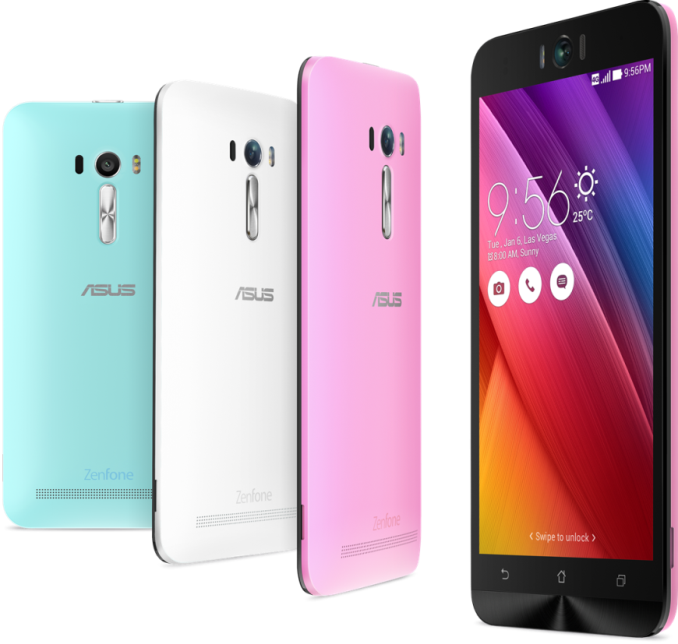
At launch the ZenFone Selfie will be available with seven different color options for the back cover. The pastel-like finishes are available in white, pink, aqua blue. There will also be black, gold, grey, and red metallic back covers, much like those available now on the Zenfone 2.

Like the two ZenPads that ASUS also launched today, the price and availability of the ZenFone Selfie are not yet known. Based on its SoC, I would imagine it has to undercut the ZenFone 2 on price, even with the higher resolution front camera. Once I get word on the price and what countries the ZenFone 2 will be available in I’ll update that here as well.

ASUS Announces the ZenFone Selfie at Computex

ASUS Announces the ZenFone Selfie at Computex

ASUS has been making waves in the industry lately with their powerful but low priced ZenFone 2. ASUS’s second generation of ZenFones is another chance for them to break into markets like North America and Western Europe. Part of their strategy appears to be a consolidation of the number of models they offer, and another aspect is rethinking the naming of their devices. The first generation of ZenFones were mostly named with a number on the end which signified how large the screen was. This type of naming doesn’t scale very well when you update phones every year, and it isn’t very good for naming models that target a specific niche. 

Today’s announcement is one of those devices. The ZenFone Selfie is a device for users who like to take selfies, and as such it has a large degree of focus on the device’s front camera and the software features that assist it. Of course, even when a device is focused on Selfies, making sure the other aspects hold up is still very important. To get an idea of how the ZenFone Selfie stacks up on paper I’ve listed its specifications below.

ASUS ZenFone Selfie
SoC Qualcomm Snapdragon 615, 4 x Cortex A53 at 1.7GHz + 4 x Cortex A53 at 1.0GHz,
Adreno 405 GPU
Memory and Storage ?
Display 5.5″ 1920×1080 IPS LCD
Cellular Connectivity 2G / 3G / 4G LTE (Qualcomm MDM9x25 UE Category 4 LTE)
Dimensions ?
Cameras Facing: 13 MP 1/3.2″ Toshiba sensor with F/2.0 aperture, laser autofocus, 28mm focal length
Front-Facing:  1/3.2″ Toshiba sensor with F/2.2 aperture, laser autofocus, 24mm focal length
Battery ?
Other Connectivity ?
Operating System Android 5.0 Lollipop 

Unfortunately, ASUS’s press release is somewhat light when it comes to specifications. In terms of its design, it looks almost exactly the same as the ZenFone 2. What we do know is that the ZenFone Selfie sports the same 13MP Toshiba camera sensors on the front and back, with the rear sensor having a wider aperture and a longer focal length than the front sensor. Both sensors are stated to be 1/3.2″, although it’s likely that they’re advertised as 1/3.07″ sensors with 1.12 micron pixels. The rear camera also sports laser autofocus like the ZenFone Zoom and the LG G3 / G4.

Beyond the cameras we have Qualcomm’s Snapdragon 615 CPU which has eight Cortex A53 cores split into two clusters. One cluster runs at 1.7GHz and is intended for more CPU intense workloads, while the 1.0GHz cluster is for lighter workloads. The display has the same specifications as the ZenFone 2, being a 5.5″ 1920×1080 IPS panel. Currently the amount of RAM and NAND included is unknown, as is the capacity of the battery, and the specifications for WiFi, GNSS, and other connectivity features. The dimensions of the phone are also unknown, but one can get a decent idea of the specs from the display size, photos, and ASUS’s advertisement that the bezels on the long edges of the display are 3.3mm wide. Once more information becomes available, I’ll update this article to reflect it.

On the software side, the ZenFone Selfie supports a number of features to appeal to users. ASUS is advertising the front camera’s 88 degree field of view, which can span up to 140 degrees when their selfie panorama mode is used in the camera. Features like “beautification” mode are also back, and that’s all I have to say about that.

At launch the ZenFone Selfie will be available with seven different color options for the back cover. The pastel-like finishes are available in white, pink, aqua blue. There will also be black, gold, grey, and red metallic back covers, much like those available now on the Zenfone 2.

Like the two ZenPads that ASUS also launched today, the price and availability of the ZenFone Selfie are not yet known. Based on its SoC, I would imagine it has to undercut the ZenFone 2 on price, even with the higher resolution front camera. Once I get word on the price and what countries the ZenFone 2 will be available in I’ll update that here as well.