News


Microsoft Partners With 20 More Vendors To Pre-Install Apps On Android Tablets

Microsoft Partners With 20 More Vendors To Pre-Install Apps On Android Tablets

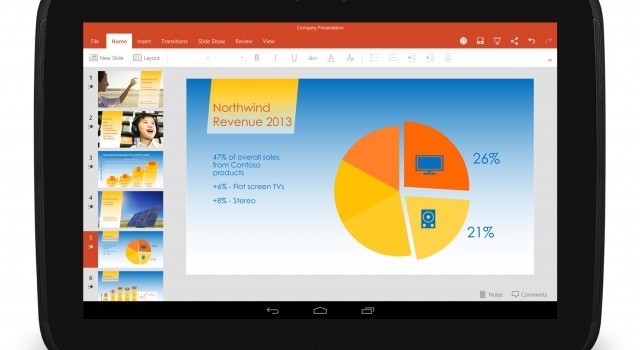
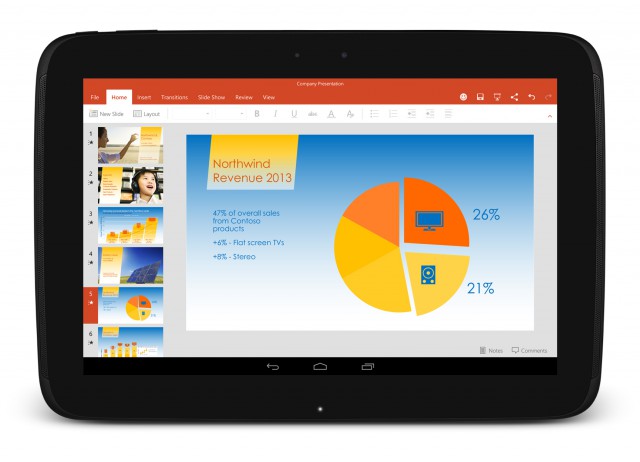
Today Microsoft announced partnerships with 20 device manufacturers to pre-install apps such as Office, OneDrive, and Skype on future Android tablets. Microsoft already has existing deals in place with companies like Dell, Samsung, and Pegatron, and we’ve seen the results of those agreements on devices like the Venue 8 7840 and the Galaxy S6. Today’s announcement focuses more on tablets, which is a natural area of focus for Microsoft as their suite of Office applications are made for Android tablets.

Microsoft’s list of partnered companies mostly consists of regional manufacturers that serve a specific country. However, both LG and Sony appear on the list, which means that Microsoft’s apps will be shipping on future devices to countries all over the world. The press release specifically states that Sony’s Xperia Z4 tablet will begin shipping with the apps within 90 days, and states that a future tablet from LG will include them as well.

Microsoft’s partnerships represent a new direction for a company that once used their suite of Office apps as a way to lead users to Windows devices. You can view the entire list of new partner companies in the source below.

Source: Microsoft via The Verge

Microsoft Edge Gains SIMD Support, Dolby Audio, And More

Microsoft Edge Gains SIMD Support, Dolby Audio, And More

Microsoft is pushing their new Edge browser (formerly Project Spartan) as the replacement for Internet Explorer 11. Back on May 5th, Microsoft opened up the Microsoft Edge Dev Blog and ever since then they have been bringing to light a lot of the changes that are coming with Edge. One of the first posts was detailing what has been changed with Edge as compared to Internet Explorer 11.

Edge is not a completely new browser. Internet Explorer was based on the Trident web rendering engine, and the Chakra ECMAscript engine, and these continue to be the basis of Edge as well. However Edge will not have any of the legacy compatibility requirements of Internet Explorer, which has allowed the company to strip out a lot of unnecessary code. According to Microsoft, over 220,000 lines of code have been removed to strip out the features that are no longer part of the modern web. This includes things like ActiveX extensions, Browser Helper Objects, IE Document Modes, Vector Markup Language, VBScript, and more. For a full listing, check out their blog post here. They obviously did not just stop at removing old code though, and over 300,000 new lines of code have been added for 49 new features and over 4000 interoperability fixes.

Microsoft is pushing Edge as a standards compliant browser, and they have quite a bit of work to do in this regard since Internet Explorer, even at the latest version 11, did not support a lot of the standards that were upcoming. This is always a moving target, and in the past browser upgrades were slow to happen if they happened at all. IE seemed stuck out of sync with the rest of the browsers. The company seems to want to avoid that going forward, and one of the ways this will happen is that Edge can now be updated through the Windows Store, which should allow them to quickly and easily roll out updates and fixes. One thing they want to avoid if possible is vendor prefixes for experimental APIs. They will still have to support some, since they are in use on many pages, but going forward they want to eliminate any new MS prefixes if they can, and instead will be offering experimental API support through feature flags.

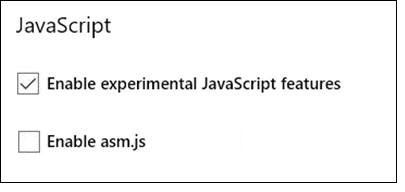
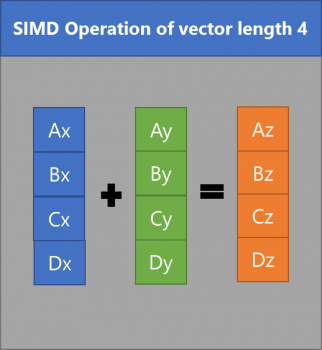
Chakra is the browser’s scripting engine, and it is getting a lot of updates as well. One of the most requested is the addition of Asm.js to the browser. Asm.js is a sublanguage which allows sandboxed execution of memory-unsafe languages. Toolchains are available to convert C/C++ code into Asm.js, and technologies which leverage this are things like WebGL and gaming engines like Unity and Unreal. These new features will also bring Single Instruction Multiple Data (SIMD) support to Chakra, and Microsoft got assistance with this work from Intel, so it will likely leverage Intel’s SSE extensions. Using the SIMD Mandebrot demo, Edge with SIMD support performs 200-300% faster than Edge without the support enabled, so there is a lot of performance potential here. Intel has also helped reduce navigation time and has helped reduce DOM parse times. SIMD support is something that Intel is also bringing to other browsers, but the main point is that Edge will have it as well, which should promote the use of these kinds of features on the web as a whole.

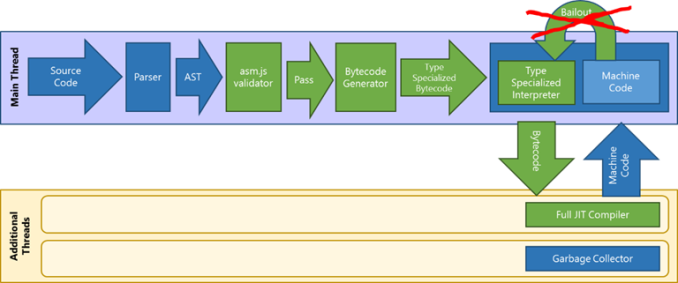
Back in January I was able to run the new Edge browser code (in IE 11 at the time) through its paces and it really was a large leap forward in performance. On May 20th, Microsoft revealed some of the changes they have made to Chakra to make such large gains. ECMAscript leverages Just-in-Time (JIT) code compliation, which means that the script is compiled into code on the fly, rather than ahead of time (AoT) compilation. Enhancements have been made to Chakra’s ability to move external functions into the running code (function inlining) and especially when the code is defined across JavaScript files. This helps reduce the overhead of function calls, which force the system to push relevant data to the stack, and bring it all back when the function returns. All browsers do this in one way or another, but IE 11 was not efficient at doing this across different script files, so Edge has a big edge here (pun intended). Performance improvements were also brought with some of the changes in ECMAScript 2015, which is the latest iteration the scripting language. It brings about a new data type of a constant value, which was not available in prior versions of the language. Chakra’s JIT compiler will now optimize existing code to identify non-constant variable declarations defined globally, but do not change, and therefore they can be identified as constants to reduce the overhead of lookups. Another big change is a how Arrays are handled, and here Chakra in Edge is up to five times faster than IE 11.

Chakra Execution Pipeline

A new feature that is currently unique to Edge is the ability to support Multi-Channel audio through Dolby Audio. Edge will support Dolby Digital Plus and is supported with current DASH (MP4) and HLS (M2TS) file formats. This means that there will be support for both progressive download content and adaptive streaming content. Dolby has a Dolby Audio Experience demo which leverages WebGL if you want to try this out for yourself.

These are just some of the changes coming to Edge. After years of trailing the browser pack, it certainly seems like Microsoft has stepped up their game. Performance is much better in Edge than their outgoing browser, and it is picking up standards support much earlier. Edge already supports 81% of the ECMAscript 2015 features, which leads all other desktop browsers for the moment. HTML 5 standards support is also much improved. Browsers are one of the most important tools we have on any device, and it looks like Windows 10 is going to bring its best forward. I can’t say I love the icon, but that can always be changed.

The ASUS ZenFone 2 Review

ASUS is not new to the smartphone market. Since the days of Windows Mobile (not the new Windows Mobile) they’ve been selling smartphones. But when it comes to Android devices they’ve been primarily focused on tablets. ASUS worked with Google to design and manufacture both generations of the Nexus 7, which was beloved by Android enthusiasts. Their Padfone devices were an attempt to have a smartphone that attached to a tablet shell to make a sort of 2-in-1 smartphone and tablet. But only recently has the company started making a serious push into the Android smartphone space. Their ZenFone line of phones consists of several devices, with the newest being the ZenFone Zoom and the ZenFone 2, the latter being the device I’m looking at today. Read on for my full review of the ASUS ZenFone 2.

SanDisk Releases Z400s SSD for Mainstream PCs & Embedded Applications

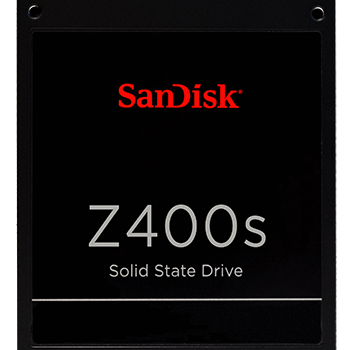
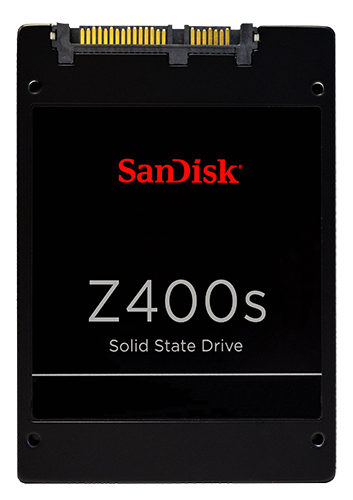
SanDisk Releases Z400s SSD for Mainstream PCs & Embedded Applications

With Computex only a week away, SanDisk is taking a head start today with the release of Z400s SSD. SanDisk is aiming to cater two different markets with the X400s, the first one being the traditional mainstream PC space where SanDisk is looking to bring low-capacity drives at an affordable price, and the other one is the embedded market that includes applications such as digital signage, point of sale and surveillance.

Embedded devices still rely heavily on hard drives because the upgrade cycles tend to be long and the cost of SSDs hasn’t been low enough to attract interest over hard drives. Most embedded devices often have only one key function, which is why the market hasn’t seen SSDs as a viable solution until recently when low-capacity SSDs have become cost competitive with hard drives. Because the applications don’t typically need more than a few dozen gigabytes, SanDisk is offering the Z400s in capacities from 32GB to 256GB in a variety of form factors including M.2 and mSATA. The reason why SanDisk isn’t offering any higher capacity options is because the average client SSD capacity is still well below 256GB (~180GB according to SanDisk’s own research), so since the Z400s is aimed for the hard drive replacement crowd the company wanted to keep the available options as low cost as possible. 

As usual, SanDisk isn’t disclosing the controller inside the Z400s, but given SanDisk’s history I would guess it’s a 4-channel Marvell silicon, although I wouldn’t be surprised to see a Silicon Motion or JMicron controller for further cost reductions (Marvell’s controllers are relatively expensive compared to others). The Z400s turns out to be SanDisk’s, and world’s, first SSD to utilize 15nm NAND, which has certainly spent a long time in making. I posted a preliminary analysis on Toshiba-SanDisk’s 15nm NAND in last August, but we’ll know more once the drives ship and the die is put under a microscope. From what I have heard the supply of 15nm is still very limited, but we should see more products based on it in the coming months. 

The Z400s has already been validated by a handful of key embedded PC manufacturers, including Intel’s NUC and Gigabyte’s Brix divisions that focus on small form factor PCs. That said, despite being focused on the embedded market the Z400s hasn’t been validated for industrial use (large temperature scale, heavy vibration, humidity etc), so it’s strictly for applications used in normal environments (e.g. a point of sale in a grocery store). While that somewhat limits the market, there are many applications that will certainly enjoy the benefits of higher reliability and performance that SSDs bring to the table. All in all, I don’t really follow the embedded space enough to know how big the market is, but I do see it being a growing niche in the future. Given that SanDisk is an SSD-only company, it’s logical for it to pursue smaller niches and markets that aren’t overly populated yet because it can’t rely on other operations for revenue growth (and due to SanDisk’s recent stock performance, it’s clear that the company needs to widen its revenue base).

The Z400s is entering mass production next month with availability being later in the summer. It will be available through the channel too, but since it’s not exactly a retail product like the Ultra II SanDisk isn’t publishing any pricing details at this point. 

AnandTech Call for Writers: 2015

05/25/2015: Just bringing this back up to the top; there’s a bit less than one week to go before the Call for Writers application window closes

The Call for Writers has become something of an annual tradition over here at AnandTech. As anyone who follows the site knows very well, the list of things we have to review/cover usually exceeds our available time. So the call for writers gives us a chance to find new talent and new opportunities to grow, be it into new coverage areas entirely or just covering more of the existing products our readers have come to enjoy over the years.

In the last year of course we were acquired by Purch, which presents us with some additional opportunities we have not had in the past. Purch is making good on their commitment to helping us grow, which means that for 2015 in particular we’re aiming higher than ever before.

Anyhow, the ultimate purpose of the Call for Writers is to find new talent. To continue to grow, we need your help. We’re looking for writers with a true passion for the technology we cover, a deep understanding of what’s out there and a thirst for more knowledge.

We’re looking for contributors to help out both with reviews as well as our short to medium form Pipeline coverage. The areas in particular we’re looking for help with are listed below:

  • SSDs
  • Monitors
  • GPUs
  • Mobile (US-only, potential for quick promotion to full-time)
  • Systems/Laptops (US-only)
  • Networking
  • Home Automation
  • Professional Graphics
  • Pipeline

If you find yourself at the intersection of knowledge and passion about any of those areas, and have some time to contribute, you’re exactly what we’re looking for. These are paid, part-time positions that we’re looking to fill, with most positions open on a world-wide basis, and certain positions primed for a quick promotion to full-time. What I need is a writing sample that demonstrates your ability to talk about any one of these topics. Your sample can be in the form of a review, a pipeline post or an analysis piece – it should be something that looks like it would fit in on AnandTech.

Once you’ve produced it, send it on over to [email protected]. Please also include a description of what subject(s) you would be interested in writing about, and some basic information about your background and where you’re located. We’ll read through all samples but can’t guarantee a reply due to the sheer volume of submissions we tend to receive. If we like what you’ve sent and there’s a potential fit on the team, we’ll be in touch.

I’ll conclude this post with a passage from our About page:

In the early days of technology reporting on the web the focus was almost exclusively on depth. We had a new medium for content that didn’t come with the same restrictions as more traditional forms. We could present as much data as we felt was necessary and we could do it quicker.

As the web grew, so did the approach to gaining readership. In many cases, publishers learned from the tips and tricks of more traditional media to growing their audience. The focus shifted away from ultimate understanding of what was being reported, to producing content significantly motivated by increasing traffic, or revenue, or both. Thorough observations were out; sensationalism, link baiting, and the path to shallow 10-o’clock-news reporting were in.

While I believe it’s definitely easier to produce content by going this route, I don’t believe it’s the only way to build a well read website.

If the above resonates with you and you’d like to help by being a part of something different, I’d encourage you to submit a writing sample.

Frequently Asked Questions

Q: How old do I need to be to work for AnandTech?
A: You need to be old enough to legally work in your country of residence without significant restriction. Otherwise we have no specific requirements so long as you can do the job well. Anand started the site at 14, after all…

Q: Do I need to be located in the United States to work for AnandTech?
A: Some positions do require that you be in the US for logistical reasons, and those specific positions are noted. However unless otherwise noted, most positions are open on a world-wide basis.

Q: Do I need to supply my own products for testing or contacts at companies? (i.e. do I need to be an insider?)
A: No. Assuming for the moment you have a computer to write on, then you already have the most important piece of equipment that you need. Meanwhile you will need some knowledge of the field at hand, but will introduce you to the people you need to know for your position at AnandTech.

Q: Can I really work for AnandTech even though I don’t have a Ph.D in electrical engineering?
A: Yes! We are first and foremost looking for people with a passion to learn, and the knack to make it happen. There’s a certain degree of baseline knowledge needed for any given position, but if you can read existing AnandTech articles then you’re already half-way there.

Q: Is there a submission deadline?
A: We have a tentative end point for the end of May.