News


The Lenovo ThinkStation P900 Workstation Review: Design 101

The workstation market has always been a consistent seller. The dream of offloading to an on or off-site VM and a cluster for work processing still lies more in the realm of mass production over local quick-to-compute work, and because of that low lat…

NVIDIA Plans To Wind Down Icera Modem Operations In 2016

NVIDIA Plans To Wind Down Icera Modem Operations In 2016

Today NVIDIA announced plans to wind down their Icera modem operations in the latter half of their fiscal 2016. Icera was originally an independent British semiconductor company before they were purchased by NVIDIA in 2011 for $367 million dollars. Their operations primarily focused on software and hardware design for wireless modems, with a strong focus on the software side. Their main product offering was their line of software modems (often shortened to softmodem) for use in cellular hotspots, computers, and mobile devices.

All modems function through a combination of hardware and software. However, at the time of NVIDIA’s purchase, Icera’s solution was significantly more software based than Qualcomm’s. Since Qualcomm was really the only big name in modems at the time, NVIDIA’s purchase of Icera made sense in order to ship future Tegra chips without having to rely on external basebands.

Unfortunately, NVIDIA’s efforts to ship SoCs with integrated modems in the mobile space haven’t worked out as well as planned. While there have been some past design wins for discrete Icera basebands such as in the ZTE Mimosa X, NVIDIA wasn’t able to drive adoption of their Tegra 4i SoC with its integrated Icera i500 baseband. As a result, Tegra chips since that time have almost entirely relied on external modems from Qualcomm or other manufacturers, with the discrete i500 only being used a handful of times.

Since then NVIDIA has shifted their focus away from mainstream cell phones and tablets and towards more niche products – the company’s press release specifically calls out gaming, automotive and cloud computing – so the company has not needed an in-house baseband solution as urgently as they once did. Meanwhile for NVIDIA’s immediate future, they expect their existing Icera basebands to meet their needs for the next year (or more), and longer term NVIDIA expects to partner with 3rd party baseband suppliers in a fashion similar to what their customers are already doing today.

NVIDIA’s press release states that Icera currently employs around 500 employees, which are mostly located in the United Kingdom and France. No longer having a need for Icera themselves, they are open to a sale of Icera’s technology or the company itself. It’s unlikely that they’ll be able to sell the company for anything near the original $367 million dollars that they paid, as many different companies have begun to offer their own softmodem products in the years since then.

NVIDIA Plans To Wind Down Icera Modem Operations In 2016

NVIDIA Plans To Wind Down Icera Modem Operations In 2016

Today NVIDIA announced plans to wind down their Icera modem operations in the latter half of their fiscal 2016. Icera was originally an independent British semiconductor company before they were purchased by NVIDIA in 2011 for $367 million dollars. Their operations primarily focused on software and hardware design for wireless modems, with a strong focus on the software side. Their main product offering was their line of software modems (often shortened to softmodem) for use in cellular hotspots, computers, and mobile devices.

All modems function through a combination of hardware and software. However, at the time of NVIDIA’s purchase, Icera’s solution was significantly more software based than Qualcomm’s. Since Qualcomm was really the only big name in modems at the time, NVIDIA’s purchase of Icera made sense in order to ship future Tegra chips without having to rely on external basebands.

Unfortunately, NVIDIA’s efforts to ship SoCs with integrated modems in the mobile space haven’t worked out as well as planned. While there have been some past design wins for discrete Icera basebands such as in the ZTE Mimosa X, NVIDIA wasn’t able to drive adoption of their Tegra 4i SoC with its integrated Icera i500 baseband. As a result, Tegra chips since that time have almost entirely relied on external modems from Qualcomm or other manufacturers, with the discrete i500 only being used a handful of times.

Since then NVIDIA has shifted their focus away from mainstream cell phones and tablets and towards more niche products – the company’s press release specifically calls out gaming, automotive and cloud computing – so the company has not needed an in-house baseband solution as urgently as they once did. Meanwhile for NVIDIA’s immediate future, they expect their existing Icera basebands to meet their needs for the next year (or more), and longer term NVIDIA expects to partner with 3rd party baseband suppliers in a fashion similar to what their customers are already doing today.

NVIDIA’s press release states that Icera currently employs around 500 employees, which are mostly located in the United Kingdom and France. No longer having a need for Icera themselves, they are open to a sale of Icera’s technology or the company itself. It’s unlikely that they’ll be able to sell the company for anything near the original $367 million dollars that they paid, as many different companies have begun to offer their own softmodem products in the years since then.

Intel Releases SSD DC S3510

Intel Releases SSD DC S3510

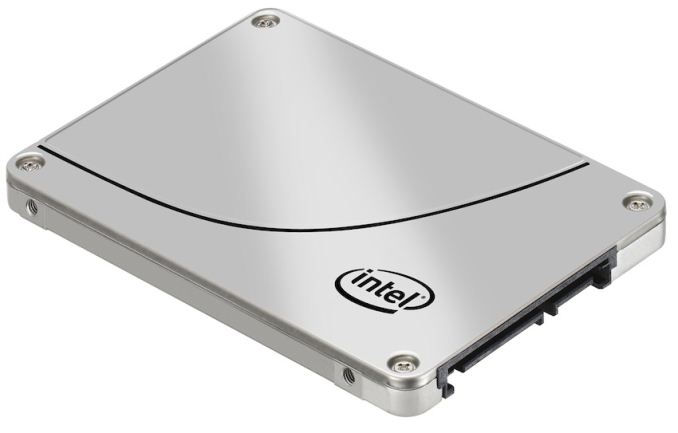
In February Intel refreshed its enterprise SATA SSD lineup with the DC S3610 and S3710 SSDs, but left the entry-level S35xx series untouched. That changes today with the launch of the DC S3510, which succeeds the popular S3500 that has been around since late 2012.

Similar to its big brothers, the S3510 features Intel’s second generation SATA 6Gbps controller that was first introduced in the high capacity S3500 models late last year. Intel has remained quiet about the specifics of the second generation controller (and the SATA 6Gbps controller as a whole), but we do know that it adds support for larger capacities, which suggests the internal caches and DRAM controller could be larger. 

The most significant change in the S3510 is the NAND. The S3510 switches to IMFT’s latest 16nm 128Gbit MLC NAND node, which is a rather surprising move given that all Intel’s client SSDs are still utilizing 20nm NAND. The reason lies behind the fact that Intel didn’t invest in IMFT’s 16nm node, meaning that Micron produces and owns all 16nm NAND output. Intel and Micron reconsider the partnership and investments for each generation separately and for 16nm Intel decided not to invest — likely because Intel’s focus is in the enterprise nowadays and 16nm is more geared towards the client market given its lower endurance, and Intel also wanted to concentrate more heavily in the companies’ upcoming 3D NAND.

That said, Intel and Micron do have strong supply agreements in place, which gives Intel access to Micron’s 16nm NAND despite not investing in its development and production. I suspect the use of 16nm NAND is why the S3510 wasn’t launched alongside the S3610 and S3710 earlier this year because validating a new NAND node is time consuming and might be that the 16nm node wasn’t even mature enough for the enterprise back then. In any case, the S3510 is the first enterprise SSD to utilize sub-19nm NAND, which is a respectable achievement on its own already. 

Intel SSD DC S3510 Specifications
Capacity 80GB 120GB 240GB 480GB 800GB 1.2TB 1.6TB
Controller Intel 2nd Generation SATA 6Gbps Controller
NAND Micron 16nm 128Gbit Standard Endurance Technology (SET) MLC
Sequential Read 375MB/s 475MB/s 500MB/s 500MB/s 500MB/s 500MB/s 500MB/s
Sequential Write 110MB/s 135MB/s 260MB/s 440MB/s 460MB/s 440MB/s 430MB/s
4KB Random Read 68K IOPS 68K IOPS 68K IOPS 68K IOPS 67K IOPS 67K IOPS 65K IOPS
4KB Random Write 8.4K IOPS 5.3K IOPS 10.2K IOPS 15.1K IOPS 15.3K IOPS 20K IOPS 15.2K IOPS
Avg Read Power 1.93W 2.14W 2.21W 2.32W 2.39W 2.61W 2.69W
Avg Write Power 1.91W 2.14W 3.06W 4.45W 4.74W 5.24W 5.59W
Endurance 45TB 70TB 140TB 275TB 450TB 660TB 880TB

On the performance side, the S3510 provides slightly better random write performance at larger capacities than its predecessor (you can find the S3500 specs here), but other than that the S3510 is a very close match with the S3500. Typical to enterprise SSDs, the S3510 features AES-256 hardware and full power loss protection that protects all data, including in-flight user writes, from sudden power losses. 

Comparison of Intel’s Enterprise SATA SSDs
  S3510 S3610 S3710
Form Factors 2.5″ 2.5″ & 1.8″ 2.5″
Capacity Up to 1.6TB Up to 1.6TB Up to 1.2TB
NAND 16nm MLC 20nm HET MLC 20nm HET MLC
Endurance 0.3 DWPD 3 DWPD 10 DWPD
Random Read Performance Up to 68K IOPS Up to 84K IOPS Up to 85K IOPS
Random Write Performance Up to 20K IOPS Up to 28K IOPS Up to 45K IOPS

The endurance is also equal to the S3500 and comes in at 0.3 drive writes per day for five years, which is a typical rating for entry-level enterprise SSDs that are mostly aimed for read intensive workloads like media streaming. For more write-centric applications, Intel offers the S3610 and S3710 with higher endurance and better write performance (but at a higher cost, of course). I didn’t get the S3510 MSRPs from Intel yet, but I suspect that the S3510 is priced around $0.80 per gigabyte, but I’ll confirm this as soon as I hear back from Intel.

All in all, even though the industry is transitioning more and more towards PCIe and NVMe, there is still a huge market for SATA drives. Many applications don’t necessarily benefit much from higher performance and especially hyperscale customers are looking at cost and compatibility, which is where SATA is still the king of the hill. 

Intel Releases SSD DC S3510

Intel Releases SSD DC S3510

In February Intel refreshed its enterprise SATA SSD lineup with the DC S3610 and S3710 SSDs, but left the entry-level S35xx series untouched. That changes today with the launch of the DC S3510, which succeeds the popular S3500 that has been around since late 2012.

Similar to its big brothers, the S3510 features Intel’s second generation SATA 6Gbps controller that was first introduced in the high capacity S3500 models late last year. Intel has remained quiet about the specifics of the second generation controller (and the SATA 6Gbps controller as a whole), but we do know that it adds support for larger capacities, which suggests the internal caches and DRAM controller could be larger. 

The most significant change in the S3510 is the NAND. The S3510 switches to IMFT’s latest 16nm 128Gbit MLC NAND node, which is a rather surprising move given that all Intel’s client SSDs are still utilizing 20nm NAND. The reason lies behind the fact that Intel didn’t invest in IMFT’s 16nm node, meaning that Micron produces and owns all 16nm NAND output. Intel and Micron reconsider the partnership and investments for each generation separately and for 16nm Intel decided not to invest — likely because Intel’s focus is in the enterprise nowadays and 16nm is more geared towards the client market given its lower endurance, and Intel also wanted to concentrate more heavily in the companies’ upcoming 3D NAND.

That said, Intel and Micron do have strong supply agreements in place, which gives Intel access to Micron’s 16nm NAND despite not investing in its development and production. I suspect the use of 16nm NAND is why the S3510 wasn’t launched alongside the S3610 and S3710 earlier this year because validating a new NAND node is time consuming and might be that the 16nm node wasn’t even mature enough for the enterprise back then. In any case, the S3510 is the first enterprise SSD to utilize sub-19nm NAND, which is a respectable achievement on its own already. 

Intel SSD DC S3510 Specifications
Capacity 80GB 120GB 240GB 480GB 800GB 1.2TB 1.6TB
Controller Intel 2nd Generation SATA 6Gbps Controller
NAND Micron 16nm 128Gbit Standard Endurance Technology (SET) MLC
Sequential Read 375MB/s 475MB/s 500MB/s 500MB/s 500MB/s 500MB/s 500MB/s
Sequential Write 110MB/s 135MB/s 260MB/s 440MB/s 460MB/s 440MB/s 430MB/s
4KB Random Read 68K IOPS 68K IOPS 68K IOPS 68K IOPS 67K IOPS 67K IOPS 65K IOPS
4KB Random Write 8.4K IOPS 5.3K IOPS 10.2K IOPS 15.1K IOPS 15.3K IOPS 20K IOPS 15.2K IOPS
Avg Read Power 1.93W 2.14W 2.21W 2.32W 2.39W 2.61W 2.69W
Avg Write Power 1.91W 2.14W 3.06W 4.45W 4.74W 5.24W 5.59W
Endurance 45TB 70TB 140TB 275TB 450TB 660TB 880TB

On the performance side, the S3510 provides slightly better random write performance at larger capacities than its predecessor (you can find the S3500 specs here), but other than that the S3510 is a very close match with the S3500. Typical to enterprise SSDs, the S3510 features AES-256 hardware and full power loss protection that protects all data, including in-flight user writes, from sudden power losses. 

Comparison of Intel’s Enterprise SATA SSDs
  S3510 S3610 S3710
Form Factors 2.5″ 2.5″ & 1.8″ 2.5″
Capacity Up to 1.6TB Up to 1.6TB Up to 1.2TB
NAND 16nm MLC 20nm HET MLC 20nm HET MLC
Endurance 0.3 DWPD 3 DWPD 10 DWPD
Random Read Performance Up to 68K IOPS Up to 84K IOPS Up to 85K IOPS
Random Write Performance Up to 20K IOPS Up to 28K IOPS Up to 45K IOPS

The endurance is also equal to the S3500 and comes in at 0.3 drive writes per day for five years, which is a typical rating for entry-level enterprise SSDs that are mostly aimed for read intensive workloads like media streaming. For more write-centric applications, Intel offers the S3610 and S3710 with higher endurance and better write performance (but at a higher cost, of course). I didn’t get the S3510 MSRPs from Intel yet, but I suspect that the S3510 is priced around $0.80 per gigabyte, but I’ll confirm this as soon as I hear back from Intel.

All in all, even though the industry is transitioning more and more towards PCIe and NVMe, there is still a huge market for SATA drives. Many applications don’t necessarily benefit much from higher performance and especially hyperscale customers are looking at cost and compatibility, which is where SATA is still the king of the hill.