News


AMD Exits Dense Microserver Business, Ends SeaMicro Brand
AMD Exits Dense Microserver Business, Ends SeaMicro Brand

AMD’s Q1’15 earnings announcement just came out a bit ago, and while we’re still waiting for the analyst call to take place to get more details, there is one item we want to get to right away, and that’s the fate of AMD’s dense server business. As part of today’s earnings release, AMD has announced that they’re existing the dense server system business – operating under the SeaMicro brand – effective immediately.

AMD initially acquired SeaMicro back in 2012 for $334 million as part of their larger play into being an agile company, aiming to take a big chunk of what was expected to be a fast-growing market micro/dense server market. In the microserver model, servers are built using very large numbers of lower performance cores, making the servers leaner, more power efficient systems for tasks that involve large numbers of low-impact threads (think: web servers). This in turn mapped well to AMD’s processor designs, where both the Bulldozer and Cat families would be well suited for such a design, not to mention AMD’s future ARM based CPUs.

SeaMicro’s first product post-acquisition was the SM15000, a dense server design announced in late 2012 that offered either AMD “Piledriver” Opterons or Intel “Ivy Bridge” Xeon CPUs. However as it turns out that first design was also the last design; SeaMicro did not release any additional products prior to today’s announcement from AMD.

Jumping back to today, AMD’s announcement comes as the company is continuing to try to find a solid foothold as a semi-custom silicon company, to which it would appear that the SeaMicro business no longer fits into. AMD’s initial announcement does offer a bit of insight as to why they’re exiting the business – to “sharpen and simplify” what the company invests in –  and we’ll likely hear more on today’s call.

Meanwhile it’s worth noting that we haven’t heard anything from SeaMicro in some time now, so today’s announcement is perhaps not all that surprising. Still, AMD’s first ARM processors were set to ship this year – the Opteron A1100 – which would have been a good fit for the SeaMicro servers. However A1100 itself appears to be behind schedule at this time, as AMD has yet to bring A1100 to market beyond last year’s development kit.

Anyhow, as part of exiting the dense server business, AMD will be taking a $75 million dollar special charge, which is “primarily related to impairment of previously acquired intangible assets” and will include a $7 million cash payment. Meanwhile AMD’s announcement doesn’t say what will become of the SeaMicro team – at this point we’re not entirely sure how large it is after AMD’s most recent restructuring – though I wouldn’t be surprised if they at least rolled some of that expertise into future ARM server CPUs. As for the SeaMicro brand itself, with AMD’s exit the brand has been shuttered, and AMD has deactivated the SeaMicro website.

Update: Here are the prepared remarks from AMD’s CFO regarding SeaMicro

At the corporate level, we continue aligning larger portions of our R&D investments to take advantage of long-term growth opportunities across our EESC segment. As we prioritize our R&D investments and simplify our business, we made the decision in the first quarter to exit the dense server systems business as we increase investments in our server processor development. We retain the fabric technology as a part of our overall IP portfolio. We see very strong opportunities for next-generation, high-performance x86 and ARM processors for the enterprise, datacenter, and infrastructure markets and we will continue to invest strongly in these areas.
The Dell Venue 11 Pro 7000 Review

Back in November, Dell took the lid off of their Venue 11 Pro 7000 refresh which is their first tablet offering to have Core M powering it. Dell is aiming this tablet squarely at the enterprise segment, but with prices that start low enough …

Huawei Announces New P8 And P8 Max

Huawei Announces New P8 And P8 Max

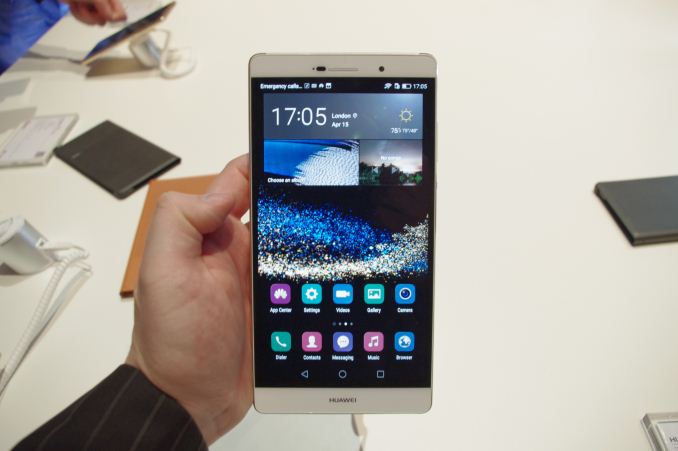
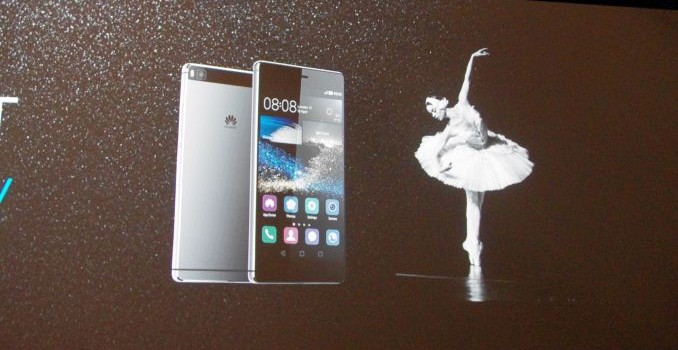
Today at the London launch event Huawei announced two new successors in the Ascend P-series of smartphones: the P8 and P8max. Noticeable lacking during the announcement is the Ascend brand name. It seems Huawei has dropped it in favour of the simpler P8 and P8max model names. Huawei has traditionally targeted the P-series towards the high end segment in Europe by offering premium build quality in very thin form factors. This is the fourth iteration of the P-series after the first announcement of the 2012 P1 and following P6 and P7.

The P8

The P8 here is a worthy successor to the Ascend P7 as it continues tradition and design language, albeit in a slightly bigger form factor. The P8’s design keeps the premium iindustrial language from the P7 while improving on details. This time we see a full uni-body design instead of the glass back employed on the P7, enabling for a more solid build. 

The P8 bumps up the screen size to 5.2″ compared to the 5″ P7, while still maintaining the same 1080p resolution.  The screen is employs a JDI IPS-Neo display with up to 1500:1 contrast ratio and 78.3% screen-to-body ratio. Huawei claims the power consumption has been reduced by 15%.

The phone is now powered by HiSilicon’s latest SoCs , the Kirin 930 and Kirin 935. This is a two-cluster A53 design coming with four cores per cluster, for a total of 8 CPUs. The slower cluster comes in clocked at 1.5GHz, while the high performance cluster goes up to 2.0GHz on the 930 and 2.2GHz on the 935. Here HiSilicon employs a custom so-called A53core, which is most likely a layout redesign of the A53 which allows for higher frequency. The standard 16GB versions of the phone come with the 930, while the premium 64GB versions employ the higher binned 935, and both SoCs have no other functional difference between themselves other than the 200MHz speed bump.

Both phones come with 16GB or 64GB NAND and a microSD expansion slot.

  Huawei
Ascend P7
Huawei
P8
Huawei
P8max
SoC HiSilicon Kirin 910T
4x Cortex [email protected]
Mali-450MP4
HiSilicon Kirin 930/935
4x [email protected],
4x [email protected]/2.2GHz
Mali-T628MP4
HiSilicon Kirin 930/935
4x CA53@1.5GHz,
4x [email protected]/2.2GHz
Mali-T628MP4
RAM/NAND 2GB LPDDR3

16GB NAND
w/ microSD

3GB LPDDR3

16 or 64GB NAND
w/ microSD
3GB LPDDR3

16 or 64GB NAND
w/ microSD
Display 5.0” 1080p LCD 5.2” 1080p LCD
JDI IPS-Neo
6.8” 1080p LCD
JDI IPS-Neo
Network 2G/3G/4G LTE Cat 4 
(HiSilicon Balong Modem)
2G/3G/4G LTE Cat 4 
(Integrated HiSilicon Balong Modem)
2G/3G/4G LTE Cat 4 
(Integrated HiSilicon Balong Modem)
Dimensions 139.8 x 68.8 x 6.5 mm,
124 grams
144.9 x 71.8 x 6.4 mm
144 grams
182.7 x 93.0 x 6.8 mm
228 grams
Camera 13MP (4160 x 3120)
Rear Camera

8MP Front Facing

13MP Sony RGBW sensor
(4160 x 3120)
Rear Camera w/ OIS

8MP Front Facing

13MP Sony RGBW sensor
(4160 x 3120)
Rear Camera w/ OIS

5MP Front Facing

Battery 2500mAh (9.5 Whr) 2680mAh (10.31 Whr) 4360mAh (16.87 Whr)
OS Android 4.4
EmotionUI 2.3
Android 5.0.2 (64-bit)
EmotionUI 3.1
Android 5.0.2 (64-bit)
EmotionUI 3.1
Connectivity 802.11a/b/g/n + BT 4.0, microUSB2.0, GPS/GNSS,
DLNA, NFC
802.11a/b/g/n + BT 4.1, microUSB2.0, GPS/GNSS, 
​DLNA, NFC
802.11a/b/g/n + BT 4.1, microUSB2.0, GPS/GNSS,
DLNA, NFC
SIM Size MicroSIM NanoSIM +
NanoSIM (w/o microSD)
NanoSIM +
NanoSIM (w/o microSD) 

At 144.9 x 71.8 x 6.4 mm in dimensions, the P8 gains some size in both width and height over the P7, but still remains very handy due to the thinness. The industry seems to have founds its sweet-spot in the 5.2″ screen size for conventional smartphone flagships.

The phone is powered by a 2680mAh battery, and the phone comes with quick charging capability, with the included charger offering the capability by default.

The biggest upgrade for Huawei is the inclusion of a 13MP shooter with optical image stabilization. The new sensor employs what claims to be a world-first four-colour Sony RGBW sensor, employing 1.12µm pixels. This is also the first time Huawei has employed OIS, and we hope both advancements will help the camera performance as we’ve seen some disappointing results from previous phones such as the Mate 7 and Honor 6. Huawei made some great advancements with the Honor 6 Plus and usage of a separate ISP chip. The P8 luckily seems to employ a similar external ISP, this time from Altek, enabling what Huawei claims to be “DSLR-level” of picture quality. A notable feature is the “Instant preview” function, the viewfinder actually shows what the phone captures. Huawei is also proud to boast a lack of camera bump on the backside, with the module and optics being flush against the rest of the phone.

On the front camera we find a 8MP sensor, which should provide solid selfie and video conferencing capability.

In terms of communications and connectivity, the phone uses the Kirin’s Balong integrated LTE modem with support for up to Category 6 speeds. The P8 uses a dual-antenna design with seamless switching to enable for better reception and avoidance of “Dead grip” scenarios. The phone employs a similar dual-SIM design as the Mate 7, employing two trays, one dedicated to a nanoSIM, and a second one which may be used as either a microSD slot or a secondary nanoSIM slot with dual radio capability. On the Wifi side, we see a noticeable lack of mention of 802.11ac, which is kind of a pity. Bluetooth though did get an upgrade to 4.1.

As an audio solution, the uses a high quality HiSilicon Hi6402 audio DSP with a smart PA and a single box audio chamber speaker system. Voice wakeup is also enabled by the audio SoC.

The P8 comes in a standard version in 16GB NAND “Titanium Grey”, and “Mystic Black Champagne” colour options, and a premium version with 64GB NAND in “Prestige Gold”, and “Carbon Black” colour options.

The P8max

The P8 Max is a 6.8″ super-sized version of the P8. The screen is still a FHD resolution screen, with a claimed 95.9% colour saturation (sRGB gamut?) and a 82% screen-to-body ratio. There is a large 4360mAh battery included, which is even bigger than what we saw in the Mate 7. The P8max claims to have much better power consumption and less heat generation. The front camera sees a slight downgrade to 5MP, but retains the same rear 13MP shooter and ISP as the standard P8. A high thermal conductivity heating material cooling system enables for better skin temperatures. The phone’s size comes in at 182.7 x 93.0 x 6.8 mm and a hefty 228g.

On the software side, both phones comes with Android 5.0.2 Lolipop and Huawei’s own EmotionUI 3.1 customization of the OS. 

Both phones will be globally available in 30 various countries in 1 month. The regular P8 comes in at a 499€ MSRP while the premium P8 comes at 599€. The P8max costs 549€ and 649€ for the 16 and 64GB versions, both unlocked and without contract.

Imagination Launches New Low Power Wireless IP: Ensigma Whisper

Imagination Launches New Low Power Wireless IP: Ensigma Whisper

Today Imagination is launching a new set of licensable wireless intellectual property (IP) called ‘Ensigma Whisper’ to complement its portfolio of other SoC IPs. This announcement gives Imagination a more complete portfolio of large SoC IP blocks and notably differentiates Imagination from ARM who does not have a comparable wireless IP offering. Imagination claims the patented power optimizations makes Whisper the highest efficiency wireless IP available. 

Customers licensing Ensigma Whisper receive access to Imagination’s ‘Radio Processing Unit’ or RPU. This RPU is a complete set of IP from antenna to software, including all parts in between such as RF transceivers and baseband processing.

Imagination considers the Ensigma Whisper brand to be a collection of different wireless IPs, and is launching three models today. The C5300 is a Bluetooth LE (Low Energy) solution, C5400 is Wi-Fi 802.11n 1×1 and the C5401 is a combination model featuring both with separate paths enabling simultaneous operation. Here’s a gallery of the Imagination overview slides for each model.

Imagination plans to fill out the Whisper line with more protocols such as LTE CAT 0/1, 802.15.4 and 802.11ah. This will provide more mobility as well as mesh networking capabilities.

Imagination actually already had wireless IP in their portfolio via the high power Ensigma Explorer series, but to meet the stringent size, cost, and power requirements of SoCs targeted to IoT and wearable applications Enigma Whisper was a redesign from the ground up. During the press briefing we were given an opportunity to ask questions and this avenue yielded some interesting details.

While most of us know that devices tend to sleep more than they are awake, Chakra Parvathaneni, vice president of the Ensigma business operations at Imagination, provided some numbers sourced by profiling a variety of IoT and wearable devices. Chakra stated that for every 300ms of time, a typical IoT device is only awake 4ms. Furthermore, when a device is connected to a populated WiFi network, only 1 out of every 100 times RX packets are processed is there also TX activity. As a result Imagination focused its optimization efforts on sleep power and RX efficiency.

One of these optimizations is a patented technique called early packet abortion, which works in tandem with rapid sync convergence. Imagination’s internal data showed that on a populated Wi-Fi network a huge number of packets being synchronized to and decoded by a given device are actually for other devices. These are normally discarded but only after significant signal processing (and thus power). To prevent this waste, after decoding a packet actually intended for itself, Whisper saves metadata about the synchronization and decoding operations performed. In continued operation, as long as the connected access point does not change, Whisper uses this meta data to take short cuts in synchronizing and decoding future packets. This improves efficiency for self-addressed packets and allows early abortion of packets intended for other devices.

Other optimizations discussed by Chakra are that the Ensigma Whisper baseband was optimized to operate at 20 or 40 MHz frequencies (depending on wireless channel width) and use an 8-bit data path. Chakra mentioned this is a significant improvement over traditional designs that operate at 80 MHz and use a 10-bit data path.

The Imagination supplied data shown above gives the benefits of these optimizations. While we cannot do independent verification of this data yet, it is great to see continuous development in wireless power efficiency.

Finally, Imagination states that the embedded microcontroller of the Ensigma Whisper can be loaded with custom firmware to provide protocol layer 2 processing and even application level logic, eliminating the need for a paired general purpose CPU. If a general purpose CPU is needed, Imagination would love to sell you its MIPS CPUs, but stated Ensigma Whisper is compatible with almost any CPU type (including ARM).

On the software side, Imagination offers connectivity of devices to internet servers via their Flow Cloud stack. Flow Cloud provides features such as device and user management, data logging, event handling, asynchronous messaging, e-payments, and even internet radio.

Ensigma Whisper is available now for licensing, so we should see devices containing it later this year.