Huawei P8 Launch Live Blog (10AM EDT)
Huawei is set to launch their new non-phablet flagship, the P8, today in London. I’m on hand at the press event, which starts at 10AM EDT / 3PM BST.

Huawei is set to launch their new non-phablet flagship, the P8, today in London. I’m on hand at the press event, which starts at 10AM EDT / 3PM BST.
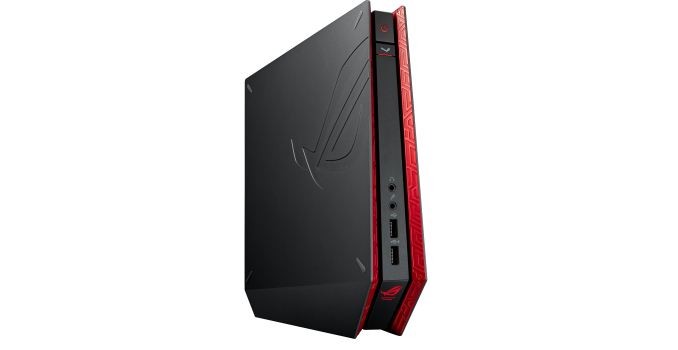
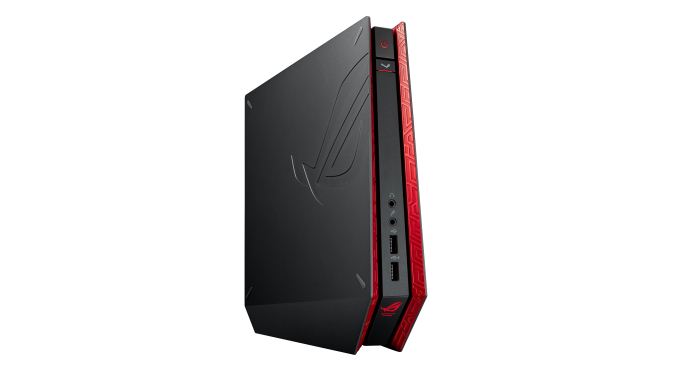
At Computex last year ASUS formally announced its mini-PC platform in the shape of the GR8. It was designed to fit within a bookcase on a shelf and act as a mini-Steam PC for gaming and streaming duties with its i7 U-series Haswell processor and integrated GTX 750Ti. The GR8 was ultimately designed to accelerate a niche where small form factor gaming was at the heart of the home. While we haven’t reviewed it at AnandTech as of yet, one could easily predict that it was going to end up getting a refresh for Broadwell, which is the case today. The i5-5200U isn’t right at the top of the Broadwell-U stack, but it certainly falls more on the side of the gaming family of mini-PCs with today’s announcement.
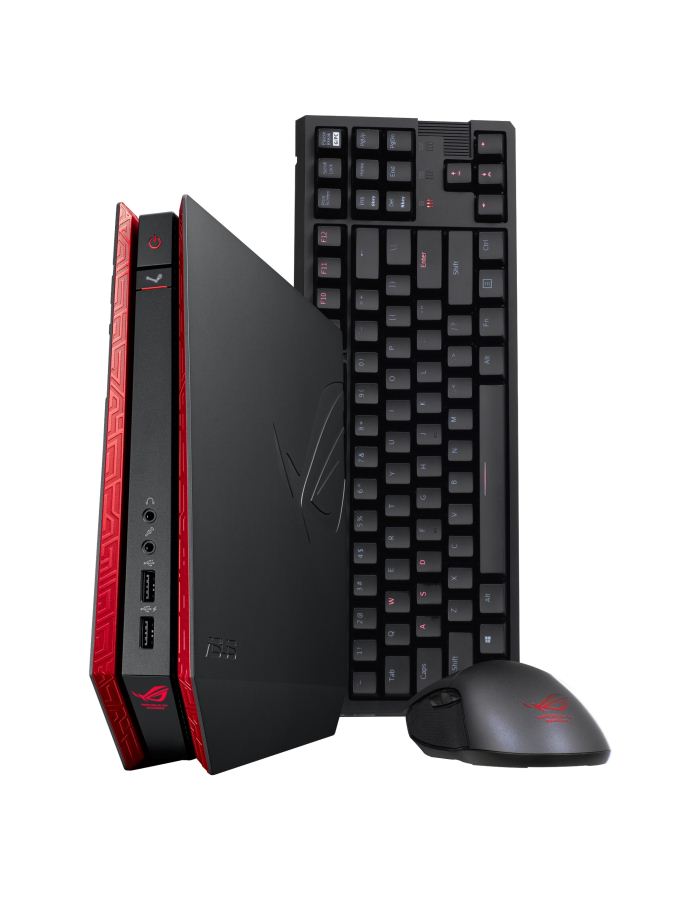
| ASUS ROG GR Series | ||
| GR8 | GR6 | |
| CPU | Core i7 4510U | Core i5 5200U |
| GPU | GTX 750 Ti 2GB Intel HD 4400 |
GTX 960M 2GB HD 5500 |
| DRAM | 8GB, Up to 16GB DDR3L-1600 MHz SO-DIMM |
8GB, Up to 16GB DDR3L-1600 MHz SO-DIMM |
| Storage | 2 x 2.5-in 500GB-1TB 7200RPM / 128GB-256GB SSD |
2 x 2.5-in 500GB-1TB 7200RPM / 128GB-256GB SSD |
| WiFi | 802.11ac Miracast Receiver |
802.11ac Miracast Receiver ? |
| LAN | Intel Gigabit | Intel Gigabit |
| Audio | SupremeFX w/5.1 DTS Connect |
SupremeFX w/5.1 DTS Connect |
| Front IO | Headphone/Microphone 2 x USB 2.0 |
Headphone/Microphone 2 x USB 2.0 |
| Rear IO | 4 x USB 3.0 HDMI DisplayPort RJ45 Audio Jacks Kensington Lock |
4 x USB 3.0 HDMI DisplayPort RJ45 Audio Jacks Kensington Lock |
| Power Supply | 120W Power Adaptor | Power Adaptor |
| Dimensions | 60 x 245 x 238 mm 1.284 kg |
60 x 245 x 238 mm 1.28 kg |
| Price (US) | $920 with 1TB HDD | N/A |
The heart of the GR6 beats with an i5-5200U, a 15W Broadwell processor which is paired with a Maxwell GM107 derived GTX 960M with 2GB of GDDR5. This is partnered with two SO-DIMM slots which can hold up to 16GB of DDR3L at 1600 MHz. Given that this is a ROG device, I wonder if those SO-DIMM slots could actually hold XMP timings for some of higher frequency SO-DIMM modules that are on the market. Nevertheless the rest of chassis can hold two 2.5-in SSDs/HDDs, there is an integrated gigabit Ethernet port, dual-band 2T2R 802.11ac WiFi and four USB 3.0 slots on the rear.
The specifications chosen highlight an important part of Intel’s strategy with the Broadwell-U series, whereby Atom and Core-M fit into the sub 6W category of ultraportables, but the 15-28W range of mobile processors are for beefier portable designs as well as mini-PCs which don’t need to rely on batteries. We discussed Core M’s issues with chassis design previously, but Broadwell-U in a desktop chassis should easily not have to worry about turbo throttling.
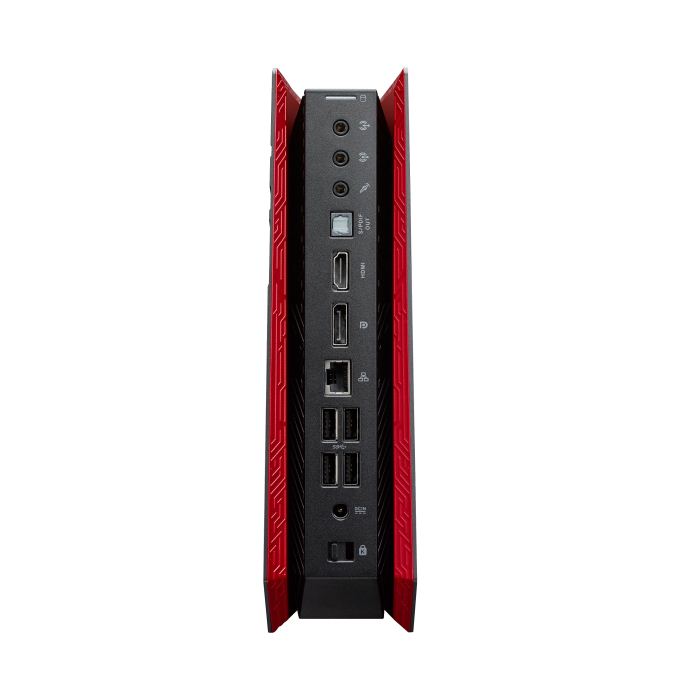
Power is provided by a 19V DC-in and a power brick, and a Kensington lock module is provided for gaming LAN protection. All the major ROG software and packages are bundled, such as SupremeFX Audio, SoundStage, SenseAmp, Sonic Radar, GameFirst III, AI Suite III. The 2.5-liter chassis is set to weigh in at 1.28kg.
As the announcement today is just for the device, pricing and availability for different regions has not been released. With Computex only six weeks or so away, I assume we will see it at the show to get some quick hands-on time.
Source: ASUS ROG
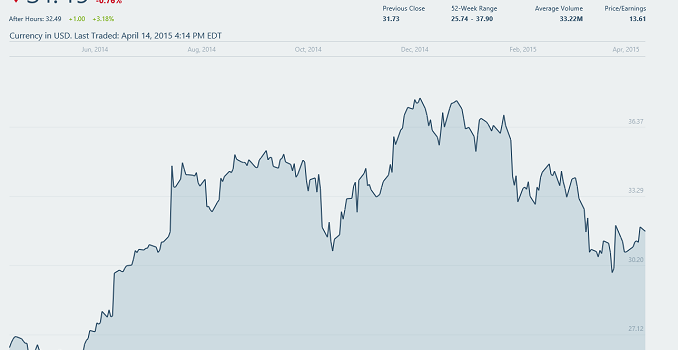

Intel released their Q1 2015 earnings today. The company posted revenues of $12.8 billion USD for the quarter which is down 13% from Q4 2014, and flat year-over-year. Gross Margin was 60.5%, which is up 0.9% over Q1 2014 and down 4.9% over last quarter. Operating Income came in at $2.6 billion, and Net Income was $2.0 billion, which was up 3% over Q1 2014 and down 46% as compared to their last quarter. Earnings per Share was $0.41, which is up 8% year-over-year and down 45% quarter-over-quarter.
There are a couple of notes to make about this year’s reporting structure. Last November it was made known that the Mobile division would merge with the PC Division. The Mobile division has long been a source of large operating losses mostly due to the contra revenue plan to boost Atom sales in tablets. It also should mean that mobile becomes as big of a priority for Intel as the PC CPU space, which should benefit the company in the long term with the push to lower power devices. For Q1 2015, Intel is no longer reporting the Mobile division as a separate reporting structure, and instead it will be combined into the Client Computing Group.
The new numbers will of course reflect this, so any year-over-year comparisons will also be compared with like-for-like data.
| Intel Q1 2015 Financial Results (GAAP) | |||||
| Q1’2015 | Q4’2014 | Q1’2014 | |||
| Revenue | $12.8B | $14.7B | $12.8B | ||
| Operating Income | $2.6B | $4.5B | $2.5B | ||
| Net Income | $2.0B | $3.7B | $1.9B | ||
| Gross Margin | 60.5% | 65.4% | 59.6% | ||
| Client Computing Group Revenue | $7.4B | -16% | -8% | ||
| Data Center Group Revenue | $3.7B | -10% | +19% | ||
| Internet of Things Revenue | $533M | -10% | +11% | ||
| Software and Services Revenue | $534M | -4% | -3% | ||
| All Other Revenue | $615M | 0% | +13% | ||
That being said, the Client Computing Group did not have an excellent quarter. Declining PC sales due to the slowing of corporate customers performing Windows 7 migrations has put a damper on this group. Revenue for the group was $7.4 billion, which is down 16% from last quarter, and down 8% from last year. Breaking the numbers down a bit further, desktop platform volumes were down 16% year-over-year, which is a pretty sharp decline. At the same time, the average selling price for desktop platforms went up 2% to help offset this loss. Notebook platforms on the other hand were up 3% year-over-year, but the average selling prices of notebook platforms went down 3%. Tablet volumes were up 45% as compared to Q1 2014. Compared to Q4 2014, the entire group had revenue down 16%, platform volumes down 18%, and average selling prices up 1%.

The Data Center Group had almost the polar opposite, with revenue of $3.7 billion which is up 19% year-over-year, with platform volumes up 15%, and average selling prices up 5%. Compared to Q4 2014, revenue was down 10% with volumes down 7% and average selling price also down 3%.
The Internet of Things group is still relatively small at Intel, but posted an 11% year-over-year growth with revenues now coming in at $533 million. This is a 10% drop as compared to Q4 2014.
Software and Services is roughly the same size of overall business as IoT, with revenues at $534 million, which was down 3% year-over-year and 4% quarter-over-quarter.
The “All Other” segment which includes non-volatile memory (NAND flash memory), SoCs for wearables and emerging computing, and corporate expenses had revenues of $615 million, up 13% year-over-year and flat quarter-over-quarter.

Intel bought back 26 million shares in Q1, meaning they have repurchased 203 million shares back since Q1 2014.
In Q2 we should start to see the new Atom chips come to market, and devices like the Surface 3 have already been confirmed to be running the latest 14 nm Atom chip. Also, there should be some talk of Skylake, which is the next Intel Core architecture, although details may be scarce until Q3.
On the financial side, Intel is forecasting revenue of $13.2 billion plus or minus $500 million for Q2, with a Gross Margin of 62%. For the full year, Intel is expecting revenue to remain flat.
Source: Intel
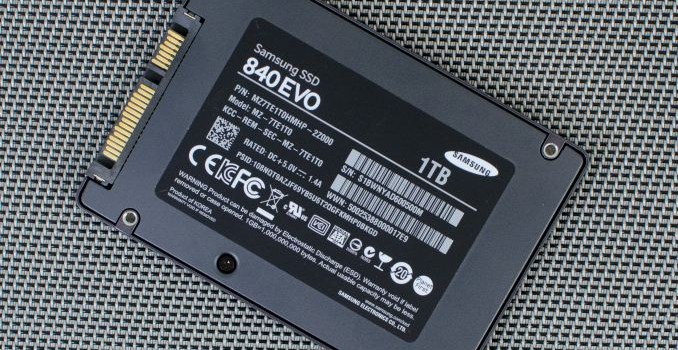
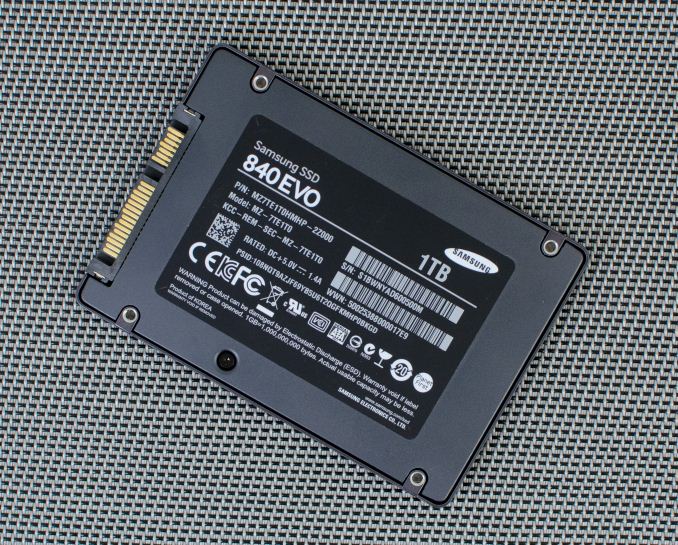
The Samsung SSD 840 EVO read performance bug has been on the table for over six months now. Initially Samsung acknowledged the issue fairly quickly and provided a fix only a month after the news hit the mainstream tech media, but reports of read performance degradation surfaced again a few weeks after the fix had been released, making it clear that the first fix didn’t solve the issue for all users. Two months ago Samsung announced that a new fix is in the works and last week Samsung sent us the new firmware along with Magician 4.6 for testing, which will be available to the public later this month.
I covered the reason behind the issue in one of our earlier articles, but in short the read performance degradation is a result of cell charge decay over time that caused extensive read-retry cycles to retrieve the correct data. The new firmware fixes this by periodically refreshing (i.e. rewriting) old data, which recovers the cell charge back to its original state and ensures that no read-retry or ECC that would degrade the performance is needed. Samsung says that the refresh operation does not impact user performance, suggesting that it’s a relatively low priority process that is run when the drive is idling.
The new Magician 4.6 also includes an Advanced Performance Optimization feature, which is similar to the performance restoration tool that Samsung released earlier. Basically, it’s a command that tells the SSD to rewrite all of its internal data, which resets all cell charges and hence recovers performance. It’s merely a supplementary tool as the firmware upgrade itself should be enough to restore performance, but in case the performance isn’t fully restored after the firmware upgrade (and some idle time to let the drive refresh the cells), the tool can be used to force a cell charge refresh.
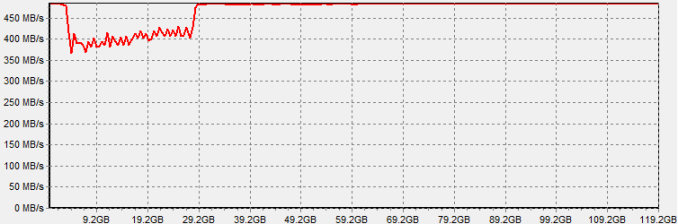
I haven’t run any tests of my own because I don’t have any 840 EVOs deployed in my systems (I only have one 2.5″ EVO anyway), but Allyn Malventano from PC Perspective managed to run some tests on a degraded drive to show the impact of the new firmware.
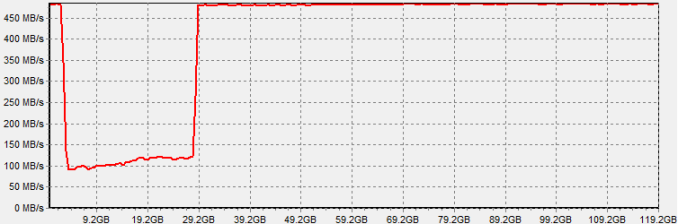
Before update
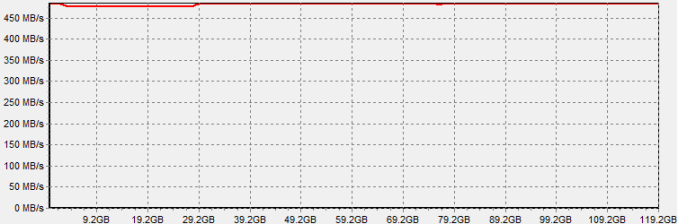
After update
After “Advanced Performance Optimization”
Allyn’s tests indicate that the new firmware seems to mostly fix the issue even without running the optimization tool. Note that Allyn didn’t give the drive any idle time after the firmware update, so the update appears the be very effective and with idle time the performance would likely have restored on its own.
Obviously, the big question is whether the performance will stay high because there was never a problem with freshly written data. We won’t know that for sure until a couple of months later, but given the way the new firmware handles old data it does sound more promising because no data should get old enough to be slow to read.
Some of you are likely skeptical about the effect on endurance since rewriting the data will consume P/E cycles, but I find this to be a non-issue. We know that Samsung’s 19nm TLC NAND is rated at 1,000 P/E cycles, so if the drive was to refresh all cells once a week, even that would only consume 52 cycles in a year. In five years time the total would be 260 cycles, which leaves you with 740 cycles for user data writes (for the record, that’s 52GB of NAND writes per day for five years with the 120GB 840 EVO).
All in all, I hope this fix will finally put an end to the performance degradation. The issue has been bugging many users for months and it’s critical that the users get what they initially paid for. On one hand I’m confident enough to say that this fix is permanent given the way it works, but on the other hand I don’t want to be too optimistic this time around because the first fix didn’t turn out so great. Either way, I think this fix is the last chance for Samsung to provide a permanent solution because they already failed to do so once and it would no longer be fair to ask the customers to wait months for a fix that might or might not fix the issue. For now the only thing we can do is wait for user reports and hope for the best, but at least in theory the new firmware should be a permanent fix.
I’m still not entirely sure when it actually happened, but at some point over the last couple of years the crossover between tablets and laptops stopped being an idea and became a real thing. Perhaps it was Microsoft’s Surface Pro 3, which…


