News


Analyzing Intel Core M Performance: How 5Y10 can beat 5Y71 & the OEMs’ Dilemma

A processor architect can battle between two major opposing principles. The one most of us seem to enjoy is performance, which when taken to the extreme exhibits an all-or-nothing approach. At the other end is low-power operation which has become the main focus of the laptop and notebook market where battery capacity and density is at a premium. The position in the middle of this is efficiency, trying to extract the best of performance and power consumption and provide a product at the end of the day which attempts to satisfy both.

Of course processor architects only have control up to the point where the chips leave the fab, at which point the final product design is in the hands of OEMs, who for various reasons will have their own product design goals. It’s this latter point that has resulted in an interesting situation developing around the Core M ecosystem, where due to OEM design goals we’ve seen the relative performance of Core M devices vary much more than usual. In our tests of some of the Core M notebooks since the beginning of the year, depending on the complexity of the test, the length of time it is running and the device it is in, we have seen cases where devices equipped with the lowest speed grades of the Core M processor are outperforming the highest speed grade processors in similar types of devices, an at-times surprising outcome to say the least.
Braswell: MSI Launches Three Mini-ITX ECO Motherboards

Braswell: MSI Launches Three Mini-ITX ECO Motherboards

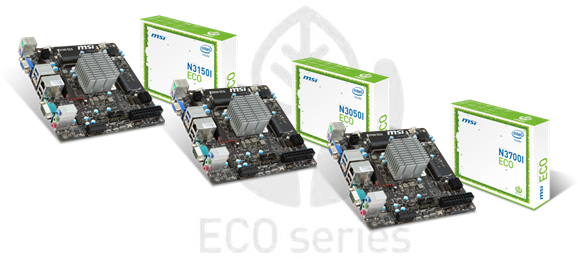
The launch of Braswell, to replace Bay Trail-D, is going to slowly emerge over the next few months. We reported on the initial launch of SKUs as leaked, but it would seem that MSI is taking point by formally announcing three motherboards in the ECO li…

Samsung SM951 PCIe SSD Now Available

Samsung SM951 PCIe SSD Now Available

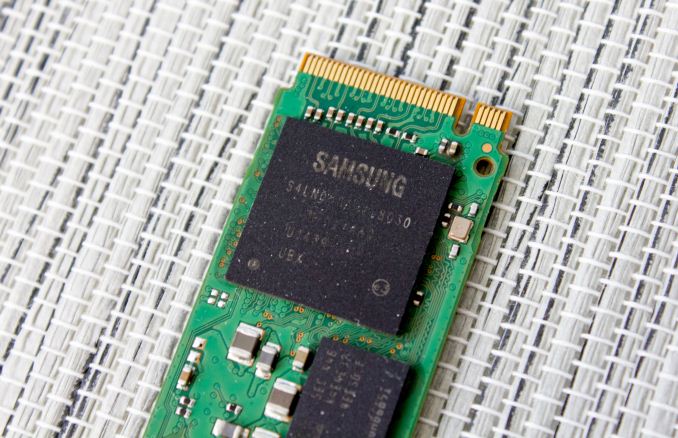
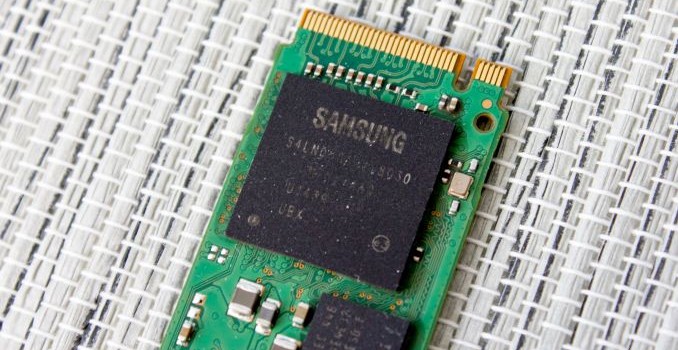
We reviewed Samsung’s SM951 PCIe 3.0 x4 SSD a little over a month ago and it ended up being clearly the fastest client-level SSD, beating its predecessor XP941 by a large margin. Our initial review sample was pulled from a Lenovo laptop as it was the only way to get early access to the drive, but RamCity just received its first batch last week and the drive is now available for purchase.

  128GB 256GB 512GB
Samsung SM951 (RamCity) $122 $242 $469
Samsung SM951 (Amazon) $160 $260 $510

EDIT: RamCity will also be selling the SM951 through Amazon and I just got the pricing details. With today’s exchange rate it’s actually cheaper to buy from RamCity’s online store despite the shipping fees, although the downside is longer shipping time (about a week versus free two-day shipping for Amazon Prime members). The SM951 isn’t listed on Amazon yet, but the 128GB and 256GB versions will be up early next week once stock arrives to the US. 

Since RamCity is located in Australia, the shipping costs to US and other parts of the world are ~$18 with today’s exchange rate. The pricing is comparable to the XP941 and overall pretty fair when taking the performance gains into account. As the SM951 is an OEM part, there’s no official warranty on behalf of Samsung, but RamCity is giving the drive a three-year warranty.

Currently the 512GB model is out of stock, but RamCity should be receiving another 150 units next week and you’re also able to pre-order one today. The 128GB and 256GB units are both in stock and available immediately. I’ll also be getting the ‘vanilla’ versions that RamCity sells in for review as our initial sample has a Lenovo-specific firmware in it and I want to ensure that our scores represent an actual product that’s available for purchase.

Additionally, you will likely need an M.2 to PCIe adapter because M.2 PCIe 3.0 x4 slots are rather rare (most I’ve seen have been PCIe 2.0 x2). There are various adapters available online, but personally I’ve been using Lycom’s DT-120 and can vouch for it as it hasn’t given me any trouble. 

All in all, there are many PCIe SSD coming during this summer and some will undoubtedly be able to challenge the SM951, but for now it’s one of the only PCIe SSDs available. Intel’s SSD 750 is a serious contender especially for very intensive IO workloads, but if you’re looking for 256GB or smaller drive the SM951 is the best option.