
News
MediaTek at MWC 2015: A72 In Silicon, Multi-Standard Wireless Charging & More
As part of our MWC coverage we had the pleasure to have a guided tour through MediaTek’s booth to see what kind of new technologies the company has in its pipeline. MediaTek has seen some enormous momentum over the last few years and we’re quickly seeing the Taiwanese company becoming a serious competitor to be reckoned with.
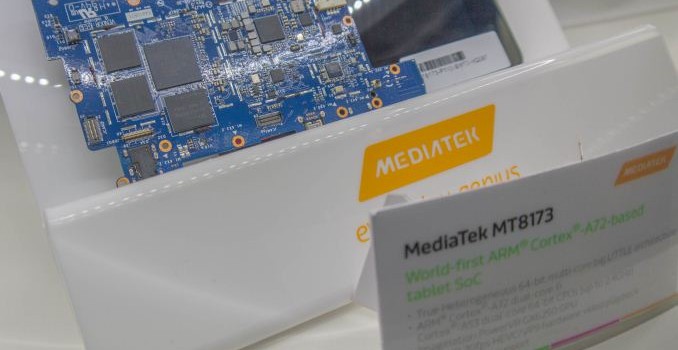
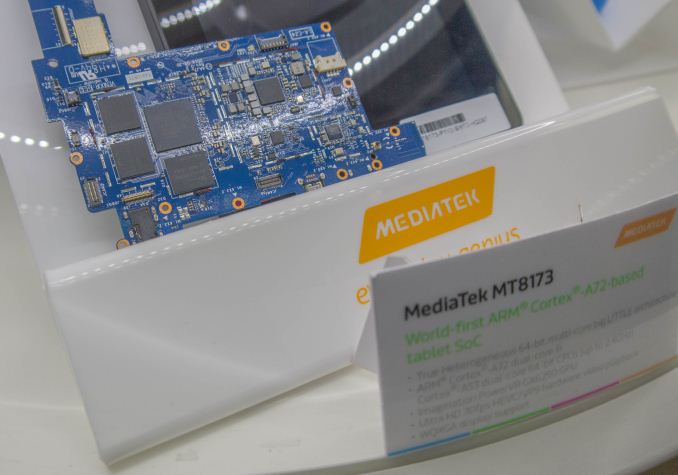
What was far the biggest surprise for us was the showing off of MT8173 hardware, a mid-range tablet SoC employing ARM’s new Cortex A72. It’s only been a few weeks since ARM officially announced the ARM Cortex A72, and while we still don’t know much about the micro-architectural nuances of the core, having MediaTek already displaying silicon is a severe departure from ARM’s usual announcement-to-release cadence. This puts the number A72 licensees with announced products already at two, with Qualcomm being the other one in the form of the Snapdragon 618 and 620.

The MT8173 employs two Cortex A72 CPUs at up to 2.4GHz and two Cortex A53 CPUs in a big.LITTLE configuration. On the GPU side we find a PowerVR GX6250 GPU, which if MediaTek’s clocking strategy continues should run north of 700MHz. The SoC is still powered by LPDDR3 as the preferred memory interface, undoubtedly a cost decision as we’re only starting to see LPDDR4 in flagship devices. On the multimedia side there’s MediaTek’s new display pipeline capable of 120Hz operation, 4K H.264/HEVC(10-bit)/VP9 video decoders and an ISP capable of 20MP sensors.

As part of the MWC announcements was also a (re)branding of MediaTek’s SoC lineup. Beginning with the MT6795 which is now denominated the Helio X10, MediaTek will in the future begin naming their new chips after the Helio (After the Greek word for sun, “helios”) brand. We’ll be seeing the P-line targeting the premium performance segment while the X-line targets the high-end and the best MediaTek has to offer.
MT3188: PMA, WPC and A4WP Wireless Charging Solution In 1
As part of the booth demos, MediaTek showed off the MT3188 wireless charging IC solution which supports all three currently available standards, PMA, WPC and the newly emerged A4WP standard. While we’ve had the IC announced early last year, it is still impressive to see the real thing in hardware.

WPC (Wireless Power Consortium) is by far the currently most widely available standard in the form of Qi, which has seen large adoption in the mobile space. PMA (Power Matters Alliance) remains as the competitor standard but which hasn’t seen as wide of an adoption rate with its Powermat/Duracell chargers. Both WPC and PMA rely on inductive charging which limit the spatial freedom between the transmitter and receiver coils to a few mm.
A4WP on the other hand is the new standard which is based on resonance charging, giving devices the freedom in x, y and z directions around the emitter coil. The charging area can be much larger than in the inductive charging technologies and also allows for one charger to simultaneously charge multiple devices. The advantage of inductive charging over resonance charging remains in the efficiency and EMI aspects.
The demonstration of the A4WP standard was impressive as it allows for an enormous amount of flexibility in terms of integrating charging pads into furniture. Among multi-device charging bases, we also saw charging through relatively thick wooden tables where the charger was hidden underneath, instead of having to integrate them into the table of having a mat on lying on top.
The MT3188 joins other unified charging solutions such as Broadcomm’s BCM59350 which we also saw demonsrated at MWC this year.
MiraVision Display Pipeline Processing
Another interesting demo was the showing off of MiraVision integrated in MediaTek’s SoCs. Basically MiraVision is a fixed-function post-processor which sits on the display pipeline which has full control of the image data being sent to the display. The use-cases which MediaTek demonstrated were colour gamut manipulation on one side, something which is already for example done in products such as the Meizu MX4 with the MT6595. What was impressive to me was the dynamic analysis of image content in dark environments and subsequent adjusting of back-light and pixel data to allow for better visibility. Think of it as a dynamic gamma-curve adjustment.
There were a few demos, including a third-person shooter one where the effect was considerable to the viewing experience. We’ve seen Samsung employ similar technology in their Exynos and television SoCs called mDNIe (Mobile digital natural image enhancement) which used among other things to change between display profiles on Galaxy devices. MediaTek’s solution seems to one-up that as it allows for more dynamic settings as opposed to simply just having fixed programmed profiles.

MediaTek also demonstrated a frame-interpolation function for video playback through MiraVision. The result is similar to what SVP achieves in the PC space via software, but here it’s again implemented through fixed-function hardware to achieve high performance at very low power. Video content that is sourced at 24fps is interpolated to 60fps on the screen. The result is remarkable on a small screen as it suffers less from the “fake motion” that one associates with such techniques (Or MediaTek’s implementation is just really good?).
The demo unit was again a Meizu MX4, so it means the hardware and products are already out there but just merely need to be officially adopted by the vendors in software.
MediaTek’s Modem Progression
Modems are an important part of MediaTek’s strategy and we’ve had more or less a status-update on how things are progressing. The LTE products from MediaTek are still far and few in-between that seems to be changing in the future as we’re seeing quick progression from the current Cat. 4 modem IP to Cat. 6 solutions in 2015 and Cat. 10 in 2016.


An interesting addition is the adoption and field testing of C2K, or better known as CDMA2000. Other vendors such as Intel and Samsung chose not to adopt the technology as in the future we’ll see it being phased out in favour of LTE-only networks. For MediaTek to adopt it even though long-term it makes no sense, puts them in a unique position against Qualcomm in markets such as the US and China.
MediaTek at MWC 2015: A72 In Silicon, Multi-Standard Wireless Charging & More
As part of our MWC coverage we had the pleasure to have a guided tour through MediaTek’s booth to see what kind of new technologies the company has in its pipeline. MediaTek has seen some enormous momentum over the last few years and we’re quickly seeing the Taiwanese company becoming a serious competitor to be reckoned with.
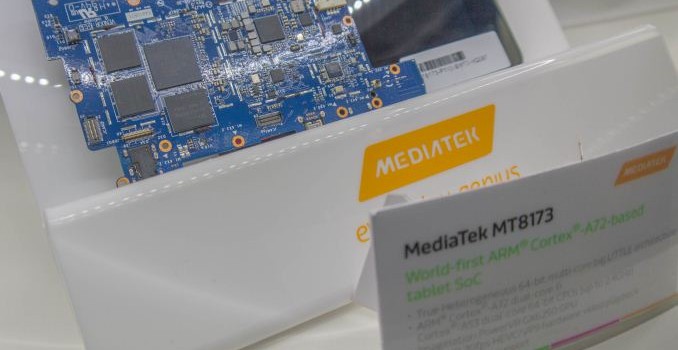
What was far the biggest surprise for us was the showing off of MT8173 hardware, a mid-range tablet SoC employing ARM’s new Cortex A72. It’s only been a few weeks since ARM officially announced the ARM Cortex A72, and while we still don’t know much about the micro-architectural nuances of the core, having MediaTek already displaying silicon is a severe departure from ARM’s usual announcement-to-release cadence. This puts the number A72 licensees with announced products already at two, with Qualcomm being the other one in the form of the Snapdragon 618 and 620.
The MT8173 employs two Cortex A72 CPUs at up to 2.4GHz and two Cortex A53 CPUs in a big.LITTLE configuration. On the GPU side we find a PowerVR GX6250 GPU, which if MediaTek’s clocking strategy continues should run north of 700MHz. The SoC is still powered by LPDDR3 as the preferred memory interface, undoubtedly a cost decision as we’re only starting to see LPDDR4 in flagship devices. On the multimedia side there’s MediaTek’s new display pipeline capable of 120Hz operation, 4K H.264/HEVC(10-bit)/VP9 video decoders and an ISP capable of 20MP sensors.
As part of the MWC announcements was also a (re)branding of MediaTek’s SoC lineup. Beginning with the MT6795 which is now denominated the Helio X10, MediaTek will in the future begin naming their new chips after the Helio (After the Greek word for sun, “helios”) brand. We’ll be seeing the P-line targeting the premium performance segment while the X-line targets the high-end and the best MediaTek has to offer.
MT3188: PMA, WPC and A4WP Wireless Charging Solution In 1
As part of the booth demos, MediaTek showed off the MT3188 wireless charging IC solution which supports all three currently available standards, PMA, WPC and the newly emerged A4WP standard. While we’ve had the IC announced early last year, it is still impressive to see the real thing in hardware.
WPC (Wireless Power Consortium) is by far the currently most widely available standard in the form of Qi, which has seen large adoption in the mobile space. PMA (Power Matters Alliance) remains as the competitor standard but which hasn’t seen as wide of an adoption rate with its Powermat/Duracell chargers. Both WPC and PMA rely on inductive charging which limit the spatial freedom between the transmitter and receiver coils to a few mm.
A4WP on the other hand is the new standard which is based on resonance charging, giving devices the freedom in x, y and z directions around the emitter coil. The charging area can be much larger than in the inductive charging technologies and also allows for one charger to simultaneously charge multiple devices. The advantage of inductive charging over resonance charging remains in the efficiency and EMI aspects.
The demonstration of the A4WP standard was impressive as it allows for an enormous amount of flexibility in terms of integrating charging pads into furniture. Among multi-device charging bases, we also saw charging through relatively thick wooden tables where the charger was hidden underneath, instead of having to integrate them into the table of having a mat on lying on top.
The MT3188 joins other unified charging solutions such as Broadcomm’s BCM59350 which we also saw demonsrated at MWC this year.
MiraVision Display Pipeline Processing
Another interesting demo was the showing off of MiraVision integrated in MediaTek’s SoCs. Basically MiraVision is a fixed-function post-processor which sits on the display pipeline which has full control of the image data being sent to the display. The use-cases which MediaTek demonstrated were colour gamut manipulation on one side, something which is already for example done in products such as the Meizu MX4 with the MT6595. What was impressive to me was the dynamic analysis of image content in dark environments and subsequent adjusting of back-light and pixel data to allow for better visibility. Think of it as a dynamic gamma-curve adjustment.
There were a few demos, including a third-person shooter one where the effect was considerable to the viewing experience. We’ve seen Samsung employ similar technology in their Exynos and television SoCs called mDNIe (Mobile digital natural image enhancement) which used among other things to change between display profiles on Galaxy devices. MediaTek’s solution seems to one-up that as it allows for more dynamic settings as opposed to simply just having fixed programmed profiles.
MediaTek also demonstrated a frame-interpolation function for video playback through MiraVision. The result is similar to what SVP achieves in the PC space via software, but here it’s again implemented through fixed-function hardware to achieve high performance at very low power. Video content that is sourced at 24fps is interpolated to 60fps on the screen. The result is remarkable on a small screen as it suffers less from the “fake motion” that one associates with such techniques (Or MediaTek’s implementation is just really good?).
The demo unit was again a Meizu MX4, so it means the hardware and products are already out there but just merely need to be officially adopted by the vendors in software.
MediaTek’s Modem Progression
Modems are an important part of MediaTek’s strategy and we’ve had more or less a status-update on how things are progressing. The LTE products from MediaTek are still far and few in-between that seems to be changing in the future as we’re seeing quick progression from the current Cat. 4 modem IP to Cat. 6 solutions in 2015 and Cat. 10 in 2016.
An interesting addition is the adoption and field testing of C2K, or better known as CDMA2000. Other vendors such as Intel and Samsung chose not to adopt the technology as in the future we’ll see it being phased out in favour of LTE-only networks. For MediaTek to adopt it even though long-term it makes no sense, puts them in a unique position against Qualcomm in markets such as the US and China.
Panasonic at MWC 2015: Lumix CM1 Hands-On
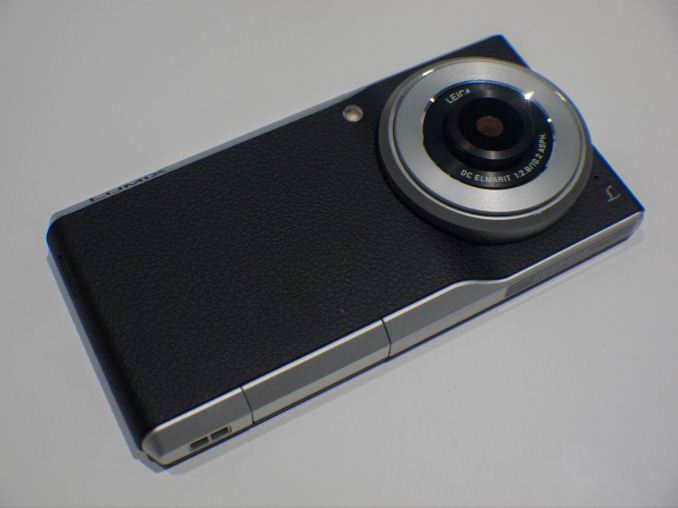

At MWC 2015 this year we had the opportunity to pass by the Panasonic booth while they were holding a media event for the Lumix CM1 camera/smartphone hybrid. These “big-camera” smartphones have been around for quite a while, most notably from Samsung with their Galaxy Camera or Galaxy K Zoom product lines. The biggest disadvantage from those products were that the phone-side of the devices were always rather large spec downgrades from their flagship “pure” smartphone counterparts.
The Lumix CM1 offers some fresh air by trying to not skimp on the phone hardware itself, offering a Snapdragon 801 as the brains of the device. While this isn’t the newest and most powerful SoC from Qualcomm, it still offers a very high-end experience over other products such as Samsung’s alternatives. It is pretty clear that Panasonic is trying to position itself the CM1 into against the K Zoom as both are the only Android camera hybrids which also offer cell connectivity.
| Samsung Galaxy K Zoom |
Panasonic Lumix CM1 |
|
| CMOS Resolution | 20.7MP | 20.9MP |
| CMOS Format | 1/2.3″, 1.12µm pixels | 1″, 2.4µm pixels |
| Optical System | Focal Length: 4.4 – 44mm (35mm equiv: 24-240 mm) F/3.1-F/6.3 aperture 10x zoom + OIS |
Focal Length: 10.2mm (35mm equiv: 28mm) F/2.8 – 11 aperture |
| Dimensions | 137.5 x 70.8 x 16.6mm (20.2mm max at lens) 200g |
135.4 x 68.0 x 15.2mm (21.1mm max at lens) 203g |
| Video Recording | 1080p60 max | 2160p15 (50mbps) 1080p30 (20mbps) |
| Display | 4.8″ 1280×720 Super AMOLED |
4.7″ 1920×1080 LCD |
| SoC | Exynos 5 Hexa (5260) 2x 1.7GHz A15 4x 1.3GHz A7 Mali T628MP3 600MHz |
Snapdragon 801 (MSM8974AB) 4x 2.26GHz Krait 400 Adreno 330 450MHz |
| Storage | 8GB + microSD | 16GB + microSD |
| Battery | 2430 mAh (9.23Whr) | 2600 mAh (9.9 Whr) |
| OS | Android 4.4 | Android 4.4 |
| Connectivity | 2G / 3G / 4G LTE (Intel XMM7160 Category 4 LTE) 802.11a/b/g/n, NFC, |
2G / 3G / 4G LTE (Qualcomm MSM9x25 Category 4 LTE) 802.11a/b/g/n/ac, NFC, |
Panasonic’s crucial feature to differentiate the CM1 from the competition is the massive 1″ CMOS image sensor. This is by far the biggest sensor employed in any currently exisiting smartphone and should offer substantial advantages in light sensitivity as the 2.4µm pixel pitch offers more than quadruple the light collecting area over the 1.12µm on the K Zoom and other commonly found smartphone image sensors.

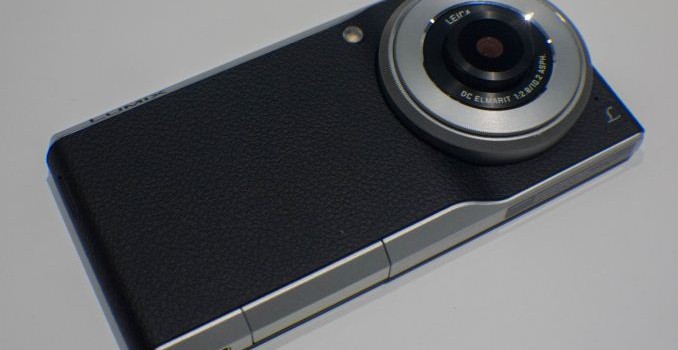
It’s on the optical system that Panasonic didn’t venture too far, as the CM1 offers no optical zoom at all. The Leica lens promises excellent optical characteristics such as a reduction in vignettes, flaring, ghosting and chromatic inconsistencies while increasing resolution and edge-to-edge sharpness. The lack of OIS may also be eyebrow-raising as we’re starting to see the technology adopted in current conventional flagship smartphones. Having a large image sensor and the capability to shoot in up to ISO 25600 mode here may help to reduce exposure time, and thus possible blurriness due to shaking, but it’s still something that needs to be tested out in practice. Panasonic employ their own dedicated ISP named the “Venus Engine”, from which we might also see some advanced post-processing done to improve image quality.
The device offers a 4.7″ 1080p LCD screen that is by far the sharpest in its category. Panasonic did great here as we’ve seen camera-oriented smartphones employ lower resolution screens. From the small hands-on time, visibility seemed good as was the colour accuracy.
The device ships with Android KitKat 4.4, a rather disappointing aspect for a device shipping in 2015. There is very little OS customization and Panasonic relies more on stock Android looks and features. It’s on the camera side where the CM1 shines, as we see a camera application that basically mimics every feature found on standard Lumix dedicated cameras. We have the full breadth of controls that you would expect from a full-featured camera, including exposure, aperture, ISO, white-balance, focus-modes and the vast plethora scene-modes that would put competitors such as the K Zoom to shame. We also have full RAW capture, a feature avoided in existing camera-oriented smartphones up until the release of Android 5.0 and Camera2 API compatible devices.

The camera lens is surrounded by a “manual control ring”, a turnable ring which can be set up, depending on shooting mode, to control different functions such as shutter speed, aperture or ISO. I found the ring to function very well and it certainly helps when you want to take very quick adjustments in (for example) the exposure while in manual mode. The device also features a dedicated hardware camera shutter button and a camera-quick access button which can be used to open up the camera app in sub-one second time even when waking up the device.
The general feel of the device was extremely solid, at 203g and 15.2mm thickness the device felt quite hefty. The faux-leather texture found on the front and sides give it a very good grip and it doesn’t detract from the rather premium feel of the camera-phone. Although the device is quite thick and heavy, we’re only seeing a 2600mAh battery employed. I’m not sure how the internal hardware is set up, but I expected it to much larger than that when I initially first picked up the unit.
The LED flash was probably the most disappointing aspect, as it simply really can’t be considered a proper solution and even Samsung’s camera-phones employ Xenon flashes. I tried it out in the Panasonic booth and it is little more powerful than your standard smartphone flash.

On the bottom of the device we find a flap which covers the SIM and microSD slots. There are two contact pins right next to it which seems to be designed for dock-charging, although Panasonic didn’t have the corresponding accessories on display.


The Lumix CM1 seems to be an interesting device which wants to position itself as a serious alternative to the K Zoom. We’ve seen quite a few Android-powered cameras announced in the past, but these two products remain the only ones which offer the true combination of point-and-shoot cameras with the option of cellular connectivity.
There seems to be no contest on the software side as Panasonic brings the years of experience from its Lumix brand to Android with little compromise. I’m not yet sure how image quality will pan out given the lack of an optical zoom and OIS, and it’s something we would have to extensively test in an eventual full review. On the phone side we have the hardware matching 2014’s flagship smartphones, which again, doesn’t match current flagship devices, but nevertheless narrows the spec gap which we’ve seen to be quite large on the K Zoom.
It all falls back down to pricing. With an MSRP of 899€ and availability only in certain European countries, the CM1 comes with a really steep price that is hard to reason with. It remains a niche product for those who really want the flexibility of a smartphone device, yet want to have a higher-end camera without actually carrying one around.
Panasonic at MWC 2015: Lumix CM1 Hands-On
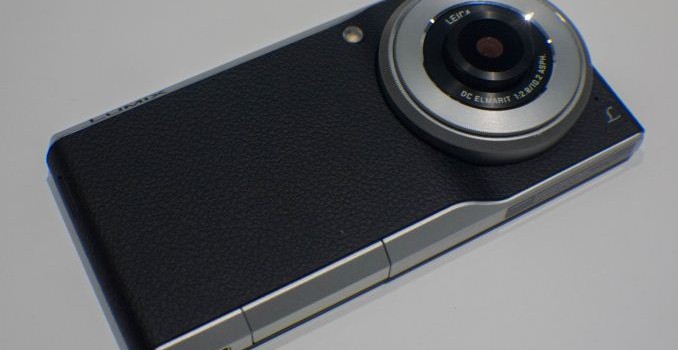
At MWC 2015 this year we had the opportunity to pass by the Panasonic booth while they were holding a media event for the Lumix CM1 camera/smartphone hybrid. These “big-camera” smartphones have been around for quite a while, most notably from Samsung with their Galaxy Camera or Galaxy K Zoom product lines. The biggest disadvantage from those products were that the phone-side of the devices were always rather large spec downgrades from their flagship “pure” smartphone counterparts.
The Lumix CM1 offers some fresh air by trying to not skimp on the phone hardware itself, offering a Snapdragon 801 as the brains of the device. While this isn’t the newest and most powerful SoC from Qualcomm, it still offers a very high-end experience over other products such as Samsung’s alternatives. It is pretty clear that Panasonic is trying to position itself the CM1 into against the K Zoom as both are the only Android camera hybrids which also offer cell connectivity.
| Samsung Galaxy K Zoom |
Panasonic Lumix CM1 |
|
| CMOS Resolution | 20.7MP | 20.9MP |
| CMOS Format | 1/2.3″, 1.12µm pixels | 1″, 2.4µm pixels |
| Optical System | Focal Length: 4.4 – 44mm (35mm equiv: 24-240 mm) F/3.1-F/6.3 aperture 10x zoom + OIS |
Focal Length: 10.2mm (35mm equiv: 28mm) F/2.8 – 11 aperture |
| Dimensions | 137.5 x 70.8 x 16.6mm (20.2mm max at lens) 200g |
135.4 x 68.0 x 15.2mm (21.1mm max at lens) 203g |
| Video Recording | 1080p60 max | 2160p15 (50mbps) 1080p30 (20mbps) |
| Display | 4.8″ 1280×720 Super AMOLED |
4.7″ 1920×1080 LCD |
| SoC | Exynos 5 Hexa (5260) 2x 1.7GHz A15 4x 1.3GHz A7 Mali T628MP3 600MHz |
Snapdragon 801 (MSM8974AB) 4x 2.26GHz Krait 400 Adreno 330 450MHz |
| Storage | 8GB + microSD | 16GB + microSD |
| Battery | 2430 mAh (9.23Whr) | 2600 mAh (9.9 Whr) |
| OS | Android 4.4 | Android 4.4 |
| Connectivity | 2G / 3G / 4G LTE (Intel XMM7160 Category 4 LTE) 802.11a/b/g/n, NFC, |
2G / 3G / 4G LTE (Qualcomm MSM9x25 Category 4 LTE) 802.11a/b/g/n/ac, NFC, |
Panasonic’s crucial feature to differentiate the CM1 from the competition is the massive 1″ CMOS image sensor. This is by far the biggest sensor employed in any currently exisiting smartphone and should offer substantial advantages in light sensitivity as the 2.4µm pixel pitch offers more than quadruple the light collecting area over the 1.12µm on the K Zoom and other commonly found smartphone image sensors.
It’s on the optical system that Panasonic didn’t venture too far, as the CM1 offers no optical zoom at all. The Leica lens promises excellent optical characteristics such as a reduction in vignettes, flaring, ghosting and chromatic inconsistencies while increasing resolution and edge-to-edge sharpness. The lack of OIS may also be eyebrow-raising as we’re starting to see the technology adopted in current conventional flagship smartphones. Having a large image sensor and the capability to shoot in up to ISO 25600 mode here may help to reduce exposure time, and thus possible blurriness due to shaking, but it’s still something that needs to be tested out in practice. Panasonic employ their own dedicated ISP named the “Venus Engine”, from which we might also see some advanced post-processing done to improve image quality.
The device offers a 4.7″ 1080p LCD screen that is by far the sharpest in its category. Panasonic did great here as we’ve seen camera-oriented smartphones employ lower resolution screens. From the small hands-on time, visibility seemed good as was the colour accuracy.
The device ships with Android KitKat 4.4, a rather disappointing aspect for a device shipping in 2015. There is very little OS customization and Panasonic relies more on stock Android looks and features. It’s on the camera side where the CM1 shines, as we see a camera application that basically mimics every feature found on standard Lumix dedicated cameras. We have the full breadth of controls that you would expect from a full-featured camera, including exposure, aperture, ISO, white-balance, focus-modes and the vast plethora scene-modes that would put competitors such as the K Zoom to shame. We also have full RAW capture, a feature avoided in existing camera-oriented smartphones up until the release of Android 5.0 and Camera2 API compatible devices.
The camera lens is surrounded by a “manual control ring”, a turnable ring which can be set up, depending on shooting mode, to control different functions such as shutter speed, aperture or ISO. I found the ring to function very well and it certainly helps when you want to take very quick adjustments in (for example) the exposure while in manual mode. The device also features a dedicated hardware camera shutter button and a camera-quick access button which can be used to open up the camera app in sub-one second time even when waking up the device.
The general feel of the device was extremely solid, at 203g and 15.2mm thickness the device felt quite hefty. The faux-leather texture found on the front and sides give it a very good grip and it doesn’t detract from the rather premium feel of the camera-phone. Although the device is quite thick and heavy, we’re only seeing a 2600mAh battery employed. I’m not sure how the internal hardware is set up, but I expected it to much larger than that when I initially first picked up the unit.
The LED flash was probably the most disappointing aspect, as it simply really can’t be considered a proper solution and even Samsung’s camera-phones employ Xenon flashes. I tried it out in the Panasonic booth and it is little more powerful than your standard smartphone flash.
On the bottom of the device we find a flap which covers the SIM and microSD slots. There are two contact pins right next to it which seems to be designed for dock-charging, although Panasonic didn’t have the corresponding accessories on display.
The Lumix CM1 seems to be an interesting device which wants to position itself as a serious alternative to the K Zoom. We’ve seen quite a few Android-powered cameras announced in the past, but these two products remain the only ones which offer the true combination of point-and-shoot cameras with the option of cellular connectivity.
There seems to be no contest on the software side as Panasonic brings the years of experience from its Lumix brand to Android with little compromise. I’m not yet sure how image quality will pan out given the lack of an optical zoom and OIS, and it’s something we would have to extensively test in an eventual full review. On the phone side we have the hardware matching 2014’s flagship smartphones, which again, doesn’t match current flagship devices, but nevertheless narrows the spec gap which we’ve seen to be quite large on the K Zoom.
It all falls back down to pricing. With an MSRP of 899€ and availability only in certain European countries, the CM1 comes with a really steep price that is hard to reason with. It remains a niche product for those who really want the flexibility of a smartphone device, yet want to have a higher-end camera without actually carrying one around.