News


Corsair Unveils New Flash Storage Solutions
Corsair Unveils New Flash Storage Solutions

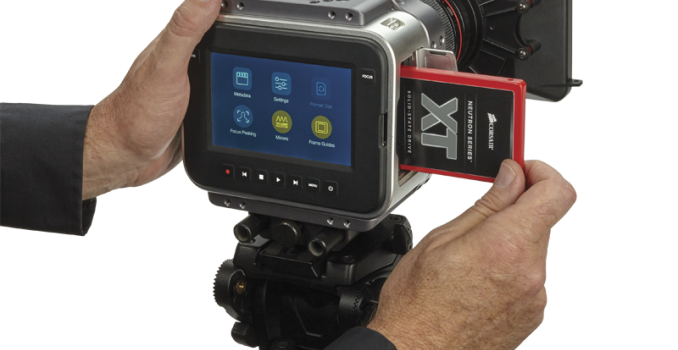
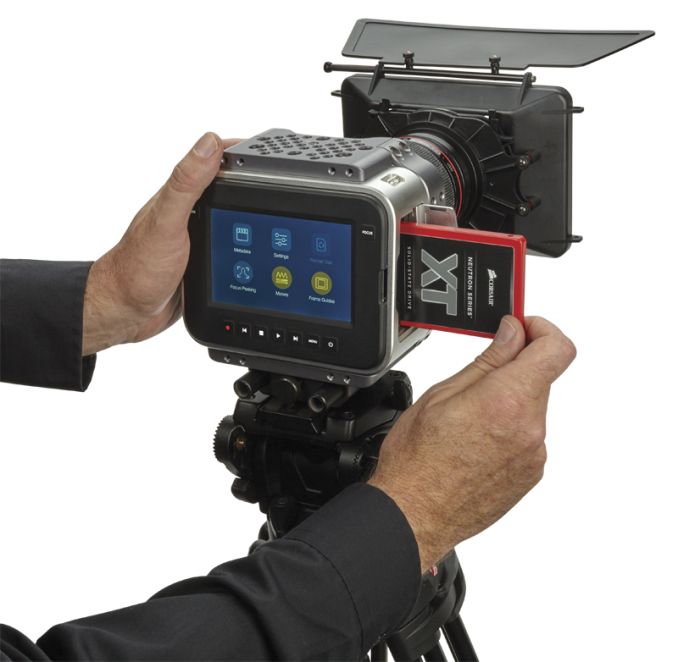
In their long list of new product announcements today, Corsair is also upgrading their top performance SSD drives lineup with the release of the Neutron XT SSDs. We already reviewed the drive and all of its available capacities (240GB, 480GB & 960GB) roughly two months ago, so this announcement is merely for the availability and MSRPs. For those who need a quick refresher, the Neutron XT is the first commercially available SSD with Phison’s S10 contoller, which is equipped with Toshiba’s A19nm NAND. The Neutron XT didn’t set any new records in our tests, but it was a solid middle-class performer and I’ve been told Corsair is looking into new firmwares to further improve the performance in the future.

The Neutron XT will be available immediately with MSRPs of $150 for 240GB, $270 for 480GB and $540 for 960GB. I would have liked to see a bit more aggressive pricing because the Neutron XT isn’t fast enough to compete with the 850 Pro and Extreme Pro, but as it stands the Neutron XT is a decent option for those who seek for something in between the value and high-end drives. 

Gallery: Neutron XT

Furthermore, Corsair performed a major overhaul of their USB 3.0 drives. The company released two new USB 3.0 flash drive families, the Flash Voyager Slider X1 and Flash Voyager Slider X2, and upgraded the Flash Voyager GS and Flash Voyager GTX families.

The Flash Voyager Slider X1 and X2 are visually similar and both are available in capacities between 16GB and 256GB. The difference is their maximum speed, with the X1 and X2 capable of maximum read speeds of 130MB/s and 200MB/s respectively. Of course, both drives are backwards compatible with USB 2.0 equipment but their performance will be limited by the USB 2.0 interface.


Flash Voyager Slider X1 Flash Drive

Product

Part Number

MSRP (USD)

Flash Voyager Slider X1 16GB Flash Drive

CMFSL3X1-16GB

$14.99

Flash Voyager Slider X1 32GB Flash Drive

CMFSL3X1-32GB

$19.99

Flash Voyager Slider X1 64GB Flash Drive

CMFSL3X1-64GB

$39.99

Flash Voyager Slider X1 128GB Flash Drive

CMFSL3X1-128GB

$64.99

Flash Voyager Slider X1 256GB Flash Drive

CMFSL3X1-256GB

$149.99


Flash Voyager Slider X2 Flash Drive

Product

Part Number

MSRP (USD)

Flash Voyager Slider X2 16GB

CMFSL3X2-16GB

$19.99

Flash Voyager Slider X2 32GB

CMFSL3X2-32GB

$29.99

Flash Voyager Slider X2 64GB

CMFSL3X2-64GB

$54.99

Flash Voyager Slider X2 128GB

CMFSL3X2-128GB

$99.99

Flash Voyager Slider X2 256GB

CMFSL3X2-256GB

$189.99


Corsair also upgraded the Voyager GS and Voyager GTX series and reduced their price a little. The Voyager GS is the high capacity series of the company, with the drives ranging from 64GB up to a whooping 512GB. Voyager GS drives have read speeds of up to 260MB/s and write speeds of up to 105MB/s. The Voyager GTX on the other hand is the performance-oriented series. Only two Voyager GTX drives are available, a 128GB and a 256GB version. Both drives have an integrated SSD data controller that allows them to reach read and write speeds up to 450MB/s and 200MB/s respectively.


Flash Voyager GS Flash Drive

Product

Part Number

MSRP (USD)

Flash Voyager GS 64GB

CMFVYGS3B-64GB

$89.99

Flash Voyager GS 128GB

CMFVYGS3B-128GB

$109.99

Flash Voyager GS 256GB

CMFVYGS3B-256GB

$199.99

Flash Voyager GS 512GB

CMFVYGS3B-512GB

$399.99


Flash Voyager GTX Flash Drive

Product

Part Number

MSRP (USD)

Flash Voyager GTX 128GB

CMFVYGTX3B-128GB

$129.99

Flash Voyager GTX 256GB

CMFVYGTX3B-256GB

$249.99

 
Synology's BeyondCloud Series - NAS Units made User-Friendly

Synology’s BeyondCloud Series – NAS Units made User-Friendly

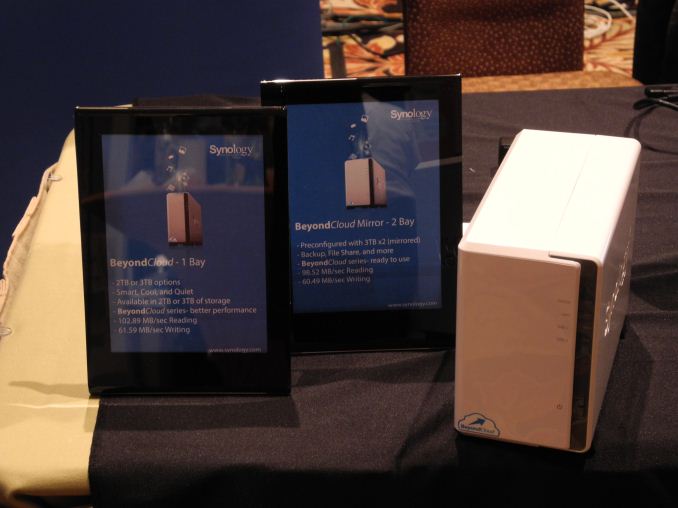
Synology has put out some interesting updates (both expected as well as unexpected) in the lead up to the new year. At CES 2015, the focus is on a new series of NAS units to complement the traditional Disk Station (DS) lineup. The BeyondCloud (BC) package takes the traditional DS unit, preconfigures it with disks and sets up an appropriate volume. Certain packages (such as the multimedia-focused Photo Station and Video Station) are also pre-installed.

Newly purchased BeyondCloud NAS units are up and running immediately after purchase. As I have mentioned before in previous Synology reviews, setting up a JBOD or RAID-1 volume with fresh raw disks involves optimization of the configured file system. It often takes the better part of a day. The BeyondCloud series manages to hasten the setup process, and it is particularly useful for SMBs and busy tech-savvy users

On the other end of the spectrum, we have this new lineup making NAS units more friendly to the average consumer – those who are not comfortable with aspects such as shared folders and mapping network drives. In this area, I think Synology has a chance to jostle for space with the Western Digital EX2, Seagate Personal Cloud, LenovoEMC EZ Backup and Media Center and other such products which come with disks pre-installed and target home users. Given the ease of use of the DSM UI, home consumers should find the BC series a welcome competitor in this space.

The BC series currently has three members:

  • BC115j 1200: 1-bay, 2TB hard disk pre-installed for $180
  • BC115j 1300: 1-bay, 3TB hard disk pre-installed for $240
  • BC214se 2300: 2-bay, 2x 3TB hard disks in RAID-1 for $370

The units are based on the DS115j and the DS214se. Both of them have a Marvell ARMADA 370 as the main SoC. The concept is great (albeit one that Western Digital and Seagate have already implemented in their consumer-focused personal cloud solutions). Synology can differentiate a bit by offering higher-end systems (4- and 5-bay ones) in a BeyondCloud configuration.

We met up with Synology at Pepcom, and they had the units on display, along with the SMB-focused DS2015xs and the DS414slim. On the CES show floor, they will also be having demonstrations of the new Surveillance Station (which doesn’t require Java on the client systems anymore) as well as other features of the latest DSM.


Synology's BeyondCloud Series - NAS Units made User-Friendly

Synology’s BeyondCloud Series – NAS Units made User-Friendly

Synology has put out some interesting updates (both expected as well as unexpected) in the lead up to the new year. At CES 2015, the focus is on a new series of NAS units to complement the traditional Disk Station (DS) lineup. The BeyondCloud (BC) package takes the traditional DS unit, preconfigures it with disks and sets up an appropriate volume. Certain packages (such as the multimedia-focused Photo Station and Video Station) are also pre-installed.

Newly purchased BeyondCloud NAS units are up and running immediately after purchase. As I have mentioned before in previous Synology reviews, setting up a JBOD or RAID-1 volume with fresh raw disks involves optimization of the configured file system. It often takes the better part of a day. The BeyondCloud series manages to hasten the setup process, and it is particularly useful for SMBs and busy tech-savvy users

On the other end of the spectrum, we have this new lineup making NAS units more friendly to the average consumer – those who are not comfortable with aspects such as shared folders and mapping network drives. In this area, I think Synology has a chance to jostle for space with the Western Digital EX2, Seagate Personal Cloud, LenovoEMC EZ Backup and Media Center and other such products which come with disks pre-installed and target home users. Given the ease of use of the DSM UI, home consumers should find the BC series a welcome competitor in this space.

The BC series currently has three members:

  • BC115j 1200: 1-bay, 2TB hard disk pre-installed for $180
  • BC115j 1300: 1-bay, 3TB hard disk pre-installed for $240
  • BC214se 2300: 2-bay, 2x 3TB hard disks in RAID-1 for $370

The units are based on the DS115j and the DS214se. Both of them have a Marvell ARMADA 370 as the main SoC. The concept is great (albeit one that Western Digital and Seagate have already implemented in their consumer-focused personal cloud solutions). Synology can differentiate a bit by offering higher-end systems (4- and 5-bay ones) in a BeyondCloud configuration.

We met up with Synology at Pepcom, and they had the units on display, along with the SMB-focused DS2015xs and the DS414slim. On the CES show floor, they will also be having demonstrations of the new Surveillance Station (which doesn’t require Java on the client systems anymore) as well as other features of the latest DSM.


Zotac ZBOX CI320 nano Review: A Fanless Bay Trail-M mini-PC

Over the last couple of years, mini-PCs in the ultra-compact form factor (UCFF) have emerged as one of the bright spots in the troubled PC market. Zotac is no stranger to this segment. In fact, their nano xs units came to the market before the Intel NUC, even though the NUC is credited with kickstarting the UCFF trend. Intel’s Bay Trail family of SoCs has proved to be an affordable and low-power candidate for UCFF PC units. We have already evaluated a couple – an actively cooled GIGABYTE BXBT-1900 and and the fanless ECS LIVA. This review provides some insights into what the passively cooled Zotac ZBOX CI320 nano brings to the market.

Zotac ZBOX CI320 nano Review: A Fanless Bay Trail-M mini-PC

Over the last couple of years, mini-PCs in the ultra-compact form factor (UCFF) have emerged as one of the bright spots in the troubled PC market. Zotac is no stranger to this segment. In fact, their nano xs units came to the market before the Intel NUC, even though the NUC is credited with kickstarting the UCFF trend. Intel’s Bay Trail family of SoCs has proved to be an affordable and low-power candidate for UCFF PC units. We have already evaluated a couple – an actively cooled GIGABYTE BXBT-1900 and and the fanless ECS LIVA. This review provides some insights into what the passively cooled Zotac ZBOX CI320 nano brings to the market.