News


Samsung Announces Galaxy Note Edge: Hands On
Samsung Announces Galaxy Note Edge: Hands On

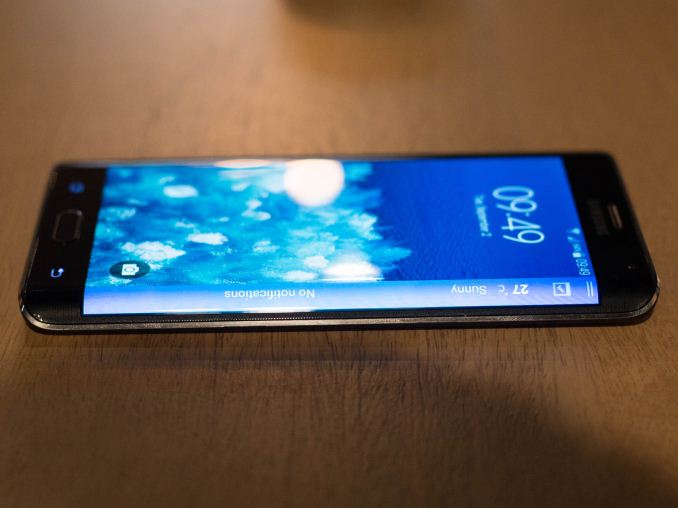
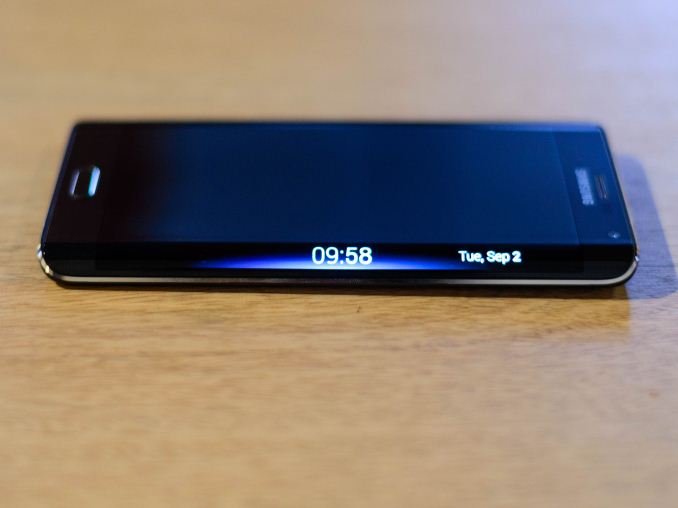
Following on the heels of the Galaxy Note 4, Samsung is also announcing a new product named the Galaxy Note Edge. In terms of basic hardware, not much changes. Same fingerprint sensor, same SoC, same RAM, camera, battery, etc. The one fundamental difference is that the display has a curved edge similar to the patent depictions. Samsung is pushing this as a secondary display of sorts that allows for more information to be shown along the curved edge without disrupting the rest of the content on the display. This is done by extending the display by an extra 160 pixels in width. I’ve included a spec sheet below to show the rest of the differences between the Note 4 and Note Edge.

  Samsung Galaxy Note Edge Samsung Galaxy Note 4
SoC 2.7 GHz Snapdragon 805 2.7 GHz Snapdragon 805
RAM/NAND 3 GB LPDDR3, 32/64GB NAND + microSD 3GB LPDDR3, 32GB NAND + microSD
Display 5.6” 1440p+160 Super AMOLED 5.7” 1440p Super AMOLED
Network 2G / 3G / 4G LTE (Qualcomm MDM9x35 IP block UE Category 6 LTE) 2G / 3G / 4G LTE (Qualcomm MDM9x35 UE Category 6 LTE)
Dimensions 151.3 x 82.4 x 8.3mm, 174 grams 153.5 x 78.6 x 8.5 mm, 176 grams
Camera 16MP Rear Facing w/ OIS, 1/2.6″ CMOS size (Sony IMX240), F/2.0, 3.7MP FFC w/ F/1.9 aperture 16MP Rear Facing w/ OIS, 1/2.6″ CMOS size (Sony IMX240), F/2.0, 3.7MP FFC w/ F/1.9 aperture
Battery 3000 mAh, 3.85V, 11.55 Whr 3220 mAh, 3.85V, 12.397 Whr
OS Android 4.4.4 with TouchWiz UX Android 4.4.4 with TouchWiz UX
Connectivity 802.11a/b/g/n/ac + BT 4.1, USB2.0, GPS/GNSS, MHL, DLNA, NFC 802.11a/b/g/n/ac + BT 4.1, USB2.0, GPS/GNSS, MHL, DLNA, NFC
SIM Size MicroSIM MicroSIM

If by any chance this reminds you of the Samsung Continuum, a variant of the Galaxy S exclusively on Verizon, you would be right. However, unlike the Continuum, this has been achieved by curving the AMOLED panel onto the side of the phone instead of putting another display beneath the primary display. This also has a few implications for ergonomics. For example, the power button is relocated to the top of the phone.
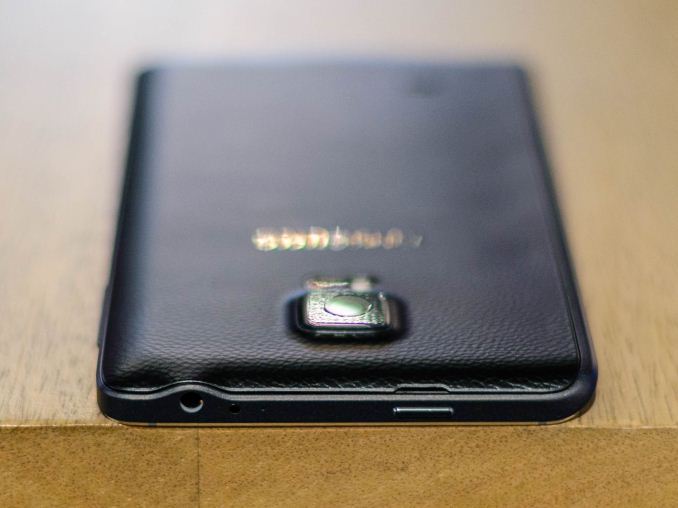
While I’m normally not too stringent on top-mounted power buttons, this move felt like a major step back for ergonomics. While it’s going to take a full review to really know whether this is a problem or not, my first impression was that this would make it harder to recommend the Note Edge over the Note 4. However, there are a few things that Samsung got right with this phone. For one, palm rejection is incredibly well-implemented. Even though I had my palm solidly on top of the display, I didn’t see any touch events occur. The side with the curved display also feels incredibly thin, and seems to disguise the actual thickness of the device.
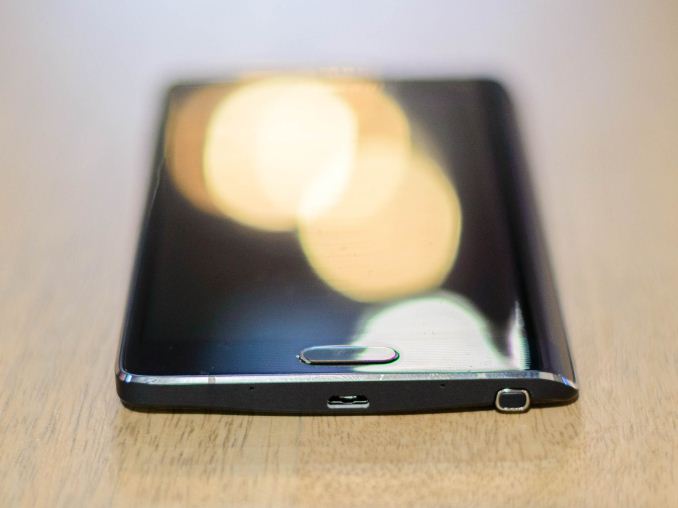
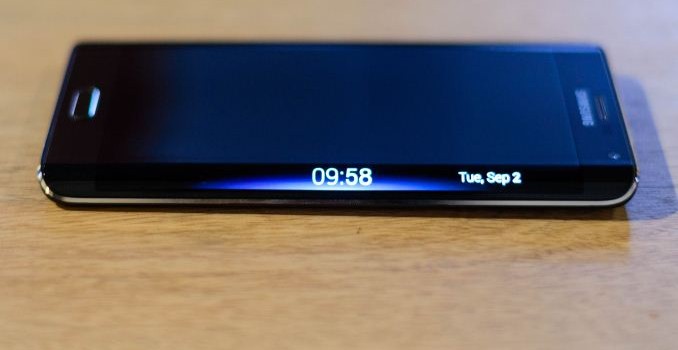
In practice, the display doesn’t really seem to have much area, and tapping shortcuts and other objects on the sidebar tends to require a bit more precision than what I’m used to. For the most part, the use cases are largely similar to what we saw in the Continuum as well. Live news feeds were one possible use case, along with Twitter feeds and Facebook status updates. The other uses that were available included placing camera controls on the curved area to make the viewfinder larger, notifications while watching movies, and some quick tools such as a flashlight or ruler. The curved edge can also serve as an alarm clock. Overall I found it hard to see any particular killer app, but it may be useful to some. To me, the Note Edge doesn’t really seem better than the Note 4, just different.

The Samsung Galaxy Note Edge will be available later this fall on AT&T, T-Mobile, Sprint, and Verizon. It will come in either Charcoal Black or Frost White in other select markets.
Samsung SSD 845DC EVO/PRO Performance Preview & Exploring IOPS Consistency

Traditionally Samsung’s enterprise SSDs have only been available to large server OEMs (e.g. Dell, EMC, and IBM). In other words, unless you were buying tens of thousands of drives, Samsung would not sell you any. However, back in June Samsung made a change in its strategy and released the 845DC EVO, Samsung’s first enterprise SSD for the channel. The 845DC EVO was accompanied by the 845DC PRO a month later and today we have a performance preview of both SSDs, along with a glimpse of our new enterprise test suite.

Broadcom Announces BCM4358: Second Gen 2x2 802.11ac WiFi

Broadcom Announces BCM4358: Second Gen 2×2 802.11ac WiFi

Today, Broadcom is announcing a new WiFi/BT combo chip that succeeds the BCM4354. According to Broadcom, the key features of this new chipset are enhanced WiFi/BT coexistence performance, integrated PA/LNA/TR switch, transmit beamforming and low de…

Western Digital Launches My Passport Wireless Mobile Storage Lineup

Western Digital Launches My Passport Wireless Mobile Storage Lineup

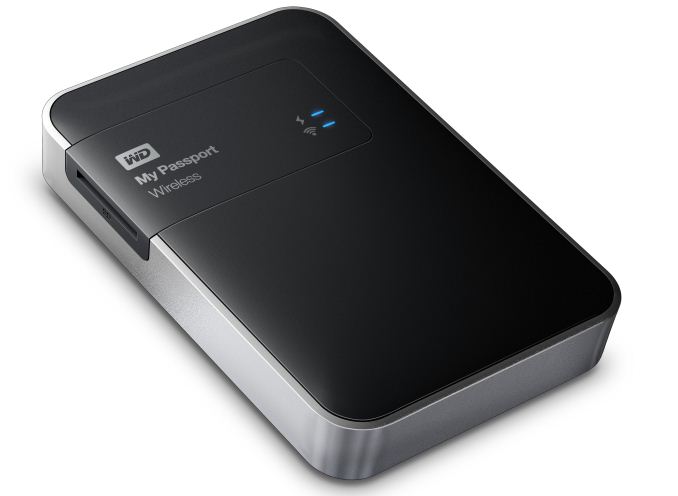
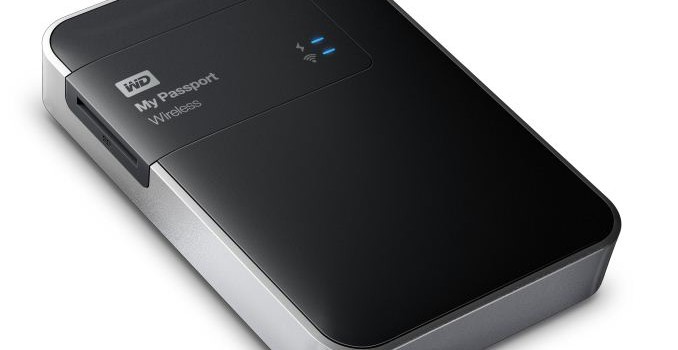
The popularity of the mobile device market (smartphones and tablets) has opened up an allied opportunity for companies – augmenting the limited storage available in those devices with portable wireless devices while adding extra functionality to make them compelling offerings. Under the ‘wireless storage’ category, we have already looked at various offerings such as the Kingston Wi-Drive, Seagate GoFlex Satellite, Patriot Gauntlet Node, Buffalo MiniStation Air Wireless Hard Drive and the Seagate Wireless Plus. All these units have a hard drive or flash drive, a Wi-Fi radio and a battery. In conjunction with various mobile apps, they enable a host of interesting use-cases. Given the popularity of this market category, it is surprising that Western Digital has not had any play in it. Things are changing today with the launch of the My Passport Wireless Wi-Fi Mobile Storage lineup.

Even though the device is a late entry into this market, it brings along some interesting features that are not common in other competing devices. These include:

  • Presence of a SD card slot with one-touch / automatic backup capabilities from the SD card to the internal storage
  • Usage of a 2×2 802.11n MIMO-capable Wi-Fi chipset
  • Reuse of Western Digital’s excellent My Cloud app (which has traditionally been used in conjunction with Western Digital’s NAS units) with a redesigned user interface to support the functionalities offered by the My Passport Wireless.

Western Digital claims that the device allows up to 8 different devices at the same time (with a maximum of four simultaneous HD video streams). The rechargeable battery is rated for 6 hours of video streaming and 20 hours of standby. The USB 3.0 device port allows it to be used as a DAS. Western Digital has also added a Wi-Fi hub feature to the device so that moble devices connecting to it can still access the Internet through the My Passport Wireless while also enjoying access to the huge storage capacity. In addition to access through the mobile apps, there is also a web dashboard for configuration through any standard web browser.

In addition to targeting users with multiple mobile devices in the family, the My Passport Wireless also presents a valid use-case for a team of photographers or videographers on the go. Thanks to the SD card slot, users can quickly upload photographs and share it with the rest of the team easily. The unit also has FTP functionality to allow Wi-Fi enabled cameras to directly upload content to the My Passport Wireless.

The My Passport Wireless comes in three capacities, 500 GB, 1 TB and 2 TB. They are priced at $130, $180 and $220 respectively.

MIPS Strikes Back: 64-bit Warrior I6400 Arrives

One of ARM’s most tangible business advantages is its offer of both CPUs and GPUs to SoC designers. Anyone with experience in business to business relationships knows just how complex forming and maintaining a mutually beneficial collaboration…