News


AMD Releases Statement On Radeon RX 480 Power Consumption; More Details Tuesday

AMD Releases Statement On Radeon RX 480 Power Consumption; More Details Tuesday

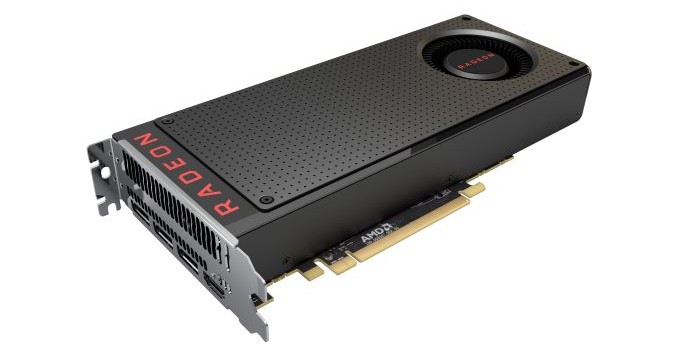
Following up on this week’s Radeon RX 480 launch, there has been some questions raised about the power consumption of the card. This is after some sites whom directly tap the power rails feeding the card discovered that at least some of their samples were pulling more than the standard-allowed 75W over the PCIe slot and/or 6-pin PCIe external power connector.

To that end, it would appear that AMD’s staff is working weekend duty, and they have just sent over the following statement.

As you know, we continuously tune our GPUs in order to maximize their performance within their given power envelopes and the speed of the memory interface, which in this case is an unprecedented 8Gbps for GDDR5. Recently, we identified select scenarios where the tuning of some RX 480 boards was not optimal. Fortunately, we can adjust the GPU’s tuning via software in order to resolve this issue. We are already testing a driver that implements a fix, and we will provide an update to the community on our progress on Tuesday (July 5, 2016).

If some of the data is to be believed, these cards are exceeding 150W total at times, which would mean there is either something causing them to run in the wrong power state, or they are just outright exeeding their power limit and need to be throttled back. As we don’t do per-rail testing I don’t have anything meaningful to add at this second, but it will be very interesting to see how AMD responds next week.

Update 07/06: AMD has since released their status update, which you can find here.
AMD Releases Statement On Radeon RX 480 Power Consumption; More Details Tuesday

AMD Releases Statement On Radeon RX 480 Power Consumption; More Details Tuesday

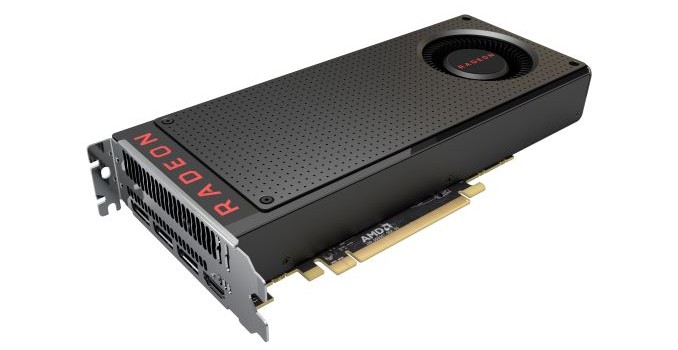
Following up on this week’s Radeon RX 480 launch, there has been some questions raised about the power consumption of the card. This is after some sites whom directly tap the power rails feeding the card discovered that at least some of their samples were pulling more than the standard-allowed 75W over the PCIe slot and/or 6-pin PCIe external power connector.

To that end, it would appear that AMD’s staff is working weekend duty, and they have just sent over the following statement.

As you know, we continuously tune our GPUs in order to maximize their performance within their given power envelopes and the speed of the memory interface, which in this case is an unprecedented 8Gbps for GDDR5. Recently, we identified select scenarios where the tuning of some RX 480 boards was not optimal. Fortunately, we can adjust the GPU’s tuning via software in order to resolve this issue. We are already testing a driver that implements a fix, and we will provide an update to the community on our progress on Tuesday (July 5, 2016).

If some of the data is to be believed, these cards are exceeding 150W total at times, which would mean there is either something causing them to run in the wrong power state, or they are just outright exeeding their power limit and need to be throttled back. As we don’t do per-rail testing I don’t have anything meaningful to add at this second, but it will be very interesting to see how AMD responds next week.

Update 07/06: AMD has since released their status update, which you can find here.
ADATA Introduces Premier SP550 SSDs in M.2 Form-Factor

ADATA Introduces Premier SP550 SSDs in M.2 Form-Factor

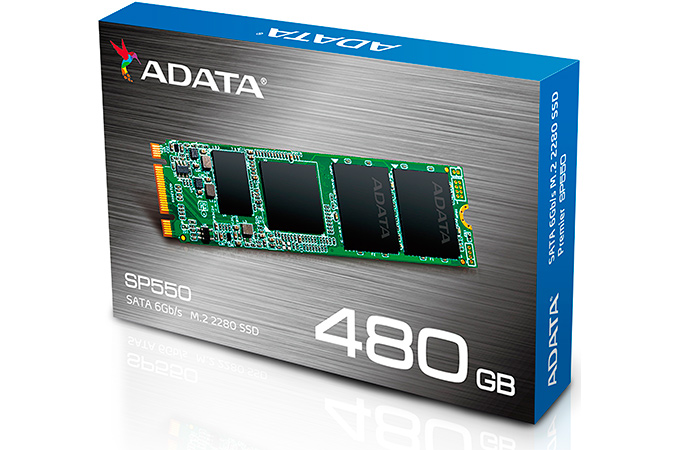
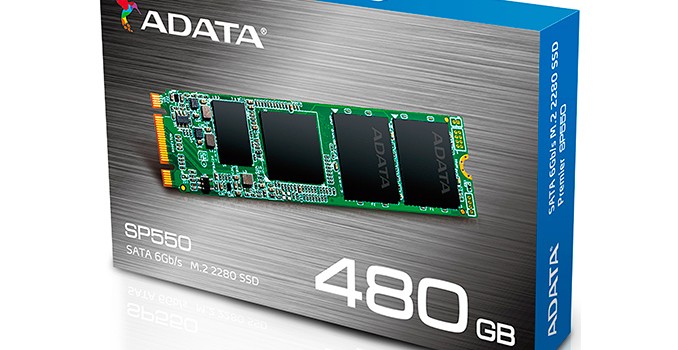
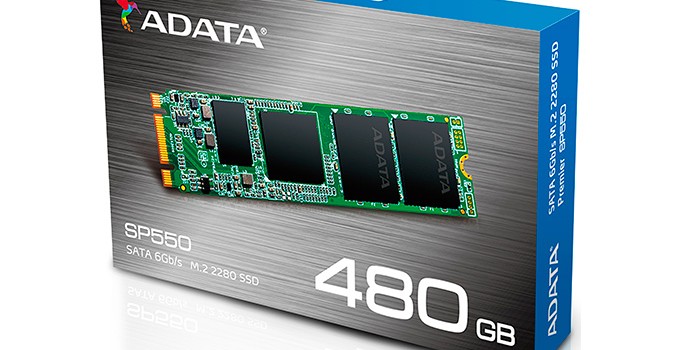
ADATA has introduced a new family of SSDs that come in M.2 form-factor and are more affordable than the majority of M.2 drives on the market. The Premier SP550 SSDs in M.2 form-factor utilize familiar architecture, a controller from Silicon Motion as well as TLC NAND flash memory. The most advanced M.2 Premier SP550, the 480 GB, has hit the street at $120.

The ADATA Premier SP550 is powered by the Silicon Motion SM2256 controller as well as TLC NAND flash memory produced by an unknown maker (though it’s likely that the M.2 drives use chips from SK Hynix, just like the SP550 SSDs in 2.5” form-factor). The SM2256 controller supports error correction control and management technology based on low-density parity-check (LDPC) code to reduce data errors and increase data integrity. Besides, the SP550 drives use pseudo-SLC caching to ensure high writing performance as well as a dedicated DRAM cache.

The Premier SP550 SSDs are available in 120 GB, 240 GB and 480 GB configurations; they come in M.2-2280 form-factor and use the SATA 6 Gb/s interface, which means that performance of the new drives is in line with that of 2.5” SSDs based on the SMI SM2256 controller. ADATA claims that the new drives feature maximum read/write speeds of up to 560/510 MB/s as well as 4K random read at up to 75K IOPS. Exact performance specifications were not touched upon by ADATA, but they should be similar to comparable 2.5” models of the SP550.

ADATA Premier SP550 M.2 Specifications
Capacity 120GB 240GB 480GB
Controller Silicon Motion SM2256
NAND Flash SK Hynix 16nm TLC (?)
Sequential Read 560MB/s 560MB/s 560MB/s
Sequential Write 410MB/s 510MB/s 510MB/s
Random Read IOPS 60k 75k 75k
Random Write IOPS 70k 75k 75k
TCG Opal Encryption No
Power Management Slumber and DevSleep
Warranty 3 years
Current Retail Price $49.99 $79.99 $119.99

ADATA released the original Premier SP550 SSDs in 2.5” form-factor in 2015. The drives were originally positioned as ultra low-cost solutions, and in our review we found that ADATA was able to hit a good balance between price and performance, offering solid performance for a low-cost SSD combined with very agressive pricing. Unsurpsingly then, they have been among the most affordable drives in the U.S. retail for quite some time now.

Finally, for retail pricing, ADATA has set the MSRPs of the M.2 Premier SP550 SSDs at $49.99 for 120 GB, $79.99 for 240 GB, and $119.99 for 480 GB version. This ends up being slightly higher than the 2.5” drives already on the market, though it’s also fairly typical for M.2 drives as a whole.

ADATA Introduces Premier SP550 SSDs in M.2 Form-Factor

ADATA Introduces Premier SP550 SSDs in M.2 Form-Factor

ADATA has introduced a new family of SSDs that come in M.2 form-factor and are more affordable than the majority of M.2 drives on the market. The Premier SP550 SSDs in M.2 form-factor utilize familiar architecture, a controller from Silicon Motion as well as TLC NAND flash memory. The most advanced M.2 Premier SP550, the 480 GB, has hit the street at $120.

The ADATA Premier SP550 is powered by the Silicon Motion SM2256 controller as well as TLC NAND flash memory produced by an unknown maker (though it’s likely that the M.2 drives use chips from SK Hynix, just like the SP550 SSDs in 2.5” form-factor). The SM2256 controller supports error correction control and management technology based on low-density parity-check (LDPC) code to reduce data errors and increase data integrity. Besides, the SP550 drives use pseudo-SLC caching to ensure high writing performance as well as a dedicated DRAM cache.

The Premier SP550 SSDs are available in 120 GB, 240 GB and 480 GB configurations; they come in M.2-2280 form-factor and use the SATA 6 Gb/s interface, which means that performance of the new drives is in line with that of 2.5” SSDs based on the SMI SM2256 controller. ADATA claims that the new drives feature maximum read/write speeds of up to 560/510 MB/s as well as 4K random read at up to 75K IOPS. Exact performance specifications were not touched upon by ADATA, but they should be similar to comparable 2.5” models of the SP550.

ADATA Premier SP550 M.2 Specifications
Capacity 120GB 240GB 480GB
Controller Silicon Motion SM2256
NAND Flash SK Hynix 16nm TLC (?)
Sequential Read 560MB/s 560MB/s 560MB/s
Sequential Write 410MB/s 510MB/s 510MB/s
Random Read IOPS 60k 75k 75k
Random Write IOPS 70k 75k 75k
TCG Opal Encryption No
Power Management Slumber and DevSleep
Warranty 3 years
Current Retail Price $49.99 $79.99 $119.99

ADATA released the original Premier SP550 SSDs in 2.5” form-factor in 2015. The drives were originally positioned as ultra low-cost solutions, and in our review we found that ADATA was able to hit a good balance between price and performance, offering solid performance for a low-cost SSD combined with very agressive pricing. Unsurpsingly then, they have been among the most affordable drives in the U.S. retail for quite some time now.

Finally, for retail pricing, ADATA has set the MSRPs of the M.2 Premier SP550 SSDs at $49.99 for 120 GB, $79.99 for 240 GB, and $119.99 for 480 GB version. This ends up being slightly higher than the 2.5” drives already on the market, though it’s also fairly typical for M.2 drives as a whole.