News


Meizu Launches the m3 note
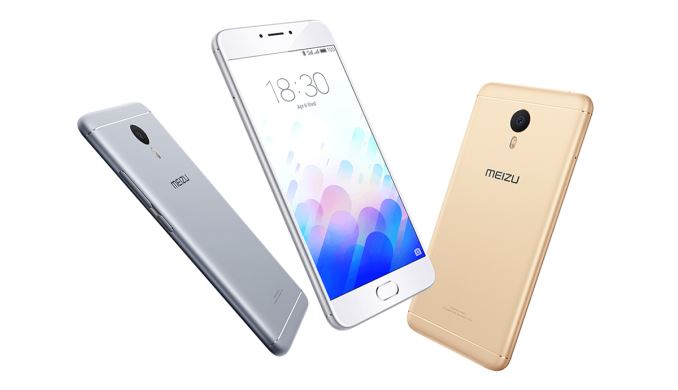
Meizu Launches the m3 note

With every year, we tend to see quite a few launches happen in the first two quarters as the cycles in supply chains align for mass production to start around this time. We’ve already seen a number of new products from Huawei, LG, Samsung, and Xiaomi. Meizu is the latest company to join this list with its announcement of the m3 note.

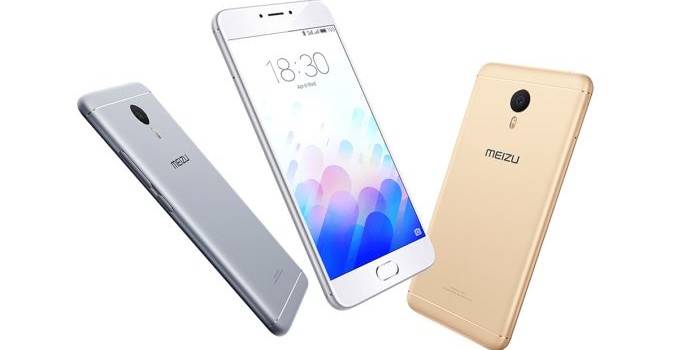
With a 6061 aluminum unibody design, the m3 note draws heavily from the PRO 5. The rear camera is accentuated by a large, black surround with the pill-shaped dual-color LED flash sitting just below. Unlike the PRO 5, however, the camera sits flush with the back. Meizu’s unique T-slot design also carries over from the PRO 5. Instead of the usual plastic antenna strips, Meizu machines slots into the aluminum back, whose polished finish provides a nice contrast to the sandblasted aluminum.
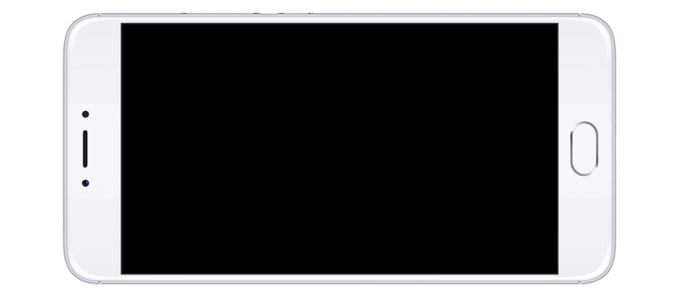
The volume rocker switch sits above the power button inside a groove machined into the right edge, while the SIM and SD card combo slot is on the left edge. A 3.5mm headphone jack is found up top. The downward firing speaker sits next to a centered microUSB port on the bottom.

The m3 note’s 5.5-inch FHD IPS display—which reaches a peak brightness of 450 nits, according to Meizu—sits behind edge-to-edge glass. There’s also an mTouch 2.1 fingerprint sensor below the screen that’s surrounded by a stainless steel accent ring. Overall, the rounded corners, beveled edges, and 2.5D curved cover glass give the m3 note a similar in-hand feel to the iPhone 6s Plus.

Meizu m3 note Specifications
SoC MediaTek Helio P10 (MT6755)
4 x 1.8GHz Cortex A53 (Performance)
4 x 1.0GHz Cortex A53 (Efficiency)

Mali T860MP2

RAM 2/3GB LPDDR3-833
NAND 16/32GB (eMMC 5.1) + microSD
Display 5.5″ 1920×1080 IPS LCD
Modem 2G / 3G / 4G LTE Category 6
(Integrated MediaTek WorldMode)
Dual SIM DSDS
Mainland China variant

GSM: B2/B3/B8/B5
TD-SCDMA: B34/B39
WCDMA: B1/B2/B5/B8
CDMA: BC0
TDD-LTE: B38/B39/B40/B41
FDD-LTE: B1/B3/B7

International Market variant

GSM: B2/B3/B8/B5

WCDMA: B1/B5/B8

TDD-LTE: B40
FDD-LTE: B1/B3/B7

Dimensions 153.8mm x 75.6mm x 8.2mm; 163g
Camera Rear Facing
13MP
f/2.2 PDAF Dual LED Flash
Front Facing
5MP
f/2.0
Battery 4100 mAh (15.79Wh)
Launch OS Android 5.1 with Flyme 5.1 UI
Connectivity 802.11 a/b/g/n/ac, Bluetooth 4.0
GPS/GNSS, Micro USB 2.0, DLNA
Launch Price (CN) 799/999 RMB (125/155 USD) 2GB/3GB

Inside the aluminum chassis is an octa-core MediaTek Helio P10 SoC. This midrange SoC uses four ARM Cortex-A53 CPUs with a max frequency of 1.8GHz and another four with a max frequency of 1.0GHz in a big.LITTLE arrangement. These frequencies are a little below the P10’s rated frequencies of 2.0GHz and 1.1GHz, respectively. So either Meizu is underclocking the P10 to save power, or it’s using a lower-binned version of the P10.

The P10 SoC also includes an ARM Mali-T860MP2 GPU. This is ARM’s current midrange GPU, which features two ALUs per core instead of three ALUs per core like the high-end Mali-T880.
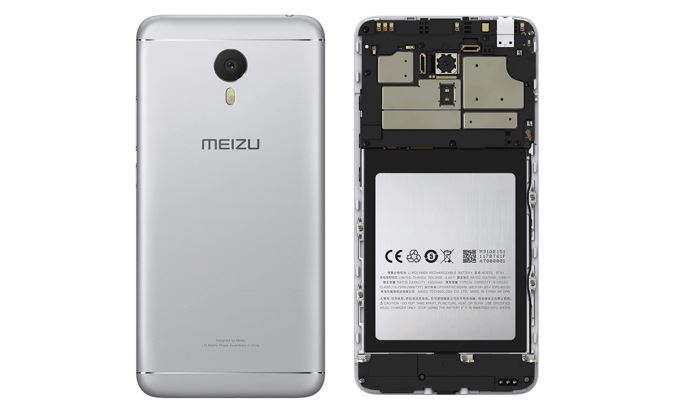
The m3 note comes in two different configurations: 2GB RAM / 16GB internal storage and 3GB RAM / 32GB internal storage. Both versions support microSD cards for storage expansion and feature a rather large 4100 mAh battery, which should provide the m3 note and its lower-clocked P10 SoC with excellent battery life.
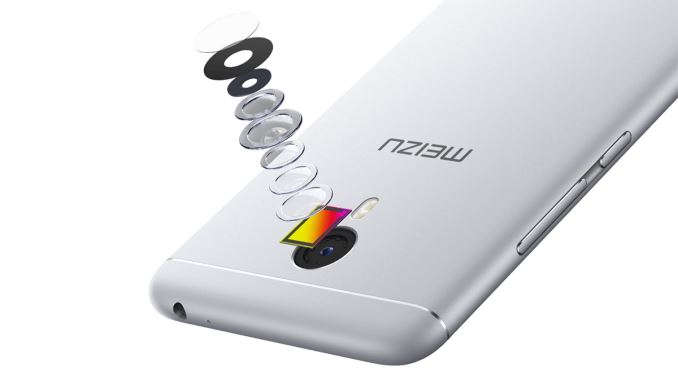
The 13MP rear camera sits behind a 5-piece lens array with an f/2.2 aperture. It’s unclear who makes the sensor, but it does use PDAF to improve focus speed. There’s no OIS support, which is a feature that has yet to trickle down to this price point. The m3 note records video at up to 1080p30, a limit imposed by the P10 SoC.

The m3 note comes in three different colors: gold/white, silver/white, and gray/black. It will be available in China for 799 and 999 RMB for the 2GB and 3GB models respectively. The m3 note will also be available India, Russia, France, Spain, Brazil, Italy, Russia and several other countries throughout Europe, Southeast Asia, Middle East and Latin America, with exact pricing to be determined.
EVGA Releases GeForce GTX 950 Low Power Graphics Cards with 75W TDP

EVGA Releases GeForce GTX 950 Low Power Graphics Cards with 75W TDP

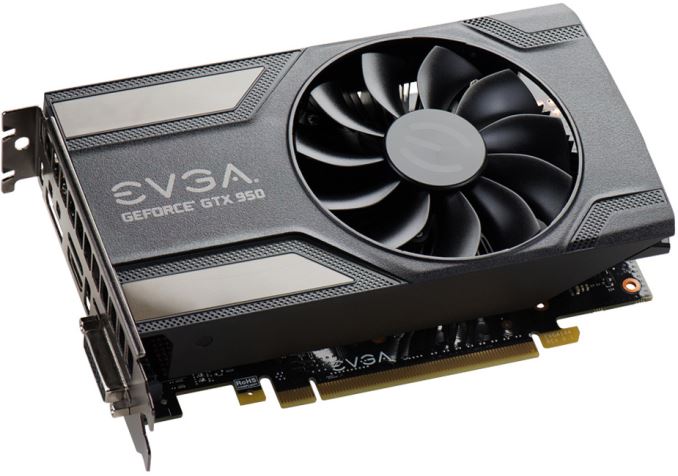
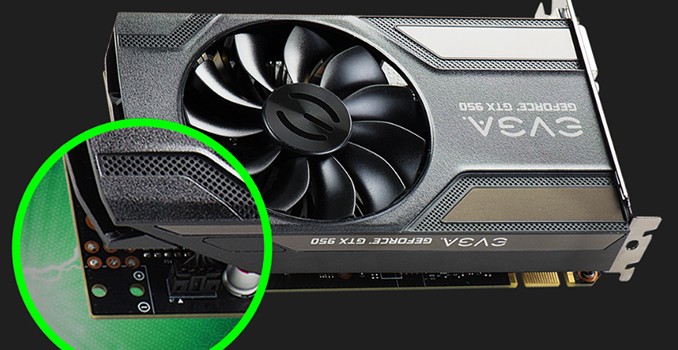
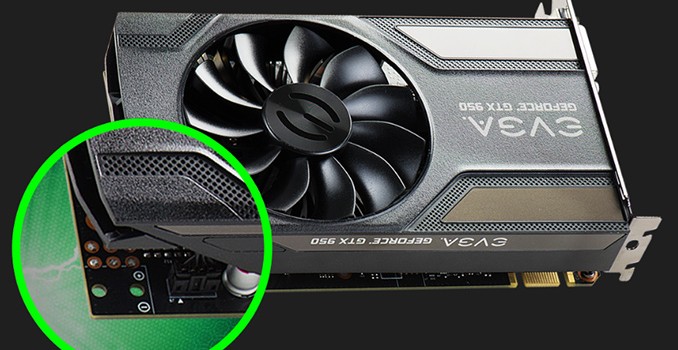
EVGA this week unveiled their NVIDIA GeForce GTX 950-based video cards with reduced power consumption. As a result, these new cards do not require auxiliary power connectors and can be powered entirely by a PCIe x16 slots Similar variants have already been announced from companies like ASUS and MSI, but EVGA decided to release a range of such graphics cards as well, including factory-overclocked models.

EVGA’s family of low-power GeForce GTX 950 graphics cards that do not need external power consists of four models, which is a lot by contrast to other manufacturers. The GPUs are based on NVIDIA’s cut-down GM206 graphics die (768 stream processors, 48 texture units, 32 ROPs, 128-bit GDDR5 memory interface) but use EVGA’s custom PCB with 3+1 phase VRM. The GPUs are equipped with 2 GB of GDDR5 memory, one or two DVI connectors depending on model, one HDMI 2.0 port and one DisplayPort output. 

From the four cards, two of them run at NVIDIA’s reference GPU clock rates of 1025/1190 MHz, while the other two a little bit faster and run the graphics chip at 1076/1253 MHz. In each pair, one has a single DVI-I while the other has DVI-I and DVI-D connectors. All the boards feature 6.6 Gbps GDDR5 memory. As for cooling, they use dual-slot single-fan EVGA ACX 2.0 coolers.

Unfortunately, EVGA does not mark its GeForce GTX 950 boards with reduced power consumption with any easy to recognize label, hence, the only way to distinguish the adapters without PCIe connectors is by referencing the product numbers:

NVIDIA GeForce GTX 950 Graphics Cards Specification Comparison
  EVGA GTX 950 EVGA GTX 950 EVGA GTX 950 EVGA GTX 950 MSI
GTX 950
ASUS
GTX 950
Ref
Product Name 02G-P4-0952 02G-P4-0956 02G-P4-0954 02G-P5-258 2GD5 OCV2 GTX950-2G
CUDA Cores 768
Texture Units 48
ROPs 32
Core Clock 1025
MHz
1076
MHz
1025
MHz
1076
MHz
1076
MHz
1026
MHz
1024
MHz
Boost Clock 1190
MHz
1253
MHz
1190
MHz
1253
MHz
1253
MHz
1190
MHz
1188
MHz
Memory Clock 6.6 Gbps
GDDR5
Memory Bus Width 128-bit
VRAM 2 GB
TDP 75 W 90 W
Outputs DVI-I
DP 1.2
HDMI 2.0
DVI-I
DP 1.2
HDMI 2.0
DVI-D
DVI-I
DP 1.2
HDMI 2.0
DVI-D
DVI-I
DP 1.2
HDMI 2.0
DVI-I
DisplayPort 1.2
HDMI 2.0
Architecture Maxwell 2
GPU GM206
Transistor Count 2.94 B
Manufacturing Process TSMC 28nm
Launch Date Apr ’16 Mar ’16 Mar ’16 Aug ’15
Launch Price unknown $159

While graphics cards like the GeForce GTX 950 are not used to build high-end gaming PCs, these new PCIe-less models can be purchased to upgrade inexpensive or older PCs which sometimes come without an auxiliary PCIe power connector on the power supply. In addition, a GM206-based adapter is a reasonable choice for an HTPC as the GPU supports hardware-accelerated decoding and encoding of H.265 (HEVC) video, as well as HDCP 2.2 content protection over HDMI 2.0 (which is required for Ultra HD Blu-ray playback).

Since at least three manufacturers of NVIDIA graphics cards already offer GeForce GTX 950 boards without auxiliary PCIe power connectors, it is could be assumed that the GM206-251 GPU (revealed by MSI) has been selected due to reduced power requirements. It is unclear whether NVIDIA picks such GPUs itself and then marks them accordingly, or if there is a new revision of the chip and makers of add-in-cards have to test power requirements themselves through binning.

Right now EVGA does not sell its GeForce GTX 950 low power graphics cards on its website. It is unknown at what price these units will be launched at this time.

EVGA Releases GeForce GTX 950 Low Power Graphics Cards with 75W TDP

EVGA Releases GeForce GTX 950 Low Power Graphics Cards with 75W TDP

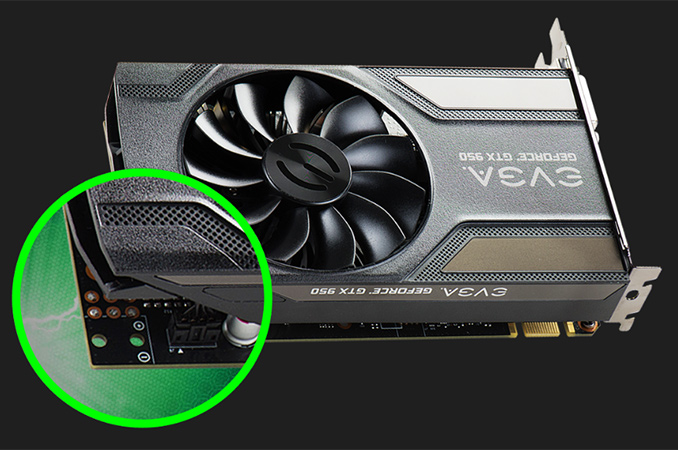
EVGA this week unveiled their NVIDIA GeForce GTX 950-based video cards with reduced power consumption. As a result, these new cards do not require auxiliary power connectors and can be powered entirely by a PCIe x16 slots Similar variants have already been announced from companies like ASUS and MSI, but EVGA decided to release a range of such graphics cards as well, including factory-overclocked models.

EVGA’s family of low-power GeForce GTX 950 graphics cards that do not need external power consists of four models, which is a lot by contrast to other manufacturers. The GPUs are based on NVIDIA’s cut-down GM206 graphics die (768 stream processors, 48 texture units, 32 ROPs, 128-bit GDDR5 memory interface) but use EVGA’s custom PCB with 3+1 phase VRM. The GPUs are equipped with 2 GB of GDDR5 memory, one or two DVI connectors depending on model, one HDMI 2.0 port and one DisplayPort output. 

From the four cards, two of them run at NVIDIA’s reference GPU clock rates of 1025/1190 MHz, while the other two a little bit faster and run the graphics chip at 1076/1253 MHz. In each pair, one has a single DVI-I while the other has DVI-I and DVI-D connectors. All the boards feature 6.6 Gbps GDDR5 memory. As for cooling, they use dual-slot single-fan EVGA ACX 2.0 coolers.

Unfortunately, EVGA does not mark its GeForce GTX 950 boards with reduced power consumption with any easy to recognize label, hence, the only way to distinguish the adapters without PCIe connectors is by referencing the product numbers:

NVIDIA GeForce GTX 950 Graphics Cards Specification Comparison
  EVGA GTX 950 EVGA GTX 950 EVGA GTX 950 EVGA GTX 950 MSI
GTX 950
ASUS
GTX 950
Ref
Product Name 02G-P4-0952 02G-P4-0956 02G-P4-0954 02G-P5-258 2GD5 OCV2 GTX950-2G
CUDA Cores 768
Texture Units 48
ROPs 32
Core Clock 1025
MHz
1076
MHz
1025
MHz
1076
MHz
1076
MHz
1026
MHz
1024
MHz
Boost Clock 1190
MHz
1253
MHz
1190
MHz
1253
MHz
1253
MHz
1190
MHz
1188
MHz
Memory Clock 6.6 Gbps
GDDR5
Memory Bus Width 128-bit
VRAM 2 GB
TDP 75 W 90 W
Outputs DVI-I
DP 1.2
HDMI 2.0
DVI-I
DP 1.2
HDMI 2.0
DVI-D
DVI-I
DP 1.2
HDMI 2.0
DVI-D
DVI-I
DP 1.2
HDMI 2.0
DVI-I
DisplayPort 1.2
HDMI 2.0
Architecture Maxwell 2
GPU GM206
Transistor Count 2.94 B
Manufacturing Process TSMC 28nm
Launch Date Apr ’16 Mar ’16 Mar ’16 Aug ’15
Launch Price unknown $159

While graphics cards like the GeForce GTX 950 are not used to build high-end gaming PCs, these new PCIe-less models can be purchased to upgrade inexpensive or older PCs which sometimes come without an auxiliary PCIe power connector on the power supply. In addition, a GM206-based adapter is a reasonable choice for an HTPC as the GPU supports hardware-accelerated decoding and encoding of H.265 (HEVC) video, as well as HDCP 2.2 content protection over HDMI 2.0 (which is required for Ultra HD Blu-ray playback).

Since at least three manufacturers of NVIDIA graphics cards already offer GeForce GTX 950 boards without auxiliary PCIe power connectors, it is could be assumed that the GM206-251 GPU (revealed by MSI) has been selected due to reduced power requirements. It is unclear whether NVIDIA picks such GPUs itself and then marks them accordingly, or if there is a new revision of the chip and makers of add-in-cards have to test power requirements themselves through binning.

Right now EVGA does not sell its GeForce GTX 950 low power graphics cards on its website. It is unknown at what price these units will be launched at this time.

Samsung Begins To Produce DDR4 Memory Using '10nm Class' Process Tech

Samsung Begins To Produce DDR4 Memory Using ’10nm Class’ Process Tech

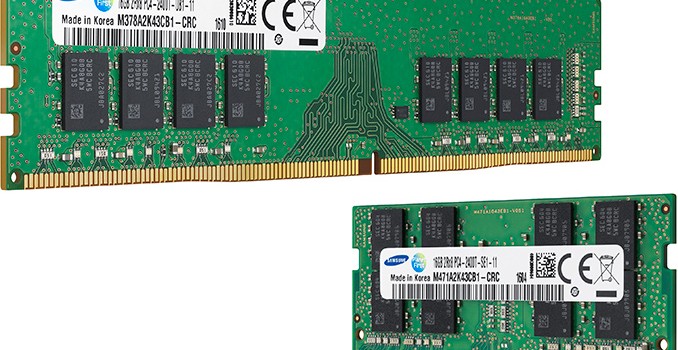
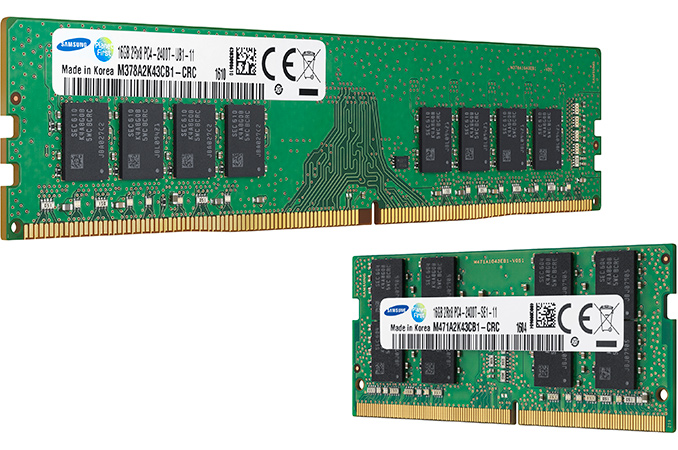
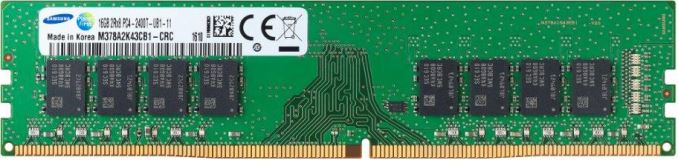
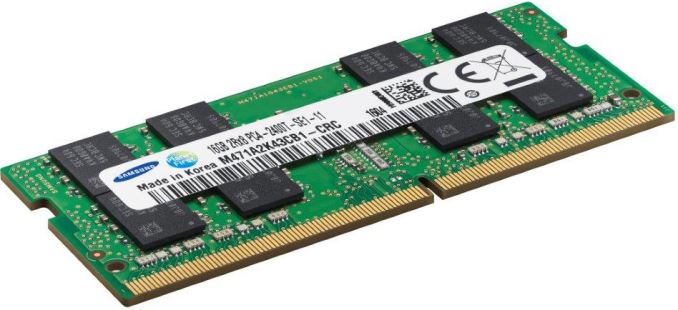
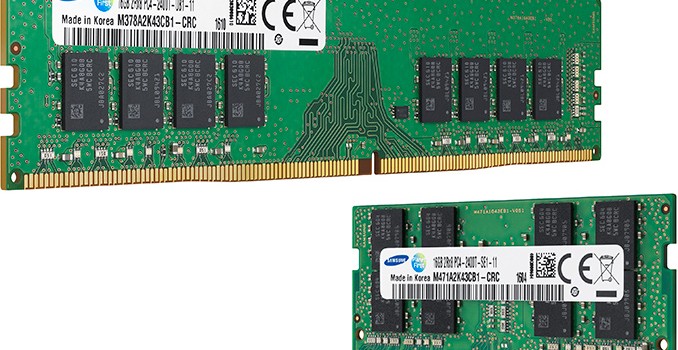
Samsung Electronics has started to manufacture DDR4 memory using its new ’10nm class’ production technology. ’10nm class’, by definition, implies sub-20nm but without fully disclosing the methodology, similar to the first sub-20nm NAND production that used 1x/1y terminology. By using a sub-20 nm fabrication process, this typically helps a company make ICs/DRAM cheaper, faster and more energy efficient, depending on the process complexity. In this case, Samsung continues to use ArF (argon fluoride) immersion lithography tools with quadruple patterning to make its latest memory, which indicates a very high complexity of the new process tech. What is also important is that the new DRAMs feature Samsung’s new memory cell structure.

In the news today, Samsung’s new DDR4 memory chips are produced using 10nm-class manufacturing technology, have 8 Gb capacity, and can operate at 3200 Mbit/s data rate (DDR4-3200). In addition, the new DRAM devices are reported to consume 10 – 20% less power than equivalent DDR4 memory ICs made using a 20 nm fabrication process, based on tests conducted by the memory maker. Finally, Samsung can produce 30% more 8 Gb chips on a single 300 mm wafer thanks to the new manufacturing technology, which will lower their costs once their yields match those of current-gen chips due to having more chips per wafer.

Samsung does not disclose many details about its production process, such as its smallest half-pitch size (which gives actual names to DRAM manufacturing technologies, such as 20 nm or 25 nm). What we do know is that the new tech stacks very narrow cylinder-shaped capacitors on top of transistors, which implies a new DRAM cell structure (4F2?). Manufacturers of memory have historically changed the structures of DRAM cells every five or six years, and each change represents a major technology challenge as the density changes. Samsung says that it has refined the dielectric layer deposition technology and enabled substantial performance improvements, which may mean that the new memory chips can have a higher clock-rate potential than Samsung’s existing DRAMs, or more units will pass the base tests. If this is the case, if we extrapolate, this may open doors to DDR4 memory modules with unprecedented data rates (e.g., higher than DDR4-4400). Nonetheless, use of quadruple patterning significantly increases the complexity of manufacturing, which may somewhat slow down the ramp up of the new memory ICs and cause delays in increased yield refinements.

Samsung claims that later this year it intends to use its 1x nm manufacturing technology to make LPDDR memory with increased capacity, which should help makers of smartphones, tablets and notebooks boost the amount of DRAM inside their devices or reduce pricing.

Use of the sub-20 nm process technology to produce 8 Gb DDR4 chips should make such DRAM ICs cheaper (eventually), which will help PC and server makers to install more memory without increasing prices of their products. At press time, one 8 Gb DDR4 chip costs $4.688, according to DRAMeXchange. By contrast, a 4 Gb DDR4 IC is priced at $1.672. Therefore, using low-capacity chips is still cheaper than using high-capacity DRAM devices. Meanwhile, if you are building servers, you might not have a choice but to utilize 8 Gb chips to create high-end memory modules (i.e., with 128 GB capacities). For that reason, for server manufacturers, Samsung’s new 8 Gb DDR4 chips should be useful.

Samsung Begins To Produce DDR4 Memory Using '10nm Class' Process Tech

Samsung Begins To Produce DDR4 Memory Using ’10nm Class’ Process Tech

Samsung Electronics has started to manufacture DDR4 memory using its new ’10nm class’ production technology. ’10nm class’, by definition, implies sub-20nm but without fully disclosing the methodology, similar to the first sub-20nm NAND production that used 1x/1y terminology. By using a sub-20 nm fabrication process, this typically helps a company make ICs/DRAM cheaper, faster and more energy efficient, depending on the process complexity. In this case, Samsung continues to use ArF (argon fluoride) immersion lithography tools with quadruple patterning to make its latest memory, which indicates a very high complexity of the new process tech. What is also important is that the new DRAMs feature Samsung’s new memory cell structure.

In the news today, Samsung’s new DDR4 memory chips are produced using 10nm-class manufacturing technology, have 8 Gb capacity, and can operate at 3200 Mbit/s data rate (DDR4-3200). In addition, the new DRAM devices are reported to consume 10 – 20% less power than equivalent DDR4 memory ICs made using a 20 nm fabrication process, based on tests conducted by the memory maker. Finally, Samsung can produce 30% more 8 Gb chips on a single 300 mm wafer thanks to the new manufacturing technology, which will lower their costs once their yields match those of current-gen chips due to having more chips per wafer.

Samsung does not disclose many details about its production process, such as its smallest half-pitch size (which gives actual names to DRAM manufacturing technologies, such as 20 nm or 25 nm). What we do know is that the new tech stacks very narrow cylinder-shaped capacitors on top of transistors, which implies a new DRAM cell structure (4F2?). Manufacturers of memory have historically changed the structures of DRAM cells every five or six years, and each change represents a major technology challenge as the density changes. Samsung says that it has refined the dielectric layer deposition technology and enabled substantial performance improvements, which may mean that the new memory chips can have a higher clock-rate potential than Samsung’s existing DRAMs, or more units will pass the base tests. If this is the case, if we extrapolate, this may open doors to DDR4 memory modules with unprecedented data rates (e.g., higher than DDR4-4400). Nonetheless, use of quadruple patterning significantly increases the complexity of manufacturing, which may somewhat slow down the ramp up of the new memory ICs and cause delays in increased yield refinements.

Samsung claims that later this year it intends to use its 1x nm manufacturing technology to make LPDDR memory with increased capacity, which should help makers of smartphones, tablets and notebooks boost the amount of DRAM inside their devices or reduce pricing.

Use of the sub-20 nm process technology to produce 8 Gb DDR4 chips should make such DRAM ICs cheaper (eventually), which will help PC and server makers to install more memory without increasing prices of their products. At press time, one 8 Gb DDR4 chip costs $4.688, according to DRAMeXchange. By contrast, a 4 Gb DDR4 IC is priced at $1.672. Therefore, using low-capacity chips is still cheaper than using high-capacity DRAM devices. Meanwhile, if you are building servers, you might not have a choice but to utilize 8 Gb chips to create high-end memory modules (i.e., with 128 GB capacities). For that reason, for server manufacturers, Samsung’s new 8 Gb DDR4 chips should be useful.