News


ASUS Starts to Ship Its First Curved Ultra-Wide Display: ROG Swift PG348Q

ASUS Starts to Ship Its First Curved Ultra-Wide Display: ROG Swift PG348Q

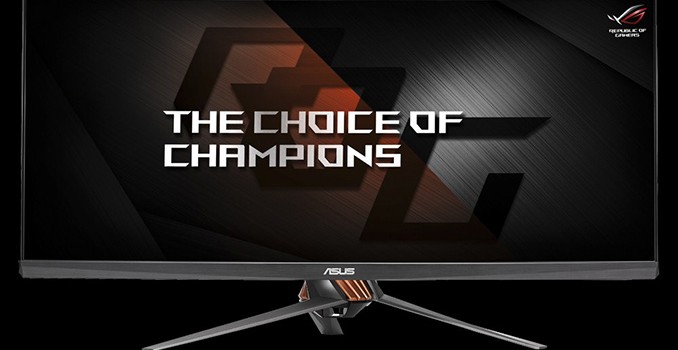
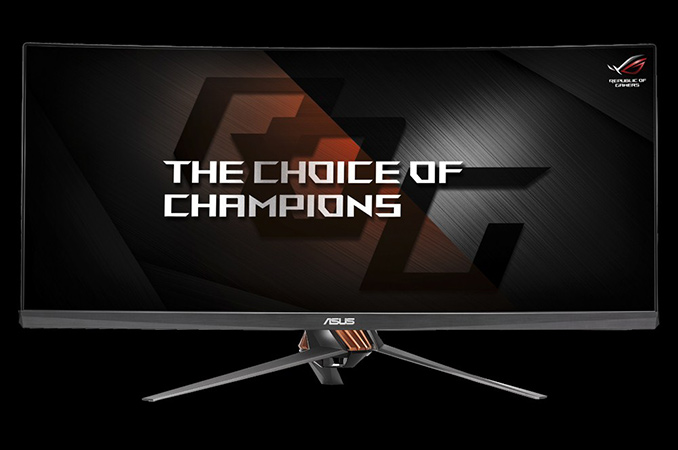
ASUS this week began to ship its first gaming curved ultra-wide display, the ROG Swift PG348Q, which the company introduced back in September and showcased at CES. The monitor, which is the largest ROG display ever, is designed primarily for gamers, features up to 100 Hz refresh rate as well as Nvidia’s G-Sync technology.

The ASUS ROG Swift PG348Q display is based on an IPS panel with 3440×1440 resolution, 1000:1 contrast ratio and 300 cd/m2 brightness. The ultra-wide 34” monitor features 21:9 aspect ratio and 3800R screen curvature, which is larger than a number of 3000R panels that are currently on the market. The monitor can reproduce 1.07 billion colors and covers 100% of sRGB color space, which is not a bad result for a gaming solution. The ROG Swift PG348Q has default refresh rate of 60 Hz and everything between that and 100 Hz should be activated using a special turbo button. ASUS claims that G-Sync variable refresh-rate technology on this display actually works at up to 100 Hz, but to ensure high framerate (as well as refresh rate), a graphics card with sufficient processing performance (e.g., GeForce GTX 980 Ti and higher) is required with demanding titles.

Specifications of ASUS’ Curved Display
  ASUS ROG Swift PG348Q
Panel 34″ IPS
Resolution 3440 x 1440
Refresh Rate 50 Hz – 100 Hz
Response Time 5 ms gray-to-gray
Brightness 300 cd/m²
Contrast 1000:1
Viewing Angles 178°/178° horizontal/vertical
PPI 109 pixels per inch
Colors 1.07 billion
Color Saturation 100% sRGB
Curvature 3800R

The ROG Swift PG348Q is equipped with one DisplayPort 1.2 and one HDMI 1.4 inputs. The latter only supports 3440×1440 resolution with 50 Hz refresh rate, according to ASUS; for everything between 50 Hz and 100 Hz the DP input must be used. The display also features a 4-port USB 3.0 hub and two 2 W speakers.

The ROG Swift PG348Q will be ASUS’s largest display ever. It will also be the company’s flagship monitor for gamers for a while. Since the company does not offer non-curved gaming displays larger than 28”, one might expect to expect ASUS to introduce one or two non-gaming models in the future. 

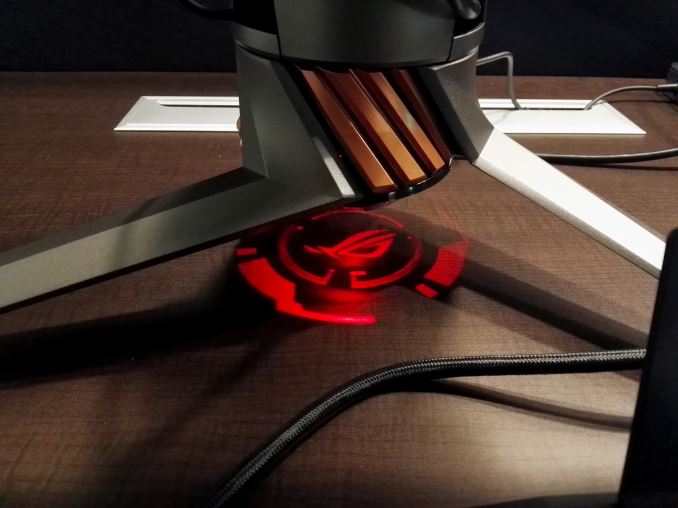
The new display uses the new ASUS ROG color scheme — plasma copper inlays on armor titanium casing as well as an LED effect on the bottom. The monitor also has an ultra-thin frame (which ASUS calls frameless design) as well as tilt, swivel, and height adjustments. Eventually, other ROG-branded displays will inherit similar design and color scheme.

ASUS did not reveal the official MSRP of its ROG Swift PG348Q display and at time to press, and the product should be available at major U.S. retail stores from May. Given the fact that the monitor is a pretty unique combination consisting of a curved IPS panel, high resolution, G-Sync technology and up to 100 Hz refresh rate, this product will be in the upper echelons of monitor pricing. TechReport caught the fact that this panel is being offered by iBuyPower as an add-on option to a prebuilt system for $1200, so we would expect the full retail price to be in that $900-$1200 region. Anyone still want VR?

MSI Releases Vortex: A Mac Pro-Like SLI PC for Gamers and VR, from $2199

MSI Releases Vortex: A Mac Pro-Like SLI PC for Gamers and VR, from $2199

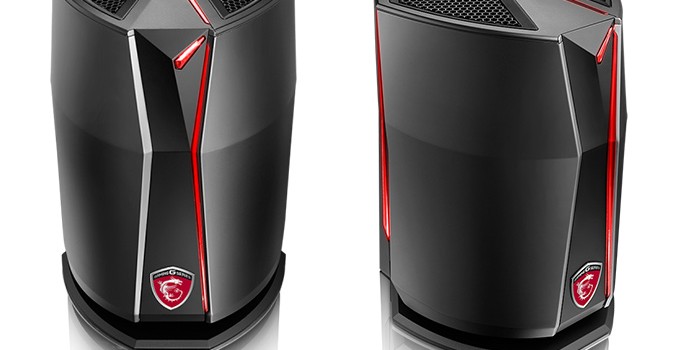
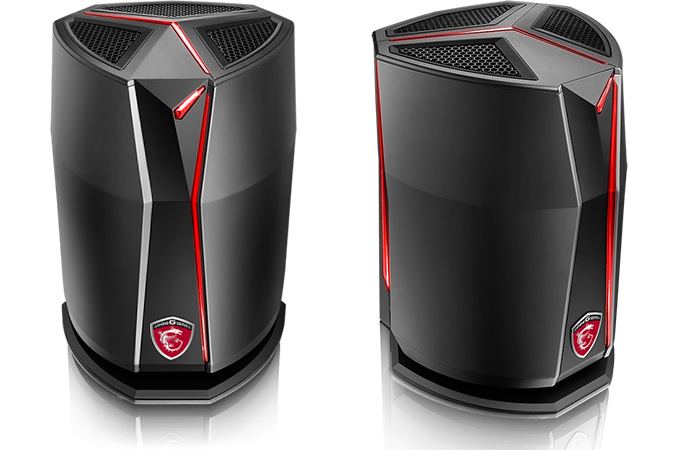
We originally laid eyes on the final design back at CES, but now MSI has begun to sell its Vortex gaming desktops in the US. The 6.5-liter systems resembles the design of Apple’s Mac Pro, using a singular fan and triangular core to pack a high-end CPU along with two GPUs and a lot of memory, offering impressive performance at a premium price.

When Apple introduced its current-generation Mac Pro a little more than two years ago, the company clearly demonstrated that it was possible to build a small form-factor workstation with two professional GPUs and a multi-core Intel Xeon E5 processor with only one fan. Since then, a number of PC makers have released high-end small form factor desktops in the mini-ITX form-factor, but all of them were equipped with multiple fans and were still larger than Apple’s Mac Pro, or traditionally looked like PCs such as ASUS’ GR20. Last year MSI decided to take a leaf out of Apple’s book and develop a gaming PC that would borrow Mac Pro’s triangle arrangement of CPU and GPUs as well as round design with one blower fan. The company first demonstrated its Vortex desktop last fall and has been refining its system since then. MSI showcased near final version at CES with a heavy bent on virtual reality support, but were still tinkering with the final specifications. Now MSI is finally ready to ship the Vortex.


MXM Modules in play, showing Samsung GDDR5

MSI’s Vortex G65 platform is based on Intel’s Core i7-6700K processor as well as the Z170 chipset. With this combination, MSI will offer systems in two variants, with either two GeForce GTX 980 GPUs in SLI (the SLI-001) or GeForce GTX 960 GPUs in SLI (SLI-011). The MSI Vortex G65 systems are equipped with 32 or 16 GB of DDR4-2133 memory respectively, two 128 GB SSDs in RAID (M.2 form-factor with PCIe 3.0 x4 interface, no word on the exact models) and 1 TB HDD at 7200 RPM. The gaming machines also feature two Rivet Networks Killer Gigabit Ethernet E2400 controllers and one Killer Wireless-AC 1535 Wi-Fi controller (802.11ac) to support DoubleShot-X3 Pro as well as two Thunderbolt 3 ports (we’re unsure if this is one controller or two at this point). As for external ports, the PCs have two TB 3, two DisplayPort 1.2, two HDMI 1.4 and four USB 3.0 connectors. No word on the audio codec, as the rear of the chassis only has headphone/microphone jacks. There’s no word if the TB3 ports also support USB 3.1, but given that it hasn’t been advertised at this time we assume not.  We can confirm that the TB3 ports do support USB 3.1.

The Vortex G65 systems from MSI heavily use custom-built hardware, such as the motherboard, cooling system, power supply and so forth. Nonetheless, they still use standard Intel’s LGA1151 processors, MXM graphics modules for the GPUs, PCIe SSDs, SO-DIMM modules for memory and so on, which sounds as if they can be easily upgraded at MSI select partners and retailers (in fact, select MSI’s partners can even upgrade MXM modules). Still, owners should keep in mind that the PCs are equipped with 450W PSUs, perhaps indicating that the parts on offer are specially binned for the low power/voltage characteristics needed for the Vortex. The Vortex G65 platform should fully support overclocking, but given thermal and power consumption constraints, it is hard to expect the Vortex G65 to be a good overclocker, but that is a natural trade-off between performance, style and size.

Specifications of MSI Vortex G65 and Apple Mac Pro
  MSI Vortex G65
SLI-011
MSI Vortex G65
SLI-002
Apple Mac Pro
CPU Intel Core i7-6700K
Quad Core, 4.0 GHz with HT
Intel Xeon E5-1650 v2
Six Core at 3.5 GHz
PCH Intel Z170 Intel C602/C604
RAM 4 SO-DIMM Slots
2 x 8 GB DDR4-2133
4 SO-DIMM Slots
4 x 8
 GB DDR4-2133
16 GB DDR3-1866
GPU 2 x NVIDIA GeForce
GTX 960 (GTX 970M?)
 3 GB
2 x NVIDIA GeForce
GTX 980 (notebook?)
8 GB
2 x AMD FirePro
D500 3 GB
SSD SuperRaid 4
2 x 128 GB PCIe 3.0 x4 SSDs plus
256 GB PCIe
HDD 1 TB HDD with 7200 RPM spindle speed
LAN 2x Rivet Killer E2400 Gigabit Ethernet controllers 2x Gigabit Ethernet
WLAN Rivet Killer Wireless-AC-1535 802.11ac
Wi-Fi + Bluetooth (2T2R) with MU-MIMO
802.11ac Wi-Fi
3-stream
PSU 450 W internal, 80 Plus Gold
DisplayPort 2 x DP 1.2 6 x TB2
HDMI 2 x HDMI 1.4
Thunderbolt 2 x TB3 via Type-C 6 x TB2
USB 4 x USB 3.0
2 x USB 3.1 via TB3
Dimensions 7.61 x 7.01 x 10.55″ 6.6 x 6.6 x 9.9″
Volume 6.5 liter unknown
Weight 8.8 lbs (4 kilograms) 11 lbs (5 kilograms)
Price $2199 $3999 $3999

It is worth noting that there are two really interesting things here with the GPUs on offer. Firstly, the GTX 980 in 8 GB form, as far as we can tell, has not been formally announced or released by NVIDIA. So either MSI is creating its own MXM module for this as an AIB partner, or they’ve pre-empted an NVIDIA announcement, or the part is a GTX 980 (notebook) with 8 GB of memory, which is currently listed at OriginPC. We had feared this was the 980M, which has 25% fewer CUDA cores, but is more common in 8GB form. Using the GTX 980 (notebook) variant makes sense, with a given TDP of 145 W per card, rather than 165 W per card on the desktop variant.

Next, on the GTX 960 side: MSI puts the total VRAM at 6 GB for the SLI system, meaning 3 GB per card, which would imply a 192-bit bus. No GTX 960 variant has a 192-bit bus, nor does the GTX 960M, which means this is either a new unreleased version of the GTX 960 with an unbalanced memory allocation (which has happened before) or something more akin to a GTX 970M which does have a 192-bit bus, but they’re calling it a GTX 960. It’s an interesting mix of information here. We’ve asked for clarification.

Update from MSI: For the GTX980 SLI, this is the MXM version (not the GTX980M but the GTX980).  We are using the same graphics card as in our GT80 TITAN SLI. For the GTX960 SLI we are also using is the MXM version.  Same MXM card we are using on the GTX970M. Since this is a “desktop” product, Nvidia new naming rule will not have the “M” in there and kick down the number to 960 [and so it has the same specifications as the GTX970M as far as CUDA cores/ROPs – ed].


Exploded view

The MSI Vortex G65 system also comes with Dragon Center dashboard application, which allows to customize lighting of the PC case, monitor system performance, launch utilities and apps, fine-tune the system with personalized profiles and so on. Nahimic audio is also bundled in the package.

MSI positions its Vortex G65 machines as SFF PCs capable of handling virtual reality games. The two graphics adapters can drive up to four monitors (and with Thunderbolt can connect to up to six displays), hence the system can be used not only for entertainment but also for work. At present MSI does not position its Vortex for professional applications, but it should not be a problem to build a workstation-class system of similar dimensions for the company and we would imagine some top-tier customers are already inquiring.

MSI charges $2199 for the Vortex G65 SLI-011 system with two GeForce GTX 960 graphics adapters. The top-of-the-range Vortex G65 SLI-002 with GTX 980 in SLI costs $3999, which is in line with the price of an advanced Apple Mac Pro.

MSI Releases Vortex: A Mac Pro-Like SLI PC for Gamers and VR, from $2199

MSI Releases Vortex: A Mac Pro-Like SLI PC for Gamers and VR, from $2199

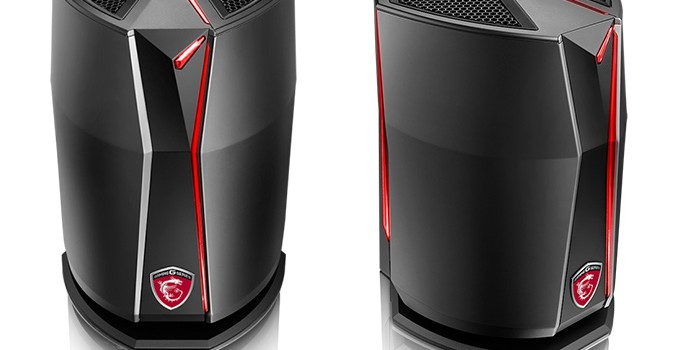
We originally laid eyes on the final design back at CES, but now MSI has begun to sell its Vortex gaming desktops in the US. The 6.5-liter systems resembles the design of Apple’s Mac Pro, using a singular fan and triangular core to pack a high-end CPU along with two GPUs and a lot of memory, offering impressive performance at a premium price.

When Apple introduced its current-generation Mac Pro a little more than two years ago, the company clearly demonstrated that it was possible to build a small form-factor workstation with two professional GPUs and a multi-core Intel Xeon E5 processor with only one fan. Since then, a number of PC makers have released high-end small form factor desktops in the mini-ITX form-factor, but all of them were equipped with multiple fans and were still larger than Apple’s Mac Pro, or traditionally looked like PCs such as ASUS’ GR20. Last year MSI decided to take a leaf out of Apple’s book and develop a gaming PC that would borrow Mac Pro’s triangle arrangement of CPU and GPUs as well as round design with one blower fan. The company first demonstrated its Vortex desktop last fall and has been refining its system since then. MSI showcased near final version at CES with a heavy bent on virtual reality support, but were still tinkering with the final specifications. Now MSI is finally ready to ship the Vortex.


MXM Modules in play, showing Samsung GDDR5

MSI’s Vortex G65 platform is based on Intel’s Core i7-6700K processor as well as the Z170 chipset. With this combination, MSI will offer systems in two variants, with either two GeForce GTX 980 GPUs in SLI (the SLI-001) or GeForce GTX 960 GPUs in SLI (SLI-011). The MSI Vortex G65 systems are equipped with 32 or 16 GB of DDR4-2133 memory respectively, two 128 GB SSDs in RAID (M.2 form-factor with PCIe 3.0 x4 interface, no word on the exact models) and 1 TB HDD at 7200 RPM. The gaming machines also feature two Rivet Networks Killer Gigabit Ethernet E2400 controllers and one Killer Wireless-AC 1535 Wi-Fi controller (802.11ac) to support DoubleShot-X3 Pro as well as two Thunderbolt 3 ports (we’re unsure if this is one controller or two at this point). As for external ports, the PCs have two TB 3, two DisplayPort 1.2, two HDMI 1.4 and four USB 3.0 connectors. No word on the audio codec, as the rear of the chassis only has headphone/microphone jacks. There’s no word if the TB3 ports also support USB 3.1, but given that it hasn’t been advertised at this time we assume not.  We can confirm that the TB3 ports do support USB 3.1.

The Vortex G65 systems from MSI heavily use custom-built hardware, such as the motherboard, cooling system, power supply and so forth. Nonetheless, they still use standard Intel’s LGA1151 processors, MXM graphics modules for the GPUs, PCIe SSDs, SO-DIMM modules for memory and so on, which sounds as if they can be easily upgraded at MSI select partners and retailers (in fact, select MSI’s partners can even upgrade MXM modules). Still, owners should keep in mind that the PCs are equipped with 450W PSUs, perhaps indicating that the parts on offer are specially binned for the low power/voltage characteristics needed for the Vortex. The Vortex G65 platform should fully support overclocking, but given thermal and power consumption constraints, it is hard to expect the Vortex G65 to be a good overclocker, but that is a natural trade-off between performance, style and size.

Specifications of MSI Vortex G65 and Apple Mac Pro
  MSI Vortex G65
SLI-011
MSI Vortex G65
SLI-002
Apple Mac Pro
CPU Intel Core i7-6700K
Quad Core, 4.0 GHz with HT
Intel Xeon E5-1650 v2
Six Core at 3.5 GHz
PCH Intel Z170 Intel C602/C604
RAM 4 SO-DIMM Slots
2 x 8 GB DDR4-2133
4 SO-DIMM Slots
4 x 8
 GB DDR4-2133
16 GB DDR3-1866
GPU 2 x NVIDIA GeForce
GTX 960 (GTX 970M?)
 3 GB
2 x NVIDIA GeForce
GTX 980 (notebook?)
8 GB
2 x AMD FirePro
D500 3 GB
SSD SuperRaid 4
2 x 128 GB PCIe 3.0 x4 SSDs plus
256 GB PCIe
HDD 1 TB HDD with 7200 RPM spindle speed
LAN 2x Rivet Killer E2400 Gigabit Ethernet controllers 2x Gigabit Ethernet
WLAN Rivet Killer Wireless-AC-1535 802.11ac
Wi-Fi + Bluetooth (2T2R) with MU-MIMO
802.11ac Wi-Fi
3-stream
PSU 450 W internal, 80 Plus Gold
DisplayPort 2 x DP 1.2 6 x TB2
HDMI 2 x HDMI 1.4
Thunderbolt 2 x TB3 via Type-C 6 x TB2
USB 4 x USB 3.0
2 x USB 3.1 via TB3
Dimensions 7.61 x 7.01 x 10.55″ 6.6 x 6.6 x 9.9″
Volume 6.5 liter unknown
Weight 8.8 lbs (4 kilograms) 11 lbs (5 kilograms)
Price $2199 $3999 $3999

It is worth noting that there are two really interesting things here with the GPUs on offer. Firstly, the GTX 980 in 8 GB form, as far as we can tell, has not been formally announced or released by NVIDIA. So either MSI is creating its own MXM module for this as an AIB partner, or they’ve pre-empted an NVIDIA announcement, or the part is a GTX 980 (notebook) with 8 GB of memory, which is currently listed at OriginPC. We had feared this was the 980M, which has 25% fewer CUDA cores, but is more common in 8GB form. Using the GTX 980 (notebook) variant makes sense, with a given TDP of 145 W per card, rather than 165 W per card on the desktop variant.

Next, on the GTX 960 side: MSI puts the total VRAM at 6 GB for the SLI system, meaning 3 GB per card, which would imply a 192-bit bus. No GTX 960 variant has a 192-bit bus, nor does the GTX 960M, which means this is either a new unreleased version of the GTX 960 with an unbalanced memory allocation (which has happened before) or something more akin to a GTX 970M which does have a 192-bit bus, but they’re calling it a GTX 960. It’s an interesting mix of information here. We’ve asked for clarification.

Update from MSI: For the GTX980 SLI, this is the MXM version (not the GTX980M but the GTX980).  We are using the same graphics card as in our GT80 TITAN SLI. For the GTX960 SLI we are also using is the MXM version.  Same MXM card we are using on the GTX970M. Since this is a “desktop” product, Nvidia new naming rule will not have the “M” in there and kick down the number to 960 [and so it has the same specifications as the GTX970M as far as CUDA cores/ROPs – ed].


Exploded view

The MSI Vortex G65 system also comes with Dragon Center dashboard application, which allows to customize lighting of the PC case, monitor system performance, launch utilities and apps, fine-tune the system with personalized profiles and so on. Nahimic audio is also bundled in the package.

MSI positions its Vortex G65 machines as SFF PCs capable of handling virtual reality games. The two graphics adapters can drive up to four monitors (and with Thunderbolt can connect to up to six displays), hence the system can be used not only for entertainment but also for work. At present MSI does not position its Vortex for professional applications, but it should not be a problem to build a workstation-class system of similar dimensions for the company and we would imagine some top-tier customers are already inquiring.

MSI charges $2199 for the Vortex G65 SLI-011 system with two GeForce GTX 960 graphics adapters. The top-of-the-range Vortex G65 SLI-002 with GTX 980 in SLI costs $3999, which is in line with the price of an advanced Apple Mac Pro.
Microsoft Rolls Out Windows 10 Mobile To Windows Phone 8.1 Devices

Microsoft Rolls Out Windows 10 Mobile To Windows Phone 8.1 Devices

The journey of Windows 10 Mobile from announcement to release has certainly been a strange one. The OS itself was announced roughly one year ago, and around that time Microsoft stated that it would make its way to existing Windows Phone 8.1 devices in December. As December of 2015 came and went, they issued another statement which said that it would be pushed to the first part of 2016.

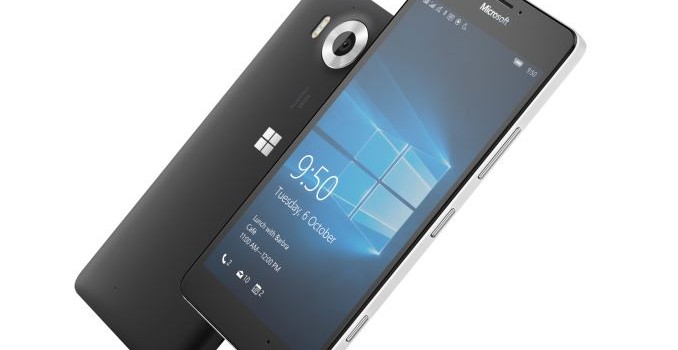
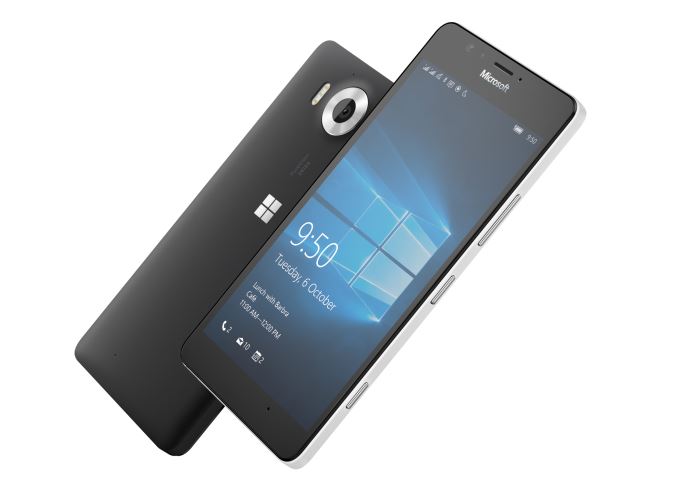
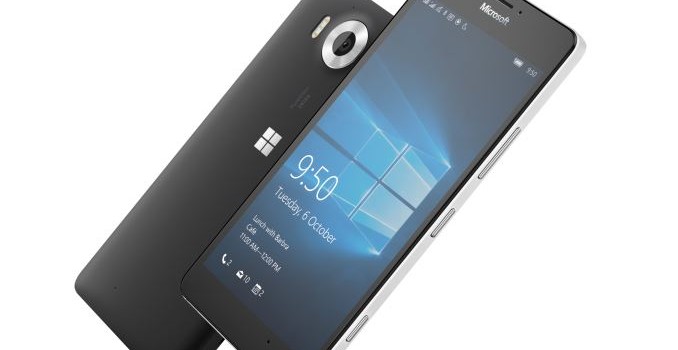
The delays with the release of the OS were fairly well understood by users participating in the Insider beta program, as there were clearly areas that needed to be improved before the software could be widely released. However, October brought about an oddity of sorts as the Lumia 950 and 950XL launched with Windows 10 Mobile while the OS still felt unfinished to users who were beta testing it. While I won’t get in to the state of Windows 10 Mobile as it launched in October, the launch of the 950 and 950XL made it clear that the OS needed to come soon to the rest of the Windows Phone user base.

Today Microsoft has made good on their promise to bring Windows 10 Mobile to select Windows Phone 8 and 8.1 devices. Getting the specifics on which devices are supported is probably the most important part of the announcement, as the update does not cover all Windows Phone 8 devices, and it doesn’t necessarily cover all devices that were originally eligible for the Windows Insider beta program. By brand, the devices that will receive the Windows 10 Mobile update are as follows:

Windows 10 Mobile Supported Update List
Brand Models
Lumia 1520
930
640
640XL
730
735
830
532
535
540
635 (1GB)
636 (1GB)
638 (1GB)
430
435
BLU Win HD w510U
Win HD LTE x150q
MCJ Madosma Q501

I have to admit that I’d never heard of the MCJ Madosma Q501, but it’s a phone for the Japanese market, so hopefully those users will be pleased with the update. As for the devices from BLU, the update is limited to the Win HD and Win HD LTE. The former of those two is a Snapdragon 200 device with two Cortex A7 cores but 1GB of RAM, which makes it clear that the limiting factor here is RAM more than processing power.

Finally, there’s the Lumia devices. The list of eligible devices is fairly substantial, but there’s again the caveat with models that came in two versions that you need the model with 1GB of RAM.

To prepare for the update to Windows 10 Mobile and confirm your phone’s eligibility Microsoft recommends that you download the Update Advisor application. They’ve also set up a support page with some more information about the upgrade.

Microsoft Rolls Out Windows 10 Mobile To Windows Phone 8.1 Devices

Microsoft Rolls Out Windows 10 Mobile To Windows Phone 8.1 Devices

The journey of Windows 10 Mobile from announcement to release has certainly been a strange one. The OS itself was announced roughly one year ago, and around that time Microsoft stated that it would make its way to existing Windows Phone 8.1 devices in December. As December of 2015 came and went, they issued another statement which said that it would be pushed to the first part of 2016.

The delays with the release of the OS were fairly well understood by users participating in the Insider beta program, as there were clearly areas that needed to be improved before the software could be widely released. However, October brought about an oddity of sorts as the Lumia 950 and 950XL launched with Windows 10 Mobile while the OS still felt unfinished to users who were beta testing it. While I won’t get in to the state of Windows 10 Mobile as it launched in October, the launch of the 950 and 950XL made it clear that the OS needed to come soon to the rest of the Windows Phone user base.

Today Microsoft has made good on their promise to bring Windows 10 Mobile to select Windows Phone 8 and 8.1 devices. Getting the specifics on which devices are supported is probably the most important part of the announcement, as the update does not cover all Windows Phone 8 devices, and it doesn’t necessarily cover all devices that were originally eligible for the Windows Insider beta program. By brand, the devices that will receive the Windows 10 Mobile update are as follows:

Windows 10 Mobile Supported Update List
Brand Models
Lumia 1520
930
640
640XL
730
735
830
532
535
540
635 (1GB)
636 (1GB)
638 (1GB)
430
435
BLU Win HD w510U
Win HD LTE x150q
MCJ Madosma Q501

I have to admit that I’d never heard of the MCJ Madosma Q501, but it’s a phone for the Japanese market, so hopefully those users will be pleased with the update. As for the devices from BLU, the update is limited to the Win HD and Win HD LTE. The former of those two is a Snapdragon 200 device with two Cortex A7 cores but 1GB of RAM, which makes it clear that the limiting factor here is RAM more than processing power.

Finally, there’s the Lumia devices. The list of eligible devices is fairly substantial, but there’s again the caveat with models that came in two versions that you need the model with 1GB of RAM.

To prepare for the update to Windows 10 Mobile and confirm your phone’s eligibility Microsoft recommends that you download the Update Advisor application. They’ve also set up a support page with some more information about the upgrade.