News


GDC 2016: Tearing & Freesync/G-Sync Support Coming to Windows' UWP Apps

GDC 2016: Tearing & Freesync/G-Sync Support Coming to Windows’ UWP Apps

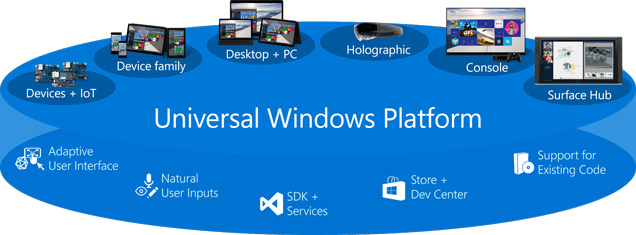
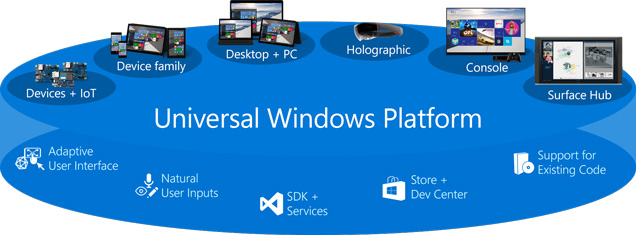
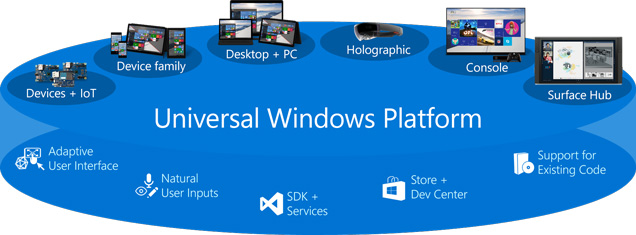
With the recent release of the first major games built for Windows’ Universal Windows Platform runtime, the current limitations of UWP has been a hot topic in technical circles. When it comes to gaming, UWP as it stands is not up to par with the Win32 API we have come to know and tolerate. To that end, with Microsoft running a block of technical sessions at today’s GDC, I checked in on the state of UWP and where Microsoft is in addressing some of the concerns that have been raised over the past couple of weeks.

The overall message from Microsoft right now is to wait and see. Talking to Microsoft representatives and speakers, the company is well aware of what’s being said and wants to address it. GDC just won’t be that venue. Rather the company will be updating the press and developers on UWP at BUILD 2016, Microsoft’s annual conference that’s taking place in two weeks. And while the company’s reps can’t make specific comments at GDC on what to expect later this month, I do consider it a positive sign that they are aware of what’s going on and that they are preparing what looks to be a serious response.

Meanwhile on a related note, in this year’s DirectX 12 session, Microsoft has confirmed that they are going to be addressing the current refresh interval limitations of UWP. In short, Windows UWP will be gaining support for interval immediate refreshing, otherwise known as tearing. Tearing currently isn’t allowed, and while tearing is not typically desirable, there are situations where the bare minimum latency it affords may be more useful than displaying a whole frame without corruption. This will also allow Freesync and G-Sync variable refresh rate technologies to work with UWP, as the underlying issues blocking them with the current system are much similar.  As it stands there isn’t an ETA on this update, however it’s something the DirectX team has taken to heart, and with a bit of luck it may be sooner than later.

GDC 2016: Tearing & Freesync/G-Sync Support Coming to Windows' UWP Apps

GDC 2016: Tearing & Freesync/G-Sync Support Coming to Windows’ UWP Apps

With the recent release of the first major games built for Windows’ Universal Windows Platform runtime, the current limitations of UWP has been a hot topic in technical circles. When it comes to gaming, UWP as it stands is not up to par with the Win32 API we have come to know and tolerate. To that end, with Microsoft running a block of technical sessions at today’s GDC, I checked in on the state of UWP and where Microsoft is in addressing some of the concerns that have been raised over the past couple of weeks.

The overall message from Microsoft right now is to wait and see. Talking to Microsoft representatives and speakers, the company is well aware of what’s being said and wants to address it. GDC just won’t be that venue. Rather the company will be updating the press and developers on UWP at BUILD 2016, Microsoft’s annual conference that’s taking place in two weeks. And while the company’s reps can’t make specific comments at GDC on what to expect later this month, I do consider it a positive sign that they are aware of what’s going on and that they are preparing what looks to be a serious response.

Meanwhile on a related note, in this year’s DirectX 12 session, Microsoft has confirmed that they are going to be addressing the current refresh interval limitations of UWP. In short, Windows UWP will be gaining support for interval immediate refreshing, otherwise known as tearing. Tearing currently isn’t allowed, and while tearing is not typically desirable, there are situations where the bare minimum latency it affords may be more useful than displaying a whole frame without corruption. This will also allow Freesync and G-Sync variable refresh rate technologies to work with UWP, as the underlying issues blocking them with the current system are much similar.  As it stands there isn’t an ETA on this update, however it’s something the DirectX team has taken to heart, and with a bit of luck it may be sooner than later.
Intel's Skull Canyon NUC is Official: $650, Shipping In May

Intel’s Skull Canyon NUC is Official: $650, Shipping In May

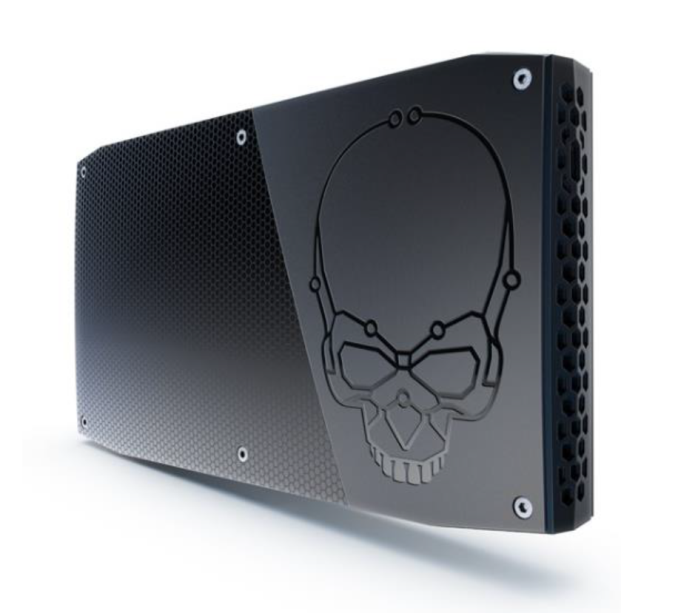
Back in January, Intel had provided us with information about the Skull Canyon NUC based on a Skylake H-Series CPU(with Iris Pro Graphics). Today, at GDC 2016, Intel made the specifications official. Pricing and availability information was also provided.

The key aspect that was not revealed before was the dimensions. The Skull Canyon NUC (NUC6i7KYK) will come in at 216mm x 116mm x 23mm, with the volume coming in at just 0.69L. For comparison, the Skylake NUC6i5SYK (non-2.5″ drive version) comes in at 115mm x 111mm x 32mm (0.41L), while NUC6i5SYH (2.5″ drive bay-enabled) one is 115mm x 111mm x 48mm (0.61L). The rest of the specifications are outlined in the table below:

Intel NUC6i7KYK (Skull Canyon) Specifications
Processor Intel Core i7-6770HQ
Skylake, 4C/8T, 2.6 GHz (Turbo to 3.5 GHz), 14nm, 6MB L2, 45W TDP
Memory 2x DDR4 SO-DIMM (2133+ MHz)
Graphics Intel Iris Pro Graphics 580 (Skylake-H GT4+4e with 128MB eDRAM)
Disk Drive(s) Dual M.2 (SATA3 / PCIe 3.0 x4 NVMe / AHCI SSDs)
Networking Intel Dual Band Wireless-AC 8260 (2×2 802.11ac – 867 Mbps + Bluetooth 4.2)
Intel I-219V Gigabit Ethernet
Audio 3.5mm Audio Jack (Headphone / Microphone)
Capable of 5.1/7.1 digital output with HD audio bitstreaming (HDMI)
Miscellaneous I/O Ports 1x Thunderbolt 3 / USB 3.1 Gen 2 Type-C
4x USB 3.0 (incl. one charging port)
1x SDXC (UHS-I)
1x HDMI 2.0, 1x mini-DP 1.2
Consumer Infrared Sensor
Operating System Barebones
Pricing $650 (Barebones)
$999 (Typical build with 16GB DDR4, 256GB SSD and Windows 10)
Fact Sheet Intel NUC6i7KYK GDC Fact Sheet (PDF)

Note that the HDMI 2.0 output is enabled by an external LSPcon (not Alpine Ridge). So, we will definitely have 4Kp60 output with HDCP 2.2 support over the HDMI port, making it suitable as a future-proof HTPC platform. From a gaming perspective, the availability of Thunderbolt 3 enables users to add an external graphics dock like the recently announced Razer Core eGFX module. Note that any external GPU will be able to talk to the CPU only over a PCIe 3.0 x4 link (which should be plenty in almost all cases).

The Skull Canyon NUC will be available to pre-order on Newegg next month, with shipping in May 2016.

Intel's Skull Canyon NUC is Official: $650, Shipping In May

Intel’s Skull Canyon NUC is Official: $650, Shipping In May

Back in January, Intel had provided us with information about the Skull Canyon NUC based on a Skylake H-Series CPU(with Iris Pro Graphics). Today, at GDC 2016, Intel made the specifications official. Pricing and availability information was also provided.

The key aspect that was not revealed before was the dimensions. The Skull Canyon NUC (NUC6i7KYK) will come in at 216mm x 116mm x 23mm, with the volume coming in at just 0.69L. For comparison, the Skylake NUC6i5SYK (non-2.5″ drive version) comes in at 115mm x 111mm x 32mm (0.41L), while NUC6i5SYH (2.5″ drive bay-enabled) one is 115mm x 111mm x 48mm (0.61L). The rest of the specifications are outlined in the table below:

Intel NUC6i7KYK (Skull Canyon) Specifications
Processor Intel Core i7-6770HQ
Skylake, 4C/8T, 2.6 GHz (Turbo to 3.5 GHz), 14nm, 6MB L2, 45W TDP
Memory 2x DDR4 SO-DIMM (2133+ MHz)
Graphics Intel Iris Pro Graphics 580 (Skylake-H GT4+4e with 128MB eDRAM)
Disk Drive(s) Dual M.2 (SATA3 / PCIe 3.0 x4 NVMe / AHCI SSDs)
Networking Intel Dual Band Wireless-AC 8260 (2×2 802.11ac – 867 Mbps + Bluetooth 4.2)
Intel I-219V Gigabit Ethernet
Audio 3.5mm Audio Jack (Headphone / Microphone)
Capable of 5.1/7.1 digital output with HD audio bitstreaming (HDMI)
Miscellaneous I/O Ports 1x Thunderbolt 3 / USB 3.1 Gen 2 Type-C
4x USB 3.0 (incl. one charging port)
1x SDXC (UHS-I)
1x HDMI 2.0, 1x mini-DP 1.2
Consumer Infrared Sensor
Operating System Barebones
Pricing $650 (Barebones)
$999 (Typical build with 16GB DDR4, 256GB SSD and Windows 10)
Fact Sheet Intel NUC6i7KYK GDC Fact Sheet (PDF)

Note that the HDMI 2.0 output is enabled by an external LSPcon (not Alpine Ridge). So, we will definitely have 4Kp60 output with HDCP 2.2 support over the HDMI port, making it suitable as a future-proof HTPC platform. From a gaming perspective, the availability of Thunderbolt 3 enables users to add an external graphics dock like the recently announced Razer Core eGFX module. Note that any external GPU will be able to talk to the CPU only over a PCIe 3.0 x4 link (which should be plenty in almost all cases).

The Skull Canyon NUC will be available to pre-order on Newegg next month, with shipping in May 2016.