News


Micron Reports on GDDR5X Dev Progress - Volume Production This Summer

Micron Reports on GDDR5X Dev Progress – Volume Production This Summer
Engineers from Micron Development Center in Munich (also known as Graphics DRAM Design Center) are well known around the industry for their contribution to development of multiple graphics memory standards, including GDDR4 and GDDR5. The engineers from MDC also played a key role in development of GDDR5X memory, which is expected to be used on some of the upcoming video cards. Micron disclosed the first details about GDDR5X in September last year, publicizing the existance of the standard ahead of later JEDEC ratification and offering a brief summary of what to expect. Since then the company has been quiet on their progress with GDDR5X, but in a new blog post they have published this week, the company is touting their results with their first samples and offering an outline of when they expect to go into volume production.

The GDDR5X standard, as you might recall, is largely based on the GDDR5 technology, but it features three important improvements: considerably higher data-rates (up to 14 Gbps per pin or potentially even higher), substantially higher-capacities (up to 16 Gb), and improved energy-efficiency (bandwidth per watt) thanks to 1.35V supply and I/O voltages. To increase performance, the GDDR5X technology uses its new quad data rate (QDR) data signaling technology to increase the amount of data transferred, in turn allowing it to use a wider 16n prefetch architecture, which enables up to 512 bit (64 Bytes) per array read or write access. Consequently, GDDR5X promises to double the performance of GDDR5 while consuming similar amounts of power, which is a very ambitious goal.

In their blog post, Micron is reporting that they already have their first samples back from their fab – this being earlier than expected – with these samples operating at data-rates higher than 13 Gbps in the lab. At present, the company is in the middle of testing its GDDR5X production line and will be sending samples to its partners this spring.
Thanks to reduction of Vdd/Vddq by 10% as well as new features, such as per-bank self refresh, hibernate self refresh, partial array self refresh and other, Micron’s 13 Gbps GDDR5X chips do not consume more energy than GDDR5 ICs (integrated circuits) — 2–2.5W per component (i.e., 10–30W per graphics card), just like the company promised several weeks ago. Since not all applications need maximum bandwidth, in certain cases usage of GDDR5X instead of its predecessor will help to reduce power consumption.

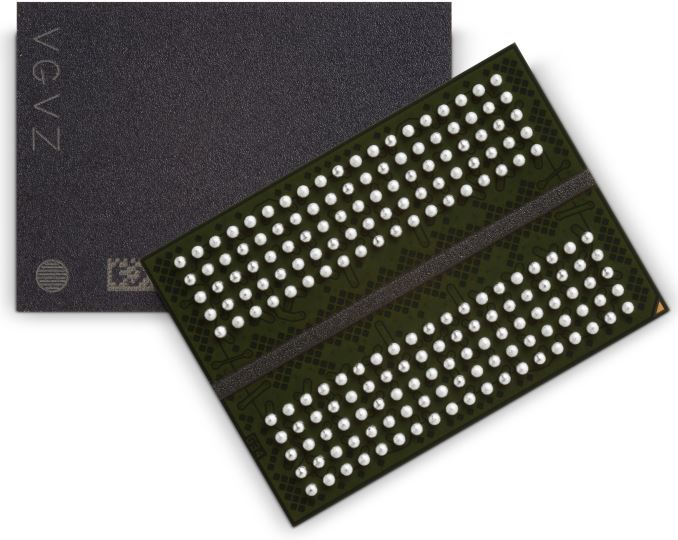
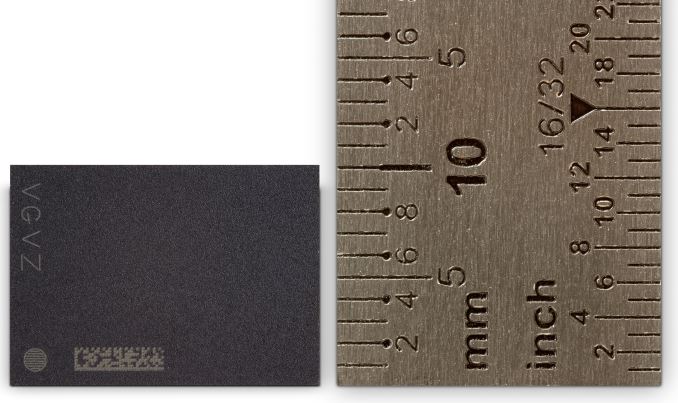
GDDR5X memory chips will come in new packages, which will be slightly smaller (14×10mm vs. 14×12mm) compared to GDDR5 ICs despite the increase of their ball count (190-ball BGA vs. 170-ball BGA). According to Micron, denser ball placement, reduced ball diameter (0.4mm vs. 0.47mm) and smaller ball pitch (0.65mm vs. 0.8mm) make PCB traces slightly shorter, which should ultimately improve electrical performance and system signal integrity. Keeping in mind higher data-rates of GDDR5X’s interface, improved signal integrity is just what the doctor ordered. The GDDR5X package maintains the same 1.1mm height as the predecessor.

Micron is using its 20 nm memory manufacturing process to make the first-generation 8 Gb GDDR5X chips. The company has been using the technology to make commercial DRAM products for several quarters now. As the company refines its fabrication process and design of the ICs, their yields and data-rate potential will increase. Micron remains optimistic about hitting 16 Gbps data-rates with its GDDR5X chips eventually, but does not disclose when it expects that to happen.
All of that said, at this time the company has not yet figured out its GDDR5X product lineup, and nobody knows for sure whether commercial chips will hit 14 Gbps this year with the first-generation GDDR5X controllers. Typically, early adopters of new memory technologies tend to be rather conservative. For example, AMD’s Radeon HD 4870 (the world’s first video card to use GDDR5) was equipped with 512 MB of memory featuring 3.6 Gbps data-rate, whereas Qimonda (the company which established Micron’s Graphics DRAM Design Center) offered chips with 4.5 Gbps data-rate at the time.

The first-gen GDDR5X memory chips from Micron have 8 Gb capacity, hence, they will cost more than 4 Gb chips used on graphics cards today. Moreover, due to increased pin-count, implementation cost of GDDR5X could be a little higher compared to that of GDDR5 (i.e., PCBs will get more complex and more expensive). That said, we don’t expect to see GDDR5X showing up in value cards right away, as this is a high-performance technology and will have a roll-out similar to GDDR5. At the higher-end however, a video card featuring a 256-bit memory bus would be able to boast with 8 GB of memory and 352 GB/s of bandwidth.

Finally, Micron has also announced in their blog post that they intend to commence high-volume production of GDDR5X chips in mid-2016, or sometime in the summer. It is unknown precisely when the first graphics cards featuring the new type of memory are set to hit the market, but given the timing it looks like this will happen in 2016.
Micron Reports on GDDR5X Dev Progress - Volume Production This Summer

Micron Reports on GDDR5X Dev Progress – Volume Production This Summer

Engineers from Micron Development Center in Munich (also known as Graphics DRAM Design Center) are well known around the industry for their contribution to development of multiple graphics memory standards, including GDDR4 and GDDR5. The engineers from MDC also played a key role in development of GDDR5X memory, which is expected to be used on some of the upcoming video cards. Micron disclosed the first details about GDDR5X in September last year, publicizing the existance of the standard ahead of later JEDEC ratification and offering a brief summary of what to expect. Since then the company has been quiet on their progress with GDDR5X, but in a new blog post they have published this week, the company is touting their results with their first samples and offering an outline of when they expect to go into volume production.

The GDDR5X standard, as you might recall, is largely based on the GDDR5 technology, but it features three important improvements: considerably higher data-rates (up to 14 Gbps per pin or potentially even higher), substantially higher-capacities (up to 16 Gb), and improved energy-efficiency (bandwidth per watt) thanks to 1.35V supply and I/O voltages. To increase performance, the GDDR5X technology uses its new quad data rate (QDR) data signaling technology to increase the amount of data transferred, in turn allowing it to use a wider 16n prefetch architecture, which enables up to 512 bit (64 Bytes) per array read or write access. Consequently, GDDR5X promises to double the performance of GDDR5 while consuming similar amounts of power, which is a very ambitious goal.

In their blog post, Micron is reporting that they already have their first samples back from their fab – this being earlier than expected – with these samples operating at data-rates higher than 13 Gbps in the lab. At present, the company is in the middle of testing its GDDR5X production line and will be sending samples to its partners this spring.

Thanks to reduction of Vdd/Vddq by 10% as well as new features, such as per-bank self refresh, hibernate self refresh, partial array self refresh and other, Micron’s 13 Gbps GDDR5X chips do not consume more energy than GDDR5 ICs (integrated circuits) — 2–2.5W per component (i.e., 10–30W per graphics card), just like the company promised several weeks ago. Since not all applications need maximum bandwidth, in certain cases usage of GDDR5X instead of its predecessor will help to reduce power consumption.

GDDR5X memory chips will come in new packages, which will be slightly smaller (14×10mm vs. 14×12mm) compared to GDDR5 ICs despite the increase of their ball count (190-ball BGA vs. 170-ball BGA). According to Micron, denser ball placement, reduced ball diameter (0.4mm vs. 0.47mm) and smaller ball pitch (0.65mm vs. 0.8mm) make PCB traces slightly shorter, which should ultimately improve electrical performance and system signal integrity. Keeping in mind higher data-rates of GDDR5X’s interface, improved signal integrity is just what the doctor ordered. The GDDR5X package maintains the same 1.1mm height as the predecessor.

Micron is using its 20 nm memory manufacturing process to make the first-generation 8 Gb GDDR5X chips. The company has been using the technology to make commercial DRAM products for several quarters now. As the company refines its fabrication process and design of the ICs, their yields and data-rate potential will increase. Micron remains optimistic about hitting 16 Gbps data-rates with its GDDR5X chips eventually, but does not disclose when it expects that to happen.

All of that said, at this time the company has not yet figured out its GDDR5X product lineup, and nobody knows for sure whether commercial chips will hit 14 Gbps this year with the first-generation GDDR5X controllers. Typically, early adopters of new memory technologies tend to be rather conservative. For example, AMD’s Radeon HD 4870 (the world’s first video card to use GDDR5) was equipped with 512 MB of memory featuring 3.6 Gbps data-rate, whereas Qimonda (the company which established Micron’s Graphics DRAM Design Center) offered chips with 4.5 Gbps data-rate at the time.

The first-gen GDDR5X memory chips from Micron have 8 Gb capacity, hence, they will cost more than 4 Gb chips used on graphics cards today. Moreover, due to increased pin-count, implementation cost of GDDR5X could be a little higher compared to that of GDDR5 (i.e., PCBs will get more complex and more expensive). That said, we don’t expect to see GDDR5X showing up in value cards right away, as this is a high-performance technology and will have a roll-out similar to GDDR5. At the higher-end however, a video card featuring a 256-bit memory bus would be able to boast with 8 GB of memory and 352 GB/s of bandwidth.

Finally, Micron has also announced in their blog post that they intend to commence high-volume production of GDDR5X chips in mid-2016, or sometime in the summer. It is unknown precisely when the first graphics cards featuring the new type of memory are set to hit the market, but given the timing it looks like this will happen in 2016.

CEO of Imagination Technologies Steps Down

CEO of Imagination Technologies Steps Down

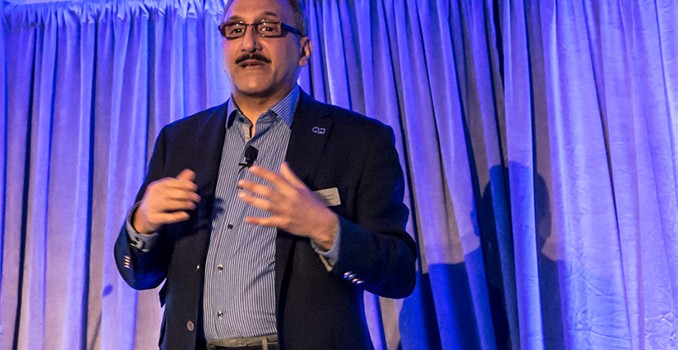
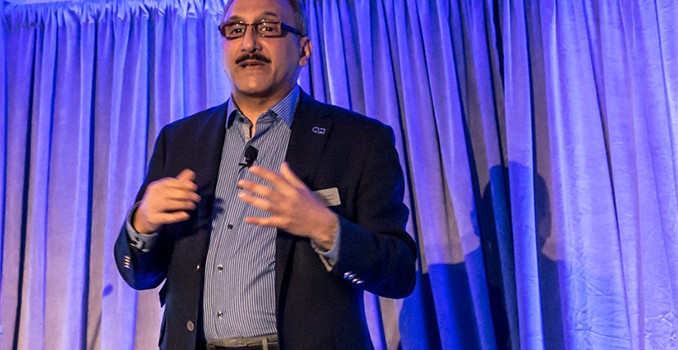
Sir Hossein Yassaie, chief executive officer of Imagination Technologies, has stepped down as of Monday, Feburary 8th. Mr. Yassaie served as Imagination’s CEO since 1998 and joined the company in 1992. The company expects to report a loss for the financial year, which may be the reason for CEO’s departure. Andrew Heath, one of the company’s non-executive directors, has been appointed interim chief executive. He has already began to search for a new CEO for Imagination.

Imagination licenses graphics, multimedia and general-purpose processing technologies to various chip developers, including Apple and Intel. The company indicated that royalties from some of its key customers have fallen short of previous expectations for the last calendar quarter of 2015. The company also lowered its forecast for Q1 2016. Imagination named global slowdown in the semiconductor sector as well as global uncertainty about future trading prospects with China as the reasons for its financial problems. While Imagination indicated that its licensing pipeline remains strong, it is not sure about its license revenue timing.

Imagination Technologies was founded in 1985 as VideoLogic. The company sold chips for televisions, game consoles and PCs. Mr. Yassaie changed the company’s business model to technology licensing in 1999 and essentially exited chip business several years later. Imagination tried to return to the market of graphics adapters with its Kyro and Kyro II graphics chips in early 2000s, but it could not compete against ATI and NVIDIA at the time. Starting from the year 2000 Imagination bought a number of important technology companies, significantly boosting its IP portfolio. Among the companies acquired by Imagination are Ensigma (digital signal processing), Caustic Graphics (hardware/software for real-time ray-tracing technology), MIPS Technologies (general-purpose processing) and a number of others. Today, Imagination can provide virtually all technologies needed to build system-on-chips for almost all kinds of devices. In fact, Imagination’s graphics processing technologies are used inside billions of smartphones and tablets.

Imagination did not announce when it expects to hire its new CEO, but said that it will consider both internal and external candidates. For a company like Imagination the absence of permanent CEO concerning because it constantly needs to make strategic decisions that have long-lasting effects on its future. Technologies developed by Imagination today will be licensed only a couple of years down the road and it is important for them to be competitive against offerings from ARM as well as developers of proprietary chips. As pointed out by The Tech Report, Mr. Yassaie is the author of the intellectual property licensing model that brought the company to fame, and it will likely not be easy to find a replacement due to the complexity of the technology licensing business.

Alongside Mr. Yassaie’s resignation, Imagination also announced additional details on restructuring initiatives, which include the sale of Pure, its consumer electronics business. The company expects to reduce operating costs of its on-going businesses by £15 million in the next financial year, ending April 2017. In addition, Imagination will re-invest £2 million in PowerVR graphics processing technology. The company also plans to analyze its overhead expenses and research and development expenditures before implementing additional restructuring actions.

CEO of Imagination Technologies Steps Down

CEO of Imagination Technologies Steps Down

Sir Hossein Yassaie, chief executive officer of Imagination Technologies, has stepped down as of Monday, Feburary 8th. Mr. Yassaie served as Imagination’s CEO since 1998 and joined the company in 1992. The company expects to report a loss for the financial year, which may be the reason for CEO’s departure. Andrew Heath, one of the company’s non-executive directors, has been appointed interim chief executive. He has already began to search for a new CEO for Imagination.

Imagination licenses graphics, multimedia and general-purpose processing technologies to various chip developers, including Apple and Intel. The company indicated that royalties from some of its key customers have fallen short of previous expectations for the last calendar quarter of 2015. The company also lowered its forecast for Q1 2016. Imagination named global slowdown in the semiconductor sector as well as global uncertainty about future trading prospects with China as the reasons for its financial problems. While Imagination indicated that its licensing pipeline remains strong, it is not sure about its license revenue timing.

Imagination Technologies was founded in 1985 as VideoLogic. The company sold chips for televisions, game consoles and PCs. Mr. Yassaie changed the company’s business model to technology licensing in 1999 and essentially exited chip business several years later. Imagination tried to return to the market of graphics adapters with its Kyro and Kyro II graphics chips in early 2000s, but it could not compete against ATI and NVIDIA at the time. Starting from the year 2000 Imagination bought a number of important technology companies, significantly boosting its IP portfolio. Among the companies acquired by Imagination are Ensigma (digital signal processing), Caustic Graphics (hardware/software for real-time ray-tracing technology), MIPS Technologies (general-purpose processing) and a number of others. Today, Imagination can provide virtually all technologies needed to build system-on-chips for almost all kinds of devices. In fact, Imagination’s graphics processing technologies are used inside billions of smartphones and tablets.

Imagination did not announce when it expects to hire its new CEO, but said that it will consider both internal and external candidates. For a company like Imagination the absence of permanent CEO concerning because it constantly needs to make strategic decisions that have long-lasting effects on its future. Technologies developed by Imagination today will be licensed only a couple of years down the road and it is important for them to be competitive against offerings from ARM as well as developers of proprietary chips. As pointed out by The Tech Report, Mr. Yassaie is the author of the intellectual property licensing model that brought the company to fame, and it will likely not be easy to find a replacement due to the complexity of the technology licensing business.

Alongside Mr. Yassaie’s resignation, Imagination also announced additional details on restructuring initiatives, which include the sale of Pure, its consumer electronics business. The company expects to reduce operating costs of its on-going businesses by £15 million in the next financial year, ending April 2017. In addition, Imagination will re-invest £2 million in PowerVR graphics processing technology. The company also plans to analyze its overhead expenses and research and development expenditures before implementing additional restructuring actions.

Sony Enters SSD Market with Phison S10-Based SLW-M Series

Sony Enters SSD Market with Phison S10-Based SLW-M Series

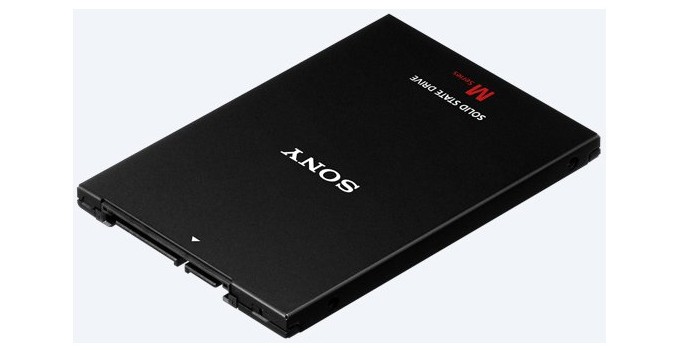
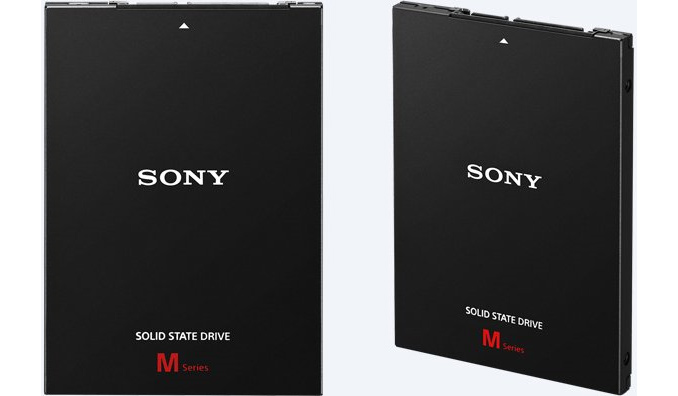
Sony-Asia this month introduced its first own-brand solid-state drives that it will sell in retail. The decision to start selling consumer SSDs is completely unexpected because Sony has been trying to focus solely on highly profitable and less competitive businesses in the recent years, whereas the competition in the market of consumer storage is fierce. Initially, the company will sell only two SSD models, which means that it is trying to test a new business rather than to become a leader on the market.

Sony’s SLW-M SSDs come in 2.5-inch/7 mm form-factor (a special bracket to install the drives into 9.5-mm bays is included) and feature 240 GB (SLW-MG2) or 480 GB (SLW-MG4) capacities. The drives use SATA-6 Gbps interface and hence Sony can address the vast majority of desktop and laptop PCs with its first-gen SSDs. According to Sony, the SLW-M solid-state drives feature up to 560 MB/s sequential write speed and up to 530 MB/s sequential write speed. Each drives comes equipped with the Acronis True image 2015 and Sony SSD ToolBox software for managing and saving your data.

The Sony SLW-M SSDs are based on the Phison PS3110-S10 controller as well as Toshiba’s TLC flash memory, according to images published by DIYPC.hk web-site. The SLW-MG2 solid-state drive from Sony features 128 MB DDR3 buffer made by Nanya. Usage of TLC NAND indicates that Sony’s SLW-M are entry-level client solid-state solutions that do not cost a lot to make and are not supposed to be expensive, and based on the specifications listed it’s a reasonable guess that performance will be near the similarly-built low-end OCZ Trion 100 series.

Meanwhile with the Sony drives it’s worth noting that Phison not only sells controller chips to makers of SSDs, but actual turnkey solutions, which include ASICs, firmware, reference designs of solid-state drives, software, and so on, and this appears to be what Sony is doing. The PCB design of Sony’s SLW-M resembles that of Kingston’s HyperX Savage, Corsair’s Neutron XT and Patriot’s Ignite, while Sony’s SSD ToolBox is rebranded Phison ToolBox.

Many new SSD suppliers acquire Phison’s turnkey solutions in order to produce own drives and find out whether they can successfully sell such products to their customers via their sales channels. For example, Zotac last year introduced its first SSDs powered by Phison’s PS3110-S10 controllers and Toshiba’s MLC NAND flash memory.

Sony’s SSD plans are not completely clear. At present, the company only sells its solid-state drives in select Asian markets and it is unknown whether Sony has plans to offer similar products in the U.S. or Europe. Nonetheless, it is noteworthy that the company, which has been withdrawing from commoditized markets for years, is trying to sell its own SSDs. Nowadays solid-state drives are not as cheap as HDDs, but in the entry level the competition is fierce and margins are low.