News


VAIO to Start Selling Smartphones in Japan

VAIO to Start Selling Smartphones in Japan

VAIO, the former PC division of Sony and now an independent supplier of PCs, this week announced plans to introduce its first smartphone in Japan this spring. The company will use Microsoft Windows 10 Mobile operating system and will target business u…

VAIO to Start Selling Smartphones in Japan

VAIO to Start Selling Smartphones in Japan

VAIO, the former PC division of Sony and now an independent supplier of PCs, this week announced plans to introduce its first smartphone in Japan this spring. The company will use Microsoft Windows 10 Mobile operating system and will target business u…

OCZ Releases Trion 150 SSD

OCZ Releases Trion 150 SSD

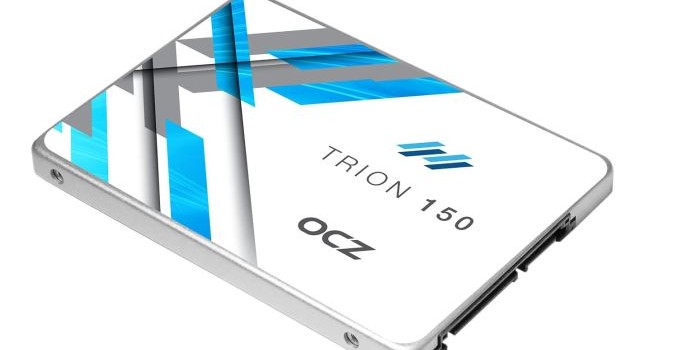
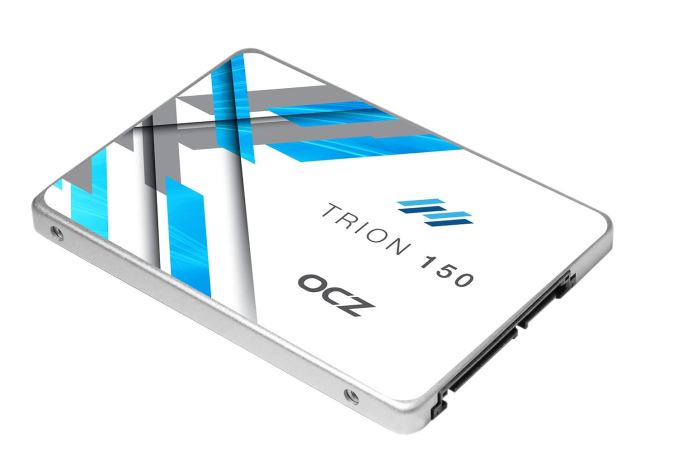
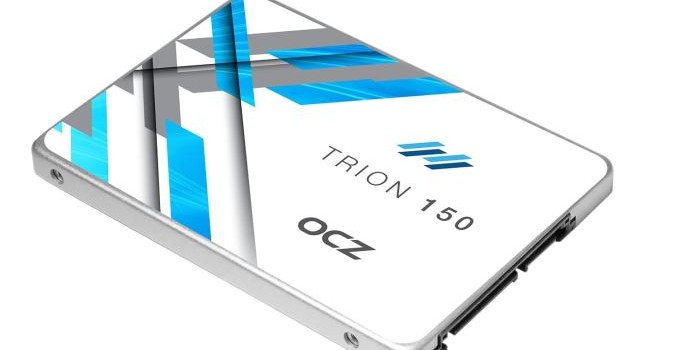
As previewed at CES, OCZ has released an update to their budget-oriented Trion 100 SATA SSD. The Trion 150 switches from parent company Toshiba’s A19nm TLC to their 15nm TLC, the densest planar NAND on the market. The transition to 15nm NAND has been slow for Toshiba and SanDisk, and the release of the Trion 150 signals that the 15nm TLC is finally ready to compete in the most cost-sensitive market segment. This is also probably the end of the road for Toshiba’s planar NAND and the Trion 150 will probably be the cheapest drive from Toshiba or OCZ until their 3D NAND ships, unless they introduce a drive with a DRAM-less controller.

The specifications for the Trion 150 are otherwise unchanged from the Trion 100, but the press releases have mentioned some improvements in sustained performance. Supporting the 15nm NAND required at least some firmware tweaks and it’s possible that some performance optimizations were introduced as well. It’s also possible that the Trion 150 adopts more overprovisioning or larger SLC-mode caches.

OCZ Trion 150 Specifications
Capacity 120GB 240GB 480GB 960GB
Controller Toshiba TC58
NAND Toshiba 15nm TLC
Sequential Read 550MB/s 550MB/s 550MB/s 550MB/s
Sequential Write 450MB/s 520MB/s 530MB/s 530MB/s
4KB Random Read 79K IOPS 90K IOPS 90K IOPS 90K IOPS
4KB Random Write 25K IOPS 43K IOPS 54K IOPS 64K IOPS
Endurance 30TB 60TB 120TB 240TB
DevSleep Power 6mW
Idle Power 830mW
Max Power 4.8W
Warranty Three years
Price (Amazon) $45.99 $69.99 $139.99 $269.99

We initially found the Trion 100 to be a fairly poor performer compared to other modern SSDs, but its pricing of late has been very low and more recent TLC drives like Crucial’s BX200 have sacrificed even more performance for the goal of affordability. The allure of the cheapest TLC SSDs has been reduced by the availability of some decent MLC drives for only slightly higher prices, such as Mushkin’s Reactor. With the switch to denser NAND, the Trion 150 may be able to widen the gap and take a clear lead in affordability over MLC drives. Even if the Trion 150 turns out to be another step in the race to the bottom among value SSDs, it will still vastly outperform hard drives, and that’s all that value SSDs are really aiming for at the moment. On the other hand, if it does offer significant real-world performance improvements without any price increase, it can probably be competitive against other value SSDs at some capacities.

OCZ hasn’t announced pricing for the Trion 150, but Newegg is currently listing the Trion 150 at around $0.29/GB for the 240GB and larger capacities and Amazon’s listing (not in stock yet) has the 120GB drive slightly cheaper.

OCZ Releases Trion 150 SSD

OCZ Releases Trion 150 SSD

As previewed at CES, OCZ has released an update to their budget-oriented Trion 100 SATA SSD. The Trion 150 switches from parent company Toshiba’s A19nm TLC to their 15nm TLC, the densest planar NAND on the market. The transition to 15nm NAND has been slow for Toshiba and SanDisk, and the release of the Trion 150 signals that the 15nm TLC is finally ready to compete in the most cost-sensitive market segment. This is also probably the end of the road for Toshiba’s planar NAND and the Trion 150 will probably be the cheapest drive from Toshiba or OCZ until their 3D NAND ships, unless they introduce a drive with a DRAM-less controller.

The specifications for the Trion 150 are otherwise unchanged from the Trion 100, but the press releases have mentioned some improvements in sustained performance. Supporting the 15nm NAND required at least some firmware tweaks and it’s possible that some performance optimizations were introduced as well. It’s also possible that the Trion 150 adopts more overprovisioning or larger SLC-mode caches.

OCZ Trion 150 Specifications
Capacity 120GB 240GB 480GB 960GB
Controller Toshiba TC58
NAND Toshiba 15nm TLC
Sequential Read 550MB/s 550MB/s 550MB/s 550MB/s
Sequential Write 450MB/s 520MB/s 530MB/s 530MB/s
4KB Random Read 79K IOPS 90K IOPS 90K IOPS 90K IOPS
4KB Random Write 25K IOPS 43K IOPS 54K IOPS 64K IOPS
Endurance 30TB 60TB 120TB 240TB
DevSleep Power 6mW
Idle Power 830mW
Max Power 4.8W
Warranty Three years
Price (Amazon) $45.99 $69.99 $139.99 $269.99

We initially found the Trion 100 to be a fairly poor performer compared to other modern SSDs, but its pricing of late has been very low and more recent TLC drives like Crucial’s BX200 have sacrificed even more performance for the goal of affordability. The allure of the cheapest TLC SSDs has been reduced by the availability of some decent MLC drives for only slightly higher prices, such as Mushkin’s Reactor. With the switch to denser NAND, the Trion 150 may be able to widen the gap and take a clear lead in affordability over MLC drives. Even if the Trion 150 turns out to be another step in the race to the bottom among value SSDs, it will still vastly outperform hard drives, and that’s all that value SSDs are really aiming for at the moment. On the other hand, if it does offer significant real-world performance improvements without any price increase, it can probably be competitive against other value SSDs at some capacities.

OCZ hasn’t announced pricing for the Trion 150, but Newegg is currently listing the Trion 150 at around $0.29/GB for the 240GB and larger capacities and Amazon’s listing (not in stock yet) has the 120GB drive slightly cheaper.

ARM Announces New 28nm POP IP For UMC Foundry

ARM Announces New 28nm POP IP For UMC Foundry

Today ARM announces a new POP IP offering directed at UMC’s new 28HPCmanufacturing process. To date we haven’t had the opportunity to properly explain what ARM’s POP IP actually is and how it enables vendors to achieve better implementation of ARM’s IP offerings. While for today’s pipeline announcement we’ll be just explaining the basics, we’re looking forward to a more in-depth article in the following months as to how vendors take various IPs through the different stages of development. 

When we talk about a vendor licensing an ARM IP (CPU for example), this generally means that they are taking the RTL (Register Transfer Level) design of an IP. The RTL is just a logical representation of the functioning of a block, and to get to from this form to one that can be implemented into actual silicon requires different development phases which is generally referred to as the physical implementation part of semiconductor development. 

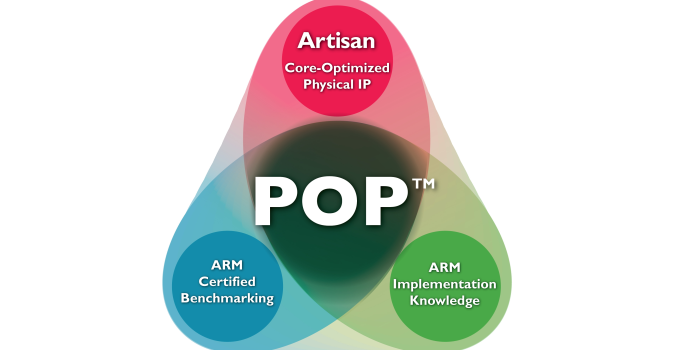
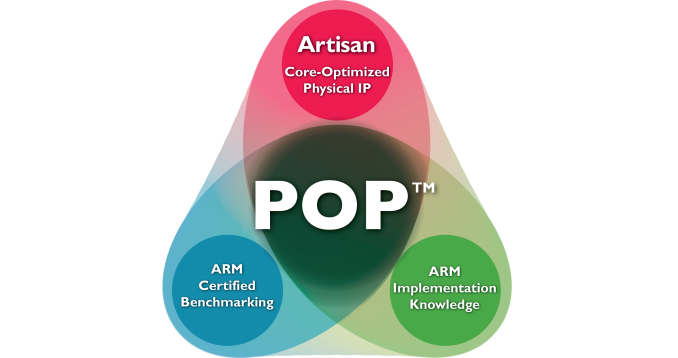
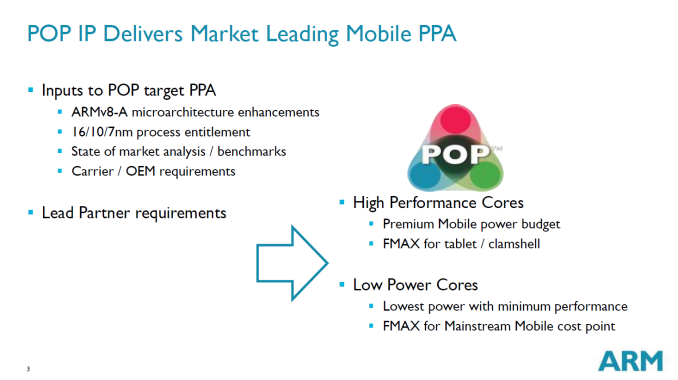
It’s here where ARM’s POP IP (Which by the way is not an acronym) comes into play: Roughly speaking, POP IP is a set of tools and resources that are created by ARM to accelerate and facilitate the implementation part of SoC development. This includes standard cell libraries, memory compilers, timing benchmarks, process optimized design changes and in general implementation knowledge that ARM is able to amass during the IP block development phase.
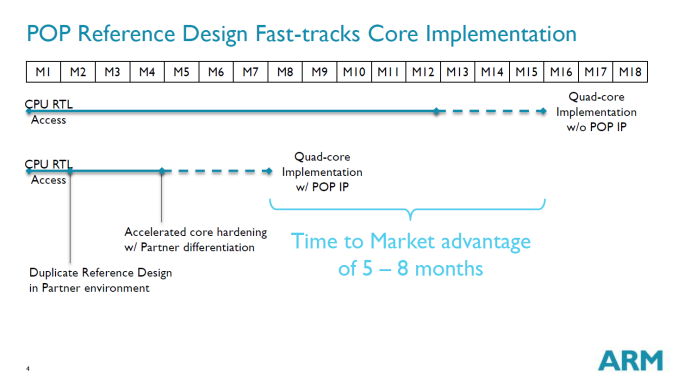
The main goal is to relieve the vendor from re-doing work that ARM has already done and thus enable a much better time-to-market compared to vendors which have their in-house implementation methodology (Samsung and Qualcomm, among others, for example). ARM explains this can give an up to 5-8 month time to market advantage which is critical in the fast-moving mobile SoC space.

One aspect that seemed to be misunderstood, and even myself had some unclear notions about, is that POP IP is not a hard-macro offering but rather all the resources that enable a vendor to achieve that hard-macro (GDSII implementation).

This is where we come back to today’s announcement. ARM’s new POP IP targets UMC’s new 28nm process called 28HPCfor ARM’s Cortex A7 and Cortex A53 cores. The acronym has a dual meaning standing for 28nm High Performance Compact “UMC” or “Ultra-Low IDDQ” with IDDQ being the leakage current which is being describes as being considerably lower than UMC’s first-generation 28nm HKMG process and able to give significant battery life improvements to devices. 

While ARM isn’t able to disclose which vendors use POP IP, they state that the main target is low-cost Asian market, which most likely means various Chinese vendors. According to S.C. Chien, vice president, corporate marketing, UMC:

“Multiple customers from a variety of applications have engaged with UMC to design their products on 28HPCU. Our collaboration with long-time partner ARM enables UMC to offer a comprehensive design platform with POP IP for two of the most efficient ARM processor cores.”