News


Who Controls the User Experience? AMD’s Carrizo Thoroughly Tested

In Q2 of 2015, AMD officially launched Carrizo, their new APU aimed at mobile devices such as laptops and portable all-in-ones that normally accommodate 15W-35W processors. Quoted in the media as ‘the biggest change to Bulldozer since Bulldozer itself’, the marketing arm of AMD released information regarding the architecture of the new processor which contained a long list of fluid and dynamic implementations on improving the Bulldozer based architecture over the previous iteration of Steamroller. Despite this, AMDs target market for the Carrizo platform has not been receptive to AMDs product stack in recent generations due to issues surrounding performance, battery life and designs. AMD believes to have solved the first two of those with Carrizo, whereas the third is out of their hands and up to the OEMs to embrace AMDs platform. We wondered if the OEM’s concerns were well placed, and organized some special testing to confirm AMD’s claims about Carrizo.

Who Controls the User Experience? AMD’s Carrizo Thoroughly Tested

In Q2 of 2015, AMD officially launched Carrizo, their new APU aimed at mobile devices such as laptops and portable all-in-ones that normally accommodate 15W-35W processors. Quoted in the media as ‘the biggest change to Bulldozer since Bulldozer itself’, the marketing arm of AMD released information regarding the architecture of the new processor which contained a long list of fluid and dynamic implementations on improving the Bulldozer based architecture over the previous iteration of Steamroller. Despite this, AMDs target market for the Carrizo platform has not been receptive to AMDs product stack in recent generations due to issues surrounding performance, battery life and designs. AMD believes to have solved the first two of those with Carrizo, whereas the third is out of their hands and up to the OEMs to embrace AMDs platform. We wondered if the OEM’s concerns were well placed, and organized some special testing to confirm AMD’s claims about Carrizo.

ioSafe Launches BDR 515 Backup and Disaster Recovery Appliance

ioSafe Launches BDR 515 Backup and Disaster Recovery Appliance

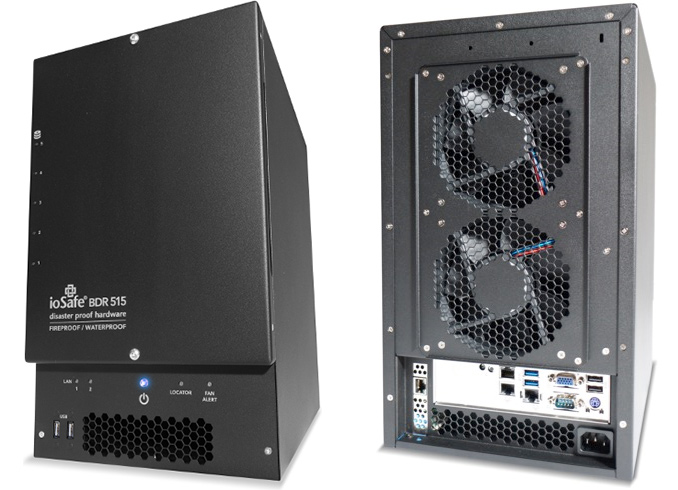
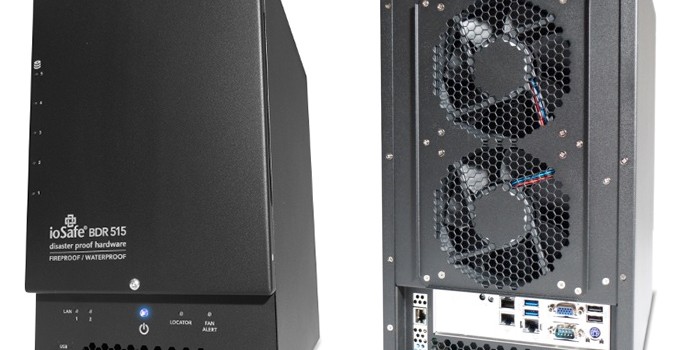
ioSafe’s disaster-resistant storage devices are unique in the market. Yesterday, they introduced the latest member of their backup and data recovery (BDR) server lineup – the BDR 515. It is a 5-bay x86 NAS running Windows Server 2012 R2. Earlier NAS appliances from ioSafe such as the 1513+ and 1515+ were based on Synology’s DSM OS. With the BDR 515, the focus has shifted to consumers who want the familiarity and capabilities of Microsoft’s server platform.

Before going into the details of the BDR 515, it might be useful to see the conditions under which a BDR NAS unit might make sense. These appliances are usually installed in server rooms and automatically back up all the data stored on servers both locally and to the cloud. If the servers are damaged because of a major hardware outage, a natural disaster, or other emergency, BDRs can help to quickly restore the data. Thanks to the fact that BDRs store data both locally and in the cloud, they can restore data even if they are physically damaged as well. Moreover, the BDR can act as a replica of the server it is attached to and work as a backup machine.

ioSafe’s BDR 515, like their complementary NAS offerings (1515+, 1513+ and the 214), is resistant to both fire and water damage. The protection specifications are the same as before – fire with temperatures up to 1550°F for 30 minutes (in accordance with the ASTM E-119 testing standard) and submergence in 10-feet deep water for three days without any harm to data. Unlike other BDR servers, the model 515 from ioSafe protects data immediately after it is recorded on its HDDs thanks to its ability to protect data in the harshest environments. Even if the Internet connection is absent after a fire or flooding, the protection for the hard disks in the BDR 515 allows data to be restored from the device after retrieval of the appliance from the disaster site.

The ioSafe BDR 515 is based on the dual-core Intel Core i5-4570T (2.90 GHz) and is equipped with 16 GB DDR3 memory. It uses the Areca ARC-1225-8i hardware RAID controller and two Intel i210 Gigabit Ethernet controllers. The BDR 515 can be equipped with up to five 6 TB WD Red hard disk drives and store up to 30 TB of data. ioSafe’s previous flagship BDR – the 1515+ running Synology’s DSM – utilized a low power Intel Atom processor. The 515’s Core i5-4570T should help ioSafe to significantly improve performance of the solution, but, at the cost of higher power consumption.

To ensure that the BDR 515 can handle the CPU with higher TDP, ioSafe had to install a dedicated air duct to pull fresh outside air directly across the processor heat sink. In addition, the company increased the quantity of FloSafe vents for greater airflow over HDDs. The fans are also larger compared to the ones in the 1515+.

The device will only be available via ioSafe’s channel partners and its price depends on actual configuration.

ioSafe Launches BDR 515 Backup and Disaster Recovery Appliance

ioSafe Launches BDR 515 Backup and Disaster Recovery Appliance

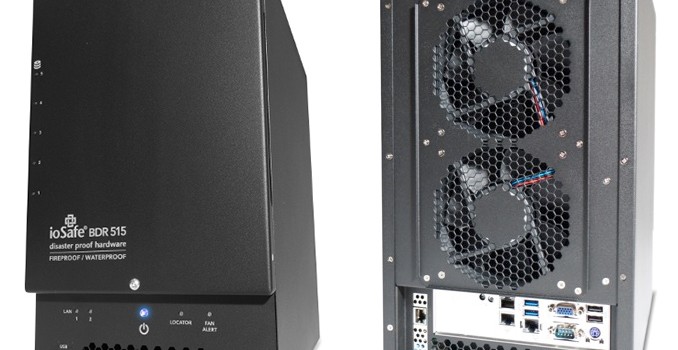
ioSafe’s disaster-resistant storage devices are unique in the market. Yesterday, they introduced the latest member of their backup and data recovery (BDR) server lineup – the BDR 515. It is a 5-bay x86 NAS running Windows Server 2012 R2. Earlier NAS appliances from ioSafe such as the 1513+ and 1515+ were based on Synology’s DSM OS. With the BDR 515, the focus has shifted to consumers who want the familiarity and capabilities of Microsoft’s server platform.

Before going into the details of the BDR 515, it might be useful to see the conditions under which a BDR NAS unit might make sense. These appliances are usually installed in server rooms and automatically back up all the data stored on servers both locally and to the cloud. If the servers are damaged because of a major hardware outage, a natural disaster, or other emergency, BDRs can help to quickly restore the data. Thanks to the fact that BDRs store data both locally and in the cloud, they can restore data even if they are physically damaged as well. Moreover, the BDR can act as a replica of the server it is attached to and work as a backup machine.

ioSafe’s BDR 515, like their complementary NAS offerings (1515+, 1513+ and the 214), is resistant to both fire and water damage. The protection specifications are the same as before – fire with temperatures up to 1550°F for 30 minutes (in accordance with the ASTM E-119 testing standard) and submergence in 10-feet deep water for three days without any harm to data. Unlike other BDR servers, the model 515 from ioSafe protects data immediately after it is recorded on its HDDs thanks to its ability to protect data in the harshest environments. Even if the Internet connection is absent after a fire or flooding, the protection for the hard disks in the BDR 515 allows data to be restored from the device after retrieval of the appliance from the disaster site.

The ioSafe BDR 515 is based on the dual-core Intel Core i5-4570T (2.90 GHz) and is equipped with 16 GB DDR3 memory. It uses the Areca ARC-1225-8i hardware RAID controller and two Intel i210 Gigabit Ethernet controllers. The BDR 515 can be equipped with up to five 6 TB WD Red hard disk drives and store up to 30 TB of data. ioSafe’s previous flagship BDR – the 1515+ running Synology’s DSM – utilized a low power Intel Atom processor. The 515’s Core i5-4570T should help ioSafe to significantly improve performance of the solution, but, at the cost of higher power consumption.

To ensure that the BDR 515 can handle the CPU with higher TDP, ioSafe had to install a dedicated air duct to pull fresh outside air directly across the processor heat sink. In addition, the company increased the quantity of FloSafe vents for greater airflow over HDDs. The fans are also larger compared to the ones in the 1515+.

The device will only be available via ioSafe’s channel partners and its price depends on actual configuration.
Giveaway: Rise of the Tomb Raider (PC)

Giveaway: Rise of the Tomb Raider (PC)

After a bit of a break we’re back with another giveaway for everyone to enjoy.

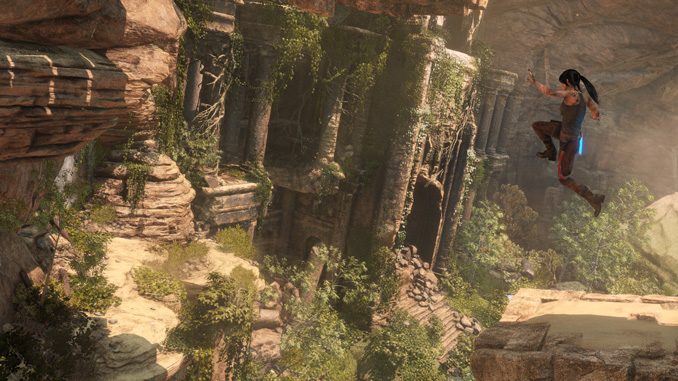
This time the folks over at Square Enix sent over a rather sizable cache of game keys for Rise of the Tomb Raider to promote the recent PC release of the game and its availability on the Windows 10 Store. Rise of the Tomb Raider is the latest game in the long-running action-adventure series, and is the direct sequel to the 2013 reboot, Tomb Raider.

Originally released on the Xbox One last November, Rise of the Tomb Raider was released on the PC last week. Of note, the PC version contains several graphical effects not present in the Xbox One version, including HBAO+ ambient occlusion, more wisely used tessellation, a more impressive sun soft shadow rendering system, and generally higher image quality at the high-end thanks to the greater rendering power of PCs. Meanwhile the fine folks at Eurogamer’s Digital Foundry have put together a video showing off the enhancements, which you can see below.

For this giveaway Square Enix has sent over 200 keys for the Windows 10 Store version of the game, and on that note I believe this is the first AAA game to get a simultaneous release through the Windows Store. Please note that Square Enix has confirmed that these keys don’t work on Steam, so you’ll need to be on Windows 10 in order to redeem and play the game.

Finally, so that we can give out the keys and let the winners start playing ASAP, we’ll be running a shorter than usual entry period on this contest. Our Rise of the Tomb Raider giveaway will only be open for 24 hours, from 8am ET today (February 3rd) to 8am ET on February 4th. Please note that standard AnandTech rules apply, so we’re only able to open up this contest to legal residents of the United States who are 18 years or older. You can read the full terms and conditions below.

Good luck to everyone, and an extra thank you to Square Enix for sending over so many keys.

Update 02/04: All of the winners have been contacted and keys distributed. Congrats to our winners, and thanks again everyone for entering.

AnandTech “Rise of the Tomb Raider” Giveaway