News


The Zalman ZM-K700M Mechanical Gaming Keyboard Review

Zalman joins the market of mechanical gaming keyboards with the ZM-K700M, a keyboard based on Cherry MX switches and with white backlighting. The primary difference between this keyboard and most other gaming keyboards is that Zalman has designed it t…

Giveaway: Rise of the Tomb Raider (PC)

Giveaway: Rise of the Tomb Raider (PC)

After a bit of a break we’re back with another giveaway for everyone to enjoy.

This time the folks over at Square Enix sent over a rather sizable cache of game keys for Rise of the Tomb Raider to promote the recent PC release of the game and its availability on the Windows 10 Store. Rise of the Tomb Raider is the latest game in the long-running action-adventure series, and is the direct sequel to the 2013 reboot, Tomb Raider.

Originally released on the Xbox One last November, Rise of the Tomb Raider was released on the PC last week. Of note, the PC version contains several graphical effects not present in the Xbox One version, including HBAO+ ambient occlusion, more wisely used tessellation, a more impressive sun soft shadow rendering system, and generally higher image quality at the high-end thanks to the greater rendering power of PCs. Meanwhile the fine folks at Eurogamer’s Digital Foundry have put together a video showing off the enhancements, which you can see below.

For this giveaway Square Enix has sent over 200 keys for the Windows 10 Store version of the game, and on that note I believe this is the first AAA game to get a simultaneous release through the Windows Store. Please note that Square Enix has confirmed that these keys don’t work on Steam, so you’ll need to be on Windows 10 in order to redeem and play the game.

Finally, so that we can give out the keys and let the winners start playing ASAP, we’ll be running a shorter than usual entry period on this contest. Our Rise of the Tomb Raider giveaway will only be open for 24 hours, from 8am ET today (February 3rd) to 8am ET on February 4th. Please note that standard AnandTech rules apply, so we’re only able to open up this contest to legal residents of the United States who are 18 years or older. You can read the full terms and conditions below.

Good luck to everyone, and an extra thank you to Square Enix for sending over so many keys.

Update 02/04: All of the winners have been contacted and keys distributed. Congrats to our winners, and thanks again everyone for entering.

AnandTech “Rise of the Tomb Raider” Giveaway

The Zalman ZM-K700M Mechanical Gaming Keyboard Review

Zalman joins the market of mechanical gaming keyboards with the ZM-K700M, a keyboard based on Cherry MX switches and with white backlighting. The primary difference between this keyboard and most other gaming keyboards is that Zalman has designed it t…

ASUS Launches 970 Pro Gaming/Aura Motherboard: USB 3.1 and M.2 to AMD FX Platform

ASUS Launches 970 Pro Gaming/Aura Motherboard: USB 3.1 and M.2 to AMD FX Platform

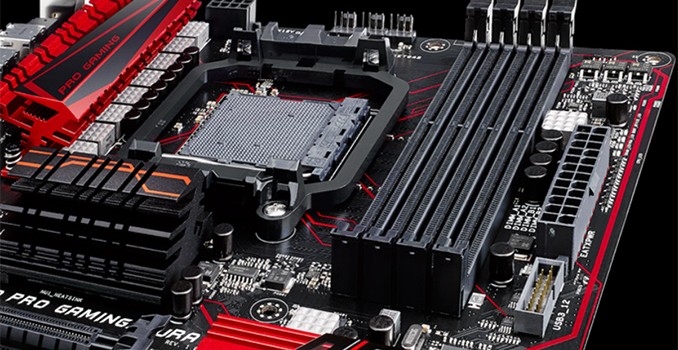
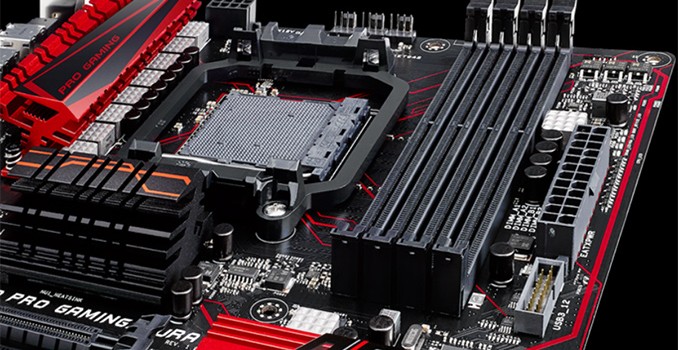
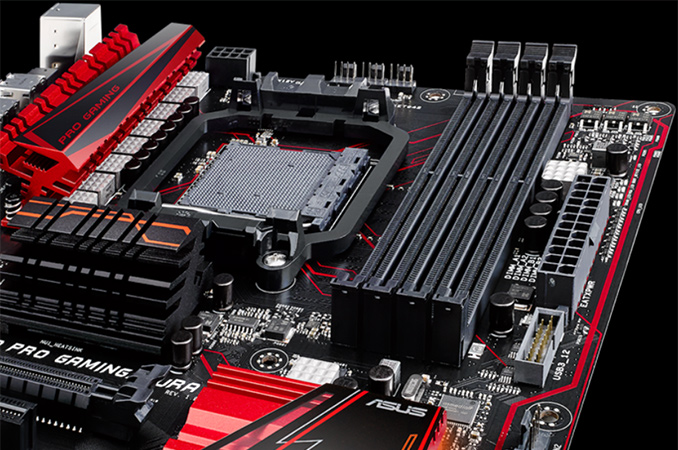
ASUS has introduced its latest motherboard for AMD FX microprocessors that brings up-to-date features to the platform. The ASUS 970 Pro Gaming/Aura belongs to a new class of AMD FX (socket AM3+) mainboards that support USB 3.1 peripherals as well as M.2 solid-state drives. In addition, the platform is also equipped with various gaming-oriented features available on the latest platforms from the company.

The ASUS 970 Pro Gaming/Aura is based on the AMD 970 + SB950 chipset, which is not AMD’s top-of-the-range core-logic for the FX processors, but which is pretty affordable for mainstream motherboards. The AMD 970 did not officially support any multi-GPU technology when it was released five years ago. AMD has removed this limitation since then and modern AMD 970-based mainboards, such as the 970 Pro Gaming/Aura, can run more than one video card. The motherboard has two PCI Express slots for graphics cards operating in PCIe 2.0 x8 mode and officially supporting both AMD CrossFire and NVIDIA SLI. In addition, the new mainboard features two PCIe 2.0 x1 and two PCI slots for add-in cards.

AMD 900 Series Chipsets
  990FX + SB950 990X + SB950 970 + SB950
Code Name RD990 RD980 RX980
Released Q2 2011 Q2 2011 Q2 2011
PCIe Lanes 42 PCIe 2.0 lanes 26 PCIe 2.0 lanes 26 PCIe 2.0 lanes
CrossFire x16 + x16
x8 + x8 + x8 + x8
x8 + x8 x16 + x4
x8 + x8 + x4
SLI x16 + x16
x16 + x8 + x8
x8 + x8 + x8 + x8
x8 + x8 x8 + x8
NB TDP 19.6W 14W 13.6W
HyperTransport (MHz) 2600 2600 2400
SATA 6 Gb/s 6 6 6
RAID 0, 1, 5, 10 0, 1, 5, 10 0, 1, 5, 10
USB 2.0 14 14 14
PCI Yes Yes Yes
SB950 TDP 6W 6W 6W

The ASUS 970 Pro Gaming/Aura supports all AMD FX processors in AM3+ form-factor with up to 125W TDP as well as their predecessors, such as the Phenom II, the Athlon II and the Sempron 100-series chips (but advised against using the 220W FX-9000 series). The new motherboard has upgraded 8-phase power delivery and similar to other ASUS designs the 970 Pro Gaming/Aura uses the company’s Digi+ custom power controller. The motherboard features four memory slots and supports up to 32 GB of DDR3-2133 memory.
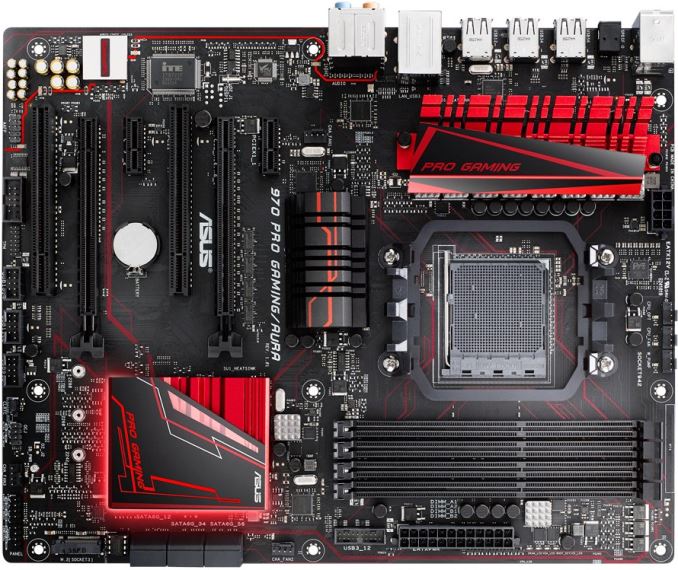
The 970 Pro Gaming/Aura comes with six SATA 6 Gb/s ports with RAID 0, 1, 5 and 10 support as well as an M.2 slot for SSDs (2242/2260/2280 form-factors are supported) that operates in PCIe 2.0 x4 mode and supports data-rates of up to 20 GT/s, making it suitable for drives such as the Samsung XP941. The UEFI/BIOS of the motherboard fully supports NVMe protocol and therefore the platform can take advantage of modern SSDs, such as Samsung 950 Pro. However it is unclear whether the M.2 slot uses PCIe lanes from the AMD970 or the SB950 controller. The platform also comes bundled with RAMcache software to speed up launches of frequently used applications.

Meanwhile for USB functionality the motherboard is equipped with ASMedia’s ASM1142 USB 3.1 controller that enables two USB 3.1 type-A connectors on the rear panel. In addition, the mainboard supports two USB 3.0 ports (also using an ASMedia controller) and 14 USB 2.0 ports.
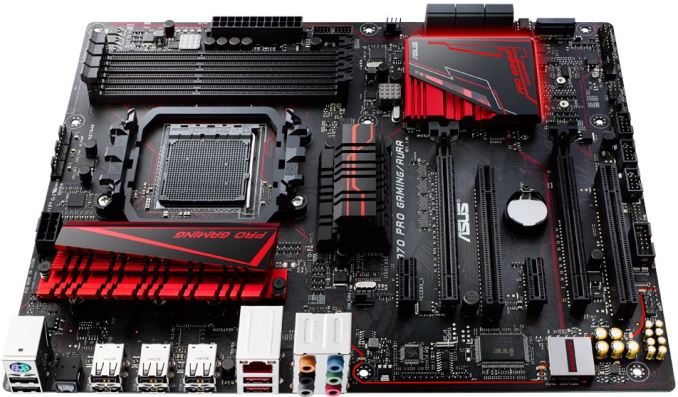
For other functionality we get Intel’s I211-AT Gigabit Ethernet controller with the GameFirst software for network traffic prioritization as well as LANGuard ESD and power surge protection. Audio comes through ASUS’ SupremeFX, their upgraded Realtek ALC1150 codec solution, with EM shielding, PCB separation of analog/digital signal and support for up to 300 ohms headphones.

The motherboard is designed for low-cost gaming systems, though that hasn’t stopped ASUS from adding a set of overclocking features into its BIOS and the components necessary to drive it. The aim is to get a full system price that is competitive. For example, the AMD FX-8320 featuring four Piledriver modules and unlocked multiplier can be purchased for $145, which is comparable to the price of Intel’s dual-core Core i3 processors. Once overclocked, the FX-8320 chip can offer rather decent performance for its price (see our results of the FX-8370E overclocked to 4.8 GHz here). The mainboard also supports AMD CrossFireX, NVIDIA SLI, as well as USB 3.1 and M.2/NVMe, which should attract attention of people seeking for the latest technologies and an easy upgrade path (at least, for graphics).

As an added flair for users that are interested, the ASUS 970 Pro Gaming/Aura also features Aura RGB LED on the south bridge, which can produce various lighting effects, such as pulsating, strobing, fading and so on. The motherboard is clearly not the first affordable platform to offer LED lighting, but ASUS just had to include the technology into the package simply because a number of competing offerings come with LEDs. They can also be switched off if needed.
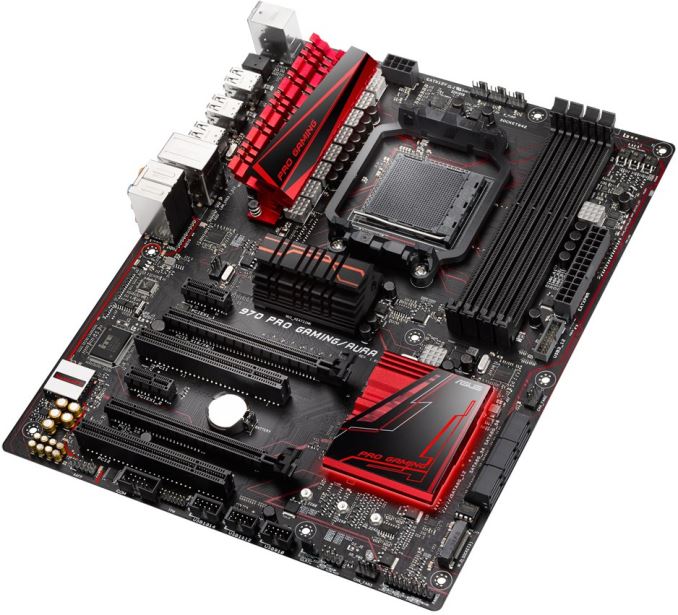
The ASUS 970 Pro Gaming/Aura has not yet reached retailers, however Newegg already has a listing up for $119.99.


ASUS Launches 970 Pro Gaming/Aura Motherboard: USB 3.1 and M.2 to AMD FX Platform

ASUS Launches 970 Pro Gaming/Aura Motherboard: USB 3.1 and M.2 to AMD FX Platform

ASUS has introduced its latest motherboard for AMD FX microprocessors that brings up-to-date features to the platform. The ASUS 970 Pro Gaming/Aura belongs to a new class of AMD FX (socket AM3+) mainboards that support USB 3.1 peripherals as well as M.2 solid-state drives. In addition, the platform is also equipped with various gaming-oriented features available on the latest platforms from the company.

The ASUS 970 Pro Gaming/Aura is based on the AMD 970 + SB950 chipset, which is not AMD’s top-of-the-range core-logic for the FX processors, but which is pretty affordable for mainstream motherboards. The AMD 970 did not officially support any multi-GPU technology when it was released five years ago. AMD has removed this limitation since then and modern AMD 970-based mainboards, such as the 970 Pro Gaming/Aura, can run more than one video card. The motherboard has two PCI Express slots for graphics cards operating in PCIe 2.0 x8 mode and officially supporting both AMD CrossFire and NVIDIA SLI. In addition, the new mainboard features two PCIe 2.0 x1 and two PCI slots for add-in cards.

AMD 900 Series Chipsets
  990FX + SB950 990X + SB950 970 + SB950
Code Name RD990 RD980 RX980
Released Q2 2011 Q2 2011 Q2 2011
PCIe Lanes 42 PCIe 2.0 lanes 26 PCIe 2.0 lanes 26 PCIe 2.0 lanes
CrossFire x16 + x16
x8 + x8 + x8 + x8
x8 + x8 x16 + x4
x8 + x8 + x4
SLI x16 + x16
x16 + x8 + x8
x8 + x8 + x8 + x8
x8 + x8 x8 + x8
NB TDP 19.6W 14W 13.6W
HyperTransport (MHz) 2600 2600 2400
SATA 6 Gb/s 6 6 6
RAID 0, 1, 5, 10 0, 1, 5, 10 0, 1, 5, 10
USB 2.0 14 14 14
PCI Yes Yes Yes
SB950 TDP 6W 6W 6W

The ASUS 970 Pro Gaming/Aura supports all AMD FX processors in AM3+ form-factor with up to 125W TDP as well as their predecessors, such as the Phenom II, the Athlon II and the Sempron 100-series chips (but advised against using the 220W FX-9000 series). The new motherboard has upgraded 8-phase power delivery and similar to other ASUS designs the 970 Pro Gaming/Aura uses the company’s Digi+ custom power controller. The motherboard features four memory slots and supports up to 32 GB of DDR3-2133 memory.

The 970 Pro Gaming/Aura comes with six SATA 6 Gb/s ports with RAID 0, 1, 5 and 10 support as well as an M.2 slot for SSDs (2242/2260/2280 form-factors are supported) that operates in PCIe 2.0 x4 mode and supports data-rates of up to 20 GT/s, making it suitable for drives such as the Samsung XP941. The UEFI/BIOS of the motherboard fully supports NVMe protocol and therefore the platform can take advantage of modern SSDs, such as Samsung 950 Pro. However it is unclear whether the M.2 slot uses PCIe lanes from the AMD970 or the SB950 controller. The platform also comes bundled with RAMcache software to speed up launches of frequently used applications.

Meanwhile for USB functionality the motherboard is equipped with ASMedia’s ASM1142 USB 3.1 controller that enables two USB 3.1 type-A connectors on the rear panel. In addition, the mainboard supports two USB 3.0 ports (also using an ASMedia controller) and 14 USB 2.0 ports.

For other functionality we get Intel’s I211-AT Gigabit Ethernet controller with the GameFirst software for network traffic prioritization as well as LANGuard ESD and power surge protection. Audio comes through ASUS’ SupremeFX, their upgraded Realtek ALC1150 codec solution, with EM shielding, PCB separation of analog/digital signal and support for up to 300 ohms headphones.

The motherboard is designed for low-cost gaming systems, though that hasn’t stopped ASUS from adding a set of overclocking features into its BIOS and the components necessary to drive it. The aim is to get a full system price that is competitive. For example, the AMD FX-8320 featuring four Piledriver modules and unlocked multiplier can be purchased for $145, which is comparable to the price of Intel’s dual-core Core i3 processors. Once overclocked, the FX-8320 chip can offer rather decent performance for its price (see our results of the FX-8370E overclocked to 4.8 GHz here). The mainboard also supports AMD CrossFireX, NVIDIA SLI, as well as USB 3.1 and M.2/NVMe, which should attract attention of people seeking for the latest technologies and an easy upgrade path (at least, for graphics).

As an added flair for users that are interested, the ASUS 970 Pro Gaming/Aura also features Aura RGB LED on the south bridge, which can produce various lighting effects, such as pulsating, strobing, fading and so on. The motherboard is clearly not the first affordable platform to offer LED lighting, but ASUS just had to include the technology into the package simply because a number of competing offerings come with LEDs. They can also be switched off if needed.

The ASUS 970 Pro Gaming/Aura has not yet reached retailers, however Newegg already has a listing up for $119.99.