News


Intel and Tsinghua University to Co-Develop Semi-Custom Solutions for Servers

Intel and Tsinghua University to Co-Develop Semi-Custom Solutions for Servers

At present, investors state that Intel controls 98% of the server processor market with its Xeon CPUs, but the server market is changing. Intel’s acquisition of Altera is telling – many companies these days require chips with specific features and functionality, and as a result Intel has been making strides to add custom features to its processors. In an extension of this, this month Intel agreed to jointly work with Tsinghua University and Montage Technology to develop custom server platforms for servers used in China.

Under the terms of the agreement, Tsinghua University will develop a reconfigurable computing processor (RCP) module, as well as system software, that will work with a standard Intel Xeon CPU to add features that address requirements for specific applications in various market segments in Asia. The RCP will be made by outsourcing to a maker of semiconductors and it is likely that the government-controlled university may prefer to make the chip in the country or through a subsidiary.

The computing solution proposed consists of an Intel Xeon and a custom RCP, but will not be a multi-chip-module package designs like Intel’s Xeon processors with integrated Altera FPGAs. Instead we are told it will involve a different kind of packaging. Unfortunately, at present it is unclear whether Intel’s Xeon and Tsinghua’s RCP will communicate using known standards (such as the PCI Express interface, QPI, or other), or a custom protocol. 

Intel, TU and Montage did not disclose a lot of technical details about their joint semi-custom solution for Chinese datacenters, but re-configurability of processors implies that the final product could address a broad range of market segments. We postulated that the RCP is just another name for an FPGA, although our sources were unable to confirm this.

Intel will ensure that its chips work with RCPs, and will supply CPU dies to Montage Technology which will market the whole solution to interested parties. Montage plans to sell the final product, which will consist of a standard Intel Xeon CPU, a reconfigurable computing processor developed by Tsinghua, as well as software, in 2017. There is no information about specifications of the Xeon processor lines that will be used, nor the capabilities of the RCP, which still leaves the question of what range of CPUs are being discussed, if it is sub-25W or 90W+.

The collaboration between Intel, Tsinghua University and Montage is aimed to better address demands of Chinese state-owned and other datacenters. Since China is one of the world’s largest markets for servers, the importance of jointly working with local companies is something that is becoming very important not only for Intel, but for all developers of server CPUs, especially as news emerged last year about how Intel and others can or cannot sell to various entities. Intel has arrangements similar to this already in place, such as the Rockchip engagement for some smartphone-based SoCs to be made and sold by Rockchip in Asia, as well as arrangements with Spreadtrum (which is owned by Tsinghua Unigroup, to which Tsinghua University has sole investment).
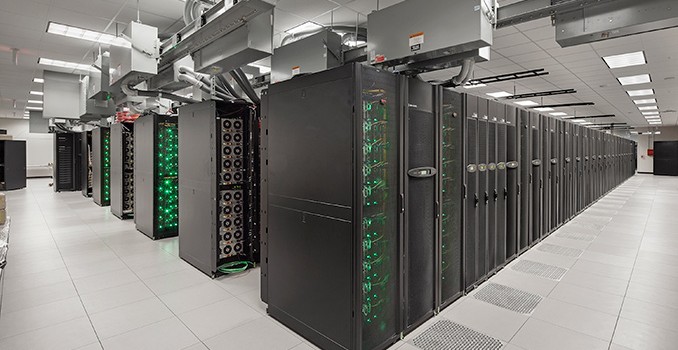
Intel and Tsinghua University to Co-Develop Semi-Custom Solutions for Servers

Intel and Tsinghua University to Co-Develop Semi-Custom Solutions for Servers

At present, investors state that Intel controls 98% of the server processor market with its Xeon CPUs, but the server market is changing. Intel’s acquisition of Altera is telling – many companies these days require chips with specific features and functionality, and as a result Intel has been making strides to add custom features to its processors. In an extension of this, this month Intel agreed to jointly work with Tsinghua University and Montage Technology to develop custom server platforms for servers used in China.

Under the terms of the agreement, Tsinghua University will develop a reconfigurable computing processor (RCP) module, as well as system software, that will work with a standard Intel Xeon CPU to add features that address requirements for specific applications in various market segments in Asia. The RCP will be made by outsourcing to a maker of semiconductors and it is likely that the government-controlled university may prefer to make the chip in the country or through a subsidiary.

The computing solution proposed consists of an Intel Xeon and a custom RCP, but will not be a multi-chip-module package designs like Intel’s Xeon processors with integrated Altera FPGAs. Instead we are told it will involve a different kind of packaging. Unfortunately, at present it is unclear whether Intel’s Xeon and Tsinghua’s RCP will communicate using known standards (such as the PCI Express interface, QPI, or other), or a custom protocol. 

Intel, TU and Montage did not disclose a lot of technical details about their joint semi-custom solution for Chinese datacenters, but re-configurability of processors implies that the final product could address a broad range of market segments. We postulated that the RCP is just another name for an FPGA, although our sources were unable to confirm this.

Intel will ensure that its chips work with RCPs, and will supply CPU dies to Montage Technology which will market the whole solution to interested parties. Montage plans to sell the final product, which will consist of a standard Intel Xeon CPU, a reconfigurable computing processor developed by Tsinghua, as well as software, in 2017. There is no information about specifications of the Xeon processor lines that will be used, nor the capabilities of the RCP, which still leaves the question of what range of CPUs are being discussed, if it is sub-25W or 90W+.

The collaboration between Intel, Tsinghua University and Montage is aimed to better address demands of Chinese state-owned and other datacenters. Since China is one of the world’s largest markets for servers, the importance of jointly working with local companies is something that is becoming very important not only for Intel, but for all developers of server CPUs, especially as news emerged last year about how Intel and others can or cannot sell to various entities. Intel has arrangements similar to this already in place, such as the Rockchip engagement for some smartphone-based SoCs to be made and sold by Rockchip in Asia, as well as arrangements with Spreadtrum (which is owned by Tsinghua Unigroup, to which Tsinghua University has sole investment).
The Cherry MX Board 6.0 Mechanical Keyboard Review

We frequently review mechanical keyboards here in AnandTech. Over half of them come with mechanical switches from Cherry, and for good reason. If you are keeping track of our recent reviews, you should have noticed that Cherry’s switches generally are more consistent than any other type we have tested to this date. Cherry is virtually the inventor of the modern mechanical keyboard switch (not to be confused with the classic buckling spring), manufacturing and marketing them since nearly three decades ago. It is only because their patent expired that other manufacturers were able to copy their switch designs.

With all of that said, Cherry is not only supplying their switches to other keyboard manufacturers. As a matter of fact, the company has a significant line-up of their own keyboard and mouse products. On the other hand, Cherry’s products are almost exclusively aimed towards professionals and for specific applications, such as keyboards with biometric or magnetic card readers for security. Considering the target market of their products, naturally their keyboards were using just plastic black or beige parts and never looked like anything special. However, Cherry is taking a huge leap of faith and releasing a new keyboard, the MX Board 6.0, which a mere glance upon it is enough to reveal that it is nothing like their previous products.

The Cherry MX Board 6.0 Mechanical Keyboard Review

We frequently review mechanical keyboards here in AnandTech. Over half of them come with mechanical switches from Cherry, and for good reason. If you are keeping track of our recent reviews, you should have noticed that Cherry’s switches generally are more consistent than any other type we have tested to this date. Cherry is virtually the inventor of the modern mechanical keyboard switch (not to be confused with the classic buckling spring), manufacturing and marketing them since nearly three decades ago. It is only because their patent expired that other manufacturers were able to copy their switch designs.

With all of that said, Cherry is not only supplying their switches to other keyboard manufacturers. As a matter of fact, the company has a significant line-up of their own keyboard and mouse products. On the other hand, Cherry’s products are almost exclusively aimed towards professionals and for specific applications, such as keyboards with biometric or magnetic card readers for security. Considering the target market of their products, naturally their keyboards were using just plastic black or beige parts and never looked like anything special. However, Cherry is taking a huge leap of faith and releasing a new keyboard, the MX Board 6.0, which a mere glance upon it is enough to reveal that it is nothing like their previous products.

Apple Reports Q1 FY 2016 Results: Record Revenue Despite Flat iPhone Sales

Apple Reports Q1 FY 2016 Results: Record Revenue Despite Flat iPhone Sales

Today Apple announced their quarter 1 earnings, and once again Apple had record revenue of $75.9 billion, and a record quarterly profit of $18.4 billion. Revenue is up 2% compared to Q1 2015, and 66% of the quarter’s revenue came from International sales. Gross margin for the quarter was 40.1%, or $30.4 billion, up from 39.9% and $29.7 billion last year. Operating income was down slightly to $24.171 billion, but net income was $18.361 billion, which is up 1.8% year-over-year.

Apple Q1 2016 Financial Results (GAAP)
  Q1’2016 Q4’2015 Q1’2015
Revenue (in Billions USD) $75.872 $51.501 $74.599
Gross Margin (in Billions USD) $30.423 $20.548 $29.741
Operating Income (in Billions USD) $24.171 $14.623 $24.246
Net Income (in Billions USD) $18.361 $11.124 $18.024
Margins 40.1% 39.9% 39.9%
Earnings per Share (in USD) $3.30 $1.96 $3.08

Although the company had record iPhone sales, it was only just a record. It is still a massive part of their business, and for the quarter Apple sold 74.779 million iPhones, with an average selling price of $691. Compared to the year ago quarter, this is a gain of 311,000 iPhones. That’s a pretty small gain, and percentage wise Apple calls it a year-over-year change of 0%. Although the growth is not there, that is still a huge amount of devices sold. iPhones accounted for $51.6 billion in Apple’s revenue this quarter.

iPad has been a tricky market for Apple. After initial sales figures with huge growth, the platform stopped growing and started having a drop in sales quite a few quarters ago. The release of the iPad Pro was hoped to kick-start this, but, at least for the launch quarter, that has not been the case. iPad sales continued their fall, and in fact had an even larger drop of 25% year-over-year to 16.1 million devices. Revenue from iPads dropped 21% to $7.084 billion.

Mac sales were also down, with a year-over-year drop of 4% to 5.3 million devices sold. Revenue went down slightly less than that, with just a 3% drop, to $6.7 billion. Considering the slowdown in the PC market, the drop is less than what we’ve seen from the PC market as a whole, but still a drop nonetheless. Regardless, Apple is likely pretty happy with Mac sales, which have weathered the storm better than many other brands. Dividing revenue by sales leads to an average of $1269.95 per Mac sale, which is territory most other OEMs would love to be in.

Apple Q1 2016 Device Sales (thousands)
  Q1’2016 Q4’2015 Q1’2015 Seq Change Year/Year Change
iPhone 74,779 48,046 74,468 +56% 0%
iPad 16,122 9,883 21,419 +63% -25%
Mac 5,312 5,709 5,519 -7% -4%

Services, which includes the App Store, AppleCare, Apple Pay, licensing, and other services, had a much better quarter. This segment had revenue of $6.056 billion for the quarter, which is a 26% increase year-over-year.

Finally, Other Products, which includes Apple TV, Apple Watch, Beats, iPod, and accessories, had another great gain of 62% in revenue to $4.351 billion. Apple doesn’t break out individual numbers for this segment, but considering the Apple Watch did not exist in the 2015 numbers, you can be sure a lot of the gain is from this new product introduction.

Apple Q1 2016 Revenue by Product (billions)
  Q1’2016 Q4’2015 Q1’2015 Revenue for current quarter
iPhone $51.635 $32.209 $51.182 68.05%
iPad $7.084 $4.726 $8.985 9.34%
Mac $6.746 $6.882 $6.944 8.89%
iTunes/Software/Services $6.056 $5.086 $4.799 7.98%
Other Products $4.351 $3.048 $2.689 5.73%

Apple will pay a dividend of $0.52 per share, payable to shareholders of record as of February 8. The payment will be made on February 11. Apple paid back $9 billion to shareholders this quarter, through share buybacks and dividend payments. They have now paid out $153 billion of their $200 billion capital return program.

Looking forward to next quarter, the forecast is decidedly down, with Apple expecting revenue of $50-53 billion, and margins of 39-39.5%. In Q2 2015, Apple had revenue of $58 billion, so this is a big drop. As always, forecasts are just that, and we’ll have to wait for their actual numbers to see how they do.

Apple had a record quarter, but flat iPhone sales, and a drop in iPad and Mac sales are definite sour notes on this otherwise great quarter. Apple did say that currency rates have had a big impact this quarter, and “$100 of Apple’s non-U.S. dollar revenue in Q4’14 translates into only $85 U.S. dollars today”, which is going to be a big factor in earnings. Looking at a Constant Currency calculation, revenue would have been up 8% instead of 2%. Still, for a company with a net income higher than the revenue of many other players in the tech space, I think they will be OK.

Source: Apple Investor Relations