News


SanDisk Updates DAS Lineup at CES
SanDisk Updates DAS Lineup at CES

Billy and I met with SanDisk at their CES 2016 suite. While Billy talked to them about their internal SSD efforts, I checked out the updates to their direct-attached storage (DAS) offerings. SanDisk had a relatively straightforward launch set, with just three new products in this space.

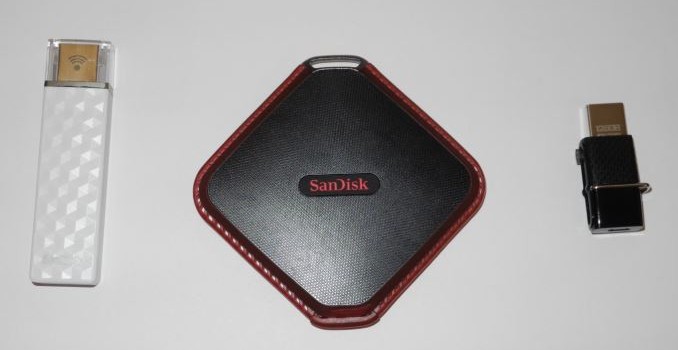
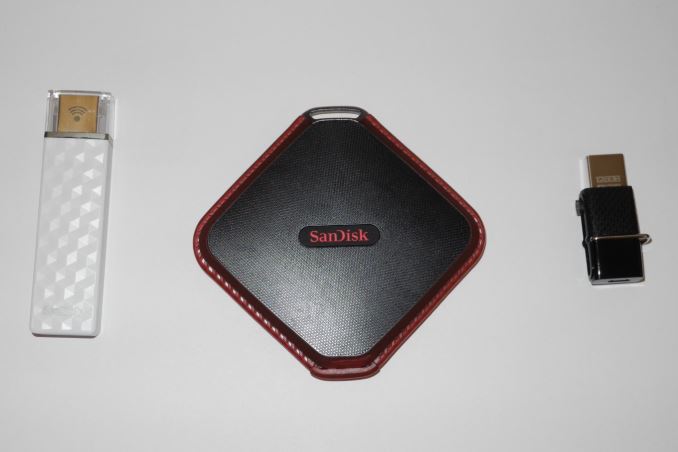
The SanDisk Extreme 510 Portable SSD (in the middle of the above picture) is based on the same platform as the Extreme 500 Portable SSD that we reviewed recently. The only differences lie in the fact that the new one comes in only one capacity – 480GB. It also carries a IP55 rating (dust and water resistance), thanks to the rubber bumper around the unit. It is targeted towards content creators who want rugged high capacity storage in the field. As I had mentioned in my review of the Extreme 500 Portable SSD, the speeds are very satisfying – but, only when connected to the right host controller. In our testing, we got better performance numbers with ASMedia USB host controllers compared to Intel’s native controllers integrated in the PCH. The unit is priced at $250, and will be available in retail channels in a few weeks.

The SanDisk 200GB Connect Wireless USB Flash Drive (pictured to the left) is a flash drive that can also act as a wireless drive for mobile devices. It uses the SanDisk Connect app for management on the mobile side. It is priced at $120, and is available now. The WLAN component is a 1×1 802.11n implementation.

The SanDisk 128GB Ultra Dual USB Drive 3.0 (pictured to the right ) is meant for OTG smartphones and tablets when used with the microUSB port on one end. It also has a separate USB 3.0 Type-A male interface for connecting to a computer. SanDisk claims speeds of up to 150 MBps when used with a PC. The SanDisk Memory Zone app on the mobile device helps manage and transfer content between the main memory in the mobile device and the OTG drive. The 128GB drive is priced at $40 and available for purchase now.
 

CES 2016: Dell Booth Tour

CES 2016: Dell Booth Tour

In 2015, Dell’s CES product launch included the redesigned XPS 13, arguably one of the best Windows laptops on the market today. With the launch of Skylake, the XPS 13 is now upgraded, as is its XPS 15 sibling, which now features the same infini…

AMD Cuts Price of Radeon R9 Nano to $499

AMD Cuts Price of Radeon R9 Nano to $499

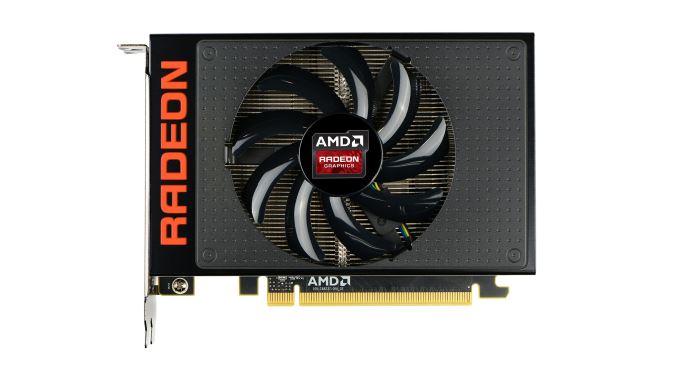
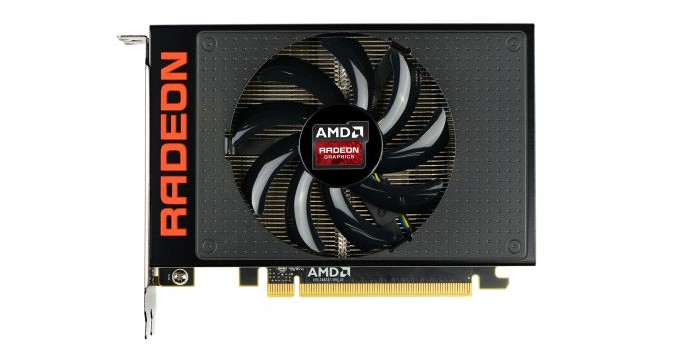
Word comes from AMD via a press release this morning that they are giving the Radeon R9 Nano a price cut. AMD’s diminutive flagship, which launched in September 2015 at $649, is now the first Fiji card to get an official price cut, with AMD lowering the MSRP to $499 effective immediately.

The third card based on AMD’s flagship Fiji GPU, the Radeon R9 Nano was in a sense a culmination of AMD’s design goals for Fiji. Seeking to take full advantage of the compact packaging afforded by the use of High Bandwidth Memory, AMD packed a fully enabled Fiji into a Mini-ITX sized video card designed especially for small form factor systems. The resulting card was neither a performance flagship card like the Fury X nor a clear second-tier card like the regular Fury, but rather a third card that occupied its own niche within the PC market. This coupled with its unique power binning requirements led to it being launched as a micro-sized alternative to the full Fury X at the same $649 MSRP.

This marks the first instance of a significant price cut for a Fiji card – since their respective launches we’ve seen all three cards drift lower by only $50 or so – and that the card receiving a price drop is AMD’s most recently launched Fiji card is a bit surprising. From a price/performance perspective the Nano was essentially priced as a luxury card, with AMD banking on being able to charge a premium for its improved power efficiency and small size. Today’s price drop essentially puts an end to that, especially since the two Fury cards are not receiving a price cut of their own. With that said, the Nano’s power requirements call for what is arguably the best Fiji chip bin, so that adds another wrinkle to the entire situation.

More interesting perhaps is where this puts the R9 Fury (vanilla), which can already be found for as low at $499. The R9 Fury is only a few percent faster than the R9 Nano and noticeably more power hungry as well, so if the R9 Fury remains at $499 then it’s hard to imagine the R9 Nano not being disruptive to R9 Fury sales.

Finally, it’s also worth noting that this comes just days after NVIDIA’s most recent game bundle announcement. Although not specifically addressed by AMD, this may be their response to that bundle in order to shore up their lineup against the similarly-priced GTX 980. Especially since this now places AMD’s most power efficient card against NVIDIA’s most efficient card, offering about 5% better performance for 5% higher power consumption.

Winter 2016 GPU Pricing Comparison
AMD Price NVIDIA
  $629 GeForce GTX 980 Ti
Radeon R9 Fury X $599  
Radeon R9 Fury
Radeon R9 Nano
$499  
  $479 GeForce GTX 980
Radeon R9 390X $379  
Radeon R9 390 $299 GeForce GTX 970
Intel Expands Compute Stick Family with Cherry Trail and Core M Models

Intel Expands Compute Stick Family with Cherry Trail and Core M Models

The desktop PC market is seeing growth only in two areas – the gaming high-end and the mini-PCs (in the NUC form factor). Intel has been strengthening its offerings in the latter space as a system vendor. The NUC has been extremely popular and Intel’s partners such as Zotac and GIGABYTE are also enjoying a lot of success with similarly sized systems.

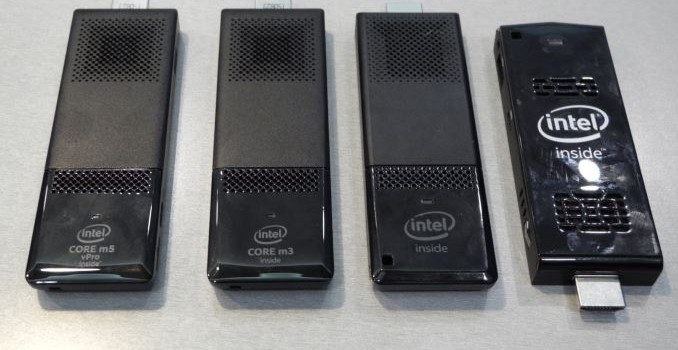
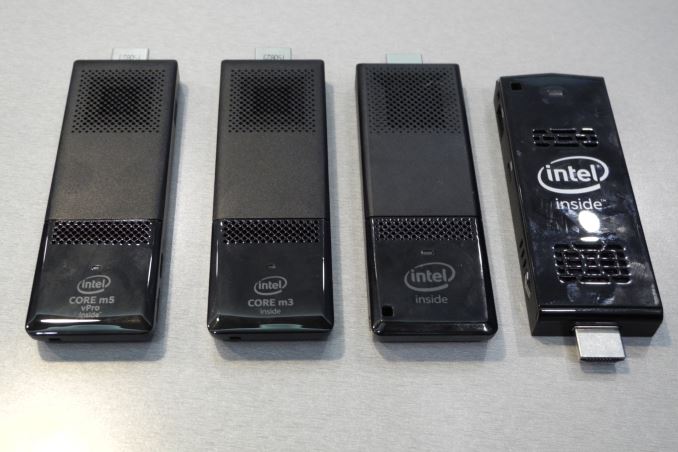
ARM SoC vendors started the trend of HDMI sticks, but Intel joined the game in CES 2015 with the Bay Trail Compute Stick. The first iteration was, to put it kindly, a bit underwhelming, but Intel showed its commitment to the form factor by announcing three new Compute Stick models at CES 2016.

Cherry Trail Compute Stick

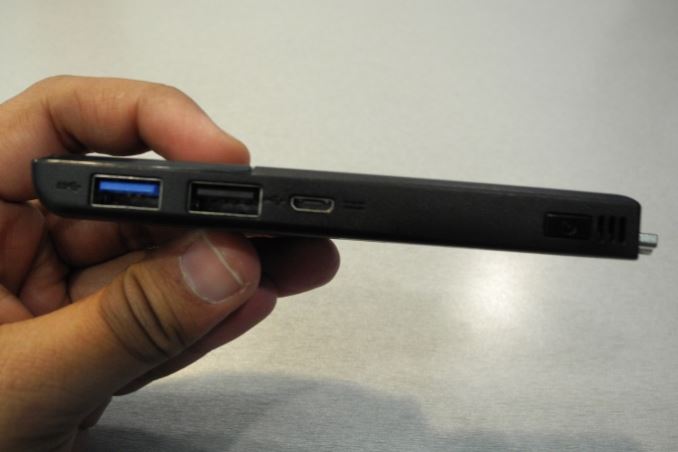
This is a straight-on follow-up to the Bay Trail model from last year. The I/O ports and hardware construction are similar, except that the Cherry Trail model is slightly longer and includes a USB 3.0 port in addition to the previously existing single USB 2.0 port.

Other improved aspects include the use of Intel’s own 802.11ac Wi-Fi chipset instead of the Realtek one found in the Bay Trail version. Obviously, Cherry Trail’s GPU is better than Bay Trail’s. However, the cooling fan still remains part of the hardware. The eMMC capacity is only 32GB and the RAM is only 2GB – two aspects that have an artificial limitation imposed on them by Intel’s decision to pre-install Windows 10 Home. Even though the information is not public, it is likely that Microsoft mandates neutering of a PC’s hardware specifications in exchange for a lower price for the Windows 10 OEM license.

Skylake Core M Compute Sticks

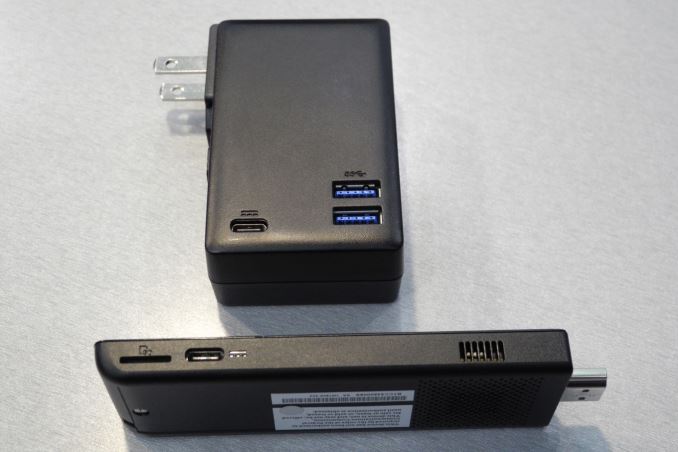
While the Cherry Trail Compute Stick was more or less expected, the Core M-based Compute Sticks were a real surprise. Later this year, Intel will launch two Compute Stick models with a Core m3 and Core m5 vPro configuration respectively. The OS will not be pre-installed, and this means that we don’t need the storage or RAM to be limited by anything other than what the hardware design allows. In terms of available ports, the design retains the microSD slot from the other Compute Stick models. However, there is only one USB 3.0 port on the unit itself. Power to the unit is delivered by a USB Type-C connector.

The USB Type-C power adapter also includes two USB 3.0 ports. This is a very novel use of the USB Type-C power delivery mechanism. Intel mainly expects the Core M Compute Sticks to be popular amongst businesses and enterprises (thanks to the availability of vPro).

NUCs

Intel has been shipping the Skylake NUCs for a couple of months now. They had one on display at their booth. Interesting aspects include the presence of a SDXC slot as well as a full-sized HDMI port in the rear panel.

They also talked about the upcoming ‘Skull Canyon’ mini-PC featuring a 45W TDP Skylake H CPU with Iris Pro graphics. It will not be in the NUC form factor, but will be a slightly larger rectangle with height similar to the current NUCs which don’t support 2.5″ drives. The unit is still a work in progress, but we expect it to launch in the second half of this year. Unfortunately, Intel didn’t allow us to take photographs of the Skull Canyon mini-PC.

On the whole, Intel is showing strong commitment to the mini-PC market segment. This will keep x86 relevant in the home computing space even as ARM continues to strengthen its hold in mobile computing.

Intel Expands Compute Stick Family with Cherry Trail and Core M Models

Intel Expands Compute Stick Family with Cherry Trail and Core M Models

The desktop PC market is seeing growth only in two areas – the gaming high-end and the mini-PCs (in the NUC form factor). Intel has been strengthening its offerings in the latter space as a system vendor. The NUC has been extremely popular and Intel’s partners such as Zotac and GIGABYTE are also enjoying a lot of success with similarly sized systems.

ARM SoC vendors started the trend of HDMI sticks, but Intel joined the game in CES 2015 with the Bay Trail Compute Stick. The first iteration was, to put it kindly, a bit underwhelming, but Intel showed its commitment to the form factor by announcing three new Compute Stick models at CES 2016.

Cherry Trail Compute Stick

This is a straight-on follow-up to the Bay Trail model from last year. The I/O ports and hardware construction are similar, except that the Cherry Trail model is slightly longer and includes a USB 3.0 port in addition to the previously existing single USB 2.0 port.

Other improved aspects include the use of Intel’s own 802.11ac Wi-Fi chipset instead of the Realtek one found in the Bay Trail version. Obviously, Cherry Trail’s GPU is better than Bay Trail’s. However, the cooling fan still remains part of the hardware. The eMMC capacity is only 32GB and the RAM is only 2GB – two aspects that have an artificial limitation imposed on them by Intel’s decision to pre-install Windows 10 Home. Even though the information is not public, it is likely that Microsoft mandates neutering of a PC’s hardware specifications in exchange for a lower price for the Windows 10 OEM license.

Skylake Core M Compute Sticks

While the Cherry Trail Compute Stick was more or less expected, the Core M-based Compute Sticks were a real surprise. Later this year, Intel will launch two Compute Stick models with a Core m3 and Core m5 vPro configuration respectively. The OS will not be pre-installed, and this means that we don’t need the storage or RAM to be limited by anything other than what the hardware design allows. In terms of available ports, the design retains the microSD slot from the other Compute Stick models. However, there is only one USB 3.0 port on the unit itself. Power to the unit is delivered by a USB Type-C connector.

The USB Type-C power adapter also includes two USB 3.0 ports. This is a very novel use of the USB Type-C power delivery mechanism. Intel mainly expects the Core M Compute Sticks to be popular amongst businesses and enterprises (thanks to the availability of vPro).

NUCs

Intel has been shipping the Skylake NUCs for a couple of months now. They had one on display at their booth. Interesting aspects include the presence of a SDXC slot as well as a full-sized HDMI port in the rear panel.

They also talked about the upcoming ‘Skull Canyon’ mini-PC featuring a 45W TDP Skylake H CPU with Iris Pro graphics. It will not be in the NUC form factor, but will be a slightly larger rectangle with height similar to the current NUCs which don’t support 2.5″ drives. The unit is still a work in progress, but we expect it to launch in the second half of this year. Unfortunately, Intel didn’t allow us to take photographs of the Skull Canyon mini-PC.

On the whole, Intel is showing strong commitment to the mini-PC market segment. This will keep x86 relevant in the home computing space even as ARM continues to strengthen its hold in mobile computing.