News


AMD Releases Crimson 15.12 WHQL Drivers

AMD Releases Crimson 15.12 WHQL Drivers

Just last month we saw the release of AMDs new Radeon Software Crimson Edition. This release included the brand new Radeon Settings and promised a new commitment to more frequent driver updates alongside better support for WHQL certification. To that …

Apple and UnionPay Will Bring Apple Pay To China In Early 2016

Apple and UnionPay Will Bring Apple Pay To China In Early 2016

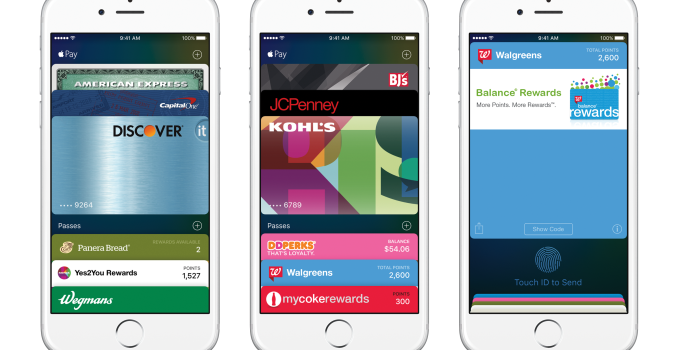
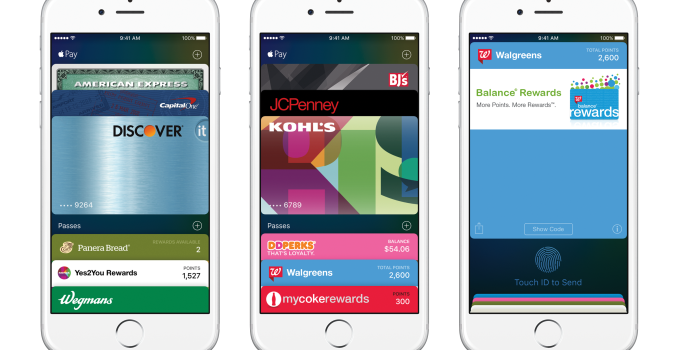
Today Apple and China UnionPay announced plans to bring support for Apple Pay to China by the beginning of 2016. China UnionPay is the only bank card organization in China, and so partnering with them was essential to Apple expanding the Apple Pay service to the country. Apple Pay is Apple’s mobile payment service that utilizes NFC and either an iPhone or an Apple Watch to make mobile payments at merchants that have the necessary payment terminals to support contactless payments.

At launch, Apple Pay will be available on 15 of China’s leading banks. It’s not specified exactly which banks have signed on for the original roll out, but if the service expands in the way it has in the United States that number will end up growing fairly quickly. The launch of the service will be subject to approvals by Chinese regulators, which could cause delays to Apple’s planned roll out timeline. With China UnionPay having issued bank cards for hundreds of millions of customers, the expansion to China could potentially provide a big boost to the number of users using the service. The expansion into China also makes sense when one considers Apple’s recent attempts to gain a better foothold in the Chinese market.

As for Apple Pay in general, the launch of Apple Pay in China will mark the fifth expansion of the service. It originally launched exclusively in the United States before expanding to the United Kingdom, and it was recently introduced in Australia and Canada through a partnership with American Express.


Apple and UnionPay Will Bring Apple Pay To China In Early 2016

Apple and UnionPay Will Bring Apple Pay To China In Early 2016

Today Apple and China UnionPay announced plans to bring support for Apple Pay to China by the beginning of 2016. China UnionPay is the only bank card organization in China, and so partnering with them was essential to Apple expanding the Apple Pay service to the country. Apple Pay is Apple’s mobile payment service that utilizes NFC and either an iPhone or an Apple Watch to make mobile payments at merchants that have the necessary payment terminals to support contactless payments.

At launch, Apple Pay will be available on 15 of China’s leading banks. It’s not specified exactly which banks have signed on for the original roll out, but if the service expands in the way it has in the United States that number will end up growing fairly quickly. The launch of the service will be subject to approvals by Chinese regulators, which could cause delays to Apple’s planned roll out timeline. With China UnionPay having issued bank cards for hundreds of millions of customers, the expansion to China could potentially provide a big boost to the number of users using the service. The expansion into China also makes sense when one considers Apple’s recent attempts to gain a better foothold in the Chinese market.

As for Apple Pay in general, the launch of Apple Pay in China will mark the fifth expansion of the service. It originally launched exclusively in the United States before expanding to the United Kingdom, and it was recently introduced in Australia and Canada through a partnership with American Express.
Qualcomm renames Snapdragon 618,620 to 650,652

Qualcomm renames Snapdragon 618,620 to 650,652

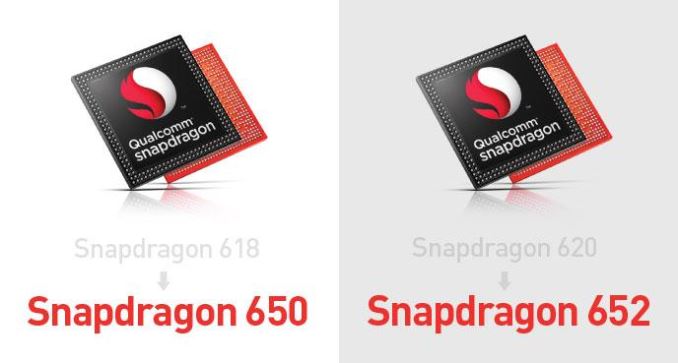
Earlier in the year we were able to cover Qualcomm’s announcement of the Snapdragon 618 and 620 mid-range SoCs. We haven’t heard much about the SoCs since the original news, but today Qualcomm made the new announcement that there will be a product renaming. From now on, the Snapdragon 618 becomes the Snapdragon 650 and the Snapdragon 620 becomes the new Snapdragon 652. It seems that Qualcomm saw possibility of product lineup confusion between the existing Snapdragon 61x models and the new parts, and because the new models represent a significant boost in performance to previous generation A53-only SoCs, repositioned the parts with new higher numeric names that allows them to better differentiate themselves.

Qualcomm 2016 Mid- to High-End
SoC Snapdragon 650
(MSM8952)
Snapdragon 652
(MSM8976)
Snapdragon 820
(MSM8996)
CPU 4x Cortex A53 @1440MHz

2x Cortex A72 @1804MHz

4x Cortex A53 @1440MHz

4x Cortex A72 @1804MHz

2x Kryo @1598MHz

2x Kryo @2150MHz

Memory 2x 32-bit @ 931MHz
LPDDR3

14.9GB/s b/w

2x 32-bit @ 1803MHz
LPDDR4

28.8GB/s b/w

GPU Adreno 510
@ 550MHz
Adreno 530
@ 624MHz
Encode/
Decode
2160p30, 1080p90
H.264 & HEVC
2160p30 (p60 decode),
1080p60
H.264 & HEVC
Camera/ISP Dual ISP
21MP
Dual ISP
25MP
Integrated
Modem
“X8 LTE” Cat. 7
300Mbps DL 100Mbps UL

2x20MHz C.A. 
(DL & UL)

“X12 LTE” Cat. 12/13 
600Mbps DL 150Mbps UL

3x20MHz C.A. (DL)
2x20MHz C.A. (UL)

Mfc. Process 28nm HPm 14nm LPP

As a reminder, the Snapdragon 650 and 652 are big.LITTLE SoCs based on ARM’s Cortex A72 acting as the big cores running at 1804MHz, and along with them comes ARM’s Cortex A53 clocked at 1440MHz. While both SoCs have 4 little cores, the Snapdragon 652 sports 4 A72 cores while the smaller brother sports only 2.

As a GPU we find an Adreno 510 clocked in at 550MHz. We still don’t have much more information on how this new part will be able to perform compared to its predecessors, but we should be expecting levels along the line of the Adreno 418 in the current Snapdragon 808.

The biggest difference between the Snapdragon 650/652 and the high end flagship, the Snapdragon 820 will be in terms of manufacturing node as we’ll be seeing the former parts made on a mature 28nm HPm node while the Snapdragon 820 enjoys the more high-end 14nm LPP manufacturing process. 

At the time we expected the new parts to ship in devices by the end of the year but as we’re closing in on the holiday season it looks like we’ll have to wait for early 2016 until we can get our hands on the new products, so hopefully we’ll be seeing announcements in the following months with availability shortly after.
Qualcomm renames Snapdragon 618,620 to 650,652

Qualcomm renames Snapdragon 618,620 to 650,652

Earlier in the year we were able to cover Qualcomm’s announcement of the Snapdragon 618 and 620 mid-range SoCs. We haven’t heard much about the SoCs since the original news, but today Qualcomm made the new announcement that there will be a product renaming. From now on, the Snapdragon 618 becomes the Snapdragon 650 and the Snapdragon 620 becomes the new Snapdragon 652. It seems that Qualcomm saw possibility of product lineup confusion between the existing Snapdragon 61x models and the new parts, and because the new models represent a significant boost in performance to previous generation A53-only SoCs, repositioned the parts with new higher numeric names that allows them to better differentiate themselves.

Qualcomm 2016 Mid- to High-End
SoC Snapdragon 650
(MSM8952)
Snapdragon 652
(MSM8976)
Snapdragon 820
(MSM8996)
CPU 4x Cortex A53 @1440MHz

2x Cortex A72 @1804MHz

4x Cortex A53 @1440MHz

4x Cortex A72 @1804MHz

2x Kryo @1598MHz

2x Kryo @2150MHz

Memory 2x 32-bit @ 931MHz
LPDDR3

14.9GB/s b/w

2x 32-bit @ 1803MHz
LPDDR4

28.8GB/s b/w

GPU Adreno 510
@ 550MHz
Adreno 530
@ 624MHz
Encode/
Decode
2160p30, 1080p90
H.264 & HEVC
2160p30 (p60 decode),
1080p60
H.264 & HEVC
Camera/ISP Dual ISP
21MP
Dual ISP
25MP
Integrated
Modem
“X8 LTE” Cat. 7
300Mbps DL 100Mbps UL

2x20MHz C.A. 
(DL & UL)

“X12 LTE” Cat. 12/13 
600Mbps DL 150Mbps UL

3x20MHz C.A. (DL)
2x20MHz C.A. (UL)

Mfc. Process 28nm HPm 14nm LPP

As a reminder, the Snapdragon 650 and 652 are big.LITTLE SoCs based on ARM’s Cortex A72 acting as the big cores running at 1804MHz, and along with them comes ARM’s Cortex A53 clocked at 1440MHz. While both SoCs have 4 little cores, the Snapdragon 652 sports 4 A72 cores while the smaller brother sports only 2.

As a GPU we find an Adreno 510 clocked in at 550MHz. We still don’t have much more information on how this new part will be able to perform compared to its predecessors, but we should be expecting levels along the line of the Adreno 418 in the current Snapdragon 808.

The biggest difference between the Snapdragon 650/652 and the high end flagship, the Snapdragon 820 will be in terms of manufacturing node as we’ll be seeing the former parts made on a mature 28nm HPm node while the Snapdragon 820 enjoys the more high-end 14nm LPP manufacturing process. 

At the time we expected the new parts to ship in devices by the end of the year but as we’re closing in on the holiday season it looks like we’ll have to wait for early 2016 until we can get our hands on the new products, so hopefully we’ll be seeing announcements in the following months with availability shortly after.