
Vik


Seagate and LaCie at CES 2015

Seagate and LaCie at CES 2015

Seagate acquired LaCie a couple of years back. We saw some complementary product lineups last year, but this time around, the integration seems to be well and truly complete. Amongst the new products introduced at CES 2015, the most interesting seemed to be the 7mm thin external USB 3.0 hard drive.
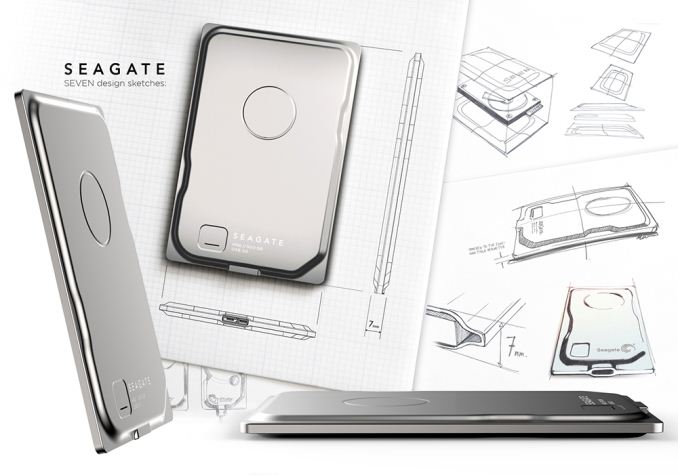
The Seagate Seven is based on a 500 GB 5mm 2.5″ Angsana drive (two platters). The SATA-USB 3.0 bridge has been integrated on the main board. A premium steel enclosure creates a unique and striking product at a reasonable $100 price point.

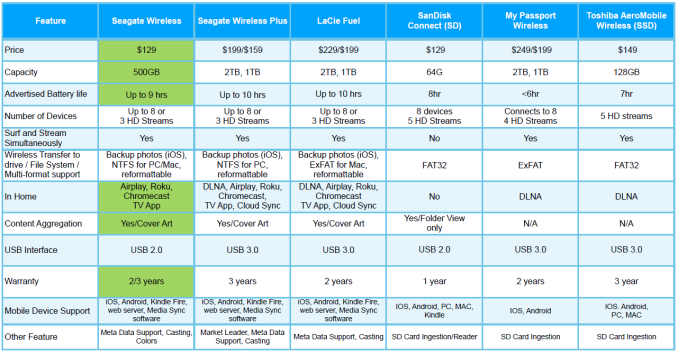
The Seagate Wireless product is an low-cost entry update to the wireless mobile storage lineup for smartphones and tablets. The USB 3.0-based Seagate Wireless Plus and the LaCie Fuel will continue to exist. The new product is USB 2.0-based and has only one available capacity point – 500 GB. It is priced at $129. Unlike the My Passport Wireless that we reviewed late last year, this one doesn’t have a SD card slot – the content consumption side is the target market here. Seagate had a handy comparison table in their briefing.
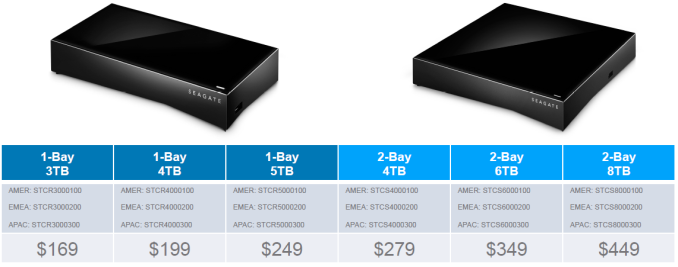
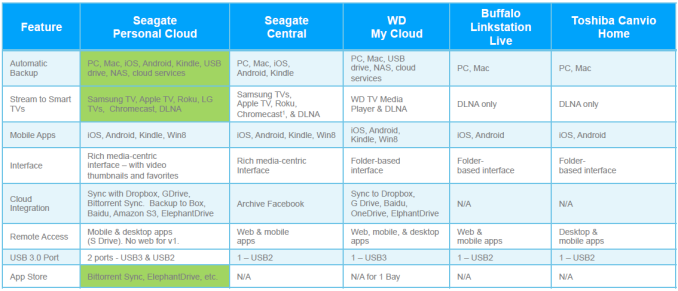
The Seagate Personal Cloud is a NAS lineup targeted towards the average home consumer. It comes in 1 and 2-bay varieties. The mobile apps are the focus here – primary target market being owners with media libraries that need to be streamed to a variety of devices. Seagate operates relay servers with end-to-end encryption so that access to the content on the device is available from anywhere in the world. The various models and price points, as well as the competitive positioning are reproduced below.
On the LaCie side of things, we had the usual fashion statement in the LaCie Mirror – an external 1TB 2.5″ USB 3.0 drive that can double up as a mirror. It carries a premium, as usual, with the pricing set at $280. The more exciting product from a technical viewpoint was the LaCie Rugged RAID. The industrial design is almost the same as the LaCie Rugged Thunderbolt that we had reviewed last year. The thickness is more to accommodate two 2.5″ drives, and there is a switch to move between RAID 0 and RAID 1 for the internal volume. The device comes with two hard drives. A dual SSD option was ruled out since Thunderbolt and USB 3.0 don’t support more than 10 W over the bus.
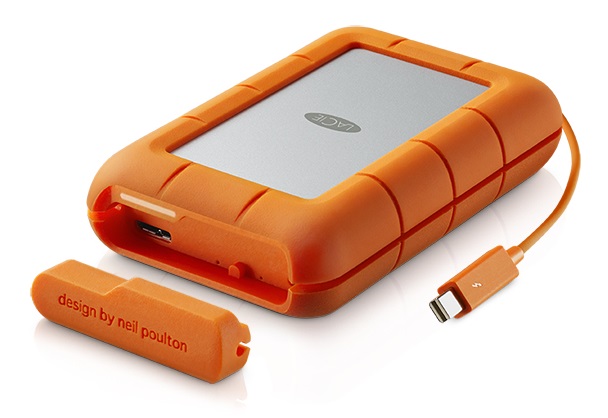
The pricing of the 4TB version (2x 2TB drives inside) will be $450. Advertised performance numbers include speeds of over 240 MBps in RAID 0. Similar to the Rugged Thunderbolt, the unit is shock, dust and splash-proof, and carries an IP54 rating.

On the enterprise side of things, we finally got a look at the Seagate Kinetic Ethernet-Attached Hard Drive. As a quick introduction, the unit does away with the need for a separate NAS server by presenting two Ethernet links over what looks like a SATA connector. Object-based storage removes lots of overhead. Seagate indicated a growing number of chassis vendors with support for these drives. We hope to do a more detailed investigation into Kinetic in the near future.
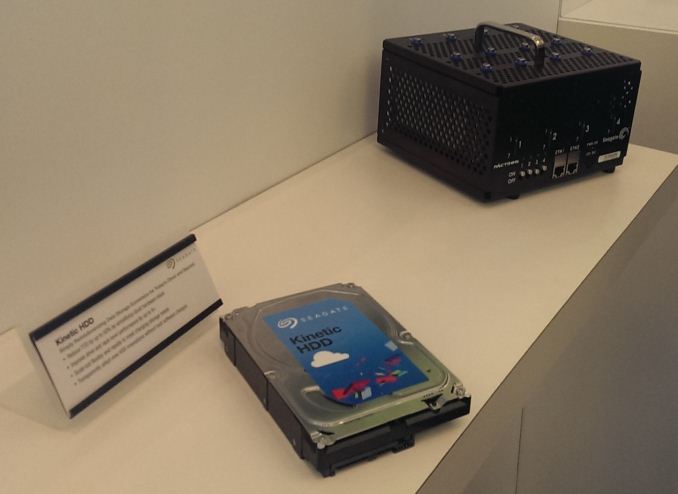
Seagate also had a demonstration of a ClusterStor unit from their Xyratex acquisition. Kristian will be covering updates from the SandForce division later this week.
TP-LINK's Networking Solutions at CES 2015

TP-LINK’s Networking Solutions at CES 2015

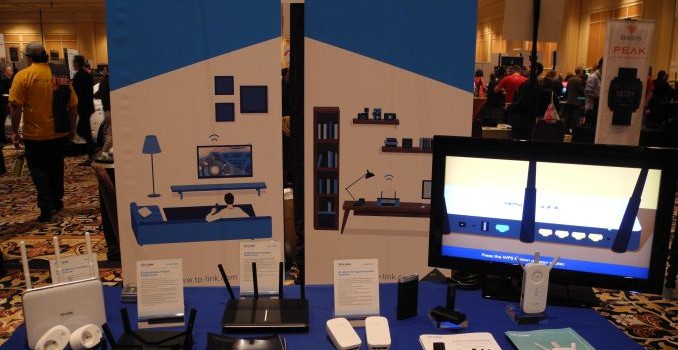
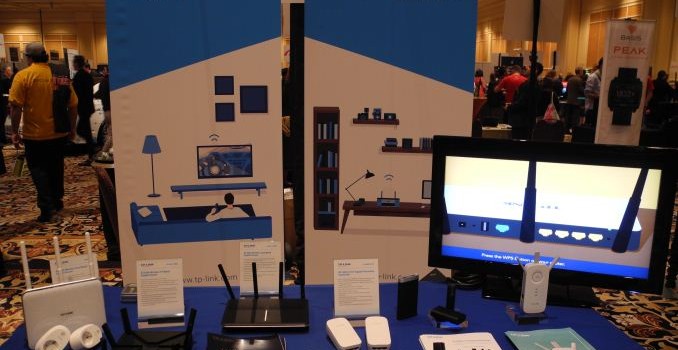
TP-LINK is one of the leading networking solutions vendor in the Asian market. They have been slowly trying to build up a presence in the US, but there has always been a bit of a delay between the launch in the North American market compared to the As…

TP-LINK's Networking Solutions at CES 2015

TP-LINK’s Networking Solutions at CES 2015

TP-LINK is one of the leading networking solutions vendor in the Asian market. They have been slowly trying to build up a presence in the US, but there has always been a bit of a delay between the launch in the North American market compared to the As…

HTC Announces the Desire 826

HTC Announces the Desire 826

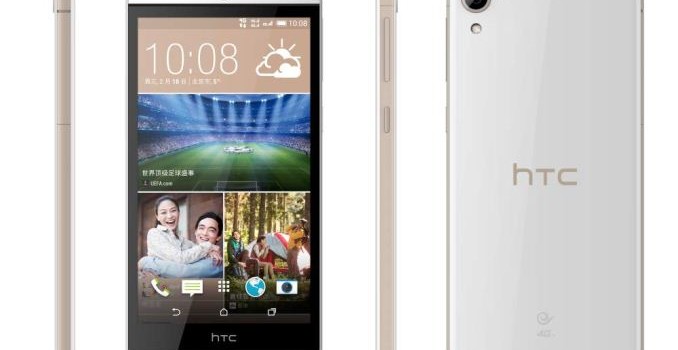
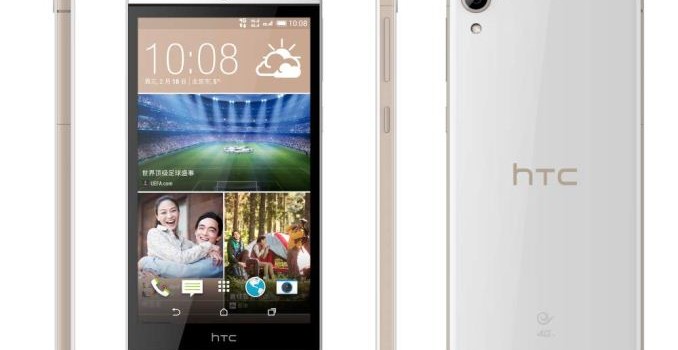
Yesterday at CES, HTC announced the newest device in their lineup of Desire smartphones. Years ago, HTC’s flagship devices fell under the Desire brand. In recent years, the Desire brand has been shifted to more budget oriented devices. This new HTC smartphone is the Desire 826, and it follows in the footsteps of the Desire 816 and Desire 820 that came before it. Although it isn’t HTC’s flagship smartphone, it still has respectable specifications, and in many ways is not far off from today’s flagship devices. I’ve laid out the key specifications of the Desire 826 below.

HTC Desire 826
SoC Qualcomm Snapdragon 615, 4 x Cortex A53 at 1.7GHz + 4 x Cortex A53 at 1.0GHz,
Adreno 405 GPU
Memory and Storage 16GB NAND + MicroSDXC, 2GB LPDDR3
Display 5.5” 1920×1080 LCD
Cellular Connectivity 2G / 3G / 4G LTE (Qualcomm MDM9x25 UE Category 4 LTE)
Dimensions 158 x 77.5 x 7.99 mm, 183g
Camera 13 MP f/2.2 Rear Facing, 4MP UltraPixel f/2.0 Front Facing or 13MP f/2.0 Front Facing
Battery 2600 mAh (9.88 Whr)
Other Connectivity 802.11 a/b/g/n + BT 4.1, AptX, USB2.0, GPS/GNSS, NFC (in select regions)
SIM Size Nano SIM (Dual SIM SKU available)
Operating System Android 5.0 KitKat with HTC Sense

The Desire 826 has a lot in common with the Desire 820 that was released in September 2014. Both devices use Qualcomm’s Snapdragon 615 with 2GB of LPDDR3 memory, 16GB of NAND, and 2600mAh (9.88Wh) battery. However, the Desire 826 has a maximum clock speed of 1.7GHz on its high-power A53 cluster, while the Desire 820 was limited to 1.5GHz. Being an Android 5.0 Lollipop device, the Desire 826 will also be 64-bit enabled out of the gate, while the Desire 820 had to operate in 32-bit mode due to a 64-bit version of Android being unavailable. I still believe having two clusters of Cortex-A53s is silly, but HTC weren’t the ones making that decision so it’s not something I can really fault the phone itself for.

There are some other notable improvements over the Desire 820. The Desire 826 has a significantly sharper display due to HTC’s move from 1280×720 to 1920×1080 on the same panel size. The front-facing camera is the other significant difference between the two devices. While the Desire 820 used an 8MP front-facing sensor, the Desire 826 uses a 4MP UltraPixel sensor with an f/2.0 aperture for the front-facing camera in most markets. This should significantly improve low-light camera performance. In certain unspecified markets, the Desire 826 will use a 13MP f/2.0 sensor instead. Like all of HTC’s recent devices, the Desire 826 ships with HTC’s Eye Experience software for the camera.

The Desire 826 will be available in the Asia-Pacific region by the end of this month, and will expand to other markets afterward. It comes in multiple colors, including but not limited to white, purple, and blue. There is currently no word on what to expect for pricing, but it should be similar to the launch price of the Desire 820.

HTC Announces the Desire 826

HTC Announces the Desire 826

Yesterday at CES, HTC announced the newest device in their lineup of Desire smartphones. Years ago, HTC’s flagship devices fell under the Desire brand. In recent years, the Desire brand has been shifted to more budget oriented devices. This new HTC smartphone is the Desire 826, and it follows in the footsteps of the Desire 816 and Desire 820 that came before it. Although it isn’t HTC’s flagship smartphone, it still has respectable specifications, and in many ways is not far off from today’s flagship devices. I’ve laid out the key specifications of the Desire 826 below.

HTC Desire 826
SoC Qualcomm Snapdragon 615, 4 x Cortex A53 at 1.7GHz + 4 x Cortex A53 at 1.0GHz,
Adreno 405 GPU
Memory and Storage 16GB NAND + MicroSDXC, 2GB LPDDR3
Display 5.5” 1920×1080 LCD
Cellular Connectivity 2G / 3G / 4G LTE (Qualcomm MDM9x25 UE Category 4 LTE)
Dimensions 158 x 77.5 x 7.99 mm, 183g
Camera 13 MP f/2.2 Rear Facing, 4MP UltraPixel f/2.0 Front Facing or 13MP f/2.0 Front Facing
Battery 2600 mAh (9.88 Whr)
Other Connectivity 802.11 a/b/g/n + BT 4.1, AptX, USB2.0, GPS/GNSS, NFC (in select regions)
SIM Size Nano SIM (Dual SIM SKU available)
Operating System Android 5.0 Lollipop with HTC Sense

The Desire 826 has a lot in common with the Desire 820 that was released in September 2014. Both devices use Qualcomm’s Snapdragon 615 with 2GB of LPDDR3 memory, 16GB of NAND, and 2600mAh (9.88Wh) battery. However, the Desire 826 has a maximum clock speed of 1.7GHz on its high-power A53 cluster, while the Desire 820 was limited to 1.5GHz. Being an Android 5.0 Lollipop device, the Desire 826 will also be 64-bit enabled out of the gate, while the Desire 820 had to operate in 32-bit mode due to a 64-bit version of Android being unavailable. I still believe having two clusters of Cortex-A53s is silly, but HTC weren’t the ones making that decision so it’s not something I can really fault the phone itself for.

There are some other notable improvements over the Desire 820. The Desire 826 has a significantly sharper display due to HTC’s move from 1280×720 to 1920×1080 on the same panel size. The front-facing camera is the other significant difference between the two devices. While the Desire 820 used an 8MP front-facing sensor, the Desire 826 uses a 4MP UltraPixel sensor with an f/2.0 aperture for the front-facing camera in most markets. This should significantly improve low-light camera performance. In certain unspecified markets, the Desire 826 will use a 13MP f/2.0 sensor instead. Like all of HTC’s recent devices, the Desire 826 ships with HTC’s Eye Experience software for the camera.

The Desire 826 will be available in the Asia-Pacific region by the end of this month, and will expand to other markets afterward. It comes in multiple colors, including but not limited to white, purple, and blue. There is currently no word on what to expect for pricing, but it should be similar to the launch price of the Desire 820.