Vik


AT20 Giveaway Day 14: PowerColor Unleashes the Red Devil RX 570 Video Card

AT20 Giveaway Day 14: PowerColor Unleashes the Red Devil RX 570 Video Card

Good morning everyone on what is now day 14 of our 20 day giveaway celebration of AnandTech’s 20th anniversary. This is our last full week of giveaways, so let’s get started!

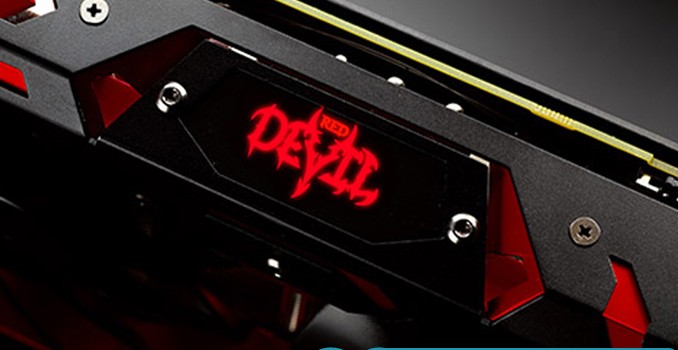
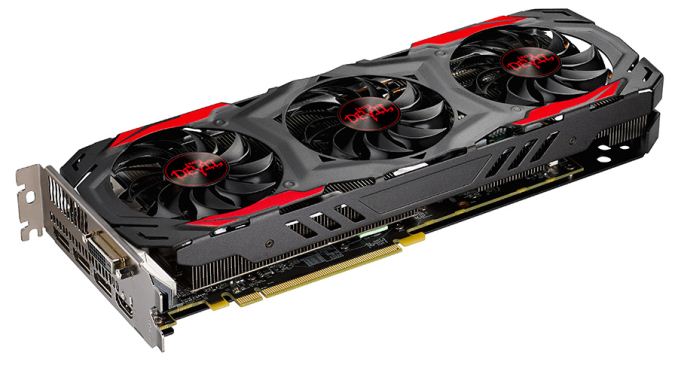
Kicking off this week we have PowerColor. Principally known for their graphics products, PowerColor is one of AMD’s long-time exclusive partners. To that end, the company has sent over a pair of their recently launched Red Devil Radeon RX 570 cards, which are the company’s highest-performance RX 570 cards. So for those of you looking for a solid 1080p gaming card, today’s your day.

  • PowerColor Red Devil Radeon RX 570 (#1)
  • PowerColor Red Devil Radeon RX 570 (#2)

The AnandTech 20th Anniversary Celebration – PowerColor Giveaway

PowerColor Red Devil Radeon RX 570

PowerColor Red Devil RX 570 Specifications
  PowerColor Red Devil
RX 570
AMD Radeon RX 570
(Reference)
Boost Clock 1320MHz 1244MHz
Memory Clock 7Gbps 7Gbps
VRAM 4GB 4GB
TDP N/A 150W
Power Connectors 8pin N/A
Length 12.2″ N/A
Width Double Slot N/A
Cooler Type Open Air N/A

At the high-end of PowerColor’s Radeon RX 500 series lineup is the Red Devil series, the company’s gaming-focused, factory overclocked cards. The Red Devil RX 570 is PowerColor’s 1080p-focused card, shipping with 4GB of VRAM and sporting a factory overclock of 1320MHz, 76MHz over AMD’s reference clock. Internally, the card is built with the company’s Gold PowerKIT VRMs in a 6+1 phase configuration, and while the company doesn’t state an official TDP, it’s clearly a card designed to go a good deal higher than AMD’s reference 150W design.

Cooling for the card is provided by one of PowerColor’s Double Blade III triple fan coolers, which sports a trio of 80mm diameter fans. Consequently the card is quite large – about 12.2 inches in length – with the heatsink extending well past the PCB itself. PowerColor’s cooler also sports support for zero fan speed idle (under the “Mute Fan” name), which should play especially well with the sizable mass that is the heatsink. Finally, for further noise control, the card ships with a BIOS selection switch that allows switching between its default BIOS, and a 1270MHz BIOS tuned for even quieter operation.

Finally, as with our other giveaways, today’s giveaway is only open for 48 hours, so be sure to enter soon. However please note that for legal reasons, we’re only able to open these giveaways to residents of the United States.

Good luck to everyone! And be sure to check in this afternoon for our next giveaway.

AT20 Giveaway Day 14: PowerColor Unleashes the Red Devil RX 570 Video Card

AT20 Giveaway Day 14: PowerColor Unleashes the Red Devil RX 570 Video Card

Good morning everyone on what is now day 14 of our 20 day giveaway celebration of AnandTech’s 20th anniversary. This is our last full week of giveaways, so let’s get started!

Kicking off this week we have PowerColor. Principally known for their graphics products, PowerColor is one of AMD’s long-time exclusive partners. To that end, the company has sent over a pair of their recently launched Red Devil Radeon RX 570 cards, which are the company’s highest-performance RX 570 cards. So for those of you looking for a solid 1080p gaming card, today’s your day.

  • PowerColor Red Devil Radeon RX 570 (#1)
  • PowerColor Red Devil Radeon RX 570 (#2)

The AnandTech 20th Anniversary Celebration – PowerColor Giveaway

PowerColor Red Devil Radeon RX 570

PowerColor Red Devil RX 570 Specifications
  PowerColor Red Devil
RX 570
AMD Radeon RX 570
(Reference)
Boost Clock 1320MHz 1244MHz
Memory Clock 7Gbps 7Gbps
VRAM 4GB 4GB
TDP N/A 150W
Power Connectors 8pin N/A
Length 12.2″ N/A
Width Double Slot N/A
Cooler Type Open Air N/A

At the high-end of PowerColor’s Radeon RX 500 series lineup is the Red Devil series, the company’s gaming-focused, factory overclocked cards. The Red Devil RX 570 is PowerColor’s 1080p-focused card, shipping with 4GB of VRAM and sporting a factory overclock of 1320MHz, 76MHz over AMD’s reference clock. Internally, the card is built with the company’s Gold PowerKIT VRMs in a 6+1 phase configuration, and while the company doesn’t state an official TDP, it’s clearly a card designed to go a good deal higher than AMD’s reference 150W design.

Cooling for the card is provided by one of PowerColor’s Double Blade III triple fan coolers, which sports a trio of 80mm diameter fans. Consequently the card is quite large – about 12.2 inches in length – with the heatsink extending well past the PCB itself. PowerColor’s cooler also sports support for zero fan speed idle (under the “Mute Fan” name), which should play especially well with the sizable mass that is the heatsink. Finally, for further noise control, the card ships with a BIOS selection switch that allows switching between its default BIOS, and a 1270MHz BIOS tuned for even quieter operation.

Finally, as with our other giveaways, today’s giveaway is only open for 48 hours, so be sure to enter soon. However please note that for legal reasons, we’re only able to open these giveaways to residents of the United States.

Good luck to everyone! And be sure to check in this afternoon for our next giveaway.

Aquantia Launch AQtion 5G/2.5G/1G Multi-Gigabit Ethernet Cards (NICs) for PCIe

Aquantia Launch AQtion 5G/2.5G/1G Multi-Gigabit Ethernet Cards (NICs) for PCIe

Late last year, Aquantia launched their range of multi-gigabit Ethernet controllers. These were controllers that could enable 1G, 2.5G and 5G connections over standard RJ45 connectors and Cat5e cabling. At the time, the two launched controllers were offered to OEMs to add into their custom motherboard builds, such as enterprise focused machines with a 5G office network in place. We have also seen motherboard manufacturers pick up the mantle, with consumer motherboards such as the ASRock Z270 SuperCarrier and the ASRock X370 Gaming, using the 5G Aquantia AQtion AQC108 chip. 
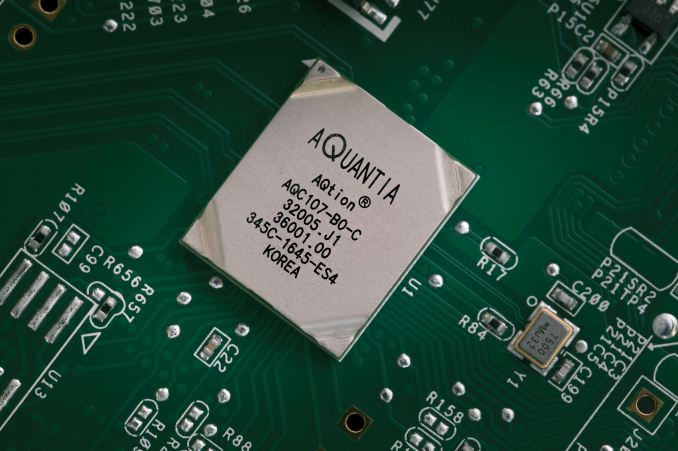
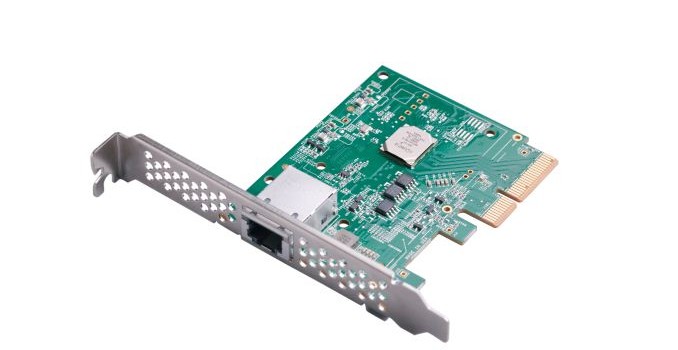
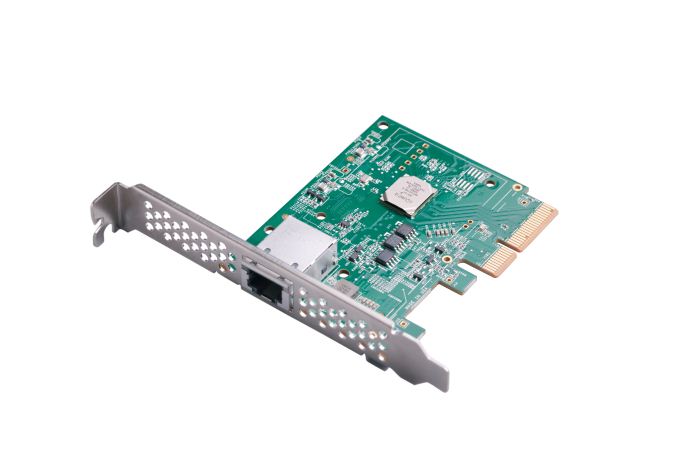
Today’s announcement cements Aquantia’s lead in the multi-gigabit Ethernet space, despite already having an apparent 2 year lead over other rivals in this space (it helps that Aquantia helped define a major part of the 2.5G/5G specifications in the NBASE-T Alliance). Aquantia is launching two PCIe-based single-port network cards using their AQC108 and AQC107 controllers. 

Aquantia AQtion Multi-Gigabit NICs
Card AQN-107 AQN-108
Controller AQC-107 AQC-108
100BASE-T Yes Yes
1000BASE-T Yes Yes
2.5GBASE-T Yes Yes
5GBASE-T Yes Yes
10GBASE-T Yes No
Ports 1 1
Price (from Aquantia) $127 $99
Release Date Soon Soon
Potential Resellers ASUS
GIGABYTE
?

Both of these cards equip a system with a single port, with the AQC108 based card supporting BASE-T standards from 100M to 1G, 2.5G and 5G and uses a PCIe 3.0 x1 interface. The beefier AQC107 based card supports the same standards as well as 10G, and uses a PCIe 3.0 x4 interface (both cards will work down to PCIe 2.0 x1, with reduced data rates). Drivers for both cards will be available for the Windows 7/8/8.1/10 (also as part of the Windows Update solution) as well as varieties of Linux (3.10, 3.12, 3.2, 4.2 and 4.4).
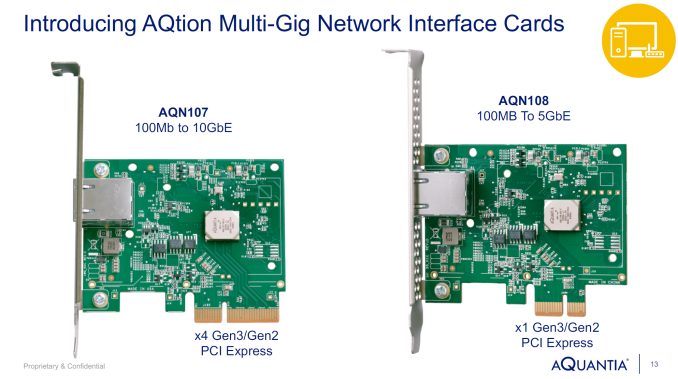
The idea behind these cards is the same as other network cards – to be able to offer functionality without having to embed the controller on the motherboard or into a prebuilt/legacy system. In the consumer world, we have plenty of offerings of Intel and Realtek based gigabit Ethernet cards (even Killer NICs back in the day), and Intel commands the 10GBASE-T cards with its X540 and X550 series. Aquantia is hoping to shake up this market, particularly for businesses and end users willing to invest in 2.5G/5G infrastructure.
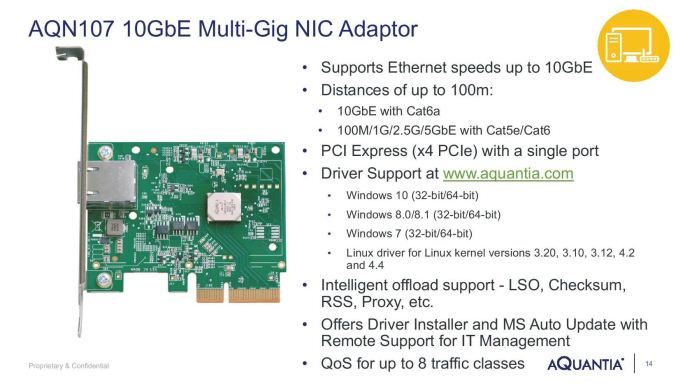
One of the big questions surrounding the transition to 2.5G/5G for home and SMB is infrastructure – making sure the network backbone, switches and access points are all capable. The major enterprise network players are already deploying multi-gigabit Ethernet networks to their customers, however it will be a bit longer before commercially available switches for consumers are available. One of the major drawbacks investing in 10GBASE-T in the home right now, aside from the $100-200 per port PCIe cards, is the cost of the switches. This is something Aquantia isn’t doing directly, but we have been told that they are working with partners (the typical enterprise players at least) to solve. The depth of those solutions remain to be seen (we’ve been told similar by 10G switch vendors who had a different interpretation of ‘mass market’), but ultimately for this technology to become ubiquitous, we need to see cheaper switches ($25/port), followed by cheap implementations, as we have seen in the last 15-20 years with gigabit Ethernet. 
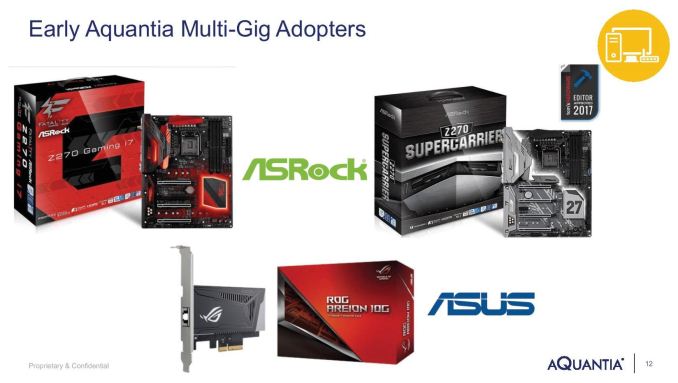
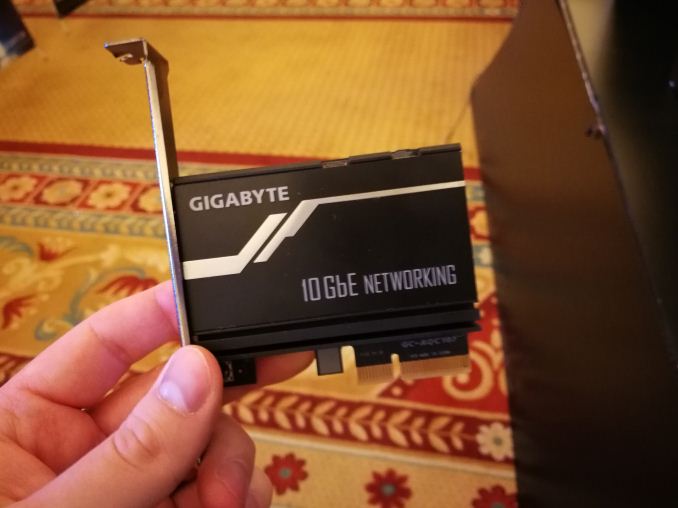
Final pricing is set at $99 and $127, with the 5G card being cheaper over the 10G card. Aquantia stated in the briefing that they are planning to sell the cards direct to consumers, or OEMs can brand the cards in their own style (eg imagine gaming based cards, as we’ve seen from Gigabyte already, or ASUS and their recently announced ROG Areion 10G card using the AQC107 chip) for their customers. It would be interesting to see if a manufacturer will offer a multi-port card by placing 2-4 chips on the same PCB, even if it requires a basic PLX switch.  Four 1G/2.5G/5G/10G ports for $549, anyone?

Review samples are currently being circulated, and I’m discussing with Ganesh the best way to test them, especially as we don’t have any 5G switch equipment. We’re also looking at angles to test these ports as they appear on motherboards too. Aquantia expects the cards to be on shelves shortly, with branded cards to follow. 

Related Reading