Vik


Thin is the New Thin: Hands On with the 5.15mm KAZAM Tornado 348
Thin is the New Thin: Hands On with the 5.15mm KAZAM Tornado 348

My take on thin phones is not a positive one. This comes from two main areas. Firstly I like my phone to have some form of bulk – this way I know it is in my pocket and I would notice if it went missing. Secondly, going thin often brings about several compromises, namely performance (due to heat dissipation), camera quality (due to z-height restrictions) and battery life. As a reference point, my daily driver is a 5.9-inch display with a 3300 mAh battery that measures 10.9mm and weighs 217g, so that device probably will not go missing unnoticed and I get a good range in performance and battery life.

At a MediaTek conference this week in London, as part of MediaTek’s strategy to educate the mobile media and analyst community about their strategy and goals, they invited Kazam’s CEO Michael Coombs to show and formally announce the MediaTek powered Tornado 348, the world’s slimmest smartphone. Kazam is a smartphone maker based in Europe formed by a number of former senior sales and marketing executives from bigger mobile companies. The company was founded earlier this year and have several models on the market already. The Tornado 348 is their latest model, with pre-launch stock already sold to distributors.

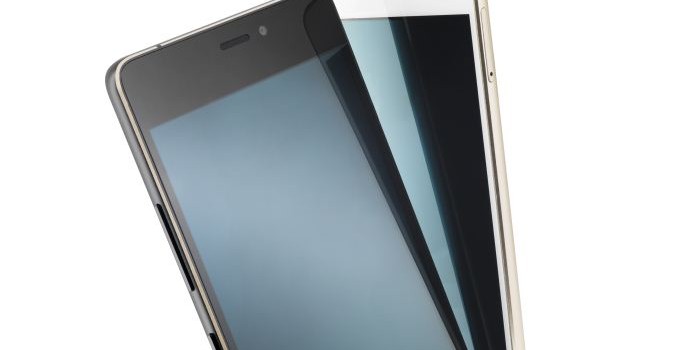
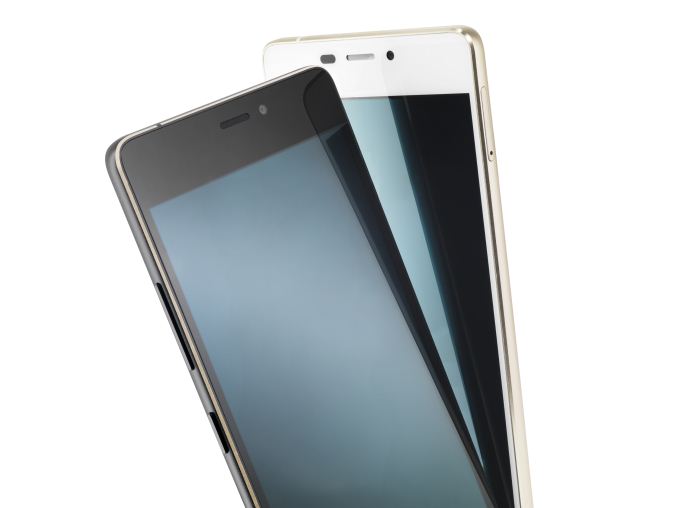
The phone itself is rather surprising. Despite being as thin as it is, it was relatively sturdy with no obvious issues by opposing pressure on opposite corners despite the metal frame design. The white model I played with felt comfortable in the hand with a rounded edge, using fixed android buttons on the bottom bezel (which I prefer) and a 4.8-inch 1280×720 AMOLED screen that came across as rather vibrant. Under the hood is MediaTek’s ‘True Octa-core’ MT6592, with eight Cortex-A7s at 1.7 GHz and a Mali 450-MP4 for graphics. Normally if you hear ‘eight Cortex A7’ it seems odd to combine eight power efficient cores together for performance, especially in such a thin device. Kazam’s CEO said that they initially wanted to run with one of MediaTek’s 4-core, but the 8-core ended up more efficient in tasks as by using MediaTek’s CorePilot they are able to keep control of enabling cores and frequencies but overall performance reasonable. The proof will be in the pudding for sure.

While Android 4.4.2 version the device had on the day was the near-final version for the device, and scrolling felt snappy and program selection felt responsive. There was a little stuttering when quickly swiping between screens, and the settings menu was in a different place than what I was used to, but at the end of the day this is not aimed at the high end flagship market. The device comes with 1 GB of DRAM and 16 GB of storage, but due to the stock (or near-stock) Android used in the final version, space should be suitable. Due to the size of the device there is no SD card slot, and the 2050 mAh lithium polymer battery is fixed into the device. Perhaps surprisingly, it requires a micro-SIM rather than a nano-SIM. With the battery, Kazam is quoting 6 hours of talk time.

The main camera is good for 8MP and 1080p30, with the rear camera being a 5MP fixed-focus device. One area Kazam wants to push ahead of their rivals on is the 12-month screen protection service with the Tornado 348, allowing one free screen replacement in those 12-months. Users will have to log in and send their device away for a week or so, but it is reassuring to know that this service comes free with the device.

Overall device dimensions come in at 139.8mm x 67.5mm x 5.15mm and 95g weight (compared to the iPhone’s 138.1 x 67 x 6.9 and 129g), although only GSM 850/900/1800/1900 and 3G 900/2100 are supported – no LTE here due to the mid-range it aims for. Kazam’s CEO told me that due to Mediatek’s structure for customers like Kazam it allowed him to get a handset from idea to market in only a few months, rather than the 9/12/18 month cycle required going through someone else.

The Tornado 348 is due out in November, with pricing in the UK around £250. At that price it pushes against that mid to high barrier albeit without 4G, wireless charging, more storage or a better camera design that has crept down from the high end over the last few quarters. This might limit the device in terms of future-proofing, but in the brief time I held it and used it, I could see it being used as a daily driver for many of my family members. I will look into it further if I get an opportunity to hook one up to the internet and download our testing tools. However, from the few moments I used the device I was suitably impressed.

FSP Aurum PT 1200W Power Supply Review

Today FSP Group is launching their newest and most advanced PSU to date, the Aurum PT 1200W. The 80 Plus Platinum certified unit has been designed to compete with corresponding products from other manufacturers, many of which were a few months ago. Does FSP have what it takes to go head to head with the top-tier designs from companies like Seasonic and Flextronics? We’ll find out in our full review.


FSP Aurum PT 1200W Power Supply Review

Today FSP Group is launching their newest and most advanced PSU to date, the Aurum PT 1200W. The 80 Plus Platinum certified unit has been designed to compete with corresponding products from other manufacturers, many of which were a few months ago. Does FSP have what it takes to go head to head with the top-tier designs from companies like Seasonic and Flextronics? We’ll find out in our full review.


Google Announces the Nexus 6 and Nexus 9 Running Android Lollipop

Google Announces the Nexus 6 and Nexus 9 Running Android Lollipop

Today Google has officially announced the newest devices in the Nexus line, just one day before Apple’s October event. Both devices have been rumored for some time now, and this is the first time in a while that we’ve seen Google introduce a new smartphone and tablet at the same time. The first device in the announcement is the Nexus 6, made by Motorola. The second is the Nexus 9 tablet made by HTC. To give an overview of how both devices look on paper, I’ve put together their specifications in a chart below.

  Nexus 6 Nexus 9
SoC 2.7GHz Snapdragon 805 (APQ8084) with 4 x Krait 450 + Adreno 420 at 600MHz 2.3GHz 64-bit dual core Tegra K1 Denver SoC
RAM/NAND 3GB LPDDR3 + 32/64GB NAND 2GB LPDDR3 + 16/32GB NAND
Display 5.96″ 2560×1440 AMOLED 8.9″ 2048×1536 IPS LCD
Network 2G / 3G / 4G LTE WiFi only or 2G / 3G / 4G LTE SKU
Dimensions 82.98 x 159.26 x 10.06mm, 184g 153.68 x 228.25 x 7.95mm, 425g WiFi, 436g LTE
Camera 13MP Rear Facing with F/2.0 aperture and OIS, 2MP FFC
4K video recording
8MP Rear Facing with F/2.4 aperture, 1.6MP FFC
Battery 3220 mAh (12.236 Whr) 6700 mAh (25.46 Whr)
OS Android 5.0 Lollipop Android 5.0 Lollipop
Connectivity 802.11a/b/g/n/ac + BT 4.1, USB2.0, GPS/GNSS, NFC 802.11a/b/g/n/ac + BT 4.1, USB2.0, GPS/GNSS, NFC
SIM Size NanoSIM NanoSIM on LTE SKU

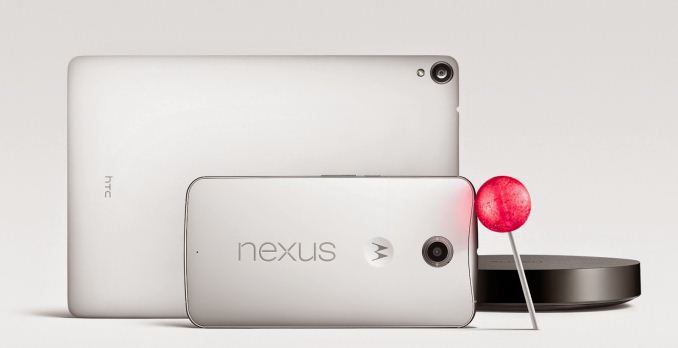
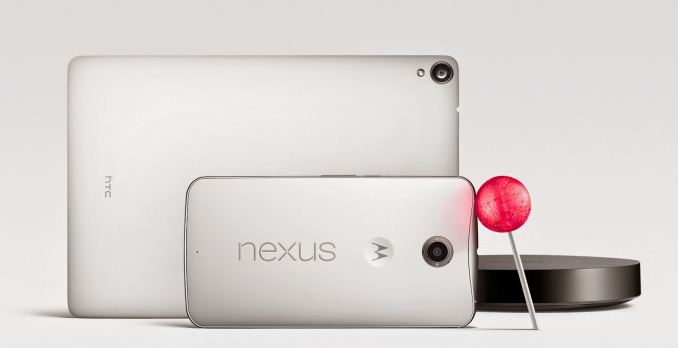
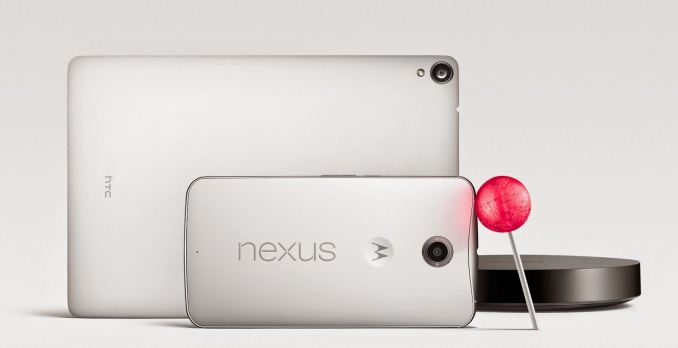
The Nexus 6 features a similar appearance to Motorola’s other devices like the Moto X and Moto G. The plastic back is surrounded by a contoured aluminum frame that curves downward at the top where the 3.5mm headphone jack is located. On the back is Google’s traditional Nexus logo, accompanied by an indented motorola logo and a centered rear-facing camera. The front is dominated by a large 5.96″ display with a pixel density of 493ppi, and stereo speakers on the top and bottom bezels.

In terms of its specifications, the Nexus 6 is competitive with all the current Android flagship devices. It packs Qualcomm’s latest silicon, a hefty battery, and a high resolution display. However, those premium specs are accompanied by a premium price of $649 outright which is significantly more than the $349 that the Nexus 5 is priced at. The Nexus 5 has been given a new web page along with the other Nexus devices which suggests it isn’t going disappear with the launch of this newer, more expensive smartphone.

The next announcement was the Nexus 9 made by HTC. This is the first tablet from HTC since the days of Android Gingerbread and Honeycomb where HTC announced they were exiting the tablet market. With its soft touch back, the Nexus 9 is similar in its design to the Nexus 5. Unlike the Nexus 5 which was an entirely plastic construction, the sides of the Nexus 9 are made of brushed metal.

The front of the device is similar to the Nexus 7 with its asymmetrical bezels. The shape of the device is a departure from any tablet Google has produced before, with a 2048×1536 4:3 display like Apple’s iPad. Both the 8.9″ display size and 4:3 aspect ratio make the Nexus 9 a significantly larger device than the Nexus 7.

The SoC is the biggest point of interest with the Nexus 9. It will be the first device to ship with Nvidia’s Project Denver architecture. This is a custom 64-bit ARMv8 architecture designed by Nvidia, a significant departure from the standard ARM cores used in previous Tegra chips. We covered the details about Tegra K1 Denver previously and you can read that over to get a more in-depth look at NVIDIA’s new chip.

Along with the new device announcements comes the official name for the next version of Android. Android L is now Android 5.0 Lollipop, and it will ship on the new Nexus 6 and Nexus 9. Lollipop comes with Google’s new Material Design and Google’s new ART runtime, and will be rolling out to existing compatible Nexus and Google Play Edition devices in the coming weeks.

The Nexus 9 will be available for pre-order on October 17th starting at $399 for 16GB, while the Nexus 6 will be available sometime in late October at $649 for 32GB.

Google Announces the Nexus 6 and Nexus 9 Running Android Lollipop

Google Announces the Nexus 6 and Nexus 9 Running Android Lollipop

Today Google has officially announced the newest devices in the Nexus line, just one day before Apple’s October event. Both devices have been rumored for some time now, and this is the first time in a while that we’ve seen Google introduce a new smartphone and tablet at the same time. The first device in the announcement is the Nexus 6, made by Motorola. The second is the Nexus 9 tablet made by HTC. To give an overview of how both devices look on paper, I’ve put together their specifications in a chart below.

  Nexus 6 Nexus 9
SoC 2.7GHz Snapdragon 805 (APQ8084) with 4 x Krait 450 + Adreno 420 at 600MHz 2.3GHz 64-bit dual core Tegra K1 Denver SoC
RAM/NAND 3GB LPDDR3 + 32/64GB NAND 2GB LPDDR3 + 16/32GB NAND
Display 5.96″ 2560×1440 AMOLED 8.9″ 2048×1536 IPS LCD
Network 2G / 3G / 4G LTE WiFi only or 2G / 3G / 4G LTE SKU
Dimensions 82.98 x 159.26 x 10.06mm, 184g 153.68 x 228.25 x 7.95mm, 425g WiFi, 436g LTE
Camera 13MP Rear Facing with F/2.0 aperture and OIS, 2MP FFC
4K video recording
8MP Rear Facing with F/2.4 aperture, 1.6MP FFC
Battery 3220 mAh (12.236 Whr) 6700 mAh (25.46 Whr)
OS Android 5.0 Lollipop Android 5.0 Lollipop
Connectivity 802.11a/b/g/n/ac + BT 4.1, USB2.0, GPS/GNSS, NFC 802.11a/b/g/n/ac + BT 4.1, USB2.0, GPS/GNSS, NFC
SIM Size NanoSIM NanoSIM on LTE SKU

The Nexus 6 features a similar appearance to Motorola’s other devices like the Moto X and Moto G. The plastic back is surrounded by a contoured aluminum frame that curves downward at the top where the 3.5mm headphone jack is located. On the back is Google’s traditional Nexus logo, accompanied by an indented motorola logo and a centered rear-facing camera. The front is dominated by a large 5.96″ display with a pixel density of 493ppi, and stereo speakers on the top and bottom bezels.

In terms of its specifications, the Nexus 6 is competitive with all the current Android flagship devices. It packs Qualcomm’s latest silicon, a hefty battery, and a high resolution display. However, those premium specs are accompanied by a premium price of $649 outright which is significantly more than the $349 that the Nexus 5 is priced at. The Nexus 5 has been given a new web page along with the other Nexus devices which suggests it isn’t going disappear with the launch of this newer, more expensive smartphone.

The next announcement was the Nexus 9 made by HTC. This is the first tablet from HTC since the days of Android Gingerbread and Honeycomb where HTC announced they were exiting the tablet market. With its soft touch back, the Nexus 9 is similar in its design to the Nexus 5. Unlike the Nexus 5 which was an entirely plastic construction, the sides of the Nexus 9 are made of brushed metal.

The front of the device is similar to the Nexus 7 with its asymmetrical bezels. The shape of the device is a departure from any tablet Google has produced before, with a 2048×1536 4:3 display like Apple’s iPad. Both the 8.9″ display size and 4:3 aspect ratio make the Nexus 9 a significantly larger device than the Nexus 7.

The SoC is the biggest point of interest with the Nexus 9. It will be the first device to ship with Nvidia’s Project Denver architecture. This is a custom 64-bit ARMv8 architecture designed by Nvidia, a significant departure from the standard ARM cores used in previous Tegra chips. We covered the details about Tegra K1 Denver previously and you can read that over to get a more in-depth look at NVIDIA’s new chip.

Along with the new device announcements comes the official name for the next version of Android. Android L is now Android 5.0 Lollipop, and it will ship on the new Nexus 6 and Nexus 9. Lollipop comes with Google’s new Material Design and Google’s new ART runtime, and will be rolling out to existing compatible Nexus and Google Play Edition devices in the coming weeks.

The Nexus 9 will be available for pre-order on October 17th starting at $399 for 16GB, while the Nexus 6 will be available sometime in late October at $649 for 32GB.