Vik


Cooler Master Debuts Affordable MasterBox Lite 5 Mid-Tower Case

Cooler Master Debuts Affordable MasterBox Lite 5 Mid-Tower Case

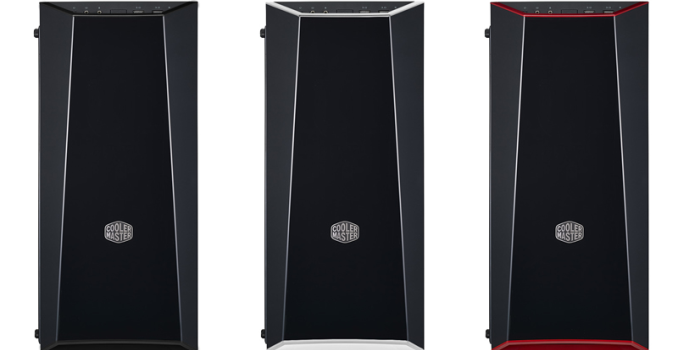
With an eye towards expanding and refreshing their case lineup, Cooler Master has just announced the MasterBox Lite 5 mid-tower case. The Lite 5 is a new model, with a translucent front panel and customizable trim colors. Not to be confused with the MasterCase 5 that we reviewed back in 2015, the MasterBox 5 Lite is the latest variation in the MasterBox 5 series, which now consists of six different models.

The MasterBox Lite 5 is a 43-liter ATX mid-tower design, and This model supports Mini-ITX to ATX motherboards with a total of seven expansion slots. Due to its depth and wide open interior design, this case can handle expansion cards up to 400mm in length, which means that it can easily fit the longest consumer graphics cards on the market. For the CPU cooler, it is worth taking note that, it has a hard z-height limit up to 160mm tall for heatsinks. This doesn’t mean much in the grand scheme of what’s available for CPU cooling, but the tallest models like the Noctua NH-D15 will unfortunately not fit.

With dimensions of 200mm(W) x 468.8 mm(D) x 454.5 mm(H), the case is quite narrow, relatively deep, and a roughly average height. Surprisingly, for a case made with a combination of steel and plastic, it is reasonably lightweight at 5.07kg. While we are on the topic of dimensions, Cooler Master have included a generous 25mm to 35mm of cable routing room behind the motherboard tray.

Liquid cooling capabilities are aplenty, with support for one 120mm radiator at the back of the case and one 240-360mm radiator (up to 50mm thick without fan) on the front of the case. Speaking of fans, there is one 120mm fan pre-installed in the back of the case, and there is room for three 120mm or two 140mm fans on the front of the case. Dust filters are included on the front and bottom of the case (for the PSU fan). When it comes to connectivity, the front I/O panel has two USB 3.0 ports, as well as both audio in and audio out 3.5mm jacks.

As you can probably see, the interior of the case has been split into two chambers. The enclosed bottom chamber is where the power supply – which can be up to 180mm long – is installed. Although not explicitly mentioned in the available documentation, we strongly believe that the bottom chamber is also where you will find the single 2.5″ SSD mount (either there or behind the MB tray) and two combo 2.5″/3.5″ drive bays.

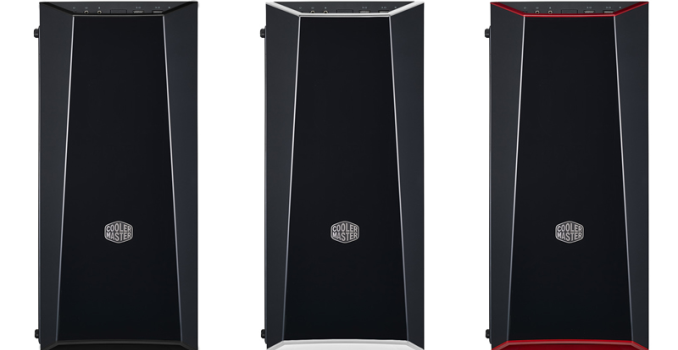
Clearly, one of the main marketing points of this model is aesthetics. The centerpiece is the angular front fascia, which Cooler Master calls their DarkMirror front panel. It is a tinted and highly glossy piece of translucent plastic – likely acrylic like the side panel – that is fully removable to help with the installation of any liquid cooling components. The edge-to-edge side panel window is tinted yet highly transparent, fully removable, and held in place with thumbscrews. As with other MasterCase designs, there are also some external customization possibilities thanks to the inclusion of three trim pieces of various colors – black, white, and red – for both the top and bottom part of the front fascia. And if that is not enough, Cooler Master have also made 3D printing schematics of the top and bottom trim available for download so that DIY community can customize this case. 

The Cooler Master MasterBox 5 Lite is currently available for pre-order at Newegg.com for $50 USD with a stated release date of May 19th.

Related Reading

Cooler Master Debuts Affordable MasterBox Lite 5 Mid-Tower Case

Cooler Master Debuts Affordable MasterBox Lite 5 Mid-Tower Case

With an eye towards expanding and refreshing their case lineup, Cooler Master has just announced the MasterBox Lite 5 mid-tower case. The Lite 5 is a new model, with a translucent front panel and customizable trim colors. Not to be confused with the MasterCase 5 that we reviewed back in 2015, the MasterBox 5 Lite is the latest variation in the MasterBox 5 series, which now consists of six different models.

The MasterBox Lite 5 is a 43-liter ATX mid-tower design, and This model supports Mini-ITX to ATX motherboards with a total of seven expansion slots. Due to its depth and wide open interior design, this case can handle expansion cards up to 400mm in length, which means that it can easily fit the longest consumer graphics cards on the market. For the CPU cooler, it is worth taking note that, it has a hard z-height limit up to 160mm tall for heatsinks. This doesn’t mean much in the grand scheme of what’s available for CPU cooling, but the tallest models like the Noctua NH-D15 will unfortunately not fit.

With dimensions of 200mm(W) x 468.8 mm(D) x 454.5 mm(H), the case is quite narrow, relatively deep, and a roughly average height. Surprisingly, for a case made with a combination of steel and plastic, it is reasonably lightweight at 5.07kg. While we are on the topic of dimensions, Cooler Master have included a generous 25mm to 35mm of cable routing room behind the motherboard tray.

Liquid cooling capabilities are aplenty, with support for one 120mm radiator at the back of the case and one 240-360mm radiator (up to 50mm thick without fan) on the front of the case. Speaking of fans, there is one 120mm fan pre-installed in the back of the case, and there is room for three 120mm or two 140mm fans on the front of the case. Dust filters are included on the front and bottom of the case (for the PSU fan). When it comes to connectivity, the front I/O panel has two USB 3.0 ports, as well as both audio in and audio out 3.5mm jacks.

As you can probably see, the interior of the case has been split into two chambers. The enclosed bottom chamber is where the power supply – which can be up to 180mm long – is installed. Although not explicitly mentioned in the available documentation, we strongly believe that the bottom chamber is also where you will find the single 2.5″ SSD mount (either there or behind the MB tray) and two combo 2.5″/3.5″ drive bays.

Clearly, one of the main marketing points of this model is aesthetics. The centerpiece is the angular front fascia, which Cooler Master calls their DarkMirror front panel. It is a tinted and highly glossy piece of translucent plastic – likely acrylic like the side panel – that is fully removable to help with the installation of any liquid cooling components. The edge-to-edge side panel window is tinted yet highly transparent, fully removable, and held in place with thumbscrews. As with other MasterCase designs, there are also some external customization possibilities thanks to the inclusion of three trim pieces of various colors – black, white, and red – for both the top and bottom part of the front fascia. And if that is not enough, Cooler Master have also made 3D printing schematics of the top and bottom trim available for download so that DIY community can customize this case. 

The Cooler Master MasterBox 5 Lite is currently available for pre-order at Newegg.com for $50 USD with a stated release date of May 19th.

Related Reading

Intel’s Itanium Takes One Last Breath: Itanium 9700 Series CPUs Released

Intel’s Itanium Takes One Last Breath: Itanium 9700 Series CPUs Released

One of Intel’s ventures into the historic mainframe space was Itanium: a 64-bit capable processor designed in conjunction with Hewlett Packard. The main reason for Itanium was to run HP-UX and compete against big names, such as Oracle, using a new IA-64 instruction set. The appeal for the original Itanium parts was support for RAS features, ECC, and cores focus on a wide, parallel architecture – the latest cores support 12-wide execution for example. For a short while, there was success: HP’s systems based on Itanium are advertised as high-uptime mission critical servers, and a number of customers cling to these systems like a child clings to their favorite blanket due to the way they are integrated at the core of the company. The main purpose was to compete against other mission critical servers and mainframes based on SPARC and IBM Power.

So when the processors were initially delivered to customers, there was potential. However the initial impression was not great – they consumed too much power, were noisy, and needed over the top cooling. Over the years and generations of Itanium, the march into the x86 enterprise space with x86-64 drew potential Itanium customers away, then followed the drop of Microsoft’s support for Itanium in 2008, and Oracle’s dropped support in 2011. Xeon offerings were becoming popular, with CPUs incorporating the RAS/ECC features required, and Intel decided to slow down Itanium development as a result. In the meantime, due to the way the market was moving, HP transitioned a good part of its product stack to Xeons. Despite this, legal battles between HP and Oracle ensued given predicted support for HP-UX customers. At this point, there were fewer potential Itanium customers each quarter, although existing customers required support.

Today marks the release of the final known variant of Itanium, the 9700 series, beyond assurance testing. Intel spoke to IDG, stating that this generation, code-named Kittson, would be the final member of the Itanium family. These chips are likely to only end up in HP-based Integrity i6 high-uptime servers running HP-UX, and start at $14500. Hewlett Packard Enterprise has stated previously that it will keep support for Itanium-based products until 2025, with the latest OS update (HP-UX 11i v3 2017) coming in June.

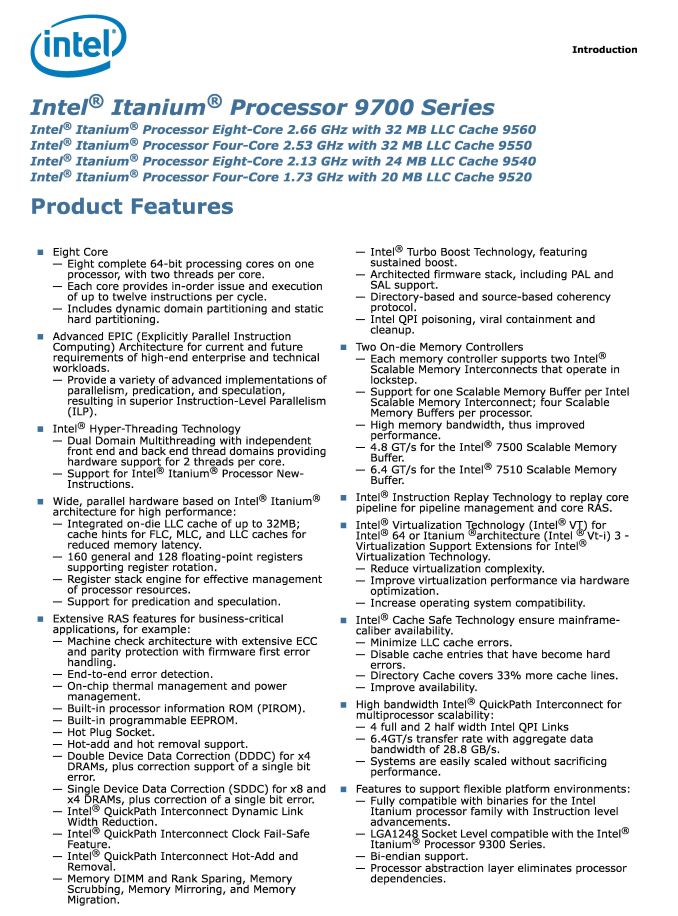
As for the processors themselves, four 9700 processors form the stack, with quad-core and eight-core parts all with hyperthreading, differing in frequency, power, and L3 cache.

Intel Itanium (Kittson) CPUs
  Cores/
Threads
Base
Freq
L3 TDP Cost*
Itanium 9760 8/16 2.66 GHz 32 MB 170 W $4650
Itanium 9750 4/8 2.53 GHz 32MB 170W $3750
Itanium 9740 8/16 2.13 GHz 24 MB 170 W $2650
Itanium 9720 4/8 1.73 GHz 20 MB 130 W $1350

*Cost is listed for the equivalent Poulson CPUs.

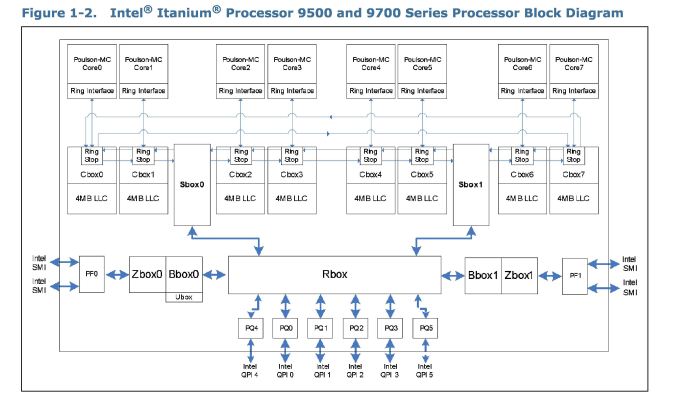
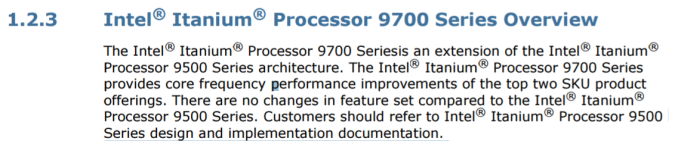
The base silicon comes in at 3.1 billion transistors, and are made on Intel’s 32nm process. Memory is supported up to DDR3-1067, with two memory controllers but support for scalable memory buffers is present. This is similar to the 9500 series, code-named Paulson. These chips are designed to be purely a drop into previous systems. Intel isn’t announcing an official press release around this, and unlike other ‘new architectures’, there are next to zero improvements. According to the documents, the only change is that the top two SKUs get a clock bump:

There’s probably something new under the hood, perhaps for a specific end-customer, but at this time Intel is directing anything 9700 related to equate to the 9500 series. Customers still interested in Itanium are directed to HPE resellers. 

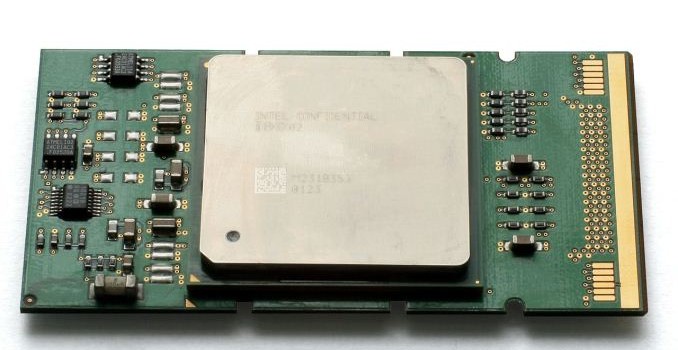
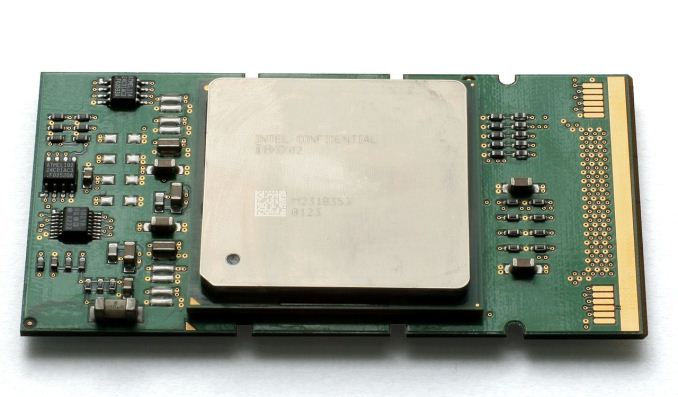
Carousel Image from Konstantin Lanzet (Wikipedia) of Itanium 2 (Poulson)
News Source: IDG