
Vik


Toshiba Demonstrates NVMe SSD With 64-Layer BiCS3 3D NAND

Toshiba Demonstrates NVMe SSD With 64-Layer BiCS3 3D NAND

Toshiba’s transition from planar NAND flash to 3D NAND flash memory has been a long, drawn-out process. Their BiCS 3D NAND architecture is on its third generation but has yet to have any significant impact on the SSD market. The first generation of BiCS 3D NAND was never mass produced. The second generation 256Gb 48-layer BiCS2 3D NAND has seen some use in memory cards and smartphones, but its only presence in the SSD market has been the BG series—a relatively low-volume OEM-only line of BGA SSDs. It’s enough to prove that their 3D NAND isn’t vaporware, but hasn’t done anything to alleviate the ongoing global NAND shortage or push prices down. Toshiba’s third generation 3D NAND is planned to be the one that finally displaces planar NAND, with a 512Gb 64-layer TLC part that should be able to beat the price/GB of Toshiba’s 15nm planar TLC, and a smaller 256Gb part for lower-capacity applications like memory cards.

This week Toshiba is publicly demonstrating for the first time a SSD using their 64-layer BiCS3 3D NAND. At the Dell EMC World conference, Toshiba has a live demo of a laptop containing a prototype XG-series NVMe PCIe SSD with a total of 1TB of BiCS3 3D TLC NAND. Toshiba’s XG3 series is the OEM counterpart to the OCZ RD400 consumer NVMe drives. Toshiba won’t comment on how the XG prototype differs from the RD400 or XG3 aside from using 3D NAND, but the prototype probably offers an early look at what the next XG will feature when it is ready to be officially announced. The prototype is a model that is currently sampling to large OEMs and could be formally announced in just a few months.

Toshiba has announced that they intend to migrate all of their SSD product lines to their 3D TLC NAND, starting with OEM and enterprise products before rolling out to the retail market. They are not willing to commit to a particular timeline for completing the transition, but we should see multiple models announced and shipping by the end of 2017. Supply will continue to be a concern as new 3D NAND fab capacity comes online in 2018, and that’s when we might see the current flash memory shortage wrap up and SSD prices resume a healthy decline.

Toshiba Demonstrates NVMe SSD With 64-Layer BiCS3 3D NAND

Toshiba Demonstrates NVMe SSD With 64-Layer BiCS3 3D NAND

Toshiba’s transition from planar NAND flash to 3D NAND flash memory has been a long, drawn-out process. Their BiCS 3D NAND architecture is on its third generation but has yet to have any significant impact on the SSD market. The first generation of BiCS 3D NAND was never mass produced. The second generation 256Gb 48-layer BiCS2 3D NAND has seen some use in memory cards and smartphones, but its only presence in the SSD market has been the BG series—a relatively low-volume OEM-only line of BGA SSDs. It’s enough to prove that their 3D NAND isn’t vaporware, but hasn’t done anything to alleviate the ongoing global NAND shortage or push prices down. Toshiba’s third generation 3D NAND is planned to be the one that finally displaces planar NAND, with a 512Gb 64-layer TLC part that should be able to beat the price/GB of Toshiba’s 15nm planar TLC, and a smaller 256Gb part for lower-capacity applications like memory cards.

This week Toshiba is publicly demonstrating for the first time a SSD using their 64-layer BiCS3 3D NAND. At the Dell EMC World conference, Toshiba has a live demo of a laptop containing a prototype XG-series NVMe PCIe SSD with a total of 1TB of BiCS3 3D TLC NAND. Toshiba’s XG3 series is the OEM counterpart to the OCZ RD400 consumer NVMe drives. Toshiba won’t comment on how the XG prototype differs from the RD400 or XG3 aside from using 3D NAND, but the prototype probably offers an early look at what the next XG will feature when it is ready to be officially announced. The prototype is a model that is currently sampling to large OEMs and could be formally announced in just a few months.

Toshiba has announced that they intend to migrate all of their SSD product lines to their 3D TLC NAND, starting with OEM and enterprise products before rolling out to the retail market. They are not willing to commit to a particular timeline for completing the transition, but we should see multiple models announced and shipping by the end of 2017. Supply will continue to be a concern as new 3D NAND fab capacity comes online in 2018, and that’s when we might see the current flash memory shortage wrap up and SSD prices resume a healthy decline.
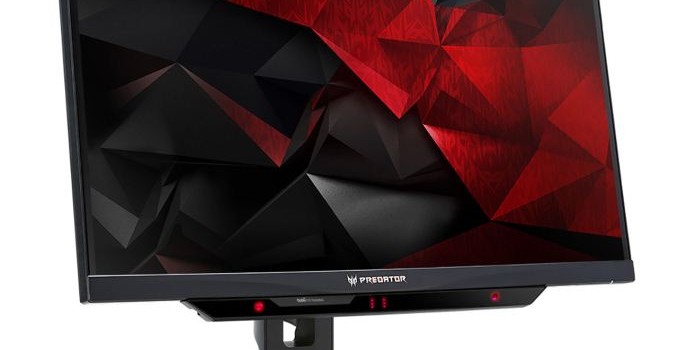
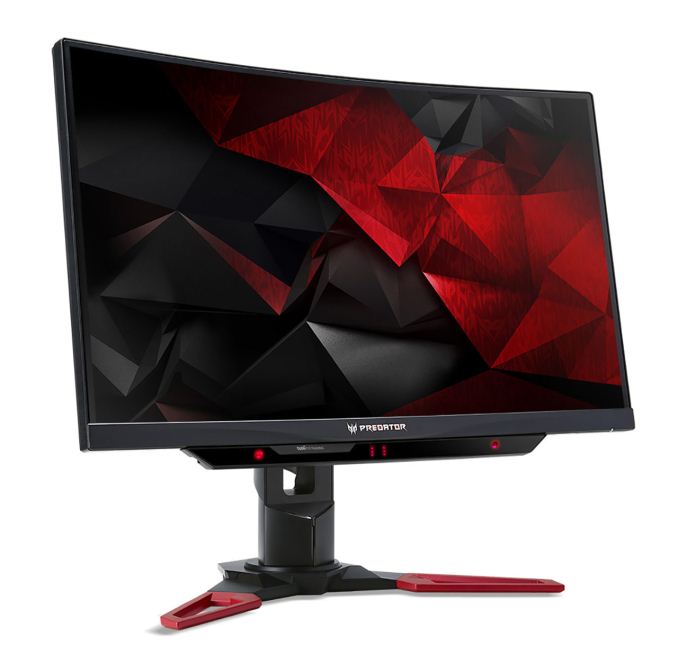
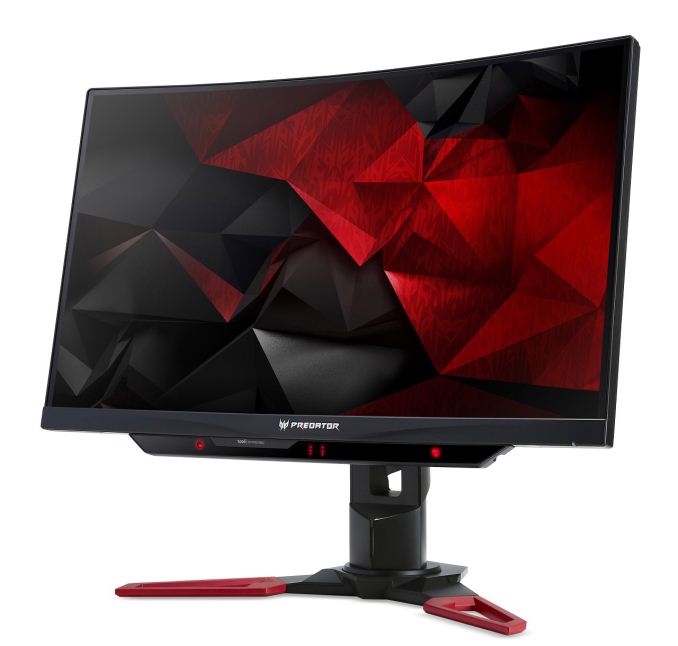
Acer Predator Z271UV Gaming Monitor: 1440p, 144-165Hz, G-Sync, Eye Tracking

Acer Predator Z271UV Gaming Monitor: 1440p, 144-165Hz, G-Sync, Eye Tracking

Although we have already reported on the flagship Acer Predator X27 gaming monitor, an interesting model that isn’t getting quite as much attention is the Predator Z271UV. By foregoing the X27’s more premium features like 4K resolution and HDR, this new model is being positioned as a more wallet-friendly option for the serious gaming crowd.

The Predator Z271UV is a 27-inch model with a WQHD resolution of 2560 × 1440 and an 1800R curve that should help provide a wider field of view. It features a TN panel with 400 nits brightness, 1000:1 contrast ratio, and viewing angles of 170°/170°. The 8-bit panel can display 16.7 million colors, and uses a quantum dot film in order to support 130% of the sRGB and 95% of the DCI-P3 color gamuts. The TN panel on this model is rated to a response time as low as 1ms (3ms native), while the refresh rate can be overclocked from the default 144 Hz all the way up to 165 Hz (the fact that the monitor isn’t sold as 165 Hz suggests that your mileage may vary). When you combine those figures with the built-in NVIDIA G-Sync or ULMB (Ultra-Low Motion Blur) technologies, this is a gaming monitor that is being promoted as having no problems with motion blur, stuttering or tearing.

This Predator Z271UV also includes Tobii eye-tracking hardware, which uses infrared light to track your head movements and where your eyes are looking on the screen. Designed to complement a keyboard and mouse, one of the uses is that you can pan around a digital world without having to use the mouse, kind of like with a virtual reality headset. There are apparently 100 game titles that support eye tracking technology. Further catering to gamers are additions like Predator GameView, which allows users to make precise color and dark level adjustments that can be saved to three different profiles, and which can be easily switched between at any time during gameplay. There are also vendor features like Acer VisionCare with Flickerless, BluelightShield, ComfyView and low dimming technologies that are intended to reduce eye fatigue during extended gaming sessions.

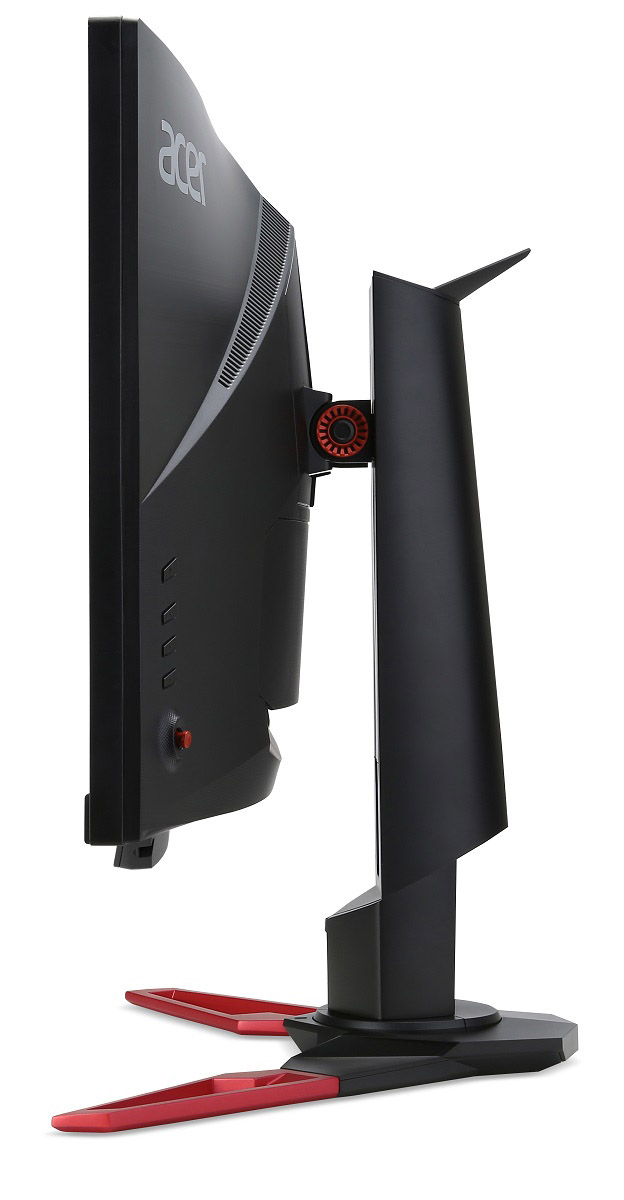
This model also has what Acer describes as a ZeroFrame design, which is a thin bezel that should improve the viewing experience for those planning a multi-monitor setup. The stand was designed with ergonomics in mind, and it can tilt the display between -5 to 25 degrees, swivel +/- 30 degrees, and provide height adjustments of up to 4.7 inches (120mm). There are also two 7-watt speakers with Acer TrueHarmony technology built into the monitor.

Acer Predator Z271UV
Panel 27-inch TN
Native Resolution 2560 x 1440 (16:9)
Maximum Refresh Rate 144 Hz Native
165 Hz Overclocked
Response Time 1 ms (GTG)
Brightness 400 cd/m2
Contrast 1000:1
Viewing Angles 170º/170º
Dynamic Refresh G-Sync (60? – 165 Hz)
Pixel Density 109 PPI
Display Colors 16.7 million
Color Gamut Support sRGB: 130%
DCI-P3: 95%
Stand Tilt (-5º to 25º)
Swivel (-30º to 30º)
Height (up to 4.7-inch/120mm)
Inputs 1 x DisplayPort 1.2a
1 x HDMI
USB Hub 4 x USB 3.0
(1 x USB 3.0 Input)
Audio 2 x 7W Speakers
Audio Out

When it comes to connectivity, the specs are little less clear. There is no indication as to the version of the HDMI input – which would likely indicate HDMI 1.4 – while the only other video connector is a DisplayPort 1.2 input. If this is accurate, only the DisplayPort would support the 165Hz refresh rate at the native resolution. The HDMI port would be limited to 60Hz. There is also a five port USB 3.0 hub (1 up, 4 down) and one audio out jack.

The press release did not have any details regarding pricing, availability, or warranty.


Related Reading