Vik


Acer Predator Z271UV Gaming Monitor: 1440p, 144-165Hz, G-Sync, Eye Tracking
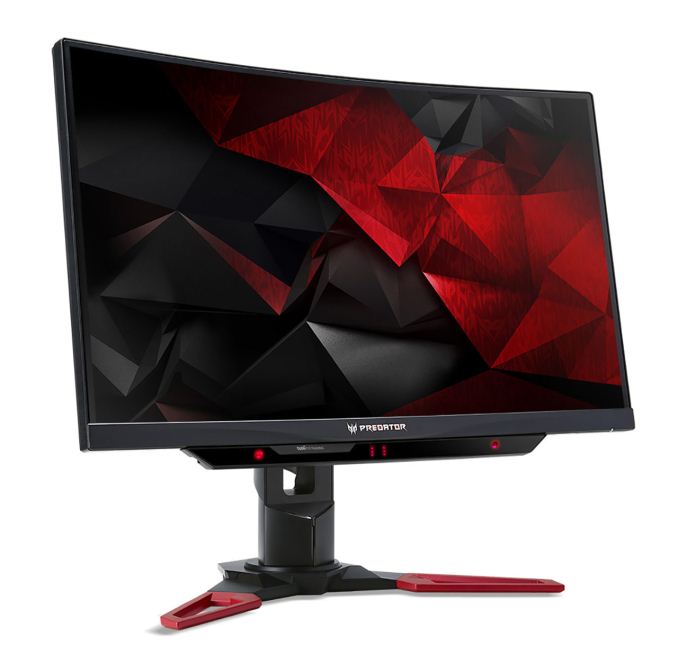
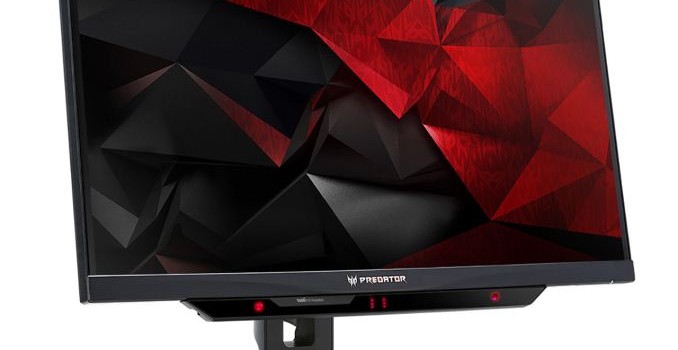
Acer Predator Z271UV Gaming Monitor: 1440p, 144-165Hz, G-Sync, Eye Tracking

Although we have already reported on the flagship Acer Predator X27 gaming monitor, an interesting model that isn’t getting quite as much attention is the Predator Z271UV. By foregoing the X27’s more premium features like 4K resolution and HDR, this new model is being positioned as a more wallet-friendly option for the serious gaming crowd.

The Predator Z271UV is a 27-inch model with a WQHD resolution of 2560 × 1440 and an 1800R curve that should help provide a wider field of view. It features a TN panel with 400 nits brightness, 1000:1 contrast ratio, and viewing angles of 170°/170°. The 8-bit panel can display 16.7 million colors, and uses a quantum dot film in order to support 130% of the sRGB and 95% of the DCI-P3 color gamuts. The TN panel on this model is rated to a response time as low as 1ms (3ms native), while the refresh rate can be overclocked from the default 144 Hz all the way up to 165 Hz (the fact that the monitor isn’t sold as 165 Hz suggests that your mileage may vary). When you combine those figures with the built-in NVIDIA G-Sync or ULMB (Ultra-Low Motion Blur) technologies, this is a gaming monitor that is being promoted as having no problems with motion blur, stuttering or tearing.
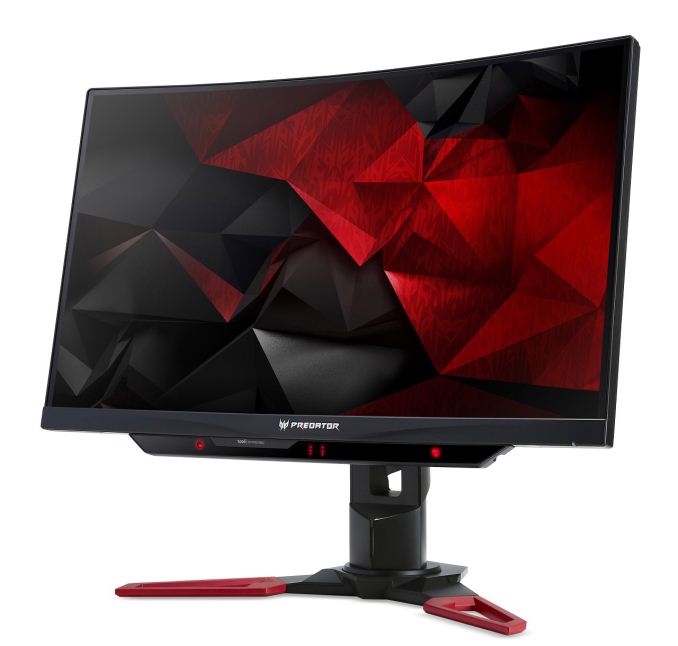
This Predator Z271UV also includes Tobii eye-tracking hardware, which uses infrared light to track your head movements and where your eyes are looking on the screen. Designed to complement a keyboard and mouse, one of the uses is that you can pan around a digital world without having to use the mouse, kind of like with a virtual reality headset. There are apparently 100 game titles that support eye tracking technology. Further catering to gamers are additions like Predator GameView, which allows users to make precise color and dark level adjustments that can be saved to three different profiles, and which can be easily switched between at any time during gameplay. There are also vendor features like Acer VisionCare with Flickerless, BluelightShield, ComfyView and low dimming technologies that are intended to reduce eye fatigue during extended gaming sessions.
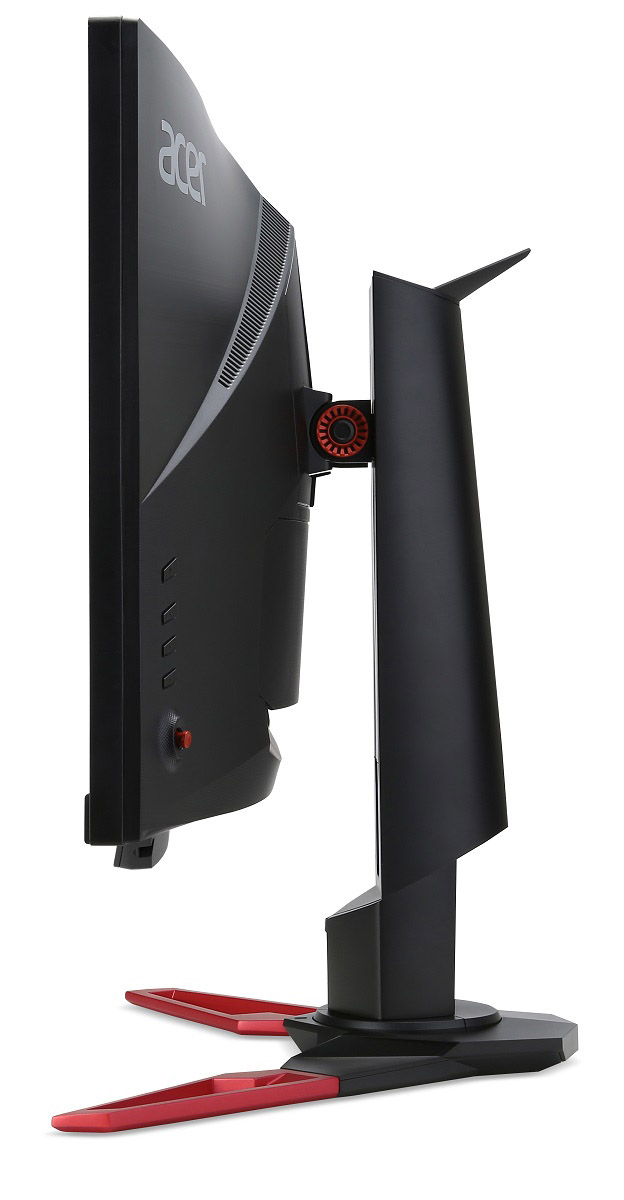
This model also has what Acer describes as a ZeroFrame design, which is a thin bezel that should improve the viewing experience for those planning a multi-monitor setup. The stand was designed with ergonomics in mind, and it can tilt the display between -5 to 25 degrees, swivel +/- 30 degrees, and provide height adjustments of up to 4.7 inches (120mm). There are also two 7-watt speakers with Acer TrueHarmony technology built into the monitor.

Acer Predator Z271UV
Panel 27-inch TN
Native Resolution 2560 x 1440 (16:9)
Maximum Refresh Rate 144 Hz Native
165 Hz Overclocked
Response Time 1 ms (GTG)
Brightness 400 cd/m2
Contrast 1000:1
Viewing Angles 170º/170º
Dynamic Refresh G-Sync (60? – 165 Hz)
Pixel Density 109 PPI
Display Colors 16.7 million
Color Gamut Support sRGB: 130%
DCI-P3: 95%
Stand Tilt (-5º to 25º)
Swivel (-30º to 30º)
Height (up to 4.7-inch/120mm)
Inputs 1 x DisplayPort 1.2a
1 x HDMI
USB Hub 4 x USB 3.0
(1 x USB 3.0 Input)
Audio 2 x 7W Speakers
Audio Out

When it comes to connectivity, the specs are little less clear. There is no indication as to the version of the HDMI input – which would likely indicate HDMI 1.4 – while the only other video connector is a DisplayPort 1.2 input. If this is accurate, only the DisplayPort would support the 165Hz refresh rate at the native resolution. The HDMI port would be limited to 60Hz. There is also a five port USB 3.0 hub (1 up, 4 down) and one audio out jack.

The press release did not have any details regarding pricing, availability, or warranty.
 

Related Reading

VAIO Launches Phone A: Snapdragon 617, 3 GB RAM, 5.5” FHD, Android

VAIO Launches Phone A: Snapdragon 617, 3 GB RAM, 5.5” FHD, Android

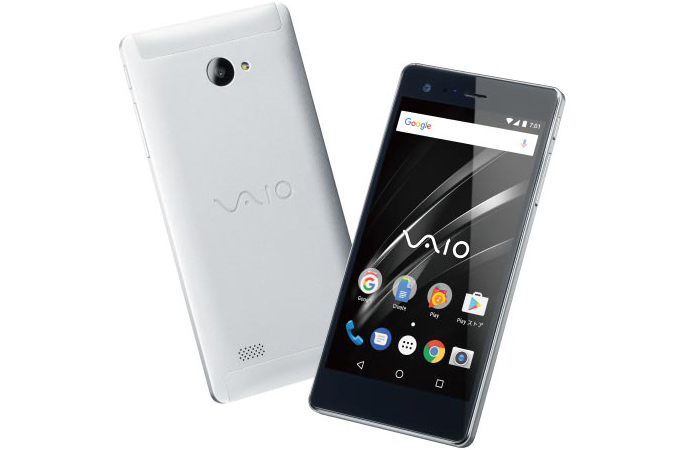
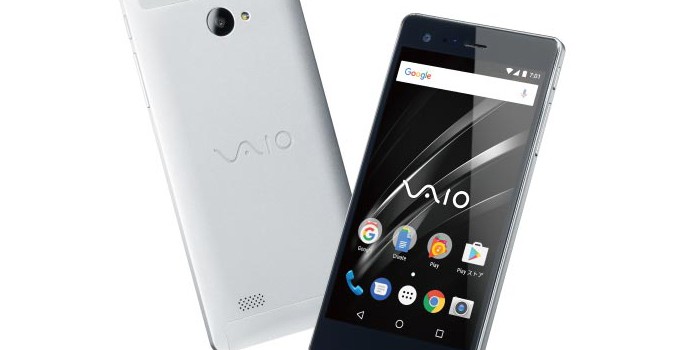
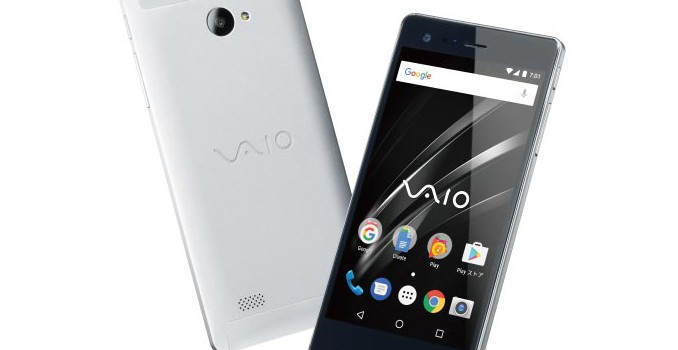
VAIO has launched its new Google Android-based smartphone in Japan. The VAIO Phone A handset uses the same hardware platform as the company’s VAIO Phone Biz launched last year, but uses Google’s more popular operating system. VAIO is selling the Cortex-A53 based mid-range phone for less than $250, which is very low for a phone made of machined aluminum.

VAIO, the former PC division of Sony and now an independent PC vendor from Japan, entered the smartphone market with its VAIO Phone Biz handset about a year ago targeting primarily business users. Since VAIO’s PCs run Windows 10, it was logical for the company to launch a Windows 10 Mobile-based handset supporting the Continuum technology and all the features that Microsoft’s platform has to offer. Apart from the OS, the key selling point of the VAIO Phone Biz was its aluminum unibody, which promised to be very durable. VAIO has never commented on just how well the Phone Biz has sold over its lifetime, but a year after the release of the product VAIO is re-launching it with Google Android.

Just like VAIO’s first smartphone, the Phone A (VPA 0511 S) is powered by the Qualcomm Snapdragon 617 system-on-chip (eight ARM Cortex-A53 cores clocked at 1.50 GHz, Adreno 405 graphics core) and features a 5.5” FHD display. The handset comes equipped with 3 GB of LPDDR3 memory, 16 GB of NAND flash storage (and a microSD card slot for expansion), 13 MP rear and 5 MP front cameras, 802.11a/b/g/n/ac Wi-Fi, Bluetooth 4.0, a micro USB 2.0 connector, various sensors, a 2800 mAh battery, and so on. Just like its Windows 10-based brother, the new unit also supports two SIM cards (a nano SIM and a micro SIM) and is compatible with 3G/LTE bands 1, 3, 6, 8, 11, 19 and 21 with carrier aggregation (so, not suitable for the U.S.). Finally, the weight and thickness of the product remained the same as before: 8.3 mm and 167 grams.

Despite the fact that the Snapdragon 617 is supported by Android 7, VAIO ships its Phone A with vanilla Android 6.0. It is unknown whether the company plans to update the OS eventually, but right now, the handset looks a bit outdated in terms of both hardware and software.

Computers and phones supplied by VAIO are developed by the company’s engineers and are made by various contract manufacturers. Meanwhile, the final quality checks and assembly of the hardware is performed at the Nagano Technology Site (Azumino City, Nagano Prefecture), the former hub of Sony’s PC operations. Due to that and materials used, VAIO has a reason to claim that its products feature a higher quality than competing offerings from its rivals, which is especially true when it comes to inexpensive Android handsets.

The VAIO Phone A is now available from the company’s online store exclusively in Japan; though like the Phone Biz, this phone is likely to show make its way to foreign third-party retailers as well. The company charges ¥26,784 ($237) per unit, which is uncommonly cheap for a smartphone featuring a durable, machined aluminum unibody, even taking the hardware and software into consideration. On the other hand, given the cutthroat competition on the Android market, a low price point is a way to drive sales.

Sources: VAIO, K-Tai Watch.

Related Reading:

VAIO Launches Phone A: Snapdragon 617, 3 GB RAM, 5.5” FHD, Android

VAIO Launches Phone A: Snapdragon 617, 3 GB RAM, 5.5” FHD, Android

VAIO has launched its new Google Android-based smartphone in Japan. The VAIO Phone A handset uses the same hardware platform as the company’s VAIO Phone Biz launched last year, but uses Google’s more popular operating system. VAIO is selling the Cortex-A53 based mid-range phone for less than $250, which is very low for a phone made of machined aluminum.

VAIO, the former PC division of Sony and now an independent PC vendor from Japan, entered the smartphone market with its VAIO Phone Biz handset about a year ago targeting primarily business users. Since VAIO’s PCs run Windows 10, it was logical for the company to launch a Windows 10 Mobile-based handset supporting the Continuum technology and all the features that Microsoft’s platform has to offer. Apart from the OS, the key selling point of the VAIO Phone Biz was its aluminum unibody, which promised to be very durable. VAIO has never commented on just how well the Phone Biz has sold over its lifetime, but a year after the release of the product VAIO is re-launching it with Google Android.

Just like VAIO’s first smartphone, the Phone A (VPA 0511 S) is powered by the Qualcomm Snapdragon 617 system-on-chip (eight ARM Cortex-A53 cores clocked at 1.50 GHz, Adreno 405 graphics core) and features a 5.5” FHD display. The handset comes equipped with 3 GB of LPDDR3 memory, 16 GB of NAND flash storage (and a microSD card slot for expansion), 13 MP rear and 5 MP front cameras, 802.11a/b/g/n/ac Wi-Fi, Bluetooth 4.0, a micro USB 2.0 connector, various sensors, a 2800 mAh battery, and so on. Just like its Windows 10-based brother, the new unit also supports two SIM cards (a nano SIM and a micro SIM) and is compatible with 3G/LTE bands 1, 3, 6, 8, 11, 19 and 21 with carrier aggregation (so, not suitable for the U.S.). Finally, the weight and thickness of the product remained the same as before: 8.3 mm and 167 grams.

Despite the fact that the Snapdragon 617 is supported by Android 7, VAIO ships its Phone A with vanilla Android 6.0. It is unknown whether the company plans to update the OS eventually, but right now, the handset looks a bit outdated in terms of both hardware and software.

Computers and phones supplied by VAIO are developed by the company’s engineers and are made by various contract manufacturers. Meanwhile, the final quality checks and assembly of the hardware is performed at the Nagano Technology Site (Azumino City, Nagano Prefecture), the former hub of Sony’s PC operations. Due to that and materials used, VAIO has a reason to claim that its products feature a higher quality than competing offerings from its rivals, which is especially true when it comes to inexpensive Android handsets.

The VAIO Phone A is now available from the company’s online store exclusively in Japan; though like the Phone Biz, this phone is likely to show make its way to foreign third-party retailers as well. The company charges ¥26,784 ($237) per unit, which is uncommonly cheap for a smartphone featuring a durable, machined aluminum unibody, even taking the hardware and software into consideration. On the other hand, given the cutthroat competition on the Android market, a low price point is a way to drive sales.

Sources: VAIO, K-Tai Watch.

Related Reading:

Corsair Launches Glaive RGB Mouse: 16,000 DPI, Interchangeable Grips, LEDs

Corsair Launches Glaive RGB Mouse: 16,000 DPI, Interchangeable Grips, LEDs

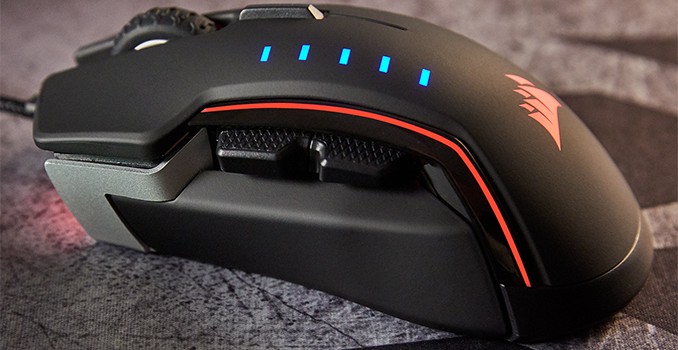
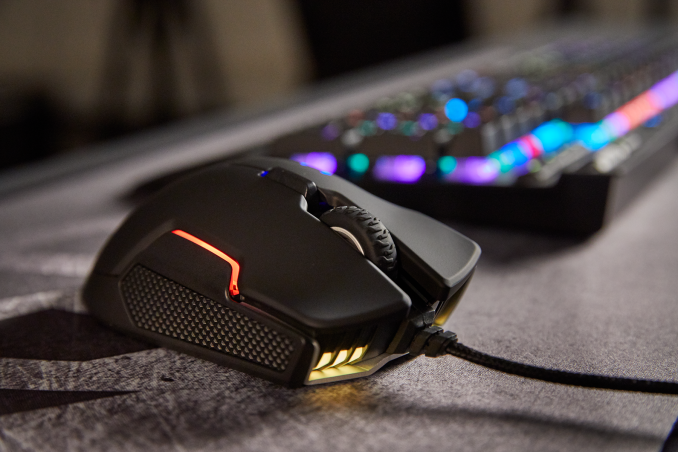
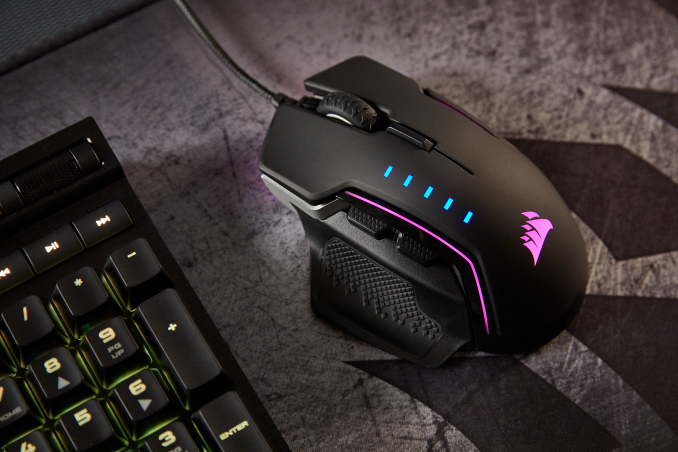
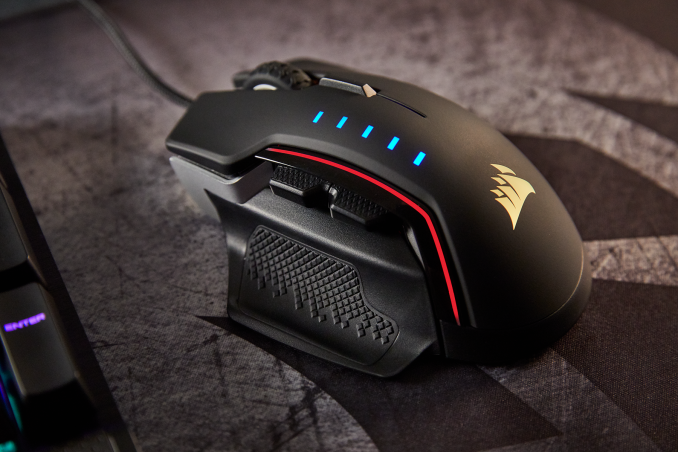
Corsair this week released its latest flagship gaming mouse, the new Glaive RGB. The company’s latest right-handed mouse incorporates a new sensor, interchangeable grips, programmable RGB lighting as well as on-board storage for profiles. And, as you’d expect for such a mouse, Corsair is aiming solidly at the high-end market, going after gamers looking for a high-end wired mouse.

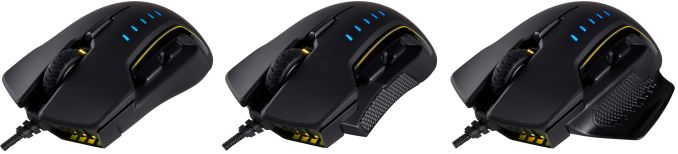
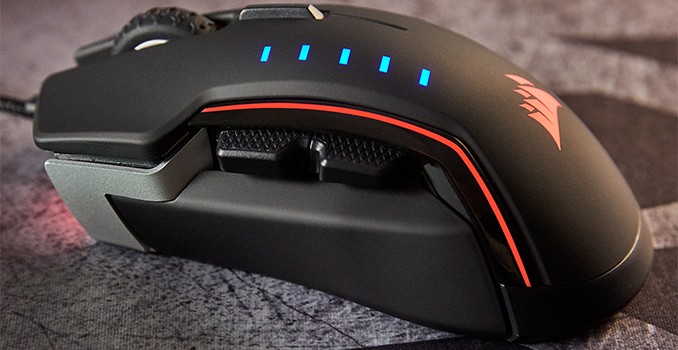
With the rise of PC gaming in the recent years, multiple companies have entered the market of gaming peripherals with mice, keyboards, headsets and other gear. As a result, the choice of gaming hardware in general and mice in particular became a complicated task as various devices feature different ergonomics and performance. With its new flagship Glaive RGB mouse, Corsair decided to somewhat simplify the choice: the Glaive RGB uses a rather advanced and sensitive IR sensor, and pairs that up with three interchangeable magnetic grips. The smooth, the rubberized and the wide thumb rest grips were designed to allow the mouse to be used with different types of hands and usage models, enabling the Glaive RGB to compete against various rivals with diverse shapes. To customize the look of the mouse further, Corsair equipped it with three RGB LEDs that can be programmed using the company’s proprietary software.

The Corsair Glaive RGB is based on a custom version of Pixart’s PMW3367 gaming sensor with adjustable sensitivity and up to a 16,000 DPI resolution (acceleration supported at that DPI is unknown). The microcontroller of the sensor supports USB report rate of up to 1000 Hz (programmable and requires support from the OS) and the mouse comes with a braided fiber cable. Just like any other high-end mouse for gamers, the Glaive RGB has programmable buttons that can be completely remapped using Corsair’s CUE software, and then used on different computers as button configuration is stored inside the mouse. Besides, the onboard storage is used to store DPI, macros and RGB LED settings.

As for the build, the Glaive RGB mouse features metallic skeleton and is made of rubberized plastic. Depending on the version of the mouse, parts of the metallic skeleton that go outside the body are either painted or not.

Corsair’s Glaive RGB mouse is now available directly from the company as well as its resellers worldwide. In the U.S., the Glave RGB costs $69.99, whereas in Europe gamers will have to pay €79.99.

Related Reading:

Corsair Launches Glaive RGB Mouse: 16,000 DPI, Interchangeable Grips, LEDs

Corsair Launches Glaive RGB Mouse: 16,000 DPI, Interchangeable Grips, LEDs

Corsair this week released its latest flagship gaming mouse, the new Glaive RGB. The company’s latest right-handed mouse incorporates a new sensor, interchangeable grips, programmable RGB lighting as well as on-board storage for profiles. And, as you’d expect for such a mouse, Corsair is aiming solidly at the high-end market, going after gamers looking for a high-end wired mouse.

With the rise of PC gaming in the recent years, multiple companies have entered the market of gaming peripherals with mice, keyboards, headsets and other gear. As a result, the choice of gaming hardware in general and mice in particular became a complicated task as various devices feature different ergonomics and performance. With its new flagship Glaive RGB mouse, Corsair decided to somewhat simplify the choice: the Glaive RGB uses a rather advanced and sensitive IR sensor, and pairs that up with three interchangeable magnetic grips. The smooth, the rubberized and the wide thumb rest grips were designed to allow the mouse to be used with different types of hands and usage models, enabling the Glaive RGB to compete against various rivals with diverse shapes. To customize the look of the mouse further, Corsair equipped it with three RGB LEDs that can be programmed using the company’s proprietary software.

The Corsair Glaive RGB is based on a custom version of Pixart’s PMW3367 gaming sensor with adjustable sensitivity and up to a 16,000 DPI resolution (acceleration supported at that DPI is unknown). The microcontroller of the sensor supports USB report rate of up to 1000 Hz (programmable and requires support from the OS) and the mouse comes with a braided fiber cable. Just like any other high-end mouse for gamers, the Glaive RGB has programmable buttons that can be completely remapped using Corsair’s CUE software, and then used on different computers as button configuration is stored inside the mouse. Besides, the onboard storage is used to store DPI, macros and RGB LED settings.

As for the build, the Glaive RGB mouse features metallic skeleton and is made of rubberized plastic. Depending on the version of the mouse, parts of the metallic skeleton that go outside the body are either painted or not.

Corsair’s Glaive RGB mouse is now available directly from the company as well as its resellers worldwide. In the U.S., the Glave RGB costs $69.99, whereas in Europe gamers will have to pay €79.99.

Related Reading: