Vik


Transcend Launches New PCIe M.2 SSDs: The MTE850 Series
Transcend Launches New PCIe M.2 SSDs: The MTE850 Series

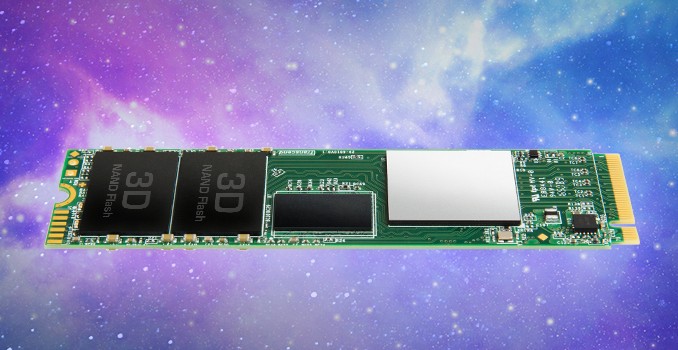
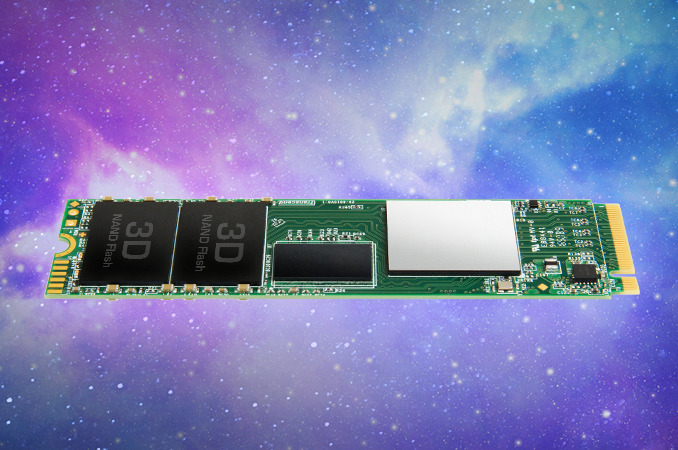
Transcend has announced its first SSDs based on 3D MLC NAND flash memory. The MTE850-series drives are aimed at the higher-end of the market and promise up to 2.5 GB/s sequential read speed along with endurance-related advantages of 3D NAND.

Transcend does not disclose exact specifications of all its new MTE850 series SSDs, but only shows their pictures as well as performance numbers for the flagship 512 GB model. The images reveal a controller covered with an aluminum heat spreader, and the only contemporary controller that supports 3D NAND and comes with such a heat spreader is Silicon Motion’s SM2260 (which uses two ARM Cortex cores and has eight NAND flash channels) Technically the SM2260 can support LDPC ECC technology and 256-bit AES although this has to be enabled in firmware. At present, only Micron sells SSD-graded 3D MLC NAND to some of its partners, so it is logical to assume that the MTE850 drives use Micron. Transcend is the third company to offer an SSD family featuring 3D MLC and SM2260 after ADATA and Mushkin, so the drives are going to have rivals that offer similar performance and functionality.
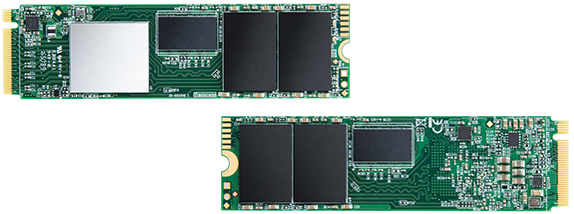
Transcend’s MTE850 family consists of three models with 128 GB, 256 GB and 512 GB capacities that come in M.2-2280 form-factor and use a PCIe 3.0 x4 interface. The manufacturer rates MTE850’s sequential read performance at up to 2.5 GB/s and its write performance at up to 1.1 GB/s when pseudo-SLC caching is used. When it comes to random performance, Transcend does not publish any numbers at all, but we know that the SM2260 controller is officially capable of up to 120K/140K 4KB read/write IOPS, although the final value for these drives will be firmware dependent.

Transcend MTE850 Specifications
Capacity 128 GB 256 GB 512 GB
Model Number TS128GMTE850 TS256GMTE850 TS512GMTE850
Controller Silicon Motion SM2260
NAND Flash 3D MLC NAND
Form-Factor, Interface M.2-2280, PCIe 3.0 x4, NVMe 1.2
Sequential Read ? ? 2.5 GB/s
Sequential Write ? ? 1.1 GB/s
Random Read IOPS ? ? ?
Random Write IOPS ? ? ?
Pseudo-SLC Caching Supported
DRAM Buffer Yes, capacity unknown
TCG Opal Encryption No
Power Management DevSleep, Slumber
Warranty 3 years

The MTE850 SSDs are expected to follow performance trends (the drives are somewhat comparable to Samsung’s 950 Pro released in 2H2015), and it is noteworthy that Transcend became the fourth independent SSD supplier after ADATA, Mushkin and Palit to introduce 3D NAND-based SSDs. We are still a few months away from a wide availability of 3D NAND-powered drives from independent vendors, but such products are getting announced today – we expect to hear more at Computex in June.

Transcend did not disclose MSRPs for its MTE850 drives, but since the SSDs have direct competitors based on the same memory and controller (ADATA’s XPG SX8000-series at $90-$242), it is highly likely that Transcend’s SSDs will be offered at similar price points. The MTE850 drives will be covered by the manufacturer’s three-year warranty.

Related Reading:
ASUS Launches the Zen AiO ZN270IE: A 27-inch Full HD Core i7 All-In-One

ASUS Launches the Zen AiO ZN270IE: A 27-inch Full HD Core i7 All-In-One

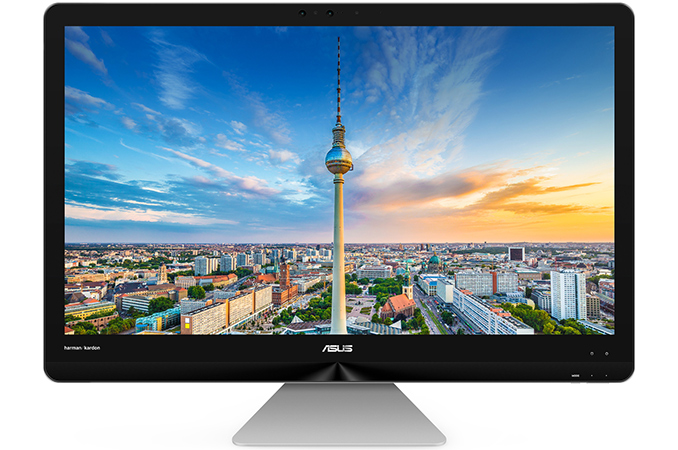
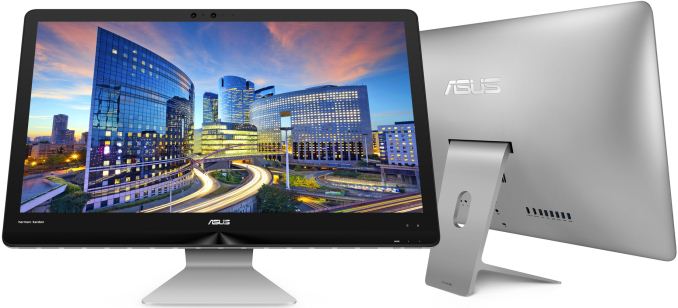
ASUS has expanded its Zen AiO lineup of all-in-one PCs for 2017 with new 27” models. The company’s largest AIOs will fit into the current lineup of Intel Kaby Lake-based systems and offer bigger displays and higher performance than models featuring 22” and 24” screens due to desktop-class CPUs being installed.

ASUS introduced its first AIO PCs with 22” and 24” monitors at Computex 2015 nearly two years ago. Since then the company has been gradually expanding its lineup of all-in-one desktop computers: first, it introduced more affordable Vivo AiO systems, and then it launched ASUS PRO AIOs for business users. Earlier this year the company began to add premium models into the Zen AiO family, targeting consumers who need better screens and/or higher performance. Back in January ASUS announced its Zen AiO Pro Z240IE, that is based on Intel’s 35W quad-core CPUs and 4K displays. In late March, ASUS added the Zen AiO ZN270IE into the lineup with a bigger 27” FHD display.

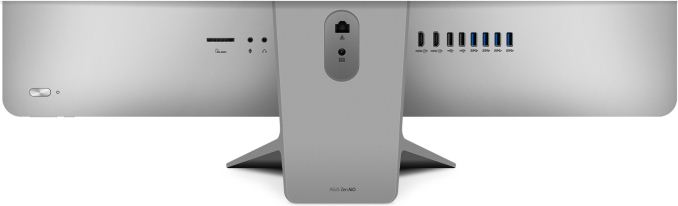
Just like the premium models introduced in January, the ASUS Zen AiO ZN270IE is based on Intel’s Core i7-T processors. However, similarities with the Zen AiO Pro Z240IE seem to end here. The Zen AiO ZN270IE comes with NVIDIA’s low-end GeForce 940MX GPU with 2 GB of DRAM (cheap versions of the ZN270IE use Intel’s iGPU, but this particular dGPU is barely faster than modern iGPUs), from 4 to 16 GB of DDR4 memory, up to a 512 GB SSD as well as 1 or 2 TB HDD storage, 802.11ac, a GbE controller and so on. The PC is equipped with an audio sub-system featuring four 3W speakers co-developed with harman/kardon, a 1 MP webcam (a premium version features Intel’s RealSense camera array with RGB and IR sensors), six USB Type-A ports, an SD/MMC card reader as well as HDMI connectors.

ASUS 27″ Zen AiO PC Specifications
  Zen AiO ZN270IE
Display 27″ IPS with 1920 × 1080 resolution
27″ IPS with 1920 × 1080 resolution with 10-point multi-touch
CPU Intel Core i7-7700T
4C/8T, 2.9/3.8 GHz
HD Graphics 630
35 W
Intel Core i5-7400T
4C/4T, 2.4/3.0 GHz
HD Graphics 630
35 W
PCH Intel H110
Graphics NVIDIA GeForce GTX 940MX 2GB (384 SPs)
Intel HD Graphics 630
Memory  4 or 16 GB of DDR4
Storage 512 GB SSD (SATA or PCIe?)
1 or 2 TB 2.5″ HDD
Wi-Fi IEEE 802.11ac Wi-Fi + BT 4.0
Ethernet GbE
Display Outputs 1 × HDMI
1 × HDMI IN
Audio 4 × 3 W speakers (harman/kardon)
1 × audio in
1 × audio out
USB 4 × USB 3.0 Type-A (5 Gbps)
2 × USB 2.0 Type-A
Other I/O 1 MP webcam
Intel RealSense cam (RGB and IR) on AIOs with multi-touch LCDs
SD/MMC card reader
Dimensions 649 mm × 481 mm × 62 mm
PSU 90 W
120 W
OS Windows 10 Home

It is noteworthy that while ASUS now offers AIO PCs with 27” displays (some models will feature 10-point multi-touch, some will not), for now they still feature FHD resolution (1920×1080). Over time we may see more advanced 27” AIOs with higher-resolution screens and further performance enhancements, like Apple does with its iMac systems.

ASUS has not announced recommended prices for its Zen AiO ZN270IE PCs, but since the company intends to offer multiple versions of the product, they will naturally vary significantly depending on the retailer/local distribution.

Related Reading:

ASUS Launches the Zen AiO ZN270IE: A 27-inch Full HD Core i7 All-In-One

ASUS Launches the Zen AiO ZN270IE: A 27-inch Full HD Core i7 All-In-One

ASUS has expanded its Zen AiO lineup of all-in-one PCs for 2017 with new 27” models. The company’s largest AIOs will fit into the current lineup of Intel Kaby Lake-based systems and offer bigger displays and higher performance than models featuring 22” and 24” screens due to desktop-class CPUs being installed.

ASUS introduced its first AIO PCs with 22” and 24” monitors at Computex 2015 nearly two years ago. Since then the company has been gradually expanding its lineup of all-in-one desktop computers: first, it introduced more affordable Vivo AiO systems, and then it launched ASUS PRO AIOs for business users. Earlier this year the company began to add premium models into the Zen AiO family, targeting consumers who need better screens and/or higher performance. Back in January ASUS announced its Zen AiO Pro Z240IE, that is based on Intel’s 35W quad-core CPUs and 4K displays. In late March, ASUS added the Zen AiO ZN270IE into the lineup with a bigger 27” FHD display.

Just like the premium models introduced in January, the ASUS Zen AiO ZN270IE is based on Intel’s Core i7-T processors. However, similarities with the Zen AiO Pro Z240IE seem to end here. The Zen AiO ZN270IE comes with NVIDIA’s low-end GeForce 940MX GPU with 2 GB of DRAM (cheap versions of the ZN270IE use Intel’s iGPU, but this particular dGPU is barely faster than modern iGPUs), from 4 to 16 GB of DDR4 memory, up to a 512 GB SSD as well as 1 or 2 TB HDD storage, 802.11ac, a GbE controller and so on. The PC is equipped with an audio sub-system featuring four 3W speakers co-developed with harman/kardon, a 1 MP webcam (a premium version features Intel’s RealSense camera array with RGB and IR sensors), six USB Type-A ports, an SD/MMC card reader as well as HDMI connectors.

ASUS 27″ Zen AiO PC Specifications
  Zen AiO ZN270IE
Display 27″ IPS with 1920 × 1080 resolution
27″ IPS with 1920 × 1080 resolution with 10-point multi-touch
CPU Intel Core i7-7700T
4C/8T, 2.9/3.8 GHz
HD Graphics 630
35 W
Intel Core i5-7400T
4C/4T, 2.4/3.0 GHz
HD Graphics 630
35 W
PCH Intel H110
Graphics NVIDIA GeForce GTX 940MX 2GB (384 SPs)
Intel HD Graphics 630
Memory  4 or 16 GB of DDR4
Storage 512 GB SSD (SATA or PCIe?)
1 or 2 TB 2.5″ HDD
Wi-Fi IEEE 802.11ac Wi-Fi + BT 4.0
Ethernet GbE
Display Outputs 1 × HDMI
1 × HDMI IN
Audio 4 × 3 W speakers (harman/kardon)
1 × audio in
1 × audio out
USB 4 × USB 3.0 Type-A (5 Gbps)
2 × USB 2.0 Type-A
Other I/O 1 MP webcam
Intel RealSense cam (RGB and IR) on AIOs with multi-touch LCDs
SD/MMC card reader
Dimensions 649 mm × 481 mm × 62 mm
PSU 90 W
120 W
OS Windows 10 Home

It is noteworthy that while ASUS now offers AIO PCs with 27” displays (some models will feature 10-point multi-touch, some will not), for now they still feature FHD resolution (1920×1080). Over time we may see more advanced 27” AIOs with higher-resolution screens and further performance enhancements, like Apple does with its iMac systems.

ASUS has not announced recommended prices for its Zen AiO ZN270IE PCs, but since the company intends to offer multiple versions of the product, they will naturally vary significantly depending on the retailer/local distribution.

Related Reading: