Vik


Making AMD Tick: A Very Zen Interview with Dr. Lisa Su, CEO

Making AMD Tick: A Very Zen Interview with Dr. Lisa Su, CEO

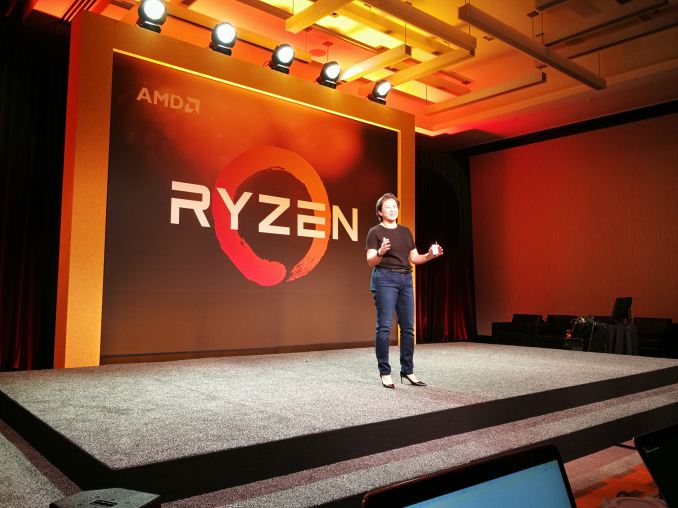
AMD held a Tech Day a week before the launch of Zen to go over the details of of the new Ryzen product with the technology press. As part of these talks, we were able to secure Dr. Lisa Su, the CEO of AMD, for 30 minutes to discuss Zen, Ryzen, and AMD.
Profile:

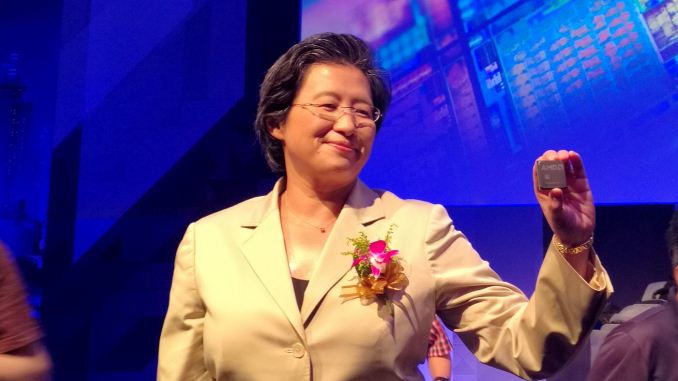
Dr. Lisa Su, CEO of AMD. Born in Taiwan and educated at MIT, Dr. Su comes fully equipped with a Bachelors, Masters, and Ph.D. in Electrical Engineering. Before AMD, Dr. Su had appointments as CTO of Freescale Semiconductor, Director of Emerging Products at IBM, and a stint at Texas Instruments. It was at IBM that Dr. Su worked alongside Mark Papermaster, who is currently AMD’s CTO. Dr. Su was initially hired as SVP and GM at AMD, overseeing the global business units, and became CEO/COO in 2012. A rare occurrence (unfortunately), but Dr. Su is one of a small handful of female C-Level Executives in the semiconductor industry. Dr. Su is consistently highly ranked in many ‘top people to watch’ lists of technology industry visionaries.
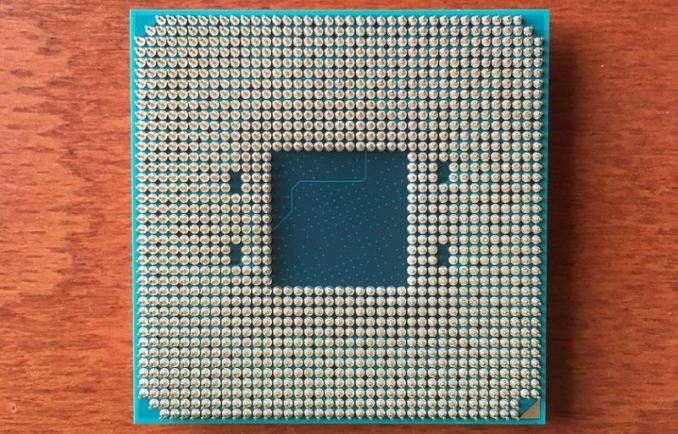

The pin-layout of Ryzen

Ian Cutress: Congratulations on formally releasing Zen!

Q1: Both yourself and AMD officially have explicitly stated that AMD has needed to return back to the high-performance CPU market. We can all assume that there are still many hurdles ahead, but is getting Zen into retail silicon the spark that sets off the rest of the roadmap?

Lisa Su: I think launching Zen in desktop was a big big hurdle. That being said we have many others to go, and as you can imagine how happy I am. I know I’m only as good as my last product, so there’s a lot of focus on: Vega, Naples, Notebook, and 2018.

Q2: When we speak to some companies, they’ll describe that internally they have engineers working on the next generation of product, and fewer engineers working for the product after that, and continuing on for three, five or up to seven years of products. Internally, how far ahead in the roadmap do you have engineers working on product and product design?

LS: It’s at least 3 to 4 years. If you look at what we have on CPU and GPU, we have our roadmap out to 2020. It’s not set in stone, but we know the major markets and we adjust timings a quarter here or there as necessary.

Q3: A lot of analysts widely regard that rehiring Jim Keller was the right move for AMD, although at the time AMD was going through a series of ups and downs with products and financial issues. Was the ‘new’ CPU team shielded from those issues from day one, or at what point could the Zen team go full throttle?

LS: If I put credit where credit is due, Mark Papermaster had incredible vision of what he wanted to do with CPU/GPU roadmap. He hired Jim Keller and Raja Koduri, and he was very clear when he said he needed this much money to do things. We did cut a bunch of projects, but we invested in our future. Sure we cut things, but it was very clear. A note to what you said about Jim Keller though – he was definitely a brilliant CPU guy, but he was a part of that vision of what we wanted to do.

Q4: With Bulldozer, AMD had to work with Microsoft due to the way threads were dispatched to cores to ensure proper performance. Even though Zen doesn’t have that issue, was there any significant back-and-forth with Microsoft to enable performance in Windows (e.g. XFR?)

LS: Zen is a pretty traditional x86 architecture as an overall machine, but there is optimization work to do. What makes this a bit different is that most of our optimization work is more on the developer side – we work with them to really understanding the bottlenecks in their code on our microarchitecture. I see many apps being tuned and getting better going on as we work forward on this.

Q5: How vital was it to support Simultaneous Multi Threading?

LS: I think it was very important. I think it was very complicated! Our goal was to have a very balanced architecture. We wanted high single threaded performance, and SMT was important given where the competition is. We didn’t want to apologize for anything with Zen – we wanted high single thread, we wanted many cores, but sorry we don’t have SMT? We didn’t want to say that, we wanted to be ambitious and give ourselves the time to get it done.

IC: Can you have your cake and eat it too?

LS: Yes! The key is to help the team to believe it can be done.
Q6: It has been noted that AMD has been working with ASMedia on the chipset side of the platform, using a 55nm PCIe 3.0×4 based chipset. Currently your competition implements a large HSIO model that can support up to 24 PCIe 3.0 lanes, albeit with limited bandwidth, but enables extensive networking, PCIe storage, and other features. What does AMD need to do to reach semi-parity for I/O ?

LS: I think we will continue to want a rich ecosystem. On the chipset side we may not develop the chipsets ourselves but we certainly want to be in partnership with others to develop a wide set of IO. I think if you look at the set of motherboard partners that we have, and the extensive testing we’ve done with them, I would expect that as we gain some market share in the high-end, you will see that system build up.

Q7: A couple of years ago, AMD’s market value was lower than its assets. Today, it is trading over $10. A cynic would say that the increase has been a good Polaris launch combined with recent marketing cycles slowly giving out small bits of information. What’s your response to AMD’s recent share price rise over the past 12 months? 

LS: My view is that I can never predict the market, so I never try! The market has a mind of its own. But what I can say is that we had some very key fundamentals. We are in key markets like the PC market, the cloud market, the infrastructure market, gaming – these are big big markets. They are growing too – I think that the markets we are in are good. We had to convince people fundamentally that we could execute a competitive roadmap and 18 months ago I’d say people didn’t really believe. They thought ‘ah well, maybe’, but ‘we don’t know’ is a power point. Over the past 6-9 months we’ve proven that we can gain graphics share, with the launch of Polaris, and with the launch of Ryzen I think you’ll see that we can convince that we can execute on high performance CPUs. Importantly our customers have become convinced too. The key thing with our customers is that when it was a power point, they weren’t sure: it was interesting, but it could have been six months late or have 20% less performance. When we actually gave them samples, they were actually like ‘Wow, this is actually real!’ and they started pulling in their schedules. So when you ask me about investors it’s something like that. I think people want some proof points to believe they can trust us and that if we execute that we’ll do ok.

Q8: Do you find that OEMs that haven’t worked with AMD are suddenly coming on board?

LS: I will say that we have engagements with every OEM now on the high-performance space. Twelve months ago, a number of them would have said that they don’t have the resources to do multiple platforms. So yes, I think momentum helps in this space.

Q9: At Intel’s recent Investor Day we learned that future chips will incorporate multiple dies on the same package. This allows a semiconductor firm to focus on smaller chips and potentially better yields at the expense of some latency. Given what we predict will happen, what is your opinion on having large 600mm2 silicon? Is there a future?

LS: There has been a lot of debate on this topic. I find it a very interesting debate. Certainly on the graphics side we view High Bandwidth Memory (HBM) and the ability to get that interconnect between the GPU and memory to be extremely differentiating. So certainly we will use that throughout our graphics roadmap. If you look at our CPU roadmap, I do think there’s a case to be made for multi-chip modules. It depends on the trade-offs you have to do, the bandwidth requirements you have, but yes as the process technology becomes more complicated, breaking up the tasks does make sense.

Q10: With high-end GPUs, we commonly approach 250-300W power consumption. Why has the CPU stalled around 75-140W by comparison? Does AMD ever look to designing a CPU that actually aims for a power/efficiency sweet-spot north of 200W? Why hasn’t the high-performance CPU market gone and matched the GPU market in power consumption?

LS: That’s a good question, let me see if I’ve thought about that. I think we’re limited by other things on the CPU side. I think we’re limited by some reliability.

IC: But if you engineer for a specific power window…

LS: Sure but if you think about it, GPUs tend to be a lot more parallel, so that’s what drives the power. With CPUs, you might argue with me about whether you actually need eight cores, or not! I have to think about that answer, but I think that’s the right one – the difference between a very parallel machine and one that is less parallel.

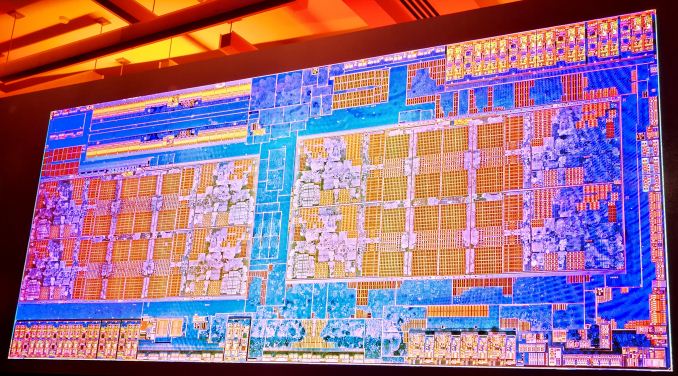
Q11: Despite the differences, a lot of fingers point to the Zen microarchitecture floorplan and see significant similarities in the layout with Intel’s Core microarchitecture.  Without a fundamental paradigm shift, it seems we might be ‘stuck’ (for lack of a better term) with this kind of layout for perhaps a decade. How does AMD approach this, given your main competitor can easily invest in new seed firms or IP?

LS: The way I look at it, and I get asked this question very often (sometimes phrased a bit differently) – your competition can invest so much more than you can, how can we be competitive? I think the simple answer is in that yes we are smaller, but I think that we are also more focused. I think that sometimes with constraints comes creativity and so when you’re talking about what processors look like 5-10 years from now, if you look at the innovation in the last 10 years , a bunch of that has come from AMD. You tend to solve problems when you’re put in a box that you have to live in, so when we look at possible microarchitectures, there are still a lot of ideas out there. There’s still a lot of opportunity to incrementally improve performance. I think the difference is that you used to be able to say ‘let me just shrink it’ and it will go faster, and that is a process that lends itself to money as you can just buy equipment to shrink it. Today you have to handcraft it a bit more, and that lends itself to more creativity I would say.

Q12: We’ve recently seen your competitor announce a change in strategy regarding new process nodes, new architectures, and how markets will take advantage of the latest CPU designs. With Zen, AMD is first launching desktop, then server, then mobile: you’ve already mentioned Zen-plus on the roadmap – is the desktop-server-mobile roll-out method the best way for AMD to move forward?

LS: Not necessarily. I think for this generation [our strategy] made a lot of sense. I think the desktop and server use very similar kind of tuning, they’re both tuned for higher frequency and higher performance. The desktop is a bit simpler; the ecosystem for desktop is a bit simpler. The server has a more complicated testing setup that needs to run so that gives some context there. We really wanted to have a product in the high-end space. It was more set the market strategy than a technical strategy.

Q13: AMD currently has a very active semi-custom business, particularly when it comes to silicon design partnerships and when it comes to millions of Consoles. Speaking of custom silicon in consoles, current generation platforms currently use AMD’s low power ‘cat’ cores. Now that AMD has a small x86 core in Zen, and I know you won’t tell me what exactly is coming in the future, but obviously future consoles will exist, so can we potentially see Zen in consoles?

LS: I think you know our console are always very secretive about what they are trying to do, but hypothetically yes I would expect Zen to show up in semi-custom opportunities including perhaps consoles at a certain point in time.

Q14: AMD is in a unique position for an x86 vendor, with significant GPU IP at its beck and call. Despite the recent redefinition of the GPU group under RTG, would/has AMD ever consider using joint branding (similar to how ASUS markets ROG motherboards and GPUs for example)? 

LS: What I’d like to say is (and you’ll appreciate this) that I love CPUs and GPUs equally, and the markets are a little bit different. And so think about it this way: our GPUs have to work with Intel CPUs, and our CPUs have to work with NVIDIA GPUs, so we have to maintain that level of compatibility and clarity. That being said, I think with Ryzen you can imagine that as we launch Vega later in the year that you might here about Ryzen plus Vega in systems because they are both high-performance things and we want to build great systems! I don’t know about co-marketing, but the idea of being able to say that ‘A plus A builds a great system’ is something we will do.

On the vendors who do motherboards and GPUs, I agree it takes a lot of work to bring out a new brand. We do view though that the way that people who buy CPUs and the people who buy GPUs do overlap, but they are still quite distinct.
Q15: Ryzen is priced very competitively compared to the competition, and it follows the common thinking that AMD is still the option for a cheaper build. Is that a characteristic that sits well with AMD?

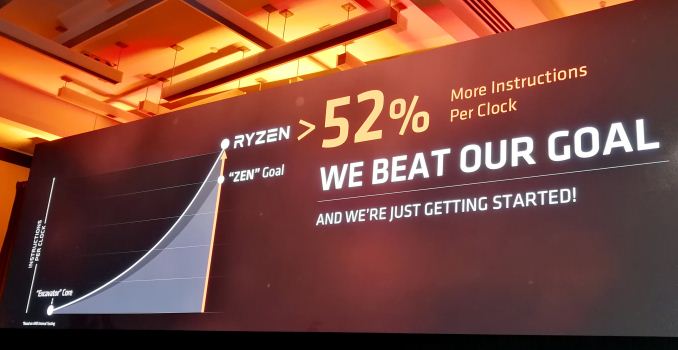
LS: I think you should judge that question by what the 200 system integrators will be building with Ryzen in, and what the OEMs will be building. My view is that they system needs to be good enough for the CPU being putting in it. We are very picky about it, and we want Ryzen to be in high-end systems. Will we see Ryzen in some mainstream systems then sure, but if you look at our introduction order, there’s a reason why we’re going Ryzen 7 first, because it sets the brand. You know I want to sell millions and millions of processors, and I’ll sell a bunch that is less than eight cores but having that eight cores and sixteen threads defines what we’re capable of.

Q16: We’ve all seen the details of how desktop PC sales are down, but PC gaming revenue is increasing. There is no doubt that Ryzen will be marketed as a chip for gamers; how do you see consumers reacting to Ryzen?

LS: I think PC gaming is doing quite well, which is one of the hot markets. We are addressing as a gamers as a very important segment, but they are one of many important segments of users for us. We think Ryzen is a great gaming CPU, and you’ll test that for yourself – we’re not going to win every head-to-head, but if you think about gaming do you want theoretical performance or do you want the CPU to be good enough to showcase your GPU? I think what Ryzen allows is those folks to do something more than just gaming. So your gaming CPU might only uses four cores, but if you are doing video editing or streaming it will do a lot more. So I think what we’re trying to address is maybe the forward thinking users, not just the today gamer.

Q17: A perennial question we get asked is ‘Core i7, i5 or i3?’. There have been countless reviews and YouTube videos on the subject. With Ryzen in the mix, what becomes the new question?

LS: I think you should help your users through that! I really think that’s the case. Ryzen 7 offers phenomenal capability for an eight-core, sixteen-thread device. As we introduce the next families you will see positioning but the end result is that you will see a top to bottom stack with a processor for everyone. At every price we will offer more performance.  You will be able to see that in your own testing.

Q18: Can you comment on whether Bristol Ridge will be available to consumers at any point?

LS: Yes, good question. The answer is yes. The idea is that if you have an AM4 platform you can put an APU in there. As you saw we put Ryzen 7 first I think the intent was to ensure that AM4 was solidified on Ryzen. I say yes because that has always been the strategy for the AM4 socket to have a very long life and a very broad range. Exact timing has not yet been finalized.

Q19: At the high-end, Ryzen 7 is competing with Intel’s high-end desktop market. But where Intel has 28/40 native PCIe 3.0 lanes, Ryzen only has sixteen. Avago PLX switches are almost $100 each, which means a route to 2 full-bandwidth GPUs or >3 GPUs or more NVMe is hindered. Was sixteen PCIe 3.0 the right choice?

LS: We think so, I mean we do. If you look at the distribution of PCs going into workstation I think that’s where the volume is. We still believe in the relative balance of performance and power in our decision, but it’s an interesting point.

Q20: Your competition has had success with both ‘Core’ parts and ‘Xeon’ parts, with the latter being ECC and vPro and having the professional feature-set.  With the launch, AMD does have its ‘Pro’ CPU line, but this is more for business agreements and not yet dealing with Ryzen. Does AMD discuss this internally?

LS: I think what you should expect that Naples will go head to head in the server space, including single socket and dual socket. What you might be asking is if we are going to do something in between on the workstation stuff – I think it is fair to say that we view it all as interesting markets. To your question of ‘do we think about it?’, sure. With everything you roll out with a set of priorities so we set on consumer first, then we are going to do data center, and then we will see what will come next.

Q21: Is there room for an ‘Opteron’ as a brand name?

LS: You tell me!

IC: I think so! I spoke to a few people today and reactions were mixed. Obviously coming up with a new brand name for a product line is difficult. I assume there is conversation internally, as I don’t suspect the product to be called Naples at launch.

LS: I think you have hit on a topic that has had a good amount of debate [internally]. As we get closer to launch we will talk about branding on the server. But yes, it will not be called Naples in the market.
Q22: AMD is formally launching Ryzen with AMD benchmark data and pre-orders on 2/22, but no third-party data until the official launch of 3/2. A lot of customers see value on third-party independent verified data, and might perhaps see this tactic in a bad light. Can you comment on the reasons for the launch structure?

LS: We had a couple of things going on internally, to give you all our thought process. Because we were going so wide on the ecosystem in terms of sampling – motherboard sampling, system integrators, a lot of OEMs, and lot of ODMs, there has been (at least to my expectation) more chatter in the marketplace than I would have thought just in terms of things that are out there. Some of them were true, some were not true…

IC: Fake News!

LS: Ha! Our view was that we wanted to go through the review process very very diligently, and we also wanted to own the news as the news cycle was coming out. So the whole idea of taking the press out on the town to some boat or something, we thought that these guys are writing is real, so give them time to perhaps not do a full review but at least get comfortable with what you are seeing. I’ve said it before and I’ll say it again: everything we show you, what you see is what you get.

IC: The problem is the perception that perhaps that up to that point, every personal in the chain that has ‘data’ wants to sell you something.

LS: My view is that you guys are very smart guys, and you said you can do a lot in six hours! 

(I had mentioned previously I had bought 10kg of testing kit to Tech Day to test Ryzen in my hotel room that evening before catching a flight out. As this is being posted, we’re still frantically writing up the review, so stay tuned as the official embargo time lifts at 9am ET, and not a minute sooner…)



Making AMD Tick: A Very Zen Interview with Dr. Lisa Su, CEO

Making AMD Tick: A Very Zen Interview with Dr. Lisa Su, CEO

AMD held a Tech Day a week before the launch of Zen to go over the details of of the new Ryzen product with the technology press. As part of these talks, we were able to secure Dr. Lisa Su, the CEO of AMD, for 30 minutes to discuss Zen, Ryzen, and AMD.

Profile:

Dr. Lisa Su, CEO of AMD. Born in Taiwan and educated at MIT, Dr. Su comes fully equipped with a Bachelors, Masters, and Ph.D. in Electrical Engineering. Before AMD, Dr. Su had appointments as CTO of Freescale Semiconductor, Director of Emerging Products at IBM, and a stint at Texas Instruments. It was at IBM that Dr. Su worked alongside Mark Papermaster, who is currently AMD’s CTO. Dr. Su was initially hired as SVP and GM at AMD, overseeing the global business units, and became CEO/COO in 2012. A rare occurrence (unfortunately), but Dr. Su is one of a small handful of female C-Level Executives in the semiconductor industry. Dr. Su is consistently highly ranked in many ‘top people to watch’ lists of technology industry visionaries.


The pin-layout of Ryzen

Ian Cutress: Congratulations on formally releasing Zen!

Q1: Both yourself and AMD officially have explicitly stated that AMD has needed to return back to the high-performance CPU market. We can all assume that there are still many hurdles ahead, but is getting Zen into retail silicon the spark that sets off the rest of the roadmap?

Lisa Su: I think launching Zen in desktop was a big big hurdle. That being said we have many others to go, and as you can imagine how happy I am. I know I’m only as good as my last product, so there’s a lot of focus on: Vega, Naples, Notebook, and 2018.

Q2: When we speak to some companies, they’ll describe that internally they have engineers working on the next generation of product, and fewer engineers working for the product after that, and continuing on for three, five or up to seven years of products. Internally, how far ahead in the roadmap do you have engineers working on product and product design?

LS: It’s at least 3 to 4 years. If you look at what we have on CPU and GPU, we have our roadmap out to 2020. It’s not set in stone, but we know the major markets and we adjust timings a quarter here or there as necessary.

Q3: A lot of analysts widely regard that rehiring Jim Keller was the right move for AMD, although at the time AMD was going through a series of ups and downs with products and financial issues. Was the ‘new’ CPU team shielded from those issues from day one, or at what point could the Zen team go full throttle?

LS: If I put credit where credit is due, Mark Papermaster had incredible vision of what he wanted to do with CPU/GPU roadmap. He hired Jim Keller and Raja Koduri, and he was very clear when he said he needed this much money to do things. We did cut a bunch of projects, but we invested in our future. Sure we cut things, but it was very clear. A note to what you said about Jim Keller though – he was definitely a brilliant CPU guy, but he was a part of that vision of what we wanted to do.

Q4: With Bulldozer, AMD had to work with Microsoft due to the way threads were dispatched to cores to ensure proper performance. Even though Zen doesn’t have that issue, was there any significant back-and-forth with Microsoft to enable performance in Windows (e.g. XFR?)

LS: Zen is a pretty traditional x86 architecture as an overall machine, but there is optimization work to do. What makes this a bit different is that most of our optimization work is more on the developer side – we work with them to really understanding the bottlenecks in their code on our microarchitecture. I see many apps being tuned and getting better going on as we work forward on this.

Q5: How vital was it to support Simultaneous Multi Threading?

LS: I think it was very important. I think it was very complicated! Our goal was to have a very balanced architecture. We wanted high single threaded performance, and SMT was important given where the competition is. We didn’t want to apologize for anything with Zen – we wanted high single thread, we wanted many cores, but sorry we don’t have SMT? We didn’t want to say that, we wanted to be ambitious and give ourselves the time to get it done.

IC: Can you have your cake and eat it too?

LS: Yes! The key is to help the team to believe it can be done.

Q6: It has been noted that AMD has been working with ASMedia on the chipset side of the platform, using a 55nm PCIe 3.0×4 based chipset. Currently your competition implements a large HSIO model that can support up to 24 PCIe 3.0 lanes, albeit with limited bandwidth, but enables extensive networking, PCIe storage, and other features. What does AMD need to do to reach semi-parity for I/O ?

LS: I think we will continue to want a rich ecosystem. On the chipset side we may not develop the chipsets ourselves but we certainly want to be in partnership with others to develop a wide set of IO. I think if you look at the set of motherboard partners that we have, and the extensive testing we’ve done with them, I would expect that as we gain some market share in the high-end, you will see that system build up.

Q7: A couple of years ago, AMD’s market value was lower than its assets. Today, it is trading over $10. A cynic would say that the increase has been a good Polaris launch combined with recent marketing cycles slowly giving out small bits of information. What’s your response to AMD’s recent share price rise over the past 12 months? 

LS: My view is that I can never predict the market, so I never try! The market has a mind of its own. But what I can say is that we had some very key fundamentals. We are in key markets like the PC market, the cloud market, the infrastructure market, gaming – these are big big markets. They are growing too – I think that the markets we are in are good. We had to convince people fundamentally that we could execute a competitive roadmap and 18 months ago I’d say people didn’t really believe. They thought ‘ah well, maybe’, but ‘we don’t know’ is a power point. Over the past 6-9 months we’ve proven that we can gain graphics share, with the launch of Polaris, and with the launch of Ryzen I think you’ll see that we can convince that we can execute on high performance CPUs. Importantly our customers have become convinced too. The key thing with our customers is that when it was a power point, they weren’t sure: it was interesting, but it could have been six months late or have 20% less performance. When we actually gave them samples, they were actually like ‘Wow, this is actually real!’ and they started pulling in their schedules. So when you ask me about investors it’s something like that. I think people want some proof points to believe they can trust us and that if we execute that we’ll do ok.

Q8: Do you find that OEMs that haven’t worked with AMD are suddenly coming on board?

LS: I will say that we have engagements with every OEM now on the high-performance space. Twelve months ago, a number of them would have said that they don’t have the resources to do multiple platforms. So yes, I think momentum helps in this space.

Q9: At Intel’s recent Investor Day we learned that future chips will incorporate multiple dies on the same package. This allows a semiconductor firm to focus on smaller chips and potentially better yields at the expense of some latency. Given what we predict will happen, what is your opinion on having large 600mm2 silicon? Is there a future?

LS: There has been a lot of debate on this topic. I find it a very interesting debate. Certainly on the graphics side we view High Bandwidth Memory (HBM) and the ability to get that interconnect between the GPU and memory to be extremely differentiating. So certainly we will use that throughout our graphics roadmap. If you look at our CPU roadmap, I do think there’s a case to be made for multi-chip modules. It depends on the trade-offs you have to do, the bandwidth requirements you have, but yes as the process technology becomes more complicated, breaking up the tasks does make sense.

Q10: With high-end GPUs, we commonly approach 250-300W power consumption. Why has the CPU stalled around 75-140W by comparison? Does AMD ever look to designing a CPU that actually aims for a power/efficiency sweet-spot north of 200W? Why hasn’t the high-performance CPU market gone and matched the GPU market in power consumption?

LS: That’s a good question, let me see if I’ve thought about that. I think we’re limited by other things on the CPU side. I think we’re limited by some reliability.

IC: But if you engineer for a specific power window…

LS: Sure but if you think about it, GPUs tend to be a lot more parallel, so that’s what drives the power. With CPUs, you might argue with me about whether you actually need eight cores, or not! I have to think about that answer, but I think that’s the right one – the difference between a very parallel machine and one that is less parallel.

Q11: Despite the differences, a lot of fingers point to the Zen microarchitecture floorplan and see significant similarities in the layout with Intel’s Core microarchitecture.  Without a fundamental paradigm shift, it seems we might be ‘stuck’ (for lack of a better term) with this kind of layout for perhaps a decade. How does AMD approach this, given your main competitor can easily invest in new seed firms or IP?

LS: The way I look at it, and I get asked this question very often (sometimes phrased a bit differently) – your competition can invest so much more than you can, how can we be competitive? I think the simple answer is in that yes we are smaller, but I think that we are also more focused. I think that sometimes with constraints comes creativity and so when you’re talking about what processors look like 5-10 years from now, if you look at the innovation in the last 10 years , a bunch of that has come from AMD. You tend to solve problems when you’re put in a box that you have to live in, so when we look at possible microarchitectures, there are still a lot of ideas out there. There’s still a lot of opportunity to incrementally improve performance. I think the difference is that you used to be able to say ‘let me just shrink it’ and it will go faster, and that is a process that lends itself to money as you can just buy equipment to shrink it. Today you have to handcraft it a bit more, and that lends itself to more creativity I would say.

Q12: We’ve recently seen your competitor announce a change in strategy regarding new process nodes, new architectures, and how markets will take advantage of the latest CPU designs. With Zen, AMD is first launching desktop, then server, then mobile: you’ve already mentioned Zen-plus on the roadmap – is the desktop-server-mobile roll-out method the best way for AMD to move forward?

LS: Not necessarily. I think for this generation [our strategy] made a lot of sense. I think the desktop and server use very similar kind of tuning, they’re both tuned for higher frequency and higher performance. The desktop is a bit simpler; the ecosystem for desktop is a bit simpler. The server has a more complicated testing setup that needs to run so that gives some context there. We really wanted to have a product in the high-end space. It was more set the market strategy than a technical strategy.

Q13: AMD currently has a very active semi-custom business, particularly when it comes to silicon design partnerships and when it comes to millions of Consoles. Speaking of custom silicon in consoles, current generation platforms currently use AMD’s low power ‘cat’ cores. Now that AMD has a small x86 core in Zen, and I know you won’t tell me what exactly is coming in the future, but obviously future consoles will exist, so can we potentially see Zen in consoles?

LS: I think you know our console are always very secretive about what they are trying to do, but hypothetically yes I would expect Zen to show up in semi-custom opportunities including perhaps consoles at a certain point in time.

Q14: AMD is in a unique position for an x86 vendor, with significant GPU IP at its beck and call. Despite the recent redefinition of the GPU group under RTG, would/has AMD ever consider using joint branding (similar to how ASUS markets ROG motherboards and GPUs for example)? 

LS: What I’d like to say is (and you’ll appreciate this) that I love CPUs and GPUs equally, and the markets are a little bit different. And so think about it this way: our GPUs have to work with Intel CPUs, and our CPUs have to work with NVIDIA GPUs, so we have to maintain that level of compatibility and clarity. That being said, I think with Ryzen you can imagine that as we launch Vega later in the year that you might here about Ryzen plus Vega in systems because they are both high-performance things and we want to build great systems! I don’t know about co-marketing, but the idea of being able to say that ‘A plus A builds a great system’ is something we will do.

On the vendors who do motherboards and GPUs, I agree it takes a lot of work to bring out a new brand. We do view though that the way that people who buy CPUs and the people who buy GPUs do overlap, but they are still quite distinct.

Q15: Ryzen is priced very competitively compared to the competition, and it follows the common thinking that AMD is still the option for a cheaper build. Is that a characteristic that sits well with AMD?

LS: I think you should judge that question by what the 200 system integrators will be building with Ryzen in, and what the OEMs will be building. My view is that they system needs to be good enough for the CPU being putting in it. We are very picky about it, and we want Ryzen to be in high-end systems. Will we see Ryzen in some mainstream systems then sure, but if you look at our introduction order, there’s a reason why we’re going Ryzen 7 first, because it sets the brand. You know I want to sell millions and millions of processors, and I’ll sell a bunch that is less than eight cores but having that eight cores and sixteen threads defines what we’re capable of.

Q16: We’ve all seen the details of how desktop PC sales are down, but PC gaming revenue is increasing. There is no doubt that Ryzen will be marketed as a chip for gamers; how do you see consumers reacting to Ryzen?

LS: I think PC gaming is doing quite well, which is one of the hot markets. We are addressing as a gamers as a very important segment, but they are one of many important segments of users for us. We think Ryzen is a great gaming CPU, and you’ll test that for yourself – we’re not going to win every head-to-head, but if you think about gaming do you want theoretical performance or do you want the CPU to be good enough to showcase your GPU? I think what Ryzen allows is those folks to do something more than just gaming. So your gaming CPU might only uses four cores, but if you are doing video editing or streaming it will do a lot more. So I think what we’re trying to address is maybe the forward thinking users, not just the today gamer.

Q17: A perennial question we get asked is ‘Core i7, i5 or i3?’. There have been countless reviews and YouTube videos on the subject. With Ryzen in the mix, what becomes the new question?

LS: I think you should help your users through that! I really think that’s the case. Ryzen 7 offers phenomenal capability for an eight-core, sixteen-thread device. As we introduce the next families you will see positioning but the end result is that you will see a top to bottom stack with a processor for everyone. At every price we will offer more performance.  You will be able to see that in your own testing.

Q18: Can you comment on whether Bristol Ridge will be available to consumers at any point?

LS: Yes, good question. The answer is yes. The idea is that if you have an AM4 platform you can put an APU in there. As you saw we put Ryzen 7 first I think the intent was to ensure that AM4 was solidified on Ryzen. I say yes because that has always been the strategy for the AM4 socket to have a very long life and a very broad range. Exact timing has not yet been finalized.

Q19: At the high-end, Ryzen 7 is competing with Intel’s high-end desktop market. But where Intel has 28/40 native PCIe 3.0 lanes, Ryzen only has sixteen. Avago PLX switches are almost $100 each, which means a route to 2 full-bandwidth GPUs or >3 GPUs or more NVMe is hindered. Was sixteen PCIe 3.0 the right choice?

LS: We think so, I mean we do. If you look at the distribution of PCs going into workstation I think that’s where the volume is. We still believe in the relative balance of performance and power in our decision, but it’s an interesting point.

Q20: Your competition has had success with both ‘Core’ parts and ‘Xeon’ parts, with the latter being ECC and vPro and having the professional feature-set.  With the launch, AMD does have its ‘Pro’ CPU line, but this is more for business agreements and not yet dealing with Ryzen. Does AMD discuss this internally?

LS: I think what you should expect that Naples will go head to head in the server space, including single socket and dual socket. What you might be asking is if we are going to do something in between on the workstation stuff – I think it is fair to say that we view it all as interesting markets. To your question of ‘do we think about it?’, sure. With everything you roll out with a set of priorities so we set on consumer first, then we are going to do data center, and then we will see what will come next.

Q21: Is there room for an ‘Opteron’ as a brand name?

LS: You tell me!

IC: I think so! I spoke to a few people today and reactions were mixed. Obviously coming up with a new brand name for a product line is difficult. I assume there is conversation internally, as I don’t suspect the product to be called Naples at launch.

LS: I think you have hit on a topic that has had a good amount of debate [internally]. As we get closer to launch we will talk about branding on the server. But yes, it will not be called Naples in the market.

Q22: AMD is formally launching Ryzen with AMD benchmark data and pre-orders on 2/22, but no third-party data until the official launch of 3/2. A lot of customers see value on third-party independent verified data, and might perhaps see this tactic in a bad light. Can you comment on the reasons for the launch structure?

LS: We had a couple of things going on internally, to give you all our thought process. Because we were going so wide on the ecosystem in terms of sampling – motherboard sampling, system integrators, a lot of OEMs, and lot of ODMs, there has been (at least to my expectation) more chatter in the marketplace than I would have thought just in terms of things that are out there. Some of them were true, some were not true…

IC: Fake News!

LS: Ha! Our view was that we wanted to go through the review process very very diligently, and we also wanted to own the news as the news cycle was coming out. So the whole idea of taking the press out on the town to some boat or something, we thought that these guys are writing is real, so give them time to perhaps not do a full review but at least get comfortable with what you are seeing. I’ve said it before and I’ll say it again: everything we show you, what you see is what you get.

IC: The problem is the perception that perhaps that up to that point, every personal in the chain that has ‘data’ wants to sell you something.

LS: My view is that you guys are very smart guys, and you said you can do a lot in six hours! 

(I had mentioned previously I had bought 10kg of testing kit to Tech Day to test Ryzen in my hotel room that evening before catching a flight out. As this is being posted, we’re still frantically writing up the review, so stay tuned as the official embargo time lifts at 9am ET, and not a minute sooner…)


NVIDIA Unveils GeForce GTX 1080 Ti: Available Week of March 5th for $699

NVIDIA Unveils GeForce GTX 1080 Ti: Available Week of March 5th for $699

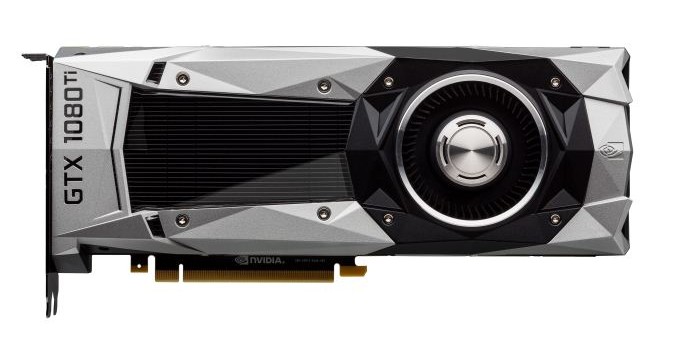
In what has now become a bona fide tradition for NVIDIA, at their GDC event this evening the company announced their next flagship video card, the GeForce GTX 1080 Ti. Something of a poorly kept secret – NVIDIA’s website accidentally spilled the beans last week – the GTX 1080 Ti is NVIDIA’s big Pascal refresh for the year, finally rolling out their most powerful consumer GPU, GP102, into a GeForce video card.

The Ti series of cards isn’t new for NVIDIA. The company has used the moniker for their higher-performance cards since the GTX 700 series back in 2013. However no two generations have really been alike. For the Pascal generation in particular, NVIDIA has taken the almighty Titan line in a more professional direction, so whereas a Ti card would be a value Titan in past generations – and this is still technically true here – it serves as more of a flagship for the Pascal generation GeForce.

At any rate, we knew that NVIDIA would release a GP102 card for the GeForce market sooner or later, and at long last it’s here. Based on a not-quite-fully-enabled GP102 GPU (more on this in a second), like its predecessors the GTX 1080 Ti is meant to serve as a mid-generation performance boost for the high-end video card market. In this case NVIDIA is aiming for what they’re calling their greatest performance jump yet for a Ti product – around 35% on average – which would translate into a sizable upgrade for GeForce GTX 980 Ti owners and others for whom GTX 1080 wasn’t the card they were looking for.

NVIDIA GPU Specification Comparison
  GTX 1080 Ti NVIDIA Titan X GTX 1080 GTX 980 Ti
CUDA Cores 3584 3584 2560 2816
Texture Units 224 224 160 176
ROPs 88 96 64 96
Core Clock ? 1417MHz 1607MHz 1000MHz
Boost Clock 1582MHz 1531MHz 1733MHz 1075MHz
TFLOPs (FMA) 11.3 TFLOPs 11 TFLOPs 9 TFLOPs 6.1 TFLOPs
Memory Clock 11Gbps GDDR5X 10Gbps GDDR5X 10Gbps GDDR5X 7Gbps GDDR5
Memory Bus Width 352-bit 384-bit 256-bit 384-bit
VRAM 11GB 12GB 8GB 6GB
FP64 1/32 1/32 1/32 1/32
FP16 (Native) 1/64 1/64 1/64 N/A
INT8 4:1 4:1 N/A N/A
TDP 250W 250W 180W 250W
GPU GP102 GP102 GP104 GM200
Transistor Count 12B 12B 7.2B 8B
Die Size 471mm2 471mm2 314mm2 601mm2
Manufacturing Process TSMC 16nm TSMC 16nm TSMC 16nm TSMC 28nm
Launch Date 03/2017 08/02/2016 05/27/2016 06/01/2015
Launch Price $699 $1200 MSRP: $599
Founders $699
$649

We’ll start as always with the GPU at the heart of the card, GP102. With NVIDIA’s business now supporting a dedicated compute GPU – the immense GP100 – GP102 doesn’t qualify for the “Big Pascal” moniker like past iterations have. But make no mistake, GP102 is quite a bit larger than the GP104 GPU at the heart of the GTX 1080, and that translates to a lot more hardware for pushing pixels.

GTX 1080 Ti ships with 28 of GP102’s 30 SMs enabled. For those of you familiar with the not-quite-consumer NVIDIA Titan X (Pascal), this is the same configuration as that card, and in fact there are a lot of similarities between those two cards. Though for this generation the situation is not going to be cut & dry as in the past; the GTX 1080 Ti is not strictly a subset of the Titan.

The big difference on the hardware front is that NVIDIA has stripped GP102 of some of its memory/ROP/L2 capacity, which was fully enabled on the Titan. Of the 96 ROPs we get 88; the last ROP block, its memory controller, and 256KB of L2 cache have been disabled.

However what the GTX 1080 Ti lacks in functional units it’s partially making up in clockspeeds, both in regards to the core and the memory. While the base clock has not yet been disclosed, the boost clock of the GTX 1080 Ti is 1582MHz, about 50MHz higher than its Titan counterpart. More significantly, the memory clock on the GTX 1080 Ti is 11Gbps, a 10% increase over the 10Gbps clock found on the Titan and the GTX 1080. Combined with the 352-bit memory bus, and we’re looking at 484GB/sec of memory bandwidth for the GTX 1080 Ti.

Taken altogether then, the GTX 1080 Ti offers just over 11.3 TFLOPS of FP32 performance. This puts the expected shader/texture performance of the card 28% ahead of the current GTX 1080, while the ROP throughput advantage stands 26%, and memory bandwidth at a much greater 51.2%. Real-world performance will of course be influenced by a blend of these factors, so I’ll be curious to see how much the major jump in memory bandwidth helps given that the ROPs aren’t seeing the same kind of throughput boost. Otherwise, relative to the NVIDIA Titan X, the two cards should end up quite close, trading blows now and then.

Speaking of the Titan, on an interesting side note, it doesn’t look like NVIDIA is going to be doing anything to hurt the compute performance of the GTX 1080 Ti to differentiate the card from the Titan, which has proven popular with GPU compute customers. Crucially, this means that the GTX 1080 Ti gets the same 4:1 INT8 performance ratio of the Titan, which is critical to the cards’ high neural networking inference performance. As a result the GTX 1080 Ti actually has slighty greater compute performance (on paper) than the Titan. And NVIDIA has been surprisingly candid in admitting that unless compute customers need the last 1GB of VRAM offered by the Titan, they’re likely going to buy the GTX 1080 Ti instead.

Speaking of memory, as I mentioned before the card will be shipping with 11 pieces of 11Gbps GDDR5X. The faster memory clock comes courtesy of a new generation of GDDR5X memory chips from partner Micron, who after a bit of a rocky start with GDDR5X development, is finally making progress on boosting memory speeds that definitely has NVIDIA pleased. Until now NVIDIA’s GPUs and boards have been ready for the higher frequency memory, and the memory is just now catching up.

Moving on, the card’s 250W TDP should not come as a surprise. This has been NVIDIA’s segment TDP of choice for Titan and Ti cards for a while now, and the GTX 1080 Ti isn’t deviating from that.

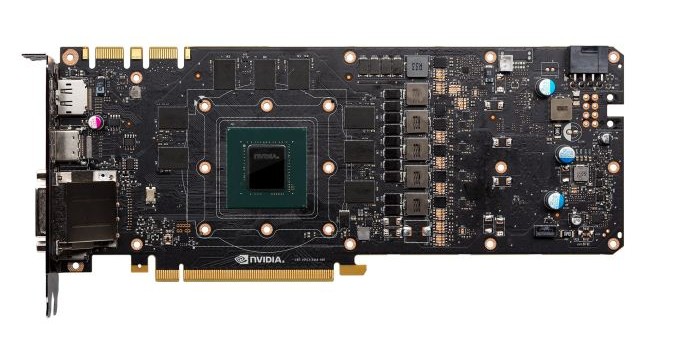
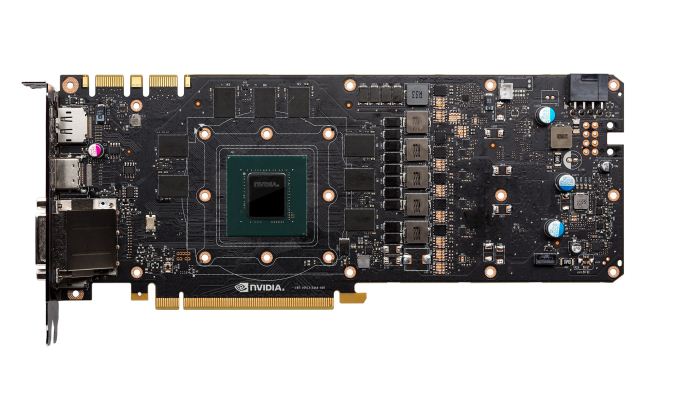
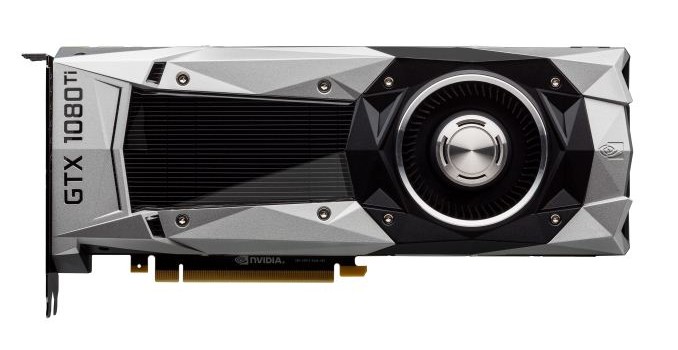
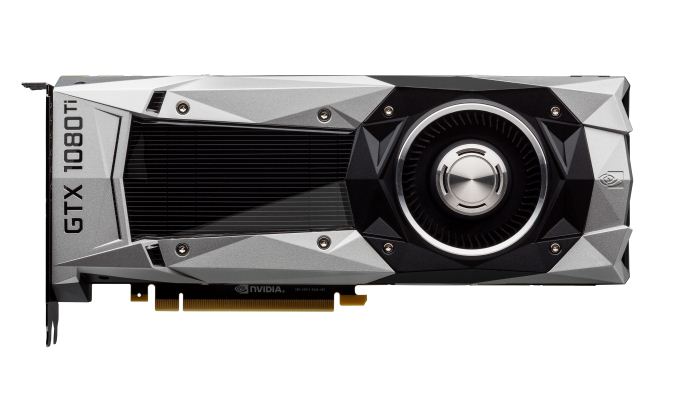
However the cooling system has seen a small but important overhaul: the DVI port is gone, opening up the card to be a full slot blower. In order to offer a DVI port along with a number of DisplayPorts/HDMI ports, NVIDIA has traditionally blocked part of the card’s second slot to house the DVI port. But with GTX 1080 Ti, that port is finally gone, and that gives the GTX 1080 Ti the interesting distinction being the first unobstructed high-end GeForce card since the GTX 580. The end result is that NVIDIA is promising a decent increase in cooling performance relative to the GTX 980 Ti and similar designs. We’ll have to see how NVIDIA has tuned the card to understand the full impact of this change, but this likely will further improve on NVIDIA’s already great acoustics.

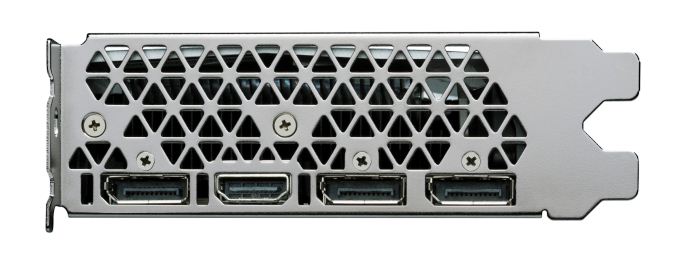
Meanwhile the end result of removing the DVI port means that the GTX 1080 Ti’s display I/O has been pared down to just a mix of HDMI and DisplayPorts. Altogether we’re looking at 3x DisplayPort 1.4 ports and 1x HDMI 2.0 port. As a consolation to owners who may still be using DVI-based monitors, the company will be including a DisplayPort to DVI adapter with the card (presumably DP to SL-DVI and not DL-DVI), but it’s clear that DVI’s days are now numbered over at NVIDIA.

Moving on, for card designs NVIDIA is once again going to be working with partners to offer a mix of reference and custom designs. The GTX 1080 Ti will initially be offered in a Founder’s Edition design, while partners are also bringing up their own semi and fully custom designs to be released a bit later. Importantly however, unlike the GTX 1080 & GTX 1070, NVIDIA has done away with the Founder’s Edition premium for the GTX 1080 Ti. The MSRP of the card will be the MSRP for both the Founder’s Edition and partners’ custom cards. This makes pricing more consistent, though I’m curious to see how this plays out with partners, as they benefitted from the premium in the form of more attractive pricing for their own cards.

Finally, speaking of pricing, let’s talk about the launch date and availability. Just in time for Pi Day, NVIDIA will be launching the card on the week of March 5th (Update: an exact date has finally been revealed: Friday, March 10th). As for pricing, long-time price watchers may be surprised. NVIDIA will be releasing the card at $699, the old price of the GTX 1080 Founder’s Edition (which itself just got a price cut). This does work out to a bit higher than the GTX 980 Ti – it launched at $649 two years ago – but it’s more aggressive than I had been expecting given the GTX 1080’s launch price last year.

In any case, at this time the high-end video card market is NVIDIA’s to command. AMD doesn’t offer anything competitive with the GTX 1070 and above, so the GTX 1080 Ti will stand alone at the top of the consumer video card market. Long-term here AMD isn’t hesitating to note their work on Vega, but that’s a bridge to be crossed only once those cards get here.

NVIDIA Unveils GeForce GTX 1080 Ti: Available Week of March 5th for $699

NVIDIA Unveils GeForce GTX 1080 Ti: Available Week of March 5th for $699

In what has now become a bona fide tradition for NVIDIA, at their GDC event this evening the company announced their next flagship video card, the GeForce GTX 1080 Ti. Something of a poorly kept secret – NVIDIA’s website accidentally spilled the beans last week – the GTX 1080 Ti is NVIDIA’s big Pascal refresh for the year, finally rolling out their most powerful consumer GPU, GP102, into a GeForce video card.

The Ti series of cards isn’t new for NVIDIA. The company has used the moniker for their higher-performance cards since the GTX 700 series back in 2013. However no two generations have really been alike. For the Pascal generation in particular, NVIDIA has taken the almighty Titan line in a more professional direction, so whereas a Ti card would be a value Titan in past generations – and this is still technically true here – it serves as more of a flagship for the Pascal generation GeForce.

At any rate, we knew that NVIDIA would release a GP102 card for the GeForce market sooner or later, and at long last it’s here. Based on a not-quite-fully-enabled GP102 GPU (more on this in a second), like its predecessors the GTX 1080 Ti is meant to serve as a mid-generation performance boost for the high-end video card market. In this case NVIDIA is aiming for what they’re calling their greatest performance jump yet for a Ti product – around 35% on average – which would translate into a sizable upgrade for GeForce GTX 980 Ti owners and others for whom GTX 1080 wasn’t the card they were looking for.

NVIDIA GPU Specification Comparison
  GTX 1080 Ti NVIDIA Titan X GTX 1080 GTX 980 Ti
CUDA Cores 3584 3584 2560 2816
Texture Units 224 224 160 176
ROPs 88 96 64 96
Core Clock ? 1417MHz 1607MHz 1000MHz
Boost Clock 1582MHz 1531MHz 1733MHz 1075MHz
TFLOPs (FMA) 11.3 TFLOPs 11 TFLOPs 9 TFLOPs 6.1 TFLOPs
Memory Clock 11Gbps GDDR5X 10Gbps GDDR5X 10Gbps GDDR5X 7Gbps GDDR5
Memory Bus Width 352-bit 384-bit 256-bit 384-bit
VRAM 11GB 12GB 8GB 6GB
FP64 1/32 1/32 1/32 1/32
FP16 (Native) 1/64 1/64 1/64 N/A
INT8 4:1 4:1 N/A N/A
TDP 250W 250W 180W 250W
GPU GP102 GP102 GP104 GM200
Transistor Count 12B 12B 7.2B 8B
Die Size 471mm2 471mm2 314mm2 601mm2
Manufacturing Process TSMC 16nm TSMC 16nm TSMC 16nm TSMC 28nm
Launch Date 03/2017 08/02/2016 05/27/2016 06/01/2015
Launch Price $699 $1200 MSRP: $599
Founders $699
$649

We’ll start as always with the GPU at the heart of the card, GP102. With NVIDIA’s business now supporting a dedicated compute GPU – the immense GP100 – GP102 doesn’t qualify for the “Big Pascal” moniker like past iterations have. But make no mistake, GP102 is quite a bit larger than the GP104 GPU at the heart of the GTX 1080, and that translates to a lot more hardware for pushing pixels.

GTX 1080 Ti ships with 28 of GP102’s 30 SMs enabled. For those of you familiar with the not-quite-consumer NVIDIA Titan X (Pascal), this is the same configuration as that card, and in fact there are a lot of similarities between those two cards. Though for this generation the situation is not going to be cut & dry as in the past; the GTX 1080 Ti is not strictly a subset of the Titan.

The big difference on the hardware front is that NVIDIA has stripped GP102 of some of its memory/ROP/L2 capacity, which was fully enabled on the Titan. Of the 96 ROPs we get 88; the last ROP block, its memory controller, and 256KB of L2 cache have been disabled.

However what the GTX 1080 Ti lacks in functional units it’s partially making up in clockspeeds, both in regards to the core and the memory. While the base clock has not yet been disclosed, the boost clock of the GTX 1080 Ti is 1582MHz, about 50MHz higher than its Titan counterpart. More significantly, the memory clock on the GTX 1080 Ti is 11Gbps, a 10% increase over the 10Gbps clock found on the Titan and the GTX 1080. Combined with the 352-bit memory bus, and we’re looking at 484GB/sec of memory bandwidth for the GTX 1080 Ti.

Taken altogether then, the GTX 1080 Ti offers just over 11.3 TFLOPS of FP32 performance. This puts the expected shader/texture performance of the card 28% ahead of the current GTX 1080, while the ROP throughput advantage stands 26%, and memory bandwidth at a much greater 51.2%. Real-world performance will of course be influenced by a blend of these factors, so I’ll be curious to see how much the major jump in memory bandwidth helps given that the ROPs aren’t seeing the same kind of throughput boost. Otherwise, relative to the NVIDIA Titan X, the two cards should end up quite close, trading blows now and then.

Speaking of the Titan, on an interesting side note, it doesn’t look like NVIDIA is going to be doing anything to hurt the compute performance of the GTX 1080 Ti to differentiate the card from the Titan, which has proven popular with GPU compute customers. Crucially, this means that the GTX 1080 Ti gets the same 4:1 INT8 performance ratio of the Titan, which is critical to the cards’ high neural networking inference performance. As a result the GTX 1080 Ti actually has slighty greater compute performance (on paper) than the Titan. And NVIDIA has been surprisingly candid in admitting that unless compute customers need the last 1GB of VRAM offered by the Titan, they’re likely going to buy the GTX 1080 Ti instead.

Speaking of memory, as I mentioned before the card will be shipping with 11 pieces of 11Gbps GDDR5X. The faster memory clock comes courtesy of a new generation of GDDR5X memory chips from partner Micron, who after a bit of a rocky start with GDDR5X development, is finally making progress on boosting memory speeds that definitely has NVIDIA pleased. Until now NVIDIA’s GPUs and boards have been ready for the higher frequency memory, and the memory is just now catching up.

Moving on, the card’s 250W TDP should not come as a surprise. This has been NVIDIA’s segment TDP of choice for Titan and Ti cards for a while now, and the GTX 1080 Ti isn’t deviating from that.

However the cooling system has seen a small but important overhaul: the DVI port is gone, opening up the card to be a full slot blower. In order to offer a DVI port along with a number of DisplayPorts/HDMI ports, NVIDIA has traditionally blocked part of the card’s second slot to house the DVI port. But with GTX 1080 Ti, that port is finally gone, and that gives the GTX 1080 Ti the interesting distinction being the first unobstructed high-end GeForce card since the GTX 580. The end result is that NVIDIA is promising a decent increase in cooling performance relative to the GTX 980 Ti and similar designs. We’ll have to see how NVIDIA has tuned the card to understand the full impact of this change, but this likely will further improve on NVIDIA’s already great acoustics.

Meanwhile the end result of removing the DVI port means that the GTX 1080 Ti’s display I/O has been pared down to just a mix of HDMI and DisplayPorts. Altogether we’re looking at 3x DisplayPort 1.4 ports and 1x HDMI 2.0 port. As a consolation to owners who may still be using DVI-based monitors, the company will be including a DisplayPort to DVI adapter with the card (presumably DP to SL-DVI and not DL-DVI), but it’s clear that DVI’s days are now numbered over at NVIDIA.

Moving on, for card designs NVIDIA is once again going to be working with partners to offer a mix of reference and custom designs. The GTX 1080 Ti will initially be offered in a Founder’s Edition design, while partners are also bringing up their own semi and fully custom designs to be released a bit later. Importantly however, unlike the GTX 1080 & GTX 1070, NVIDIA has done away with the Founder’s Edition premium for the GTX 1080 Ti. The MSRP of the card will be the MSRP for both the Founder’s Edition and partners’ custom cards. This makes pricing more consistent, though I’m curious to see how this plays out with partners, as they benefitted from the premium in the form of more attractive pricing for their own cards.

Finally, speaking of pricing, let’s talk about the launch date and availability. Just in time for Pi Day, NVIDIA will be launching the card on the week of March 5th (Update: an exact date has finally been revealed: Friday, March 10th). As for pricing, long-time price watchers may be surprised. NVIDIA will be releasing the card at $699, the old price of the GTX 1080 Founder’s Edition (which itself just got a price cut). This does work out to a bit higher than the GTX 980 Ti – it launched at $649 two years ago – but it’s more aggressive than I had been expecting given the GTX 1080’s launch price last year.

In any case, at this time the high-end video card market is NVIDIA’s to command. AMD doesn’t offer anything competitive with the GTX 1070 and above, so the GTX 1080 Ti will stand alone at the top of the consumer video card market. Long-term here AMD isn’t hesitating to note their work on Vega, but that’s a bridge to be crossed only once those cards get here.

GeForce GTX 1080 Price Cut to $499; NVIDIA Partners To Begin Selling 10-Series Cards With Faster Memory

GeForce GTX 1080 Price Cut to $499; NVIDIA Partners To Begin Selling 10-Series Cards With Faster Memory

Along with this evening’s new of the GeForce GTX 1080 Ti, NVIDIA has a couple other product announcements of sorts. First off, starting tomorrow, the GeForce GTX 1080 is getting an official $100 price cut, bringing the card’s price to $499. Since the card launched back in May at $599, prices for the card have held fairly steady around that MSRP. So once this price cut goes into effect, it will have a significant effect on card prices. Though it should be noted that the price here is the base price for vendor custom cards; the Founder’s Edition card was not mentioned. If it maintains its $100 premium, then that card would be coming down to $599.

Update: The new prices for both the GTX 1080 FE and GTX 1070 FE have been published by NVIDIA. The GTX 1080 FE is getting a steeper-than-MSRP cut of $150, bringing it to $549 and reducing the FE premium to $50. Meanwhile the GTX 1070 FE is getting a $50 price cut, moving it to $399.

As for the second announcement of the evening, NVIDIA has announced that their partners are going to be selling GeForce GTX 1080 and GTX 1060 6GB cards with faster memory. Partners will now have the option to outfit these cards with 11Gbps GDDR5X and 9Gbps GDDR5 respectively, to be sold as factory overclocked cards.

To understand the change, let’s talk briefly about how board partners work. Depending on the partner, the parts, and the designs, partners can buy anything from just the GPU, to the GPU and RAM, up to a fully assembled board (the Founder’s Edition). With the release of faster GDDR5X and GDDR5 bins, NVIDIA is now giving their board partners an additional option to use these faster memories.

GeForce 10 Series Memory Clocks
  GTX 1080 GTX 1060
Official Memory Clock 10Gbps GDDR5X 8Gbps GDDR5
New “Overclock” Memory Clock 11Gbps GDDR5X 9Gbps GDDR5

To be clear, NVIDIA isn’t releasing a new formal SKU for either card. Nor are the cards’ official specifications changing. However, if partners would like, they can now buy higher speed memory from NVIDIA for use in their cards. The resulting products will, in turn, be sold as factory overclocked cards, giving partners more configuration options for their factory overclocked SKUs.

As factory overclocking has always been done at the partner level, this doesn’t change the nature of the practice. Partners have, can, and will sell cards with factory overclocked GPUs and memory, with or without NVIDIA’s help. However with NVIDIA’s official specs already driving the memory clocks so hard, there hasn’t been much headroom left for partners to play with; factory overclocked GTX 1080 cards don’t ship much above 10.2Gbps. So the introduction of faster memory finally opens up greater memory overclocking to the partners.