Vik


Microsoft Announces Q2 FY 2017 Results

Microsoft Announces Q2 FY 2017 Results

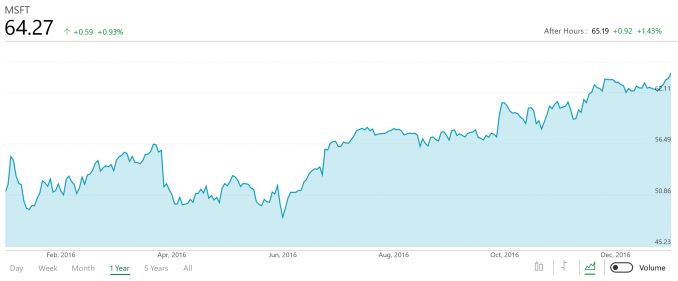
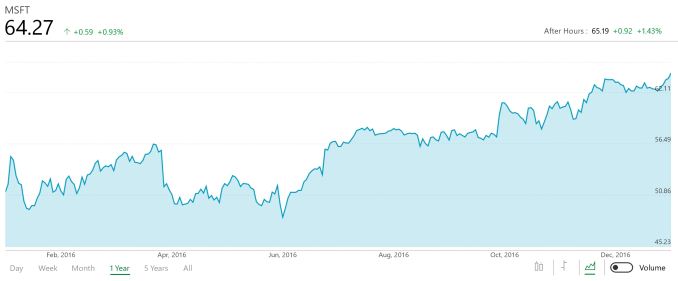
This afternoon, Microsoft had its earnings announcement for the second quarter of their 2017 fiscal year. The results for this quarter are the first to contain results from their acquisition of Linkedin, which Microsoft purchased for $26.2 billion. For this quarter, the Non-GAAP results reflect an exclusion of the LinkedIn results, to better compare the rest of Microsoft’s earnings year-over-year, in addition to another set of Non-GAAP results which do include the LinkedIn results.

But on a GAAP basis, the numbers from LinkedIn are reported. Looking at the GAAP results, Microsoft had revenue for Q2 of $24.1 billion, up 1% from a year ago. Gross margin was 58.9%, up 0.4%, and operating income came in at $6.2 billion, up 3%. Net income for the quarter was $5.2 billion, up 4%, and earnings per share were $0.66, up 6%.

Microsoft Q2 2017 Financial Results (GAAP)
  Q2’2017 Q1’2017 Q2’2016
Revenue (in Billions USD) $24.090 $20.453 $23.796
Operating Income (in Billions USD) $6.177 $5.225 $6.026
Gross Margin (in Billions USD) $14.189 $12.609 $13.924
Margins 58.9% 61.6% 58.5%
Net Income (in Billions USD) $5.200 $4.690 $5.018
Basic Earnings per Share (in USD) $0.66 $0.60 $0.62

Microsoft typically defers the revenue from Windows 10 licenses over the life of the computing device, to adhere to current revenue recognition accounting guidance. Previously, a sale of Windows would be a sale of Windows, with all of the revenue for that license being accounted for right away. Microsoft is moving its guidance on this to recognize the revenue at the time of billing, rather than over the life of the device, but has not yet adopted this accounting practice, so the Non-GAAP results this, with $2.0 billion in Windows 10 revenue deferrals.

On a Non-GAAP basis, revenue was $26.1 billion, up 2%, or 4% in constant currency (CC – excluding the effect of foreign currency rate fluctuations). Excluding LinkedIn resulted in $25.8 billion, up 1%, or 3% CC. Gross margin for the quarter was 62%, up 0.7%, and excluding LinkedIn, it was 62.1%, up 0.8%. Operating income for the quarter was $8.2 billion, up 5%, and 8% CC, and excluding LinkedIn resulted in $8.4 billion, up 8% and 11% CC. Net income was $6.5 billion, up 6%, and 10% CC, with the exclusion results of $6.6 billion. Earnings per share came in at $0.83, up 9%, and 13% CC, and the results were $0.84, up 11%, and 15% CC, if you exclude LinkedIn.

Luckily, Microsoft is not expecting to break out the LinkedIn results in Non-GAAP results in the future, but for this quarter, there is quite a few extra numbers to evaluate. LinkedIn itself had $228 million in revenue for Q4, with an operating loss of $201 million, with the sale closing on December 8, 2016.

 Microsoft has shuffled their product groups around a bit for reporting, and they now have three groups named Productivity and Business Processes, Intelligent Cloud, and More Personal Computing. For those that are interested, LinkedIn results will be in the first group.

Productivity and Business Processes is a big part of Microsoft, with revenues of $7.38 billion, up 10%, but this is a high margin business, featuring Office commercial and cloud products, Office 365 commercial and consumer, as well as Dynamics and now LinkedIn. This segment had an operating income of $3.26 billion for the quarter, down 1%. Microsoft gained 37% more Office 365 commercial seats this quarter, and 900,000 more Office 365 consumer subscribers. Microsoft doesn’t always give out the total seats for Office 365, but they did announce they were over 70 million seats in May of 2016, and Q2, so expect them to be closing in on 100 million seats. Dynamics is another key to this group, and the Dynamics products had 7% growth year-over-year, with Dynamics 365 growing over 200% year-over-year as people switch to the cloud version of Dynamics.

Intelligent Cloud is Microsoft’s server products, both on premise and cloud products. This segment had revenues of $6.86 billion, up 8% from a year ago. Operating income for this segment was $2.4 billion, down 7% from a year ago. Server products and cloud services saw revenue grow 12% year-over-year, but enterprise services fell 4%.Azure revenue was up 93% compared to the same time last year, and Microsoft has seen over double the use of Azure compute.

More Personal Computing continued to have the highest revenue per segment, at $11.82 billion, but it fell 5% compared to the same time last year. Margins are also not as high in this segment, with an operating income of $2.5 billion for the quarter. Microsoft has seen growth in its key areas though, despite the dip in revenue. Windows OEM Pro revenue was up 6%, and non-Pro was up 5%. Windows commercial products and cloud services had revenue gains of 5%. Surface revenue was down 2%, which is actually quite good considering Microsoft had launched the Surface Pro 4 and Surface Book in Q2 2016, so being almost flat year-over-year, when the product has not been refreshed, is decent. Surface had revenue of $1.3 billion for the quarter. Gaming revenue for the quarter was down 3%, to $3.595 billion. Lower console pricing, and lower console sales, contributed to the decline. Microsoft has found strong growth in their digital ecosystem though, with Xbox software and services growing revenue by 18%, and for the first time, digital transactions reached $1 billion for the quarter. Xbox Live active users grew 15% to 55 million as well, across all of Microsoft’s platforms. Search revenue was also up 10%.

The big hit to More Personal Computing continues to be the loss in revenue from the phone division, which was shuttered. Phone revenue was down 81% as Microsoft phases out of this market.

Microsoft Q2 2017 Financial Results (GAAP)
  Productivity and Business Processes Intelligent Cloud More Personal Computing
Revenue (in Billions USD) $7.38 $6.86 $11.82
Operating Income (in Billions USD) $3.00 $2.40 $2.50
Revenue Change YoY +10%, +12% CC +8%, +10% CC -5%, -4% CC
Operating Income Change YoY -1%, +1% CC -7%, -4% CC +33%, +37% CC

Overall it was a strong outing by Microsoft. They continue to advance their cloud platforms, and recently announced Microsoft Teams as a Slack competitor which is bundled with Office 365. The competitive pricing is likely going to win them a lot of customers with this new tool, and it will just be part of Office 365. They have continued to add value to this, on both the commercial and consumer lineup, and their work here has paid off well. Their move to the cloud has mostly overshadowed the client computing side, as far as on the financials, but More Personal Computing also had some strong growth, if you exclude the phones.

Source: Microsoft Investor Relations

Microsoft Announces Q2 FY 2017 Results

Microsoft Announces Q2 FY 2017 Results

This afternoon, Microsoft had its earnings announcement for the second quarter of their 2017 fiscal year. The results for this quarter are the first to contain results from their acquisition of Linkedin, which Microsoft purchased for $26.2 billion. For this quarter, the Non-GAAP results reflect an exclusion of the LinkedIn results, to better compare the rest of Microsoft’s earnings year-over-year, in addition to another set of Non-GAAP results which do include the LinkedIn results.

But on a GAAP basis, the numbers from LinkedIn are reported. Looking at the GAAP results, Microsoft had revenue for Q2 of $24.1 billion, up 1% from a year ago. Gross margin was 58.9%, up 0.4%, and operating income came in at $6.2 billion, up 3%. Net income for the quarter was $5.2 billion, up 4%, and earnings per share were $0.66, up 6%.

Microsoft Q2 2017 Financial Results (GAAP)
  Q2’2017 Q1’2017 Q2’2016
Revenue (in Billions USD) $24.090 $20.453 $23.796
Operating Income (in Billions USD) $6.177 $5.225 $6.026
Gross Margin (in Billions USD) $14.189 $12.609 $13.924
Margins 58.9% 61.6% 58.5%
Net Income (in Billions USD) $5.200 $4.690 $5.018
Basic Earnings per Share (in USD) $0.66 $0.60 $0.62

Microsoft typically defers the revenue from Windows 10 licenses over the life of the computing device, to adhere to current revenue recognition accounting guidance. Previously, a sale of Windows would be a sale of Windows, with all of the revenue for that license being accounted for right away. Microsoft is moving its guidance on this to recognize the revenue at the time of billing, rather than over the life of the device, but has not yet adopted this accounting practice, so the Non-GAAP results this, with $2.0 billion in Windows 10 revenue deferrals.

On a Non-GAAP basis, revenue was $26.1 billion, up 2%, or 4% in constant currency (CC – excluding the effect of foreign currency rate fluctuations). Excluding LinkedIn resulted in $25.8 billion, up 1%, or 3% CC. Gross margin for the quarter was 62%, up 0.7%, and excluding LinkedIn, it was 62.1%, up 0.8%. Operating income for the quarter was $8.2 billion, up 5%, and 8% CC, and excluding LinkedIn resulted in $8.4 billion, up 8% and 11% CC. Net income was $6.5 billion, up 6%, and 10% CC, with the exclusion results of $6.6 billion. Earnings per share came in at $0.83, up 9%, and 13% CC, and the results were $0.84, up 11%, and 15% CC, if you exclude LinkedIn.

Luckily, Microsoft is not expecting to break out the LinkedIn results in Non-GAAP results in the future, but for this quarter, there is quite a few extra numbers to evaluate. LinkedIn itself had $228 million in revenue for Q4, with an operating loss of $201 million, with the sale closing on December 8, 2016.

 Microsoft has shuffled their product groups around a bit for reporting, and they now have three groups named Productivity and Business Processes, Intelligent Cloud, and More Personal Computing. For those that are interested, LinkedIn results will be in the first group.

Productivity and Business Processes is a big part of Microsoft, with revenues of $7.38 billion, up 10%, but this is a high margin business, featuring Office commercial and cloud products, Office 365 commercial and consumer, as well as Dynamics and now LinkedIn. This segment had an operating income of $3.26 billion for the quarter, down 1%. Microsoft gained 37% more Office 365 commercial seats this quarter, and 900,000 more Office 365 consumer subscribers. Microsoft doesn’t always give out the total seats for Office 365, but they did announce they were over 70 million seats in May of 2016, and Q2, so expect them to be closing in on 100 million seats. Dynamics is another key to this group, and the Dynamics products had 7% growth year-over-year, with Dynamics 365 growing over 200% year-over-year as people switch to the cloud version of Dynamics.

Intelligent Cloud is Microsoft’s server products, both on premise and cloud products. This segment had revenues of $6.86 billion, up 8% from a year ago. Operating income for this segment was $2.4 billion, down 7% from a year ago. Server products and cloud services saw revenue grow 12% year-over-year, but enterprise services fell 4%.Azure revenue was up 93% compared to the same time last year, and Microsoft has seen over double the use of Azure compute.

More Personal Computing continued to have the highest revenue per segment, at $11.82 billion, but it fell 5% compared to the same time last year. Margins are also not as high in this segment, with an operating income of $2.5 billion for the quarter. Microsoft has seen growth in its key areas though, despite the dip in revenue. Windows OEM Pro revenue was up 6%, and non-Pro was up 5%. Windows commercial products and cloud services had revenue gains of 5%. Surface revenue was down 2%, which is actually quite good considering Microsoft had launched the Surface Pro 4 and Surface Book in Q2 2016, so being almost flat year-over-year, when the product has not been refreshed, is decent. Surface had revenue of $1.3 billion for the quarter. Gaming revenue for the quarter was down 3%, to $3.595 billion. Lower console pricing, and lower console sales, contributed to the decline. Microsoft has found strong growth in their digital ecosystem though, with Xbox software and services growing revenue by 18%, and for the first time, digital transactions reached $1 billion for the quarter. Xbox Live active users grew 15% to 55 million as well, across all of Microsoft’s platforms. Search revenue was also up 10%.

The big hit to More Personal Computing continues to be the loss in revenue from the phone division, which was shuttered. Phone revenue was down 81% as Microsoft phases out of this market.

Microsoft Q2 2017 Financial Results (GAAP)
  Productivity and Business Processes Intelligent Cloud More Personal Computing
Revenue (in Billions USD) $7.38 $6.86 $11.82
Operating Income (in Billions USD) $3.00 $2.40 $2.50
Revenue Change YoY +10%, +12% CC +8%, +10% CC -5%, -4% CC
Operating Income Change YoY -1%, +1% CC -7%, -4% CC +33%, +37% CC

Overall it was a strong outing by Microsoft. They continue to advance their cloud platforms, and recently announced Microsoft Teams as a Slack competitor which is bundled with Office 365. The competitive pricing is likely going to win them a lot of customers with this new tool, and it will just be part of Office 365. They have continued to add value to this, on both the commercial and consumer lineup, and their work here has paid off well. Their move to the cloud has mostly overshadowed the client computing side, as far as on the financials, but More Personal Computing also had some strong growth, if you exclude the phones.

Source: Microsoft Investor Relations
Intel Announces Record Quarterly Revenue And Full-Year Revenue For Q4'2016

Intel Announces Record Quarterly Revenue And Full-Year Revenue For Q4’2016

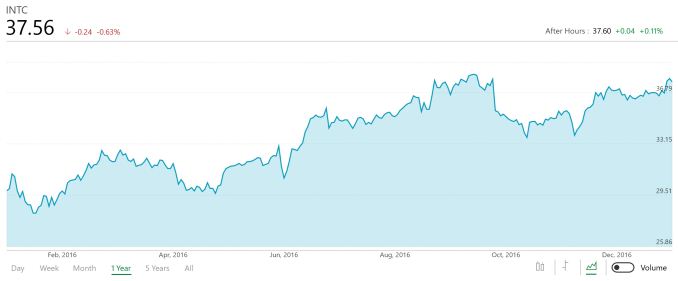
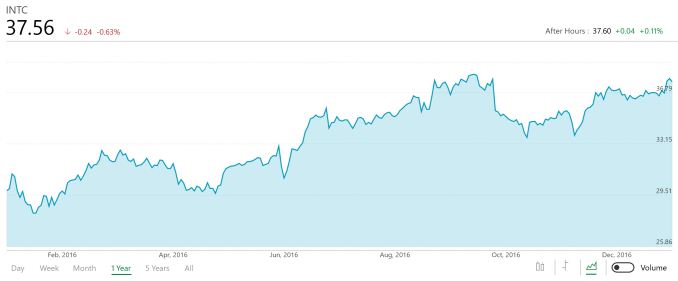
This afternoon, Intel announced their quarterly earnings for the fourth quarter of their 2016 fiscal year. Intel set a new record for revenue for this quarter, coming in at $16.4 billion. This is up 10% from a year ago. For the year, Intel brought in $59.4 billion, up 7% from their 2015 results. Intel’s gross margin fell 1.7 points to 60.9%, and they had an operating income of $12.9 billion, which is down 8% from a year ago. Net income was down 10% to $10.3 billion, and earnings per share fell 9% to $2.12.

Intel also reports Non-GAAP results, which exclude several expenditures, such as acquisition-related adjustments, write-downs, and the like. On a Non-GAAP basis, Intel had a gross margin of 63.1%, down 1.7 points, an operating income up 11% to $4.9 billion, and a net income up 4% to $3.9 billion. Non-GAAP earnings per share were up 4% to $0.79.

Intel Q4 2016 Financial Results (GAAP)
  Q4’2016 Q3’2016 Q4’2015
Revenue $16.4B $15.8B $14.9B
Operating Income $4.5B $4.5B $4.3B
Net Income $3.6B $3.4B $3.6B
Gross Margin 60.9% 63.3% 62.6%
Client Computing Group Revenue $9.1B +2.2% +3%
Data Center Group Revenue $4.7B +4.4% +3%
Internet of Things Revenue $726M +5.3% +5%
Non-Volatile Memory Solutions Group $816M +26% +26%
Intel Security Group $550M +2.4% +2%
Programmable Solutions Group $420M -9.7% -1%
All Other Revenue $65M +47.7% +10%

The gross margin impact is being attributed to a few things. Warranty and IP charges increased, as did spending on factory start-ups, due to the move to 10 nm coming this year, Client Computer Group non-platform costs, and the Non-Volatile Memory Solutions Group margins. Intel very much likes to keep their margins up above 60%, and for the moment they are still there even with these extra costs.

Intel breaks the company down into several groups. The main group is the Client Computing Group, which as the name implies, provides CPUs, SoCs, and wireless and wired connectivity products destined for PCs. Although the PC market is still down, this group had revenue for the year of $32.9 billion, which is up 2%, but platform volume is down 10%. Platform selling prices were up 11%, which makes up the difference. For just the last quarter, Client Computing Group had revenues of $9.1 billion, up 4% from a year ago. Platform volumes were down 7%, offset by selling prices up 7%. Desktop platform volume was down 9%, while notebook volumes were flat. Desktop average selling price (ASP) was up 2%, and notebook ASP was up 3%. Considering the down market, Intel continues to drive revenue here. While good for them, it means prices are high, and some competition in this space might help out the consumer.

The Data Center Group also had a strong quarter, and year. For the year, they had revenue of $17.2 billion, up from $16.0 billion a year ago. For the year, Intel saw volumes up 3% and ASP up 4%. For the most recent quarter, the Data Center Group had revenues of $4.7 billion, which was up 3%. Platform volumes were down 3%, with ASP up 6%.

Intel is slowly building it’s Internet of Things group, which had revenues for the year at $2.6 billion, up from $2.3 a year ago. Revenue for this quarter was up 5% to $726 million. The Non-Volatile Memory Solutions group had revenues for the quarter of $816 million, up 26% from a year ago, and a full-year revenue of $2.58 billion, down slightly from the $2.6 billion a year ago. Programmable Solutions is new for Intel this year, with the purchase of Altera, and this segment had revenue of $420 million for this quarter, and $1.7 billion for the year. All other revenue was $65 million for the quarter, up from $59 million a year ago.

2016 was a strong year for Intel, although it was not without its challenges. Earlier this year, Intel decided to get out of the mobile SoC space completely, abandoning it’s Atom architecture for this segment. Atom does live on for low power PCs, but any of the tablets that used the Cherry Trail Atom have found themselves without a new CPU to move to. The death of Tick-Tock also had its first new entrant in Kaby Lake, although you could easily argue Devil’s Canyon was a similar situation. But they have several new exciting technologies coming to market as well, such as 3D X-Point, and of course the expected launch of their 10 nm CPUs later this year.

Looking forward to Q1 2017, Intel is forecasting a midpoint revenue range of $14.8 billion, with margin estimates at 62%.

Source: Intel Investor Relations

Intel Announces Record Quarterly Revenue And Full-Year Revenue For Q4'2016

Intel Announces Record Quarterly Revenue And Full-Year Revenue For Q4’2016

This afternoon, Intel announced their quarterly earnings for the fourth quarter of their 2016 fiscal year. Intel set a new record for revenue for this quarter, coming in at $16.4 billion. This is up 10% from a year ago. For the year, Intel brought in $59.4 billion, up 7% from their 2015 results. Intel’s gross margin fell 1.7 points to 60.9%, and they had an operating income of $12.9 billion, which is down 8% from a year ago. Net income was down 10% to $10.3 billion, and earnings per share fell 9% to $2.12.

Intel also reports Non-GAAP results, which exclude several expenditures, such as acquisition-related adjustments, write-downs, and the like. On a Non-GAAP basis, Intel had a gross margin of 63.1%, down 1.7 points, an operating income up 11% to $4.9 billion, and a net income up 4% to $3.9 billion. Non-GAAP earnings per share were up 4% to $0.79.

Intel Q4 2016 Financial Results (GAAP)
  Q4’2016 Q3’2016 Q4’2015
Revenue $16.4B $15.8B $14.9B
Operating Income $4.5B $4.5B $4.3B
Net Income $3.6B $3.4B $3.6B
Gross Margin 60.9% 63.3% 62.6%
Client Computing Group Revenue $9.1B +2.2% +3%
Data Center Group Revenue $4.7B +4.4% +3%
Internet of Things Revenue $726M +5.3% +5%
Non-Volatile Memory Solutions Group $816M +26% +26%
Intel Security Group $550M +2.4% +2%
Programmable Solutions Group $420M -9.7% -1%
All Other Revenue $65M +47.7% +10%

The gross margin impact is being attributed to a few things. Warranty and IP charges increased, as did spending on factory start-ups, due to the move to 10 nm coming this year, Client Computer Group non-platform costs, and the Non-Volatile Memory Solutions Group margins. Intel very much likes to keep their margins up above 60%, and for the moment they are still there even with these extra costs.

Intel breaks the company down into several groups. The main group is the Client Computing Group, which as the name implies, provides CPUs, SoCs, and wireless and wired connectivity products destined for PCs. Although the PC market is still down, this group had revenue for the year of $32.9 billion, which is up 2%, but platform volume is down 10%. Platform selling prices were up 11%, which makes up the difference. For just the last quarter, Client Computing Group had revenues of $9.1 billion, up 4% from a year ago. Platform volumes were down 7%, offset by selling prices up 7%. Desktop platform volume was down 9%, while notebook volumes were flat. Desktop average selling price (ASP) was up 2%, and notebook ASP was up 3%. Considering the down market, Intel continues to drive revenue here. While good for them, it means prices are high, and some competition in this space might help out the consumer.

The Data Center Group also had a strong quarter, and year. For the year, they had revenue of $17.2 billion, up from $16.0 billion a year ago. For the year, Intel saw volumes up 3% and ASP up 4%. For the most recent quarter, the Data Center Group had revenues of $4.7 billion, which was up 3%. Platform volumes were down 3%, with ASP up 6%.

Intel is slowly building it’s Internet of Things group, which had revenues for the year at $2.6 billion, up from $2.3 a year ago. Revenue for this quarter was up 5% to $726 million. The Non-Volatile Memory Solutions group had revenues for the quarter of $816 million, up 26% from a year ago, and a full-year revenue of $2.58 billion, down slightly from the $2.6 billion a year ago. Programmable Solutions is new for Intel this year, with the purchase of Altera, and this segment had revenue of $420 million for this quarter, and $1.7 billion for the year. All other revenue was $65 million for the quarter, up from $59 million a year ago.

2016 was a strong year for Intel, although it was not without its challenges. Earlier this year, Intel decided to get out of the mobile SoC space completely, abandoning it’s Atom architecture for this segment. Atom does live on for low power PCs, but any of the tablets that used the Cherry Trail Atom have found themselves without a new CPU to move to. The death of Tick-Tock also had its first new entrant in Kaby Lake, although you could easily argue Devil’s Canyon was a similar situation. But they have several new exciting technologies coming to market as well, such as 3D X-Point, and of course the expected launch of their 10 nm CPUs later this year.

Looking forward to Q1 2017, Intel is forecasting a midpoint revenue range of $14.8 billion, with margin estimates at 62%.

Source: Intel Investor Relations