Vik


Digital Storm BOLT X: A Kaby Lake-Based SFF PC with Custom Liquid Cooling
Digital Storm BOLT X: A Kaby Lake-Based SFF PC with Custom Liquid Cooling

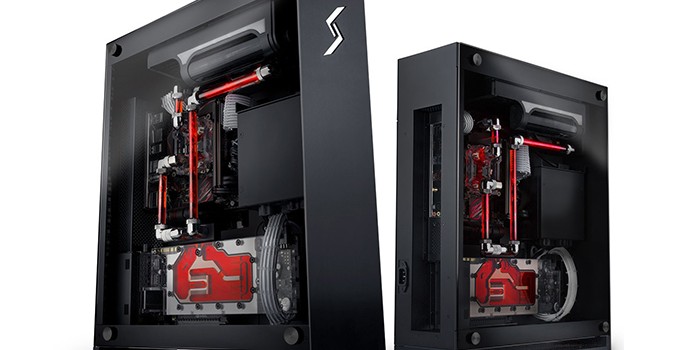
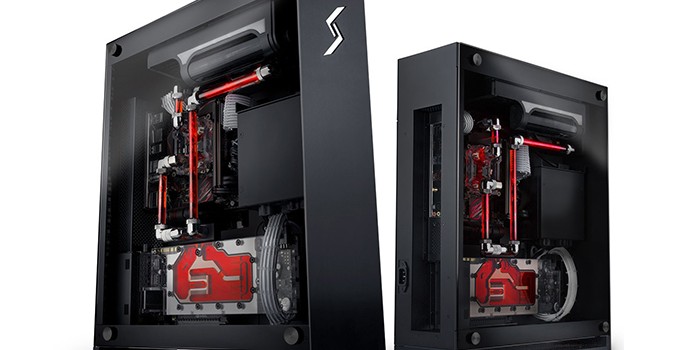
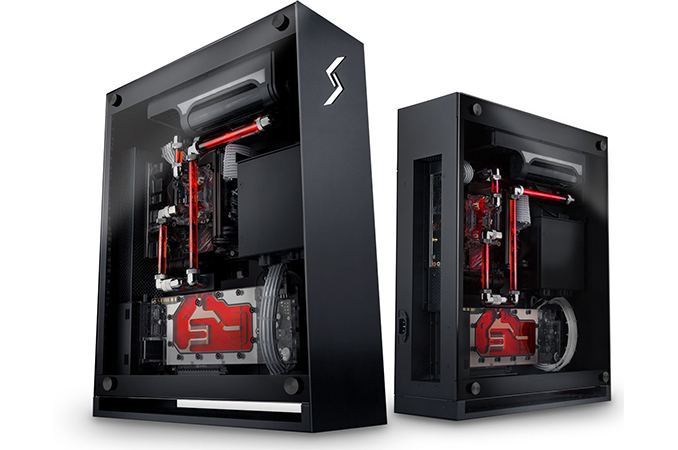
At CES this year, Digital Storm introduced its new compact PC design that weds a small form-factor with a specially-designed liquid cooling system. The BOLT X is designed to enable a significant overclocking potential of components even in a space-constrained form-factor, and it should benefit those who need to have maximum performance in a minimum footprint.

Over the past few years we have observed the culmination of several separate trends: compact computers with liquid cooling, with style and with serious overclocking capabilities. The new BOLT X from Digital Storm is the company’s next-generation SFF PC with a HydroLux LCS that features a number of upgrades aimed to advance its cooling performance  as well as improve the system in general. First off, the BOLT X has two 140-mm top mounted fans (up from two 120-mm fans in case of the BOLT 3, the predecessor). Second, it comes with an integrated stand that helps to minimize the amount of dust it sucks in through openings for cool air on the bottom. Third, it features a simplified open layout to make it easier to upgrade and service the PC.
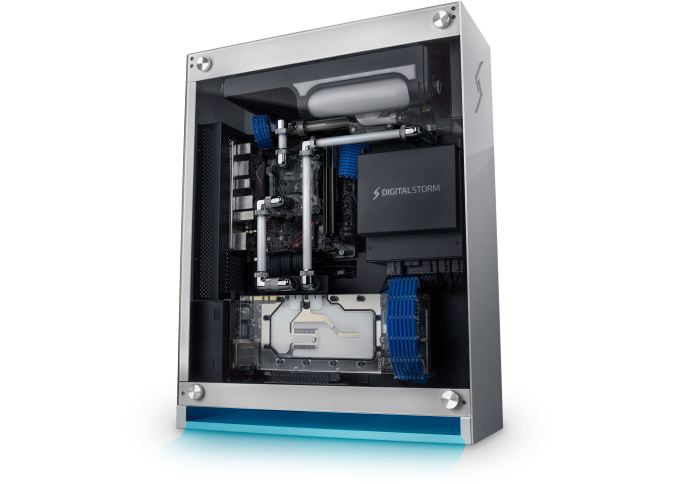
Just like the predecessors, the Digital Storm BOLT X can accommodate a Mini-ITX motherboard and one graphics card located beneath the mainboard to ensure proper cooling and compatibility with custom cards that have tall PCBs. With the BOLT X, Digital Storm will offer the Intel Z270-based platforms (so, they will support technologies like NVMe, Thunderbolt 3, USB 3.1 Gen 2, 802.11 ac Wi-Fi, etc.) along with various Intel Core processors powered by the Kaby Lake microarchitecture. As for GPUs, expect the PC maker to offer the latest graphics cards that will be available with its BOLT X — NVIDIA’s GeForce GTX 10-series for now and whatever comes up next.

At present, Digital Storm does not discuss the exact number of SSDs/HDDs that can be housed by the BOLT X chassis, but the PC will definitely support one high-performance M.2 SSD with a PCIe 3.0 x4 interface on the motherboard as well as a number of storage devices in a 2.5-inch form-factor. Following the latest trends, the boutique PC maker eliminated the ODD from the chassis completely, resulting in a perfectly flat front surface.

One of the intrigues of the new BOLT X system is its PSU. In theory, Digital Storm can install almost any SFX power supply inside (except, perhaps, the SFX-L versions) to improve overclocking potential and/or support power hungry components. However, with the BOLT 3 the company only offers 400 W PSUs.

Digital Storm will start selling BOLT X systems in the first quarter. Exact pricing will depend on actual configuration and will thus vary. At present, the company offers BOLT 3 systems starting at $1906, so the new versions are likely to start at approximately the same price-point.

Related Reading:

Digital Storm BOLT X: A Kaby Lake-Based SFF PC with Custom Liquid Cooling

Digital Storm BOLT X: A Kaby Lake-Based SFF PC with Custom Liquid Cooling

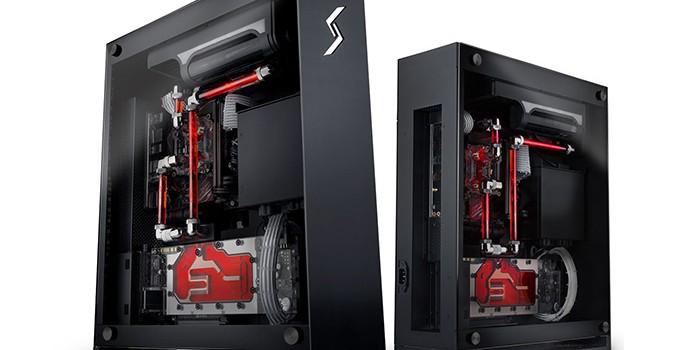
At CES this year, Digital Storm introduced its new compact PC design that weds a small form-factor with a specially-designed liquid cooling system. The BOLT X is designed to enable a significant overclocking potential of components even in a space-constrained form-factor, and it should benefit those who need to have maximum performance in a minimum footprint.

Over the past few years we have observed the culmination of several separate trends: compact computers with liquid cooling, with style and with serious overclocking capabilities. The new BOLT X from Digital Storm is the company’s next-generation SFF PC with a HydroLux LCS that features a number of upgrades aimed to advance its cooling performance  as well as improve the system in general. First off, the BOLT X has two 140-mm top mounted fans (up from two 120-mm fans in case of the BOLT 3, the predecessor). Second, it comes with an integrated stand that helps to minimize the amount of dust it sucks in through openings for cool air on the bottom. Third, it features a simplified open layout to make it easier to upgrade and service the PC.

Just like the predecessors, the Digital Storm BOLT X can accommodate a Mini-ITX motherboard and one graphics card located beneath the mainboard to ensure proper cooling and compatibility with custom cards that have tall PCBs. With the BOLT X, Digital Storm will offer the Intel Z270-based platforms (so, they will support technologies like NVMe, Thunderbolt 3, USB 3.1 Gen 2, 802.11 ac Wi-Fi, etc.) along with various Intel Core processors powered by the Kaby Lake microarchitecture. As for GPUs, expect the PC maker to offer the latest graphics cards that will be available with its BOLT X — NVIDIA’s GeForce GTX 10-series for now and whatever comes up next.

At present, Digital Storm does not discuss the exact number of SSDs/HDDs that can be housed by the BOLT X chassis, but the PC will definitely support one high-performance M.2 SSD with a PCIe 3.0 x4 interface on the motherboard as well as a number of storage devices in a 2.5-inch form-factor. Following the latest trends, the boutique PC maker eliminated the ODD from the chassis completely, resulting in a perfectly flat front surface.

One of the intrigues of the new BOLT X system is its PSU. In theory, Digital Storm can install almost any SFX power supply inside (except, perhaps, the SFX-L versions) to improve overclocking potential and/or support power hungry components. However, with the BOLT 3 the company only offers 400 W PSUs.

Digital Storm will start selling BOLT X systems in the first quarter. Exact pricing will depend on actual configuration and will thus vary. At present, the company offers BOLT 3 systems starting at $1906, so the new versions are likely to start at approximately the same price-point.

Related Reading:

Digital Storm BOLT X: A Kaby Lake-Based SFF PC with Custom Liquid Cooling

Digital Storm BOLT X: A Kaby Lake-Based SFF PC with Custom Liquid Cooling

At CES this year, Digital Storm introduced its new compact PC design that weds a small form-factor with a specially-designed liquid cooling system. The BOLT X is designed to enable a significant overclocking potential of components even in a space-constrained form-factor, and it should benefit those who need to have maximum performance in a minimum footprint.

Over the past few years we have observed the culmination of several separate trends: compact computers with liquid cooling, with style and with serious overclocking capabilities. The new BOLT X from Digital Storm is the company’s next-generation SFF PC with a HydroLux LCS that features a number of upgrades aimed to advance its cooling performance  as well as improve the system in general. First off, the BOLT X has two 140-mm top mounted fans (up from two 120-mm fans in case of the BOLT 3, the predecessor). Second, it comes with an integrated stand that helps to minimize the amount of dust it sucks in through openings for cool air on the bottom. Third, it features a simplified open layout to make it easier to upgrade and service the PC.

Just like the predecessors, the Digital Storm BOLT X can accommodate a Mini-ITX motherboard and one graphics card located beneath the mainboard to ensure proper cooling and compatibility with custom cards that have tall PCBs. With the BOLT X, Digital Storm will offer the Intel Z270-based platforms (so, they will support technologies like NVMe, Thunderbolt 3, USB 3.1 Gen 2, 802.11 ac Wi-Fi, etc.) along with various Intel Core processors powered by the Kaby Lake microarchitecture. As for GPUs, expect the PC maker to offer the latest graphics cards that will be available with its BOLT X — NVIDIA’s GeForce GTX 10-series for now and whatever comes up next.

At present, Digital Storm does not discuss the exact number of SSDs/HDDs that can be housed by the BOLT X chassis, but the PC will definitely support one high-performance M.2 SSD with a PCIe 3.0 x4 interface on the motherboard as well as a number of storage devices in a 2.5-inch form-factor. Following the latest trends, the boutique PC maker eliminated the ODD from the chassis completely, resulting in a perfectly flat front surface.

One of the intrigues of the new BOLT X system is its PSU. In theory, Digital Storm can install almost any SFX power supply inside (except, perhaps, the SFX-L versions) to improve overclocking potential and/or support power hungry components. However, with the BOLT 3 the company only offers 400 W PSUs.

Digital Storm will start selling BOLT X systems in the first quarter. Exact pricing will depend on actual configuration and will thus vary. At present, the company offers BOLT 3 systems starting at $1906, so the new versions are likely to start at approximately the same price-point.

Related Reading:

Seagate to Shut Down One of Its Largest HDD Assembly Plants

Seagate to Shut Down One of Its Largest HDD Assembly Plants

As a part of its cost-cutting efforts, Seagate has decided to shut down its HDD manufacturing plant in Suzhou, China. The factory is one of the company’s largest production assets and its closure will significantly reduce the company’s HDD output. Seagate intends to lay off ~2200 employees, but it is unclear what it intends to do with the facility, which it owns.

The factory in Suzhou, China, assemblies hard drives and performs their final testing before shipping. The plant does not produce HDD subassemblies and thus is not vertically integrated, but at 1.1 million square feet (102 thousand square meters), this is one of Seagate’s largest manufacturing assets and the largest drive assembly facility. The company got the factory from Maxtor, when it acquired it in 2006. According to a media report, the plant no longer makes products and the last employees will be laid off on January 18, 2017.

“As part of our continual optimization of operational efficiencies, Seagate has made the difficult decision to shut down its factory in Suzhou, China,” an alleged statement by Seagate reads. “We regret that our Suzhou employees will be affected by this action, which reflects our ongoing commitment to reduce Seagate’s global manufacturing footprint and better align the business with current and expected demand trends.”

Last year Seagate announced intentions to optimize its manufacturing capacities from around 55-60 million drives per quarter to approximately 35-40 million drives per quarter. In 2016, the company already fired about 8,000 employees from different locations, but that was only a part of the strategy. With the plan to shut down the plant in Suzhou, the company actually reduces its ability to produce the drives.

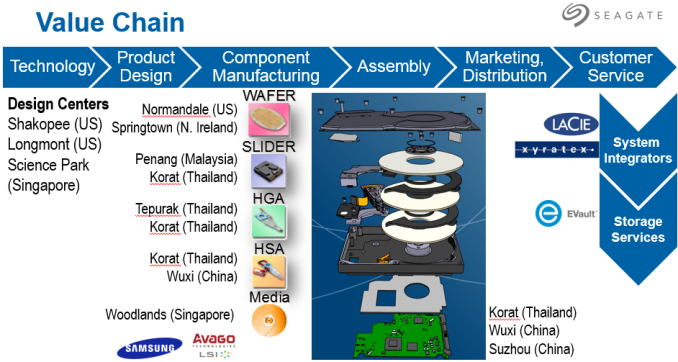
After Seagate shuts down its plant in Suzhou, China, it will have two vertically integrated HDD production facilities in Wuxi, China, and Korat, Thailand. Both factories product drive subassemblies and actual HDDs, hence, by using only these two plants the company optimizes logistics (as it no longer has to transport drive subassemblies to Suzhou) and cuts its per drive manufacturing costs. Meanwhile, it remains to be seen what happens to Seagate’s factories that only produce drive subassemblies (sliders and HGAs).

Seagate’s Manufacturing, Development, Marketing and Administrative Facilities
Location Primary Use Approximate Area Ownership
USA California Product Development

Marketing

Administrative

842,000 ft² Owned/Leased
Colorado Product Development 664,000 ft²
Minnesota Product Development

Production of Recording Heads

1,144,000 ft²
Northern Ireland Springtown Production of Recording Heads 479,000 ft² Owned
China Suzhou Production of Drives 1,103,000 ft²
Wuxi Production of Drives and Drive Subassemblies (Head Stack Assembly) 704,000 ft² Leased
Malaysia Johor Production of Substrates 631,000 ft² Owned
Penang Production of Drive Subassemblies
(Sliders)
402,000 ft²
Seremban Production of Test Equipment and Systems 299,000 ft² Owned/Leased
Singapore Woodlands Production of Media 1,504,000 ft²
Science Park Product Development 410,000 ft²
Ang Mo Kio Marketing

Administrative

225,000 ft² Leased
Thailand Korat Production of Drives and Drive Subassemblies
(Sliders, Heads Gimbal Assembly, Head Stack Assembly)
1,767,000 ft² Owned/Leased
Teparuk Production of Drive Subassemblies
(Heads Gimbal Assembly)
362,000 ft²
Korea Suwon Product Development 220,000 ft² Owned

It is important to note that while Seagate cuts down HDD assembly capacities, it does nothing to plants that produce heads, media and substrates. Over the past few years, unit shipments of HDDs have declined, but their average capacities increased (especially capacities of HDDs for datacenters) due to strong demand for high-capacity SKUs. Therefore Seagate may not need to produce a lot of drives, but it needs to pack about the same amount of heads and platters into fewer HDDs. Moreover, in the coming years, the company will need more heads because of new manufacturing technologies (TDMR, HAMR, etc.) and more media because it can now pack more platters into high-end helium-filled drives.

What remains to be seen is what Seagate plans to do with its manufacturing assets from the Suzhou facility. The fab is so large that it does not seem that all of its equipment could be relocated to other facilities. Moreover, the building itself is huge and it is unclear what will happen to it.

Related Reading:

Sources: Seagate, BestChinaNews, Reuters, The Register.

Seagate to Shut Down One of Its Largest HDD Assembly Plants

Seagate to Shut Down One of Its Largest HDD Assembly Plants

As a part of its cost-cutting efforts, Seagate has decided to shut down its HDD manufacturing plant in Suzhou, China. The factory is one of the company’s largest production assets and its closure will significantly reduce the company’s HDD output. Seagate intends to lay off ~2200 employees, but it is unclear what it intends to do with the facility, which it owns.

The factory in Suzhou, China, assemblies hard drives and performs their final testing before shipping. The plant does not produce HDD subassemblies and thus is not vertically integrated, but at 1.1 million square feet (102 thousand square meters), this is one of Seagate’s largest manufacturing assets and the largest drive assembly facility. The company got the factory from Maxtor, when it acquired it in 2006. According to a media report, the plant no longer makes products and the last employees will be laid off on January 18, 2017.

“As part of our continual optimization of operational efficiencies, Seagate has made the difficult decision to shut down its factory in Suzhou, China,” an alleged statement by Seagate reads. “We regret that our Suzhou employees will be affected by this action, which reflects our ongoing commitment to reduce Seagate’s global manufacturing footprint and better align the business with current and expected demand trends.”

Last year Seagate announced intentions to optimize its manufacturing capacities from around 55-60 million drives per quarter to approximately 35-40 million drives per quarter. In 2016, the company already fired about 8,000 employees from different locations, but that was only a part of the strategy. With the plan to shut down the plant in Suzhou, the company actually reduces its ability to produce the drives.

After Seagate shuts down its plant in Suzhou, China, it will have two vertically integrated HDD production facilities in Wuxi, China, and Korat, Thailand. Both factories product drive subassemblies and actual HDDs, hence, by using only these two plants the company optimizes logistics (as it no longer has to transport drive subassemblies to Suzhou) and cuts its per drive manufacturing costs. Meanwhile, it remains to be seen what happens to Seagate’s factories that only produce drive subassemblies (sliders and HGAs).

Seagate’s Manufacturing, Development, Marketing and Administrative Facilities
Location Primary Use Approximate Area Ownership
USA California Product Development

Marketing

Administrative

842,000 ft² Owned/Leased
Colorado Product Development 664,000 ft²
Minnesota Product Development

Production of Recording Heads

1,144,000 ft²
Northern Ireland Springtown Production of Recording Heads 479,000 ft² Owned
China Suzhou Production of Drives 1,103,000 ft²
Wuxi Production of Drives and Drive Subassemblies (Head Stack Assembly) 704,000 ft² Leased
Malaysia Johor Production of Substrates 631,000 ft² Owned
Penang Production of Drive Subassemblies
(Sliders)
402,000 ft²
Seremban Production of Test Equipment and Systems 299,000 ft² Owned/Leased
Singapore Woodlands Production of Media 1,504,000 ft²
Science Park Product Development 410,000 ft²
Ang Mo Kio Marketing

Administrative

225,000 ft² Leased
Thailand Korat Production of Drives and Drive Subassemblies
(Sliders, Heads Gimbal Assembly, Head Stack Assembly)
1,767,000 ft² Owned/Leased
Teparuk Production of Drive Subassemblies
(Heads Gimbal Assembly)
362,000 ft²
Korea Suwon Product Development 220,000 ft² Owned

It is important to note that while Seagate cuts down HDD assembly capacities, it does nothing to plants that produce heads, media and substrates. Over the past few years, unit shipments of HDDs have declined, but their average capacities increased (especially capacities of HDDs for datacenters) due to strong demand for high-capacity SKUs. Therefore Seagate may not need to produce a lot of drives, but it needs to pack about the same amount of heads and platters into fewer HDDs. Moreover, in the coming years, the company will need more heads because of new manufacturing technologies (TDMR, HAMR, etc.) and more media because it can now pack more platters into high-end helium-filled drives.

What remains to be seen is what Seagate plans to do with its manufacturing assets from the Suzhou facility. The fab is so large that it does not seem that all of its equipment could be relocated to other facilities. Moreover, the building itself is huge and it is unclear what will happen to it.

Related Reading:

Sources: Seagate, BestChinaNews, Reuters, The Register.