Vik


OWC Previews DEC Add-On For MacBook Pro
OWC Previews DEC Add-On For MacBook Pro

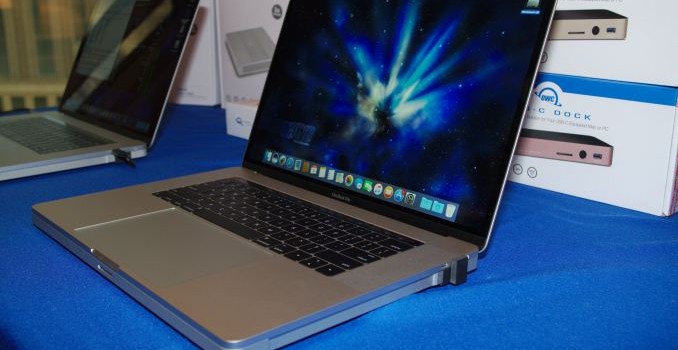
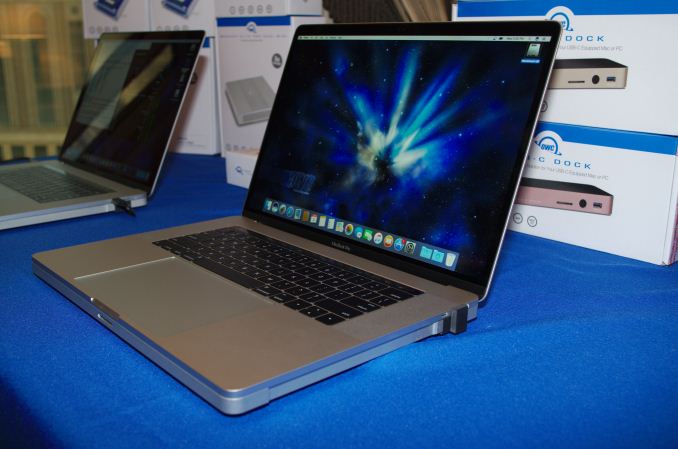
At CES, Mac accessory and upgrade supplier Other World Computing (OWC) showcased prototypes of an upcoming add-on for Apple’s latest MacBook Pro models. The OWC DEC is in many ways similar to their existing line of USB and Thunderbolt docks, with one big difference: the DEC is intended to travel around with the computer instead of staying at the desk.

The DEC is OWC’s answer to the declining expandability, upgradability and connectivity of the MacBook Pro. The DEC occupies the same footprint as the MacBook Pro and attaches to the bottom by replacing the screws that hold the bottom cover of the MacBook Pro in place. To install the OWC DEC, users will not have to open up their MacBook Pro, only remove Apple’s screws and screw the DEC on to the bottom of the machine. The DEC’s data connection will be provided by a small bridge connector between one of the MacBook Pro’s USB-C connectors and the DEC.

OWC has been working on the idea of the DEC for several years, but the latest generation of the MacBook Pro has made the DEC a priority. The DEC will provide many expansion options that have been removed from the MacBook Pro line over the years, at the expense of making the machine heavier and thicker—but no worse than what the MacBook Pro itself was several years ago. The exact configuration of ports has not been finalized, but at a minimum the DEC will provide USB type A ports, gigabit Ethernet and a SD card reader.

The DEC will also offer internal storage expandability by accommodating 2.5″ drives and potentially M.2 SATA SSDs. OWC is also considering a version of the DEC that will use a Thunderbolt 3 connection to the host machine rather than USB, which would make M.2 PCIe storage possible but also make the DEC substantially more expensive.

The fit and finish of the prototypes OWC had at CES was poor, but only because the prototypes were very early mock-ups. Despite the obvious tool marks on the bare aluminum and the use of a black plastic covering for the bridge connector, the DEC felt solid and showed attention to detail with recessed sides that don’t block the speakers or vents and an overall shape that matches Apple’s industrial design.

The first version of the DEC will be available this spring for the 2016 MacBook Pro with Touch Bar, bot 13″ and 15″ models. OWC is also working on a model that will include an extra battery and deliver power to the host system through the USB-C connection. This model is expected to be available later in the year. Pricing has not been announced, but the base model will almost certainly be more expensive than OWC’s existing USB-C docks that retail for about $150.
Marvell Show the 88SS1079 Controller: An Updated 88SS1074

Marvell Show the 88SS1079 Controller: An Updated 88SS1074

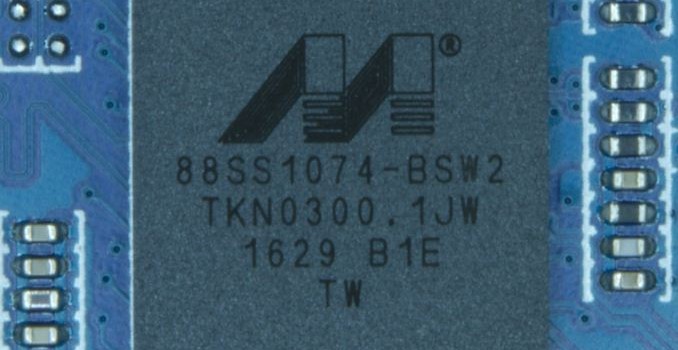
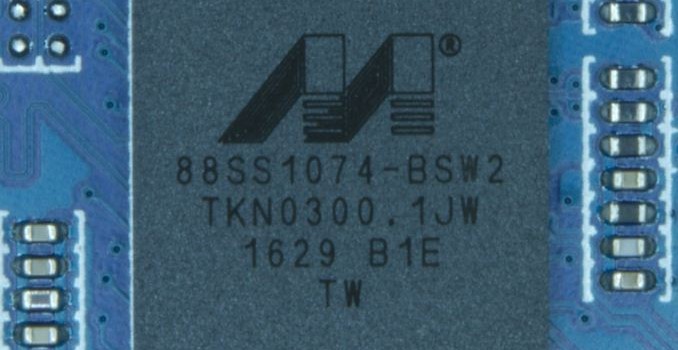
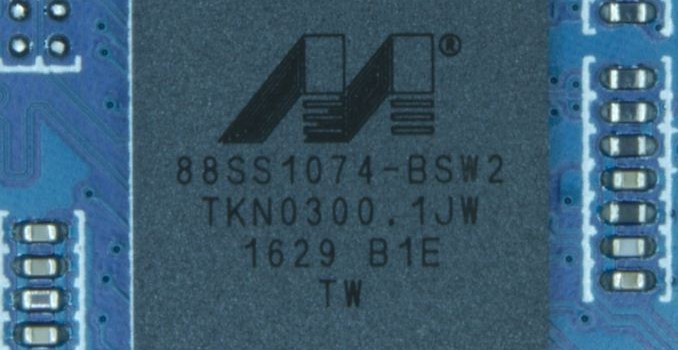
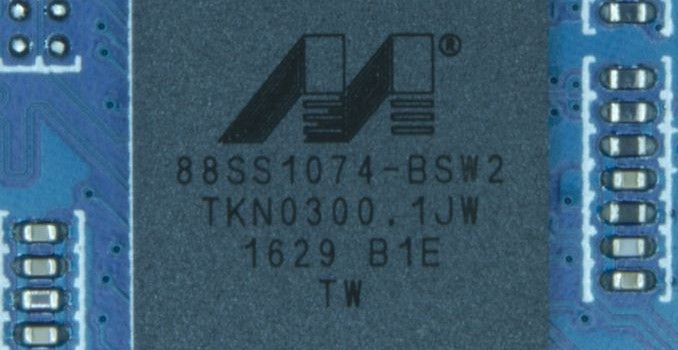
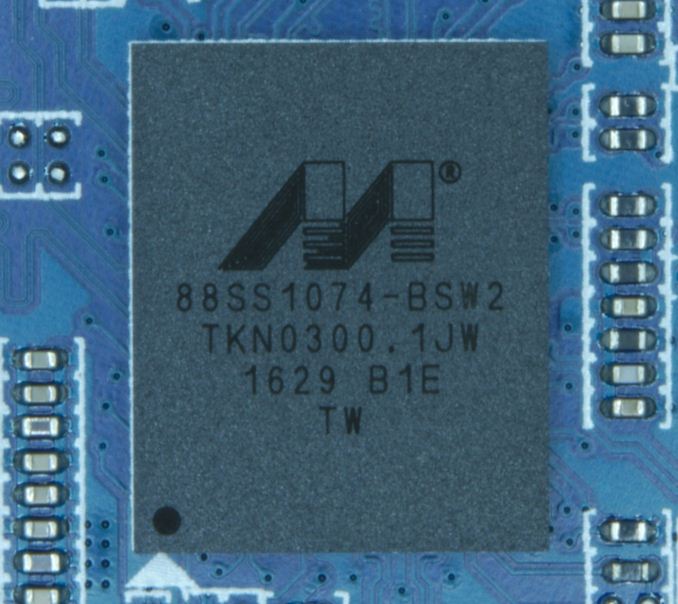
At CES, Marvell announced an updated version of its popular 88SS1074 SATA SSD controller in the 88SS1079. There’s no significant change to performance or features as far as we are told, but it moves a few components that were required on the PCB side onto the controller die, saving cost and perhaps to a small extent, power. Fewer components on the PCB will also make layout a bit easier for an M.2 SSD, but the space saved is not so large as to allow for an extra NAND package, We’ve seen the 88SS1074 on popular SSDs such as the Crucial MX300, SanDisk X400 and WD Blue, and we expect the successors to these drives to adopt the 88SS1079. Some SSD vendors may update their products relatively soon to cut costs as soon as possible and to offset the price impact of the ongoing NAND shortage, but at the very least all current users of the ‘1074 controller can be expected to use the ‘1079 when moving to the next generation of 3D NAND that will be hitting the market later this year. This is still a play for cents per GB, so a few cents off the cost of the controller will be helpful, especially for the mid-range SATA SSDs that aim to offer a significant performance boost over DRAM-less designs for a small extra cost.

While we saw a solution using the controller in our meeting with Marvell at CES, we were told to wait for partners to announce their solutions before taking pictures. When we get the 88SS1079 drives in to test, it will be interesting to see if any performance change has occurred (remember, Marvell stated that this should perform the same) or if any power difference to the 88SS1074 is observed due to moving components on die. While no retail SSDs with the new controller have been announced and Marvell cannot comment on their customers’ roadmaps, it shouldn’t take long for manufacturers to integrate the new controller into their designs given the slight hardware changes and the ability to use existing firmware as-is. We expect new products using the 88SS1079 controller to be announced by the middle of this year.

Marvell Show the 88SS1079 Controller: An Updated 88SS1074

Marvell Show the 88SS1079 Controller: An Updated 88SS1074

At CES, Marvell announced an updated version of its popular 88SS1074 SATA SSD controller in the 88SS1079. There’s no significant change to performance or features as far as we are told, but it moves a few components that were required on the PCB side onto the controller die, saving cost and perhaps to a small extent, power. Fewer components on the PCB will also make layout a bit easier for an M.2 SSD, but the space saved is not so large as to allow for an extra NAND package, We’ve seen the 88SS1074 on popular SSDs such as the Crucial MX300, SanDisk X400 and WD Blue, and we expect the successors to these drives to adopt the 88SS1079. Some SSD vendors may update their products relatively soon to cut costs as soon as possible and to offset the price impact of the ongoing NAND shortage, but at the very least all current users of the ‘1074 controller can be expected to use the ‘1079 when moving to the next generation of 3D NAND that will be hitting the market later this year. This is still a play for cents per GB, so a few cents off the cost of the controller will be helpful, especially for the mid-range SATA SSDs that aim to offer a significant performance boost over DRAM-less designs for a small extra cost.

While we saw a solution using the controller in our meeting with Marvell at CES, we were told to wait for partners to announce their solutions before taking pictures. When we get the 88SS1079 drives in to test, it will be interesting to see if any performance change has occurred (remember, Marvell stated that this should perform the same) or if any power difference to the 88SS1074 is observed due to moving components on die. While no retail SSDs with the new controller have been announced and Marvell cannot comment on their customers’ roadmaps, it shouldn’t take long for manufacturers to integrate the new controller into their designs given the slight hardware changes and the ability to use existing firmware as-is. We expect new products using the 88SS1079 controller to be announced by the middle of this year.

Marvell Show the 88SS1079 Controller: An Updated 88SS1074

Marvell Show the 88SS1079 Controller: An Updated 88SS1074

At CES, Marvell announced an updated version of its popular 88SS1074 SATA SSD controller in the 88SS1079. There’s no significant change to performance or features as far as we are told, but it moves a few components that were required on the PCB side onto the controller die, saving cost and perhaps to a small extent, power. Fewer components on the PCB will also make layout a bit easier for an M.2 SSD, but the space saved is not so large as to allow for an extra NAND package, We’ve seen the 88SS1074 on popular SSDs such as the Crucial MX300, SanDisk X400 and WD Blue, and we expect the successors to these drives to adopt the 88SS1079. Some SSD vendors may update their products relatively soon to cut costs as soon as possible and to offset the price impact of the ongoing NAND shortage, but at the very least all current users of the ‘1074 controller can be expected to use the ‘1079 when moving to the next generation of 3D NAND that will be hitting the market later this year. This is still a play for cents per GB, so a few cents off the cost of the controller will be helpful, especially for the mid-range SATA SSDs that aim to offer a significant performance boost over DRAM-less designs for a small extra cost.

While we saw a solution using the controller in our meeting with Marvell at CES, we were told to wait for partners to announce their solutions before taking pictures. When we get the 88SS1079 drives in to test, it will be interesting to see if any performance change has occurred (remember, Marvell stated that this should perform the same) or if any power difference to the 88SS1074 is observed due to moving components on die. While no retail SSDs with the new controller have been announced and Marvell cannot comment on their customers’ roadmaps, it shouldn’t take long for manufacturers to integrate the new controller into their designs given the slight hardware changes and the ability to use existing firmware as-is. We expect new products using the 88SS1079 controller to be announced by the middle of this year.

Marvell Show the 88SS1079 Controller: An Updated 88SS1074

Marvell Show the 88SS1079 Controller: An Updated 88SS1074

At CES, Marvell announced an updated version of its popular 88SS1074 SATA SSD controller in the 88SS1079. There’s no significant change to performance or features as far as we are told, but it moves a few components that were required on the PCB side onto the controller die, saving cost and perhaps to a small extent, power. Fewer components on the PCB will also make layout a bit easier for an M.2 SSD, but the space saved is not so large as to allow for an extra NAND package, We’ve seen the 88SS1074 on popular SSDs such as the Crucial MX300, SanDisk X400 and WD Blue, and we expect the successors to these drives to adopt the 88SS1079. Some SSD vendors may update their products relatively soon to cut costs as soon as possible and to offset the price impact of the ongoing NAND shortage, but at the very least all current users of the ‘1074 controller can be expected to use the ‘1079 when moving to the next generation of 3D NAND that will be hitting the market later this year. This is still a play for cents per GB, so a few cents off the cost of the controller will be helpful, especially for the mid-range SATA SSDs that aim to offer a significant performance boost over DRAM-less designs for a small extra cost.

While we saw a solution using the controller in our meeting with Marvell at CES, we were told to wait for partners to announce their solutions before taking pictures. When we get the 88SS1079 drives in to test, it will be interesting to see if any performance change has occurred (remember, Marvell stated that this should perform the same) or if any power difference to the 88SS1074 is observed due to moving components on die. While no retail SSDs with the new controller have been announced and Marvell cannot comment on their customers’ roadmaps, it shouldn’t take long for manufacturers to integrate the new controller into their designs given the slight hardware changes and the ability to use existing firmware as-is. We expect new products using the 88SS1079 controller to be announced by the middle of this year.