Vik


Microsoft Adds HP Elite x3 Smartphone to Windows Store, $799

Microsoft Adds HP Elite x3 Smartphone to Windows Store, $799

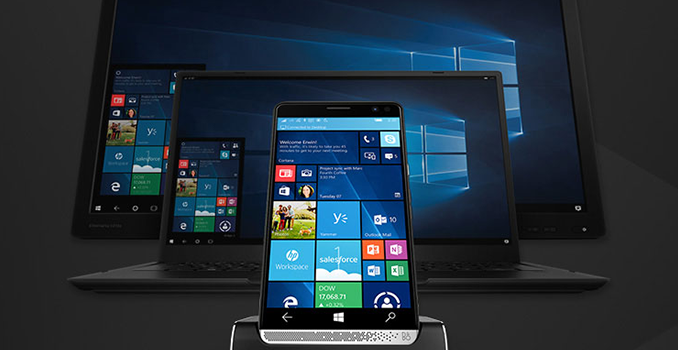
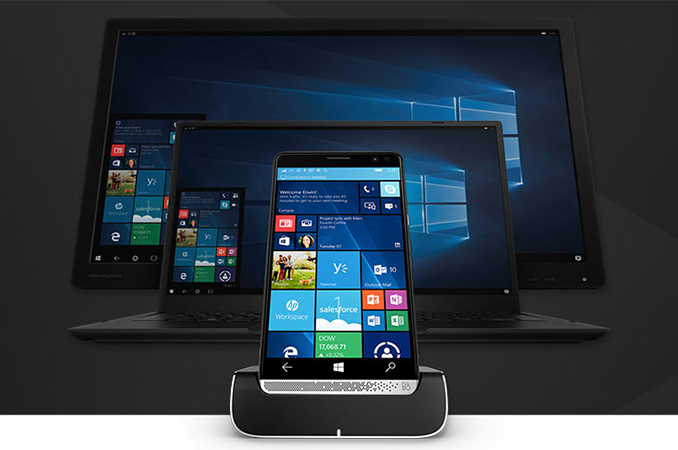
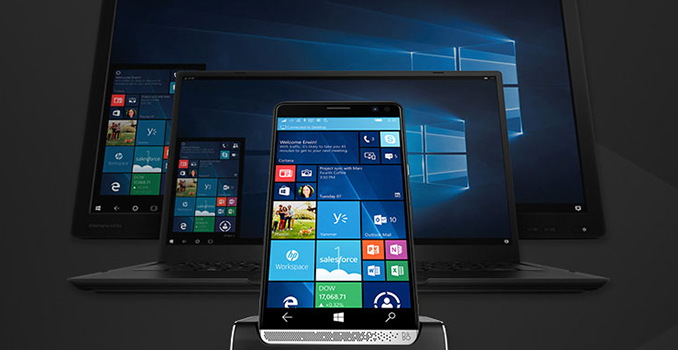
Microsoft has begun to sell HP’s Elite x3 smartphone at its Windows Store. The handset is one of the most powerful Windows 10 Mobile-based devices and the one of a few initially aimed at the business professionals on a company contract. The fact that Microsoft has started to sell the HP Elite x3 indicates that the smartphone is now available to general consumers as well.

Microsoft sells unlocked HP’s Elite x3 at it MSRP of $799, which is much higher than the price of typical Windows smartphones. The handset comes with its Continuum desk dock that features an Ethernet adapter, as well as DisplayPort USB connectors, and can work with desktop displays as well as keyboards. Meanwhile, neither Microsoft nor HP currently offer the Elite x3 Lap Dock device, which can transform the Elite x3 smartphone into a laptop.

The HP Elite x3 smartphone is powered by Qualcomm’s Snapdragon 820 SoC and is currently the only Microsoft’s Windows 10 Mobile-based smartphone to use the chip. The device is equipped a 5.96” AMOLED display and comes with 64 MB of eMMC 5.1 NAND flash storage, 4 GB of LPDDR4 RAM as well as all the necessary connectivity features, including 4G/LTE, 802.11ac Wi-Fi, Bluetooth 4.0 and a USB Type-C connector. Developed specifically for enterprise and business users, who value security, the HP Elite x3 is FIPS 140-2 certified and features Secure Boot (with iris and fingerprint scanners), full disk encryption with a 256-bit key, fTPM 2.0, and so on. The smartphone from HP also takes advantage of Microsoft’s Continuum technology, which allows you to run your phone as a desktop PC.

  HP Elite x3
SoC Qualcomm Snapdragon 820
2x Kryo @ 2.15 GHz
2x Kryo @ 1.59 GHz
Adreno 530
RAM/NAND 4 GB LPDDR4 RAM,
64 GB eMMC 5.1 NAND
microSD ‘up to 2 TB’
Display 5.96-inch, 2560×1440 AMOLED (493 PPI)
Corning Gorilla Glass 4
Network X12 Cat 12/13 LTE-A
Single Nano-SIM or Dual Nano-SIM Models
Micro-SD Shared with Nano-SIM
Dimensions 161.8 x 83.5 x 7.8 (mm)
6.36 x 3.29 x 0.31 (in)
Weight 195 grams
0.43 lb / 6.88 oz
Rear Camera 16 MP, LED Flash
Front Camera 8 MP wide angle, Iris Camera
Battery 4150 mAh, 3.85 V, 15.98 Wh,
PMA and Qi charging
OS Windows 10 Mobile
Connectivity Intel AC-7260AN WiFi (2×2 802.11ac + BT 4.0 LE)
NFC, GPS
USB 3.0 Type-C
Additional Windows Hello (Iris and Fingerprint),
FIPS 140-2, fTPM 2.0
128-bit Unified encryption, 256-bit full disk
Disaster recovery Protection
Win10 includes 128-bit BitLocker and Enterprise Grade VPN
Bang&Olufsen Sound
3x Noise-Cancelling Microphones
Water/Dust Proof Certification IP 67
MIL-STD 810G (salt/fog/humidity/shock/thermal)

At present, the HP Elite x3 has no rivals in the price range because it is the only Windows 10 smartphone that sells for $799. In the Continuum space, the HP Elite x3 competes against Acer’s Liquid Jade Primo as well as Microsoft’s own Lumia 950 and Lumia 950 XL, which are available for $449, $399 and $499 respectively.

Microsoft Adds HP Elite x3 Smartphone to Windows Store, $799

Microsoft Adds HP Elite x3 Smartphone to Windows Store, $799

Microsoft has begun to sell HP’s Elite x3 smartphone at its Windows Store. The handset is one of the most powerful Windows 10 Mobile-based devices and the one of a few initially aimed at the business professionals on a company contract. The fact that Microsoft has started to sell the HP Elite x3 indicates that the smartphone is now available to general consumers as well.

Microsoft sells unlocked HP’s Elite x3 at it MSRP of $799, which is much higher than the price of typical Windows smartphones. The handset comes with its Continuum desk dock that features an Ethernet adapter, as well as DisplayPort USB connectors, and can work with desktop displays as well as keyboards. Meanwhile, neither Microsoft nor HP currently offer the Elite x3 Lap Dock device, which can transform the Elite x3 smartphone into a laptop.

The HP Elite x3 smartphone is powered by Qualcomm’s Snapdragon 820 SoC and is currently the only Microsoft’s Windows 10 Mobile-based smartphone to use the chip. The device is equipped a 5.96” AMOLED display and comes with 64 MB of eMMC 5.1 NAND flash storage, 4 GB of LPDDR4 RAM as well as all the necessary connectivity features, including 4G/LTE, 802.11ac Wi-Fi, Bluetooth 4.0 and a USB Type-C connector. Developed specifically for enterprise and business users, who value security, the HP Elite x3 is FIPS 140-2 certified and features Secure Boot (with iris and fingerprint scanners), full disk encryption with a 256-bit key, fTPM 2.0, and so on. The smartphone from HP also takes advantage of Microsoft’s Continuum technology, which allows you to run your phone as a desktop PC.

  HP Elite x3
SoC Qualcomm Snapdragon 820
2x Kryo @ 2.15 GHz
2x Kryo @ 1.59 GHz
Adreno 530
RAM/NAND 4 GB LPDDR4 RAM,
64 GB eMMC 5.1 NAND
microSD ‘up to 2 TB’
Display 5.96-inch, 2560×1440 AMOLED (493 PPI)
Corning Gorilla Glass 4
Network X12 Cat 12/13 LTE-A
Single Nano-SIM or Dual Nano-SIM Models
Micro-SD Shared with Nano-SIM
Dimensions 161.8 x 83.5 x 7.8 (mm)
6.36 x 3.29 x 0.31 (in)
Weight 195 grams
0.43 lb / 6.88 oz
Rear Camera 16 MP, LED Flash
Front Camera 8 MP wide angle, Iris Camera
Battery 4150 mAh, 3.85 V, 15.98 Wh,
PMA and Qi charging
OS Windows 10 Mobile
Connectivity Intel AC-7260AN WiFi (2×2 802.11ac + BT 4.0 LE)
NFC, GPS
USB 3.0 Type-C
Additional Windows Hello (Iris and Fingerprint),
FIPS 140-2, fTPM 2.0
128-bit Unified encryption, 256-bit full disk
Disaster recovery Protection
Win10 includes 128-bit BitLocker and Enterprise Grade VPN
Bang&Olufsen Sound
3x Noise-Cancelling Microphones
Water/Dust Proof Certification IP 67
MIL-STD 810G (salt/fog/humidity/shock/thermal)

At present, the HP Elite x3 has no rivals in the price range because it is the only Windows 10 smartphone that sells for $799. In the Continuum space, the HP Elite x3 competes against Acer’s Liquid Jade Primo as well as Microsoft’s own Lumia 950 and Lumia 950 XL, which are available for $449, $399 and $499 respectively.
ASUS XG-U2008 10GBase-T Network Switch Released: 2x10G + 8x1G for $249

ASUS XG-U2008 10GBase-T Network Switch Released: 2x10G + 8x1G for $249

Back at CES, we saw what looked like a first budget-style entry into the 10GBase-T networking arena for low-cost, high-speed RJ-45 networking that would be backwards compatible with most of an enthusiasts home network infrastructure. At the time I was told it would be $300, but I misread the brochure and thought it said ten 10G ports. When I realized it said two ports 10GBase-T with another 8x1G ports, it still looked pretty interesting to say the least. ASUS is now formally announcing the launch of the hardware, called the XG-U2008, for $250 available at Newegg today.

At CES we saw a brushed aluminium switch, with the aim focused more on the premium and prosumer market. The styling of the switch on release essentially matches the one we saw at the show. There isn’t much in the way to say about the switch – it is unmanaged, offers two 10GBase-T ports and eight 1G ports, with the latter also supporting 100 Mbps standards. The total switch fabric affords a rated 56 Gbps bandwidth as well as up to 16 KB jumbo frames and a 2Mb memory buffer. The external adapter is rated at 18W, and it measures 1.06-inch high.

Putting this into perspective, we recently did a quick news post rounding up all the motherboards with 10GBase-T preinstalled and noted that the additional cost of the switch and the motherboard puts the cost per port for 10GBase-T around $100-$150. Aside from the $200 extra per motherboard for one or two ports, an 8-port switch comes in at around $700 (or a 16-port for $1400). Compared to the larger and more expensive switches, this switch only has two 10G ports, meaning that the only options for connectivity will be between a 10G NAS and a bigger 10G switch, or a 10G PC and a 10G NAS – ASUS marks down that for a PC-based LAN, a couple of servers could be on the 10G ports instead.

Options for low-cost 10GBase-T switches mean that it’s a minimum $700 for a few ports, which for most users is not particularly low cost. Bringing at least two ports in a 10G switch for $250 brings the cost of ownership right down and more palatable, although only having two ports has some limitations. The fact that it’s available straight away from Newegg for anyone (in the US) is a plus.

Source: ASUS Edge Up, ASUS Product Page, Newegg

ASUS XG-U2008 10GBase-T Network Switch Released: 2x10G + 8x1G for $249

ASUS XG-U2008 10GBase-T Network Switch Released: 2x10G + 8x1G for $249

Back at CES, we saw what looked like a first budget-style entry into the 10GBase-T networking arena for low-cost, high-speed RJ-45 networking that would be backwards compatible with most of an enthusiasts home network infrastructure. At the time I was told it would be $300, but I misread the brochure and thought it said ten 10G ports. When I realized it said two ports 10GBase-T with another 8x1G ports, it still looked pretty interesting to say the least. ASUS is now formally announcing the launch of the hardware, called the XG-U2008, for $250 available at Newegg today.

At CES we saw a brushed aluminium switch, with the aim focused more on the premium and prosumer market. The styling of the switch on release essentially matches the one we saw at the show. There isn’t much in the way to say about the switch – it is unmanaged, offers two 10GBase-T ports and eight 1G ports, with the latter also supporting 100 Mbps standards. The total switch fabric affords a rated 56 Gbps bandwidth as well as up to 16 KB jumbo frames and a 2Mb memory buffer. The external adapter is rated at 18W, and it measures 1.06-inch high.

Putting this into perspective, we recently did a quick news post rounding up all the motherboards with 10GBase-T preinstalled and noted that the additional cost of the switch and the motherboard puts the cost per port for 10GBase-T around $100-$150. Aside from the $200 extra per motherboard for one or two ports, an 8-port switch comes in at around $700 (or a 16-port for $1400). Compared to the larger and more expensive switches, this switch only has two 10G ports, meaning that the only options for connectivity will be between a 10G NAS and a bigger 10G switch, or a 10G PC and a 10G NAS – ASUS marks down that for a PC-based LAN, a couple of servers could be on the 10G ports instead.

Options for low-cost 10GBase-T switches mean that it’s a minimum $700 for a few ports, which for most users is not particularly low cost. Bringing at least two ports in a 10G switch for $250 brings the cost of ownership right down and more palatable, although only having two ports has some limitations. The fact that it’s available straight away from Newegg for anyone (in the US) is a plus.

Source: ASUS Edge Up, ASUS Product Page, Newegg