
Vik


HP and MAINGEAR Team Up for Omen X High-End Gaming PC
HP and MAINGEAR Team Up for Omen X High-End Gaming PC

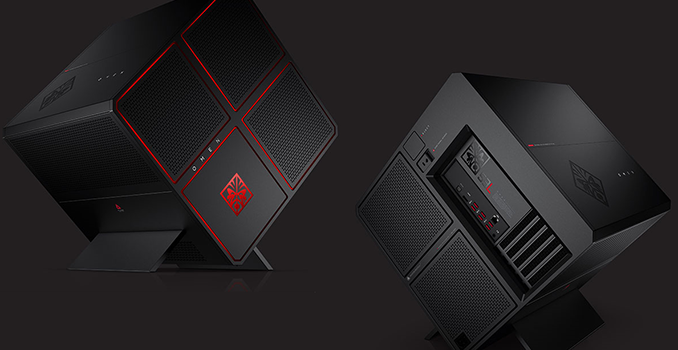
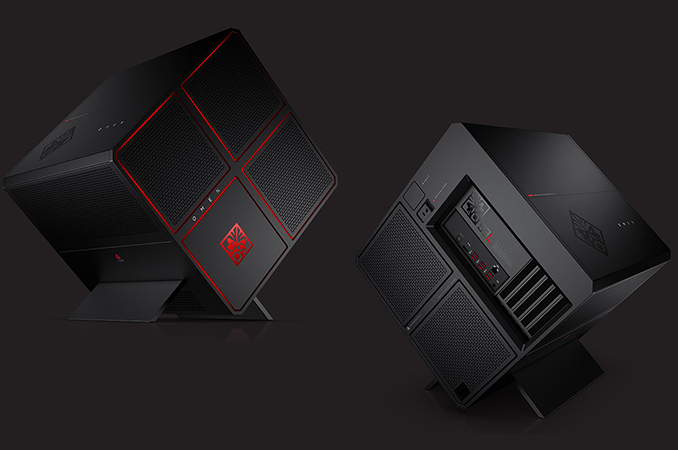
HP this week re-entered the market of high-end gaming PCs with its Omen X desktop. The machine uses rather unusual cube-shaped tri-chamber design featuring high-end hardware, liquid cooling and various upgrade options. HP will offer customized versions of the Omen X, but MAINGEAR will sell something more exclusive with additional customization options, Intel Core i7 Extreme CPUs, hand-build liquid cooling as well as factory overclocking.

The year was 2006. PC gaming was not particularly on the rise (and the word eSports was non-existent), but the interest towards high-end PC gaming technologies was high, particularly because the demographics of gamers got older and more of those people could afford ultra-high-end gaming computers as well as components. This is when Dell acquired Alienware and HP bought Voodoo PC in a bid to address the growing and lucrative segment of the PC market. While the two large PC makers made a similar decision and bought leading boutique PC makers, there actions afterwards were substantially different. While both tried to integrate their gaming PC subsidiaries, Dell has succeeded and made Alienware its integral part of itself, whereas HP first ceased to sell expensive custom desktops, then started to place VoodooDNA brand on various high-end machines and then stopped building PCs for any demanding gamers at all. Apparently, HP was not interested in serving a relatively small segment of the PC market after multiple enterprise-oriented acquisitions. However, now that HP’s consumer business is a separate company, the latter seems to be gaining interest towards high-end machines, which is why it unveiled its Omen X system. Nonetheless, the company does not plan to address the market of boutique PCs just now, which is why it teamed up with MAINGEAR for advanced versions of the Omen X. While HP does not use the Voodoo brand for its Omen X, its machine carries the distinctive logotype on it.

The cube-shaped 45° angled design of the Omen X is meant to simplify access to hardware by the end-user.  While the form of the Omen X is very distinctive, its concept is very similar to other modern desktops. The chassis sports three chambers to separate hot components (CPU+GPU, hard drives and PSU) from each other and optimally cool-down each chamber/set of components. The Omen X chassis can fit it one Micro-ATX motherboard (with one M.2 slot, two PCIe x16 slots, four DDR4 slots and so on), two graphics cards, two 3.5” storage devices/three 2.5” SSDs/HDDs, one M.2 SSD, one ODD, and one high-end PSU, with MAINGEAR offering up to a 1200 W Corsair AX1200i model.

While architecturally the HP Omen X and the MAINGEAR Omen X are exactly the same, there are substantial differences when it comes to their configurations, which is why we basically talking about two rather different systems here. HP only offers Intel’s LGA1151 processors as well as up to two AMD Radeon R9 Fury X or NVIDIA GeForce GTX 1080 graphics cards with its Omen X. By contrast, MAINGEAR offers only LGA2011-3 platforms, up to ten-core Core i7-6950X CPU, up to two NVIDIA Titan X (Pascal) graphics cards, hand-made liquid cooling as well as custom exterior finish with automotive paint. The differences of configurations naturally affect prices: the HP Omen X starts at $1800, whereas MAINGEAR-built Omen X starts at $3000 with more advanced “superstock” version available for $5200.

Specifications of HP and MAINGEAR Omen X Desktops
  HP Omen X MAINGEAR Omen X
CPU Intel Core i5/i7 Skylake-S
Up to Intel Core i7-6700K
Intel Core i7 Extreme Broadwell-E
Up to Intel Core i7-6950X
PCH Intel Z170 Intel X99
Motherboard HP custom ASUS X99-M WS
Graphics Up to two AMD Radeon R9 Fury X or NVIDIA GeForce GTX 1080 Up to two NVIDIA Titan X
No AMD Radeon options
Cooling Air cooling
Optional closed-loop liquid cooling with 120 mm radiators
Intel retail CPU cooler

Closed Loop — EPIC 240 MAINGEAR CPU SuperCooler

Regular Open Loop — Custom liquid cooling for CPU and GPU with 360mm radiator and high airflow fans

Superstock Open Loop — Custom hand crafted liquid cooling with crystal hardline or metal hardline tubing, premium Chrome fittings, 360mm copper core radiators and high airflow fans

Memory Four DIMM slots, up to 64 GB of DDR4-3000
M.2 One M.2 (PCIe 3.0 x4) slot for up to 2280 SSDs
SATA connectors 3 3 (actual motherboard has 8)
SATAe connectors unknown 1 (only available in single-GPU systems)
eSATA connectors 0 0
Storage bays 2×3.5″
3×2.5″
1×5.25″ (for portable ODDs)
Wi-Fi unknown 802.11ac + BT 4.0
Ethernet Gigabit Ethernet Gigabit Ethernet based on either
Intel I218V GbE or
Intel I211AT GbE
Display Outputs HDMI/DP/DVI – according to GPU specs + one HDMI on the motherboard HDMI/DP/DVI – according to GPU specs
Audio HDMI
Optical S/PDIF
a mini-jack for headphones
a mini-jack for microphone
Five 7.1-channel audio connectors
a mini-jack for headphones
a mini-jack for microphone
Optcal S/PDIF
USB 8 x USB 3.0 Type-A
2 x USB 3.0 Type-C with fast charging
2 x USB 3.1 Type-A (10 Gbps, ASMedia ASM1142)
6 x USB 3.0 Type-A
Dimensions 20″ (H) x 16″ (W) x 20″ (D)
50.8 cm (H) x 40.6 cm (W) x 50.8 cm (D)
PSU 600 W ~ 1300 W PSUs by HP 750 W EVGA SuperNOVA 80 Plus
860 W Corsair PAX860 80+ Platinum
1200 W Corsair AX1200i 80+ Platinum
Visual Aesthetics Custom lighting:
– Nine lighting zones
– Four color modes
Chassis lighting
Custom exterior finish with automotive Glasurit paints

All Omen X systems use industry-standard components, so it will be possible for owners to upgrade them as they wish (subject to terms and conditions of warranty) using any aftermarket part. Still, keeping in mind that MAINGEAR offers custom liquid cooling solutions, it may not be that easy to upgrade such machines without re-building the LCS.

HP plans to start shipments of its Omen X at a later date, whereas MAINGEAR intends to ship its Omen X in mid-September.

In addition to Omen X desktops, HP also plans to offer a complimentary set of Omen-branded peripherals (with Voodoo logotype on them). The initial family will include a headset and a mouse designed by SteelSeries as well as a 32” display.

Sources: HP, MAINGEAR.

Micron Cancels Ballistix TX3 NVMe SSD

Micron Cancels Ballistix TX3 NVMe SSD

At Computex in June, Micron announced that Crucial’s Ballistix brand was being promoted to a standalone brand for gaming-oriented products. Their exhibit included three tiers of Ballistix DRAM products and one SSD: the Ballistix TX3 M.2 PCIe SSD. Based on Micron 3D MLC NAND and the Silicon Motion SM2260 NVMe SSD controller, the TX3 was to be Micron’s first consumer/retail SSD with 3D MLC or a PCIe interface and was slated for a release sometime in the second half of 2016.

Micron has informed us this week that the Ballistix TX3 program has been canceled. This leaves Micron’s consumer SSD strategy up in the air. With the release this summer of the Crucial MX300, Micron moved their mainstream SATA MX line from MLC to 3D TLC NAND, casting doubt on the future of the value-oriented BX series and implying that their 3D MLC might be regarded as premium enough to be reserved for PCIe SSD. With the Ballistix TX3 canceled, we no longer have any clear indication of how Micron plans to move forward with their consumer SSD products.

Micron may have decided to switch SSD controllers. While Silicon Motion reported last week at Flash Memory Summit that final firmware for the SM2260 controller is ready, Phison’s E7 controller is also available and ready to roll out, and Micron has been shipping Marvell’s 88SS1093 NVMe controller on their 7100 series enterprise SSDs in both U.2 and M.2 form factors, albeit with planar MLC NAND rather than their 3D NAND. Micron may also have decided that the timing was wrong to be getting into a market segment that Samsung has been handily dominating; beating Samsung’s PCIe M.2 drives on performance will be an uphill battle to say the least, and substantially undercutting them on price may not be possible while Micron is still ramping up production of their 3D MLC NAND.

Micron’s OEM and enterprise offerings may offer some clues to their plans, but the Micron and Crucial SSD product lines are no longer mere alter egos of each other. Micron’s 1100 series SATA SSD is the nearest equivalent to the MX300 with the same controller and same 3D TLC NAND, but the 1100 is more a little more conservative by retaining the traditional power of two drive capacities with generous overprovisioning while the MX300 dedicates some of the extra capacity of Micron’s 3D TLC chips to increasing the usable drive capacity.

Micron announced a 2100 series at the same time as the 1100 series, but did not provide full details as it was scheduled for a later introduction than the 1100, but still by the end of summer this year. The photos provided of the 2100 clearly showed the Silicon Motion SM2260 controller and the drive was stated to be using 3D NAND, but whether it would be MLC or TLC was not specified. The layout of the 2100 M.2 card was different than that of the Ballistix TX3 prototypes shown at Computex, but they still clearly had a few things in common. Micron’s website still lists the 2100 as “Coming Summer 2016”, and with regards to its fate Micron had this statement for us:

Micron is committed to delivering client PCIe NVMe solutions. While we are excited by the possibilities with our OEM partners, we are not disclosing availability details at this time. We will be sure to keep you updated as we are ready to share more.

We are eager to hear what Micron decides to do, as they are still only the second manufacturer to deliver 3D NAND for the client and consumer SSD market and we have not yet had the chance to test their 3D MLC NAND. Competition in the consumer PCIe SSD space will be heating up with or without Micron’s participation as more drives based on Phison, Marvell and Silicon Motion PCIe NVMe controllers hit the market over the next few months, but Micron’s entry was particularly promising for the inclusion of 3D NAND.

More Details on Broxton: Quad Core, ECC, Up to 18 EUs of Gen9

More Details on Broxton: Quad Core, ECC, Up to 18 EUs of Gen9

An interesting talk regarding the IoT aspects of Intel’s Next Generation Atom Core, Goldmont, and the Broxton SoCs for the market offered a good chunk of information regarding the implementations of the Broxton-M platform. Users may remember the…

Micron Cancels Ballistix TX3 NVMe SSD

Micron Cancels Ballistix TX3 NVMe SSD

At Computex in June, Micron announced that Crucial’s Ballistix brand was being promoted to a standalone brand for gaming-oriented products. Their exhibit included three tiers of Ballistix DRAM products and one SSD: the Ballistix TX3 M.2 PCIe SSD. Based on Micron 3D MLC NAND and the Silicon Motion SM2260 NVMe SSD controller, the TX3 was to be Micron’s first consumer/retail SSD with 3D MLC or a PCIe interface and was slated for a release sometime in the second half of 2016.

Micron has informed us this week that the Ballistix TX3 program has been canceled. This leaves Micron’s consumer SSD strategy up in the air. With the release this summer of the Crucial MX300, Micron moved their mainstream SATA MX line from MLC to 3D TLC NAND, casting doubt on the future of the value-oriented BX series and implying that their 3D MLC might be regarded as premium enough to be reserved for PCIe SSD. With the Ballistix TX3 canceled, we no longer have any clear indication of how Micron plans to move forward with their consumer SSD products.

Micron may have decided to switch SSD controllers. While Silicon Motion reported last week at Flash Memory Summit that final firmware for the SM2260 controller is ready, Phison’s E7 controller is also available and ready to roll out, and Micron has been shipping Marvell’s 88SS1093 NVMe controller on their 7100 series enterprise SSDs in both U.2 and M.2 form factors, albeit with planar MLC NAND rather than their 3D NAND. Micron may also have decided that the timing was wrong to be getting into a market segment that Samsung has been handily dominating; beating Samsung’s PCIe M.2 drives on performance will be an uphill battle to say the least, and substantially undercutting them on price may not be possible while Micron is still ramping up production of their 3D MLC NAND.

Micron’s OEM and enterprise offerings may offer some clues to their plans, but the Micron and Crucial SSD product lines are no longer mere alter egos of each other. Micron’s 1100 series SATA SSD is the nearest equivalent to the MX300 with the same controller and same 3D TLC NAND, but the 1100 is more a little more conservative by retaining the traditional power of two drive capacities with generous overprovisioning while the MX300 dedicates some of the extra capacity of Micron’s 3D TLC chips to increasing the usable drive capacity.

Micron announced a 2100 series at the same time as the 1100 series, but did not provide full details as it was scheduled for a later introduction than the 1100, but still by the end of summer this year. The photos provided of the 2100 clearly showed the Silicon Motion SM2260 controller and the drive was stated to be using 3D NAND, but whether it would be MLC or TLC was not specified. The layout of the 2100 M.2 card was different than that of the Ballistix TX3 prototypes shown at Computex, but they still clearly had a few things in common. Micron’s website still lists the 2100 as “Coming Summer 2016”, and with regards to its fate Micron had this statement for us:

Micron is committed to delivering client PCIe NVMe solutions. While we are excited by the possibilities with our OEM partners, we are not disclosing availability details at this time. We will be sure to keep you updated as we are ready to share more.

We are eager to hear what Micron decides to do, as they are still only the second manufacturer to deliver 3D NAND for the client and consumer SSD market and we have not yet had the chance to test their 3D MLC NAND. Competition in the consumer PCIe SSD space will be heating up with or without Micron’s participation as more drives based on Phison, Marvell and Silicon Motion PCIe NVMe controllers hit the market over the next few months, but Micron’s entry was particularly promising for the inclusion of 3D NAND.

More Details on Broxton: Quad Core, ECC, Up to 18 EUs of Gen9

More Details on Broxton: Quad Core, ECC, Up to 18 EUs of Gen9

An interesting talk regarding the IoT aspects of Intel’s Next Generation Atom Core, Goldmont, and the Broxton SoCs for the market offered a good chunk of information regarding the implementations of the Broxton-M platform. Users may remember the…