Vik


HP’s Elite x3 Windows 10 Smartphone to Cost $699, Set to Be Available Worldwide
HP’s Elite x3 Windows 10 Smartphone to Cost $699, Set to Be Available Worldwide

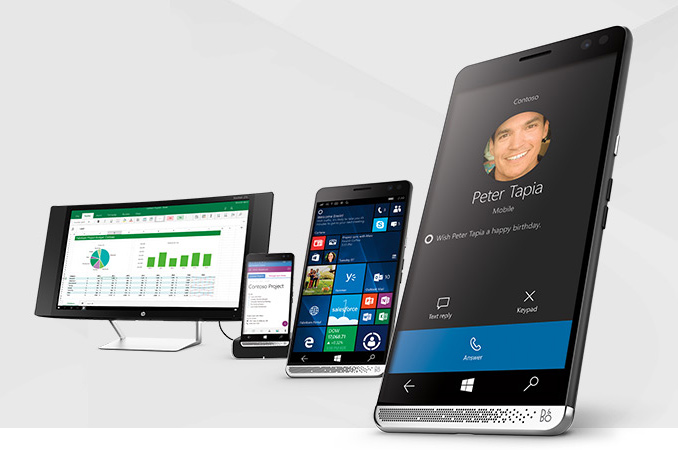
When HP introduced its flagship Elite x3 phablet earlier this year at MWC, the smartphone made a very positive impression mostly because HP decided to make a bold move and create a Windows Continuum device aimed purely at the business professional on a company contract. It drew a little ire from some industry analysts, thinking that HP building a Windows phone would never see the light of day. To them it was a paper announcement, but this week shows that the Elite x3 is still alive and well, and coming to consumers and business users. What the company did not announce in February was its recommended price as well as countries, where it planned to make the product available. This weeks details show that the Elite x3 will hit the market in August and will be sold in 46 countries worldwide.

The HP Elite x3 smartphone is based on Qualcomm’s Snapdragon 820 SoC, as well as Microsoft’s Windows 10 Mobile OS. The device is equipped a 5.96” AMOLED display and comes with 64 MB of eMMC 5.1 NAND flash storage, 4 GB of LPDDR4 RAM as well as all the necessary connectivity features, including 4G/LTE, 802.11ac Wi-Fi, Bluetooth 4.0 and a USB Type-C connector. Developed specifically for enterprise and business users, who value security, the device is FIPS 140-2 certified and features Secure Boot (with iris and fingerprint scanners), full disk encryption with a 256-bit key, fTPM 2.0, and so on.

  HP Elite x3
SoC Qualcomm Snapdragon 820
2x Kryo @ 2.15 GHz
2x Kryo @ 1.59 GHz
Adreno 530
RAM/NAND 4 GB LPDDR4 RAM,
64 GB eMMC 5.1 NAND
microSD ‘up to 2 TB’
Display 5.96-inch, 2560×1440 AMOLED (494 PPI)
Corning Gorilla Glass 4
Network X12 Cat 12/13 LTE-A
Single Nano-SIM or Dual Nano-SIM Models
Micro-SD Shared with Nano-SIM
Dimensions 161.8 x 83.5 x 7.8 (mm)
6.36 x 3.29 x 0.31 (in)
Weight 195 grams
0.43 lb / 6.88 oz
Rear Camera 16 MP, LED Flash
Front Camera 8 MP wide angle, Iris Camera
Battery 4150 mAh, 3.85 V, 15.98 Wh,
PMA and Qi charging
OS Windows 10 Mobile
Connectivity Intel AC-7260AN WiFi (2×2 802.11ac + BT 4.0 LE)
NFC, GPS
USB 3.0 Type-C
Additional Windows Hello (Iris and Fingerprint),
FIPS 140-2, fTPM 2.0
128-bit Unified encryption, 256-bit full disk
Disaster recovery Protection
Win10 includes 128-bit BitLocker and Enterprise Grade VPN
Bang&Olufsen Sound
3x Noise-Cancelling Microphones
Water/Dust Proof Certification IP 67
MIL-STD 810G (salt/fog/humidity/shock/thermal)

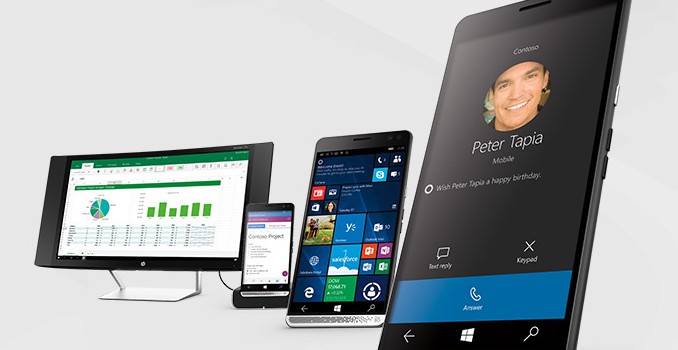
While the internal specifications of the HP Elite x3 are impressive, the company does not position the device as just its flagship smartphone. HP believes that there are enterprise customers interested in using one device for multiple workloads and in various situations by taking advantage of Microsoft’s Continuum technology, which allows you to run your phone as a desktop PC. To support such clients, HP intends to offer a special dock (with an Ethernet adapter, DisplayPort USB connectors, etc.) that can work with desktop displays as well as keyboards. When purchased from the HP online store, the dock should come as standard. In addition, the company plans to sell the Mobile Extender laptop, which does not have its own processor or storage, but relies on the Elite x3. The Mobile Extender has a 12.5” display (with 1920×1080 resolution), USB-C ports, speakers as well as a spill-resistant keyboard with a drain and backlighting.

Current competition, at least in the Continuum space, comes from Acer’s Liquid Jade Primo which was demoed at MWC and quietly shipped several days ago, and the Lumia 950.

According to Engadget, which cites a representative of HP, the phablet itself will cost $699 in the U.S. and $799 when acquired with a dock, starting from August 29. Slashgear claims that the Elite x3 will cost €863 in the Netherlands and 8,624 SEK in Sweden. Unfortunately, the price of the Mobile Extender is still unknown. 

Sources: Engadget, Slashgear, HP Netherlands, HP Sweden.

Verizon Announces Price And Availability For Moto Z And Moto Z Force Droid Editions

Verizon Announces Price And Availability For Moto Z And Moto Z Force Droid Editions

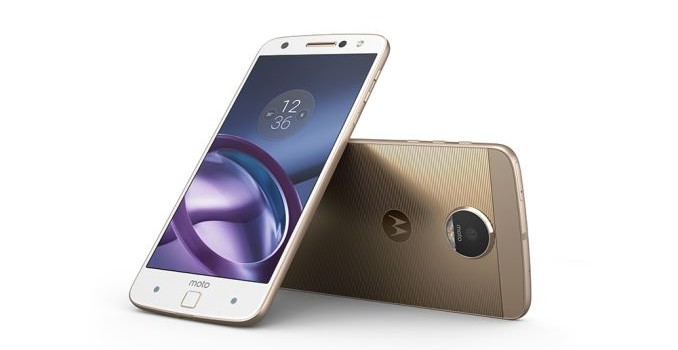
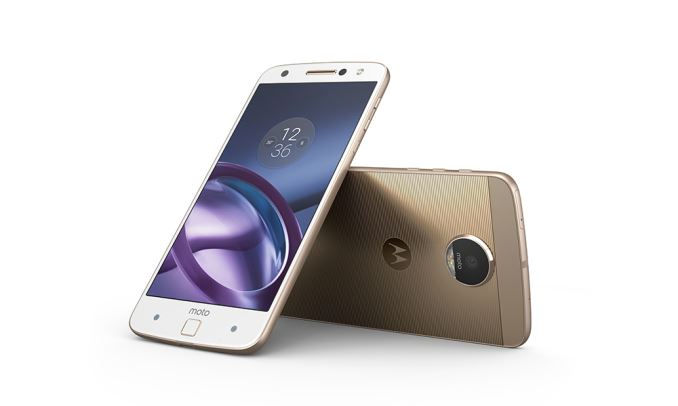
Today Motorola and Verizon announced the availability and pricing details for the Moto Z Droid Edition and the Moto Z Force Droid Edition, the Verizon exclusive versions of Motorola’s Moto Z smartphones. The Moto Z Droid with 32GB of internal storage costs $26 per month for 24 months using Verizon’s device payment plan or $624 total. The Moto Z Force Droid costs $30 per month for 24 months or $720 total. Both phones will also be available with 64GB of NAND through Motorola’s Moto Maker website for an extra $50. The new Moto Z Droids are up for preorder online starting today and will be available for purchase in Verizon stores beginning July 28.

Pricing for the Moto Mods, the modular accessories that snap onto the back of the phones using strong magnets, was also revealed. The JBL SoundBoost speaker, which includes two speakers, a kickstand, and an additional 1000mAh battery, costs $79.99. The Moto Insta-Share DLP projector, which outputs a 854×480 WVGA image at 50 lumens nominal and also includes an 1100mAh battery, is $299.99. Incipio, Kate Spade, and TUMI offer several 2200mAh Power Packs that range in price from $59.99 to $89.99. Each design comes in both standard and wireless charging versions, with the latter supporting the Qi and PMA standards.


Moto Insta-Share Projector, Style Shell, JBL SoundBoost speaker

Just like with past Motorola phones, there are several decorative back plates that allow you to customize the look and feel of the new Droids. These come in several colors and materials, including real wood, leather, and fabric, and sit flush with the rear camera when snapped into place. The decorative Style Shells start at $14.99, with the nylon fabric and wood versions costing $19.99 and the leather-covered plates costing $24.99. All of the Moto Mods and back plates will be available the same day as the phones.

Motorola first announced the Moto Z and Moto Z Force at Lenovo’s Tech World event in June. These new phones replace the Moto X family as the company’s flagship devices. Both phones have a 5.5-inch QHD (2560×1440) AMOLED screen and come with Qualcomm’s Snapdragon 820 SoC, 4GB LPDDR4 RAM, and either 32GB or 64GB of internal storage that’s expandable via microSD.


Moto Z Droid (left) and Moto Z Force Droid (right)

There are a few notable differences between the two models. The Moto Z Droid comes with a smaller 2600mAh battery packed inside an especially thin all-aluminum chassis. The Moto Z Force Droid bumps battery capacity to 3500mAh and increases rear camera resolution to 21MP versus 13MP for the Moto Z Droid. It also includes a hybrid autofocus system that combines PDAF with a laser, which should be a step up from the standard Z’s laser autofocus. Both cameras have f/1.8 apertures and OIS.

While the Moto Z Droid’s screen is covered edge to edge with Corning Gorilla Glass, the Moto Z Force Droid uses Motorola’s second-generation Moto ShatterShield technology, which should improve the screen’s resistance to cracking or shattering if dropped.

For more information about these phones, including a full list of specifications and additional pictures and discussion, please see our original Lenovo Tech World article.

Verizon Announces Price And Availability For Moto Z And Moto Z Force Droid Editions

Verizon Announces Price And Availability For Moto Z And Moto Z Force Droid Editions

Today Motorola and Verizon announced the availability and pricing details for the Moto Z Droid Edition and the Moto Z Force Droid Edition, the Verizon exclusive versions of Motorola’s Moto Z smartphones. The Moto Z Droid with 32GB of internal storage costs $26 per month for 24 months using Verizon’s device payment plan or $624 total. The Moto Z Force Droid costs $30 per month for 24 months or $720 total. Both phones will also be available with 64GB of NAND through Motorola’s Moto Maker website for an extra $50. The new Moto Z Droids are up for preorder online starting today and will be available for purchase in Verizon stores beginning July 28.

Pricing for the Moto Mods, the modular accessories that snap onto the back of the phones using strong magnets, was also revealed. The JBL SoundBoost speaker, which includes two speakers, a kickstand, and an additional 1000mAh battery, costs $79.99. The Moto Insta-Share DLP projector, which outputs a 854×480 WVGA image at 50 lumens nominal and also includes an 1100mAh battery, is $299.99. Incipio, Kate Spade, and TUMI offer several 2200mAh Power Packs that range in price from $59.99 to $89.99. Each design comes in both standard and wireless charging versions, with the latter supporting the Qi and PMA standards.


Moto Insta-Share Projector, Style Shell, JBL SoundBoost speaker

Just like with past Motorola phones, there are several decorative back plates that allow you to customize the look and feel of the new Droids. These come in several colors and materials, including real wood, leather, and fabric, and sit flush with the rear camera when snapped into place. The decorative Style Shells start at $14.99, with the nylon fabric and wood versions costing $19.99 and the leather-covered plates costing $24.99. All of the Moto Mods and back plates will be available the same day as the phones.

Motorola first announced the Moto Z and Moto Z Force at Lenovo’s Tech World event in June. These new phones replace the Moto X family as the company’s flagship devices. Both phones have a 5.5-inch QHD (2560×1440) AMOLED screen and come with Qualcomm’s Snapdragon 820 SoC, 4GB LPDDR4 RAM, and either 32GB or 64GB of internal storage that’s expandable via microSD.


Moto Z Droid (left) and Moto Z Force Droid (right)

There are a few notable differences between the two models. The Moto Z Droid comes with a smaller 2600mAh battery packed inside an especially thin all-aluminum chassis. The Moto Z Force Droid bumps battery capacity to 3500mAh and increases rear camera resolution to 21MP versus 13MP for the Moto Z Droid. It also includes a hybrid autofocus system that combines PDAF with a laser, which should be a step up from the standard Z’s laser autofocus. Both cameras have f/1.8 apertures and OIS.

While the Moto Z Droid’s screen is covered edge to edge with Corning Gorilla Glass, the Moto Z Force Droid uses Motorola’s second-generation Moto ShatterShield technology, which should improve the screen’s resistance to cracking or shattering if dropped.

For more information about these phones, including a full list of specifications and additional pictures and discussion, please see our original Lenovo Tech World article.

Assessing IBM’s POWER8, Part 1: A Low Level Look at Little Endian

A few months ago, IBM brought the relatively cheap S812LC server to the market, making sure the IBM POWER8 is within the budget of almost every datacenter. In this article we assess the capabilities of the “affordable” IBM POWER8 and compare with the Intel Xeon E5 v4 to offer you the very first Little Endian, level playing field benchmarks.  

Assessing IBM’s POWER8, Part 1: A Low Level Look at Little Endian

A few months ago, IBM brought the relatively cheap S812LC server to the market, making sure the IBM POWER8 is within the budget of almost every datacenter. In this article we assess the capabilities of the “affordable” IBM POWER8 and compare with the Intel Xeon E5 v4 to offer you the very first Little Endian, level playing field benchmarks.