Vik


HP and MSI Demonstrate Backpack PCs for VR Gaming
HP and MSI Demonstrate Backpack PCs for VR Gaming

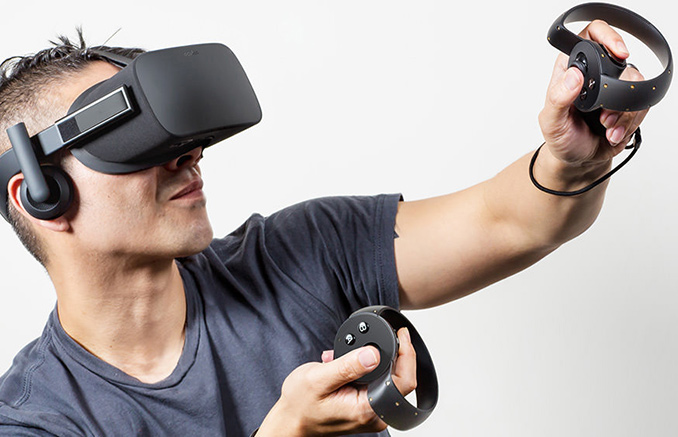
Virtual reality gaming promises to drive demand for higher-performance graphics cards as well as richer game content. But even before the first AAA VR games make their debut, computer manufacturers are inventing a new PC form-factor specifically for virtual reality gaming: backpack PCs. Truth to be told, the concept of such systems sounds somewhat odd, but HP and MSI think it’s worth investigating ahead of any attempts at commercialization.

Virtual reality gear changes the way we perceive games, whereas specially designed controllers (e.g., Oculus Touch) are supposed to change the way we interact with video games. Meanwhile, backpack PCs are expected improve the way we feel VR video games by enabling relative freedom of movements by making wiring of the VR headsets a little more comfortable.  

Backpack PCs are essentially fully-fledged personal computers without displays, which are integrated into special backpacks, which can then be worn and used to play games. For example, MSI’s Backpack PC contains Intel’s mobile Core i7 Extreme processo as well as NVIDIA’s GeForce GTX 980 graphics adapter along with RAM, SSD, networking capabilities and so on. Meanwhile, HP’s Omen X VR Backpack Concept integrates an Intel Core i5/i7 CPU as well as up to 32 GB of memory (which implies on rather high-end specs in general). The HP backpack PC features only one HDMI output, two USB ports as well as an audio jack (everything one needs to connect the HTC Vive) and a power input. As of now, the Omen X VR Backpack Concept has a battery that only lasts an hour, but allows swapping bats without shutting the PC down. Both systems are compatible with wireless keyboards and mice, so users can navigate typical Windows apps (or rather solve problems with software) with relative convenience.

Because it is not possible to build wireless VR headsets due to latency issues right now, backpack PCs can indeed improve VR experience. However, keep in mind that Oculus Rift’s positional tracking system (the Constellation) connects to PCs using a USB cable, which means that while the backpack PC can enable some additional freedom of movement compared to conventional desktops or laptops, it still needs to connect to the Constellation IR LED sensor for positional tracking. With the HTC Vive everything is a little easier since the tracking system does not need to be connected to the PC itself.

HP plans to supply its Omen X VR Backpack Concept to select software developers in the coming weeks. This will help the company not only to ensure that makers of apps take such PCs into account when they create their programs, but will eventually provide them with valuable input regarding necessary design and features. In addition, the backpack PCs are going to be used in various VR showrooms to demonstrate advantages of virtual reality.

It is unknown if and when backpack PCs will make it to the market, and how much companies like MSI or HP intend to charge for such systems.

Right now, the backpack PCs help game developers to design games, which will be used with wireless VR headsets when and if they emerge. However, it is unclear how comfortable it is to play a game with a PC on your back, albeit, a small one. Therefore, it is difficult to say whether backpack PCs can be commercially successful.

Sources: MSI, Tom’s Guide, The Verge.
Micron Launches 3D NAND Client SSDs

Micron Launches 3D NAND Client SSDs

Today Micron is announcing their first client/OEM SSDs with 3D NAND. First mentioned at an enterprise announcement event in April, the Micron 1100 and 2100 SSDs are part of an aggressive transition strategy that has switched almost all of their flash production capacity over to 3D NAND and left only enough 16nm output to fulfill their obligations for existing product lines.

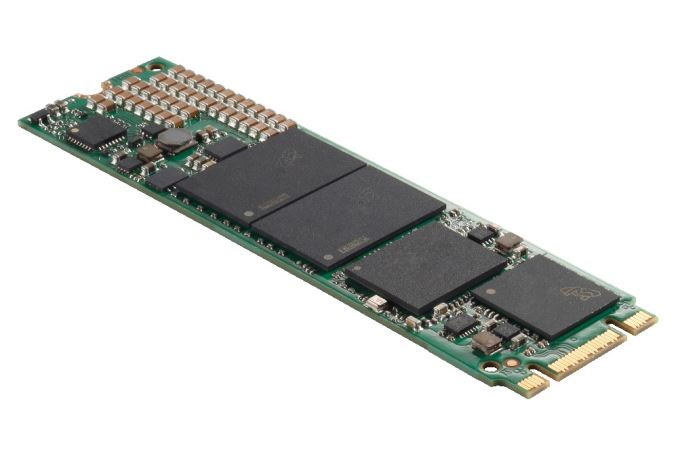
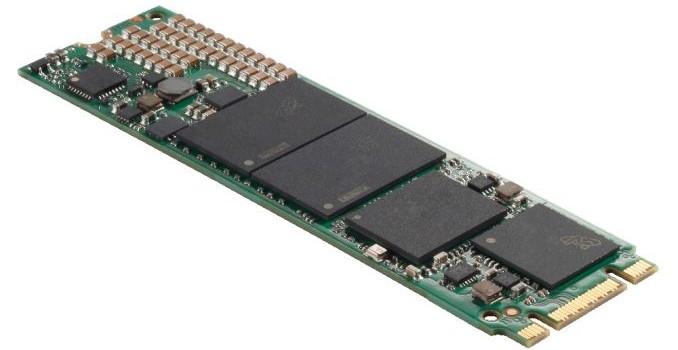
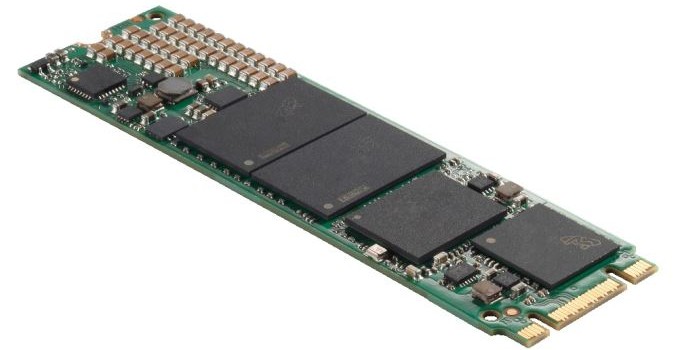
The Micron 1100 is a mainstream client SATA drive in M.2 and 2.5″ form factors. It uses Marvell’s 88SS1074 controller and Micron’s 384Gb 32-layer TLC NAND and is the replacement for the Micron M600, which used their 16nm MLC. Micron’s 3D TLC is unusual in having a capacity (48GB) that is not a power of two, but the 1100 retains the traditional drive capacity points of 256GB, 512GB and 1TB, and extends the line to 2TB. Micron hasn’t yet disclosed how many dies and how much overprovisioning each model will have, but the 256GB model will probably include 6 dies giving a raw capacity of 288 GiB.

Micron 1100 Specifications
Capacity 256GB 512GB 1TB 2TB
Controller Marvell 88SS1074
NAND Micron 384Gb 32-layer 3D TLC
Form Factors 2.5″ 7mm, M.2 2280 single-sided 2.5″ 7mm
Sequential Read 530MB/s 530MB/s 530MB/s 530MB/s
Sequential Write 500MB/s 500MB/s 500MB/s 500MB/s
4KB Random Read 55K IOPS 92K IOPS 92K IOPS 92K IOPS
4KB Random Write 83K IOPS 83K IOPS 83K IOPS 83K IOPS
DevSlp Idle Power 2mW 2mW 4mW 25mW
Encryption TCG Opal
Endurance 120TB 240TB 400TB 400TB

The Micron 1100 has slightly reduced performance and endurance specifications relative to the M600, but it retains the full feature set including TCG Opal encryption, partial power loss protection and SLC caching. The Marvell 88SS1074 was designed with TLC NAND in mind and thus also brings LDPC error correction support.

The Micron 2100 M.2 PCIe NVME will be Micron’s first client PCIe SSD and their first PCIe SSD with 3D NAND. Micron has not yet finalized the technical specifications for the 2100, but we do know it will be available in capacities up to 1TB as a double-sided M.2 2280 card.

The Micron 1100 will begin mass production in July, followed by the 2100 by the end of summer.

Micron Launches 3D NAND Client SSDs

Micron Launches 3D NAND Client SSDs

Today Micron is announcing their first client/OEM SSDs with 3D NAND. First mentioned at an enterprise announcement event in April, the Micron 1100 and 2100 SSDs are part of an aggressive transition strategy that has switched almost all of their flash production capacity over to 3D NAND and left only enough 16nm output to fulfill their obligations for existing product lines.

The Micron 1100 is a mainstream client SATA drive in M.2 and 2.5″ form factors. It uses Marvell’s 88SS1074 controller and Micron’s 384Gb 32-layer TLC NAND and is the replacement for the Micron M600, which used their 16nm MLC. Micron’s 3D TLC is unusual in having a capacity (48GB) that is not a power of two, but the 1100 retains the traditional drive capacity points of 256GB, 512GB and 1TB, and extends the line to 2TB. Micron hasn’t yet disclosed how many dies and how much overprovisioning each model will have, but the 256GB model will probably include 6 dies giving a raw capacity of 288 GiB.

Micron 1100 Specifications
Capacity 256GB 512GB 1TB 2TB
Controller Marvell 88SS1074
NAND Micron 384Gb 32-layer 3D TLC
Form Factors 2.5″ 7mm, M.2 2280 single-sided 2.5″ 7mm
Sequential Read 530MB/s 530MB/s 530MB/s 530MB/s
Sequential Write 500MB/s 500MB/s 500MB/s 500MB/s
4KB Random Read 55K IOPS 92K IOPS 92K IOPS 92K IOPS
4KB Random Write 83K IOPS 83K IOPS 83K IOPS 83K IOPS
DevSlp Idle Power 2mW 2mW 4mW 25mW
Encryption TCG Opal
Endurance 120TB 240TB 400TB 400TB

The Micron 1100 has slightly reduced performance and endurance specifications relative to the M600, but it retains the full feature set including TCG Opal encryption, partial power loss protection and SLC caching. The Marvell 88SS1074 was designed with TLC NAND in mind and thus also brings LDPC error correction support.

The Micron 2100 M.2 PCIe NVME will be Micron’s first client PCIe SSD and their first PCIe SSD with 3D NAND. Micron has not yet finalized the technical specifications for the 2100, but we do know it will be available in capacities up to 1TB as a double-sided M.2 2280 card.

The Micron 1100 will begin mass production in July, followed by the 2100 by the end of summer.