Vik


Intel Announces Major Workforce Restructuring: 11% of Workforce to Be Cut Over Next Year
Intel Announces Major Workforce Restructuring: 11% of Workforce to Be Cut Over Next Year

Ahead of today’s Q1 2016 earnings release and call, Intel has announced that they are going to be cutting a significant number of jobs over the next year. The job cuts come as part of Intel’s larger and ongoing restructuring efforts, as the company grapples with an overall soft PC market and continued struggle to carve out a larger piece of the mobile market. Ultimately Intel’s looking to invest in what they consider to be high-growth areas, which means laying off employees in stagnant business units while making other investments in those areas that are seeing continued growth.

The job cuts themselves are expected to involve up to 12,000 employees, or about 11% of the company’s workforce. Intel will be eliminating positions through a combination of both voluntary and involuntary layoffs, and in the process will be consolidating the remaining workforce and their respective sites. Intel expects the bulk of the layoffs to occur within the next 60 days, with the entire process stretching into mid-2017.

The company’s pre-earnings announcement does not state where these layoffs will come from, and we’re expecting at least some additional detail to come out of the company’s earnings call which is still on-going. However the company is reiterating what markets and businesses they see as growth opportunities and will be investing into for the future, which offers some basic guidance on what the company sees as their most important businesses. Intel’s Data Center and Internet of Things businesses are specifically being cited as their stand-out businesses, which combined with memory and FPGAs provided 40% of the company’s revenue and a majority of their operating profit. Meanwhile in the consumer/client market Intel has seen good returns on 2-in-1s, gaming and home gateways. Conversely, the overall (client) PC market is still in decline, and I expect that a number of the cuts will be centered on that.

Finally, Intel has also detailed the costs of their restructuring. The company will incur a one-time charge of $1.2 billion in Q2, with this presumably being a significant number of severance payments. In turn, the company expects to save $750 million this year, with an annual run rate savings of $1.4 billion per year after the last of the layoffs are completed in mid-2017.

We’ll update this article later today with more information once it comes out of Intel’s earnings call. Ultimately the soft PC market has been a continuing trend for Intel over the past few years, so that we’re seeing Intel react to it now is not unexpected. However it will be important to see just how the layoffs are organized – for example, if Intel makes much in the way of cuts in the fab business – as Intel is a large company. What this means for future client PC investments, mobile, could prove to be significant.

Update: Intel’s earnings call has shed a bit more light on the restructuring, but Intel is not spelling out exactly where the bulk of the cuts are coming from at this time.

Overall Intel did reiterate that although the client business has been weak, the company’s restructuring plans will be touching more than the client business. The impact to the client business then is that it is being refocused via the restructuring, hence the earlier comments on what Intel sees as the client growth markets. Undoubtedly aspects of the client business are in the crosshairs given the continued slowness in the market, but Intel isn’t saying too much more than that.

The company has also made it clear that they’re not backing off on fab/manufacturing investments in the near future. Capital expenditures on 10nm and 3D NAND continue untouched even with the restructuring, and overall Intel’s technology cadence plans have not changed. Farther ahead, the company has indicated that they are being mindful of their capable competition, and that they need to stay ahead of them, including getting back to a two-year cycle if at all possible.

Finally, Intel has offered a bit more information on the timeline for the restructuring itself. While the majority of the notices to employees will go out in 60 days, the projection is that only about half of the layoffs will be completed by the end of this year, which implies the rest will happen in H1 2017. Part of this comes down to the fact that while Intel has a target number for employment, they have not decided whether they will end any product lines entirely. Intel is in the process of undergoing a complete review of the business to identify any products the company may want to cease, and Brian Krzanich has said that when the review is done there’s likely to be a few products that get flagged.
Apple Refreshes MacBook with Skylake-based Core M and New Rose Gold Color

Apple Refreshes MacBook with Skylake-based Core M and New Rose Gold Color

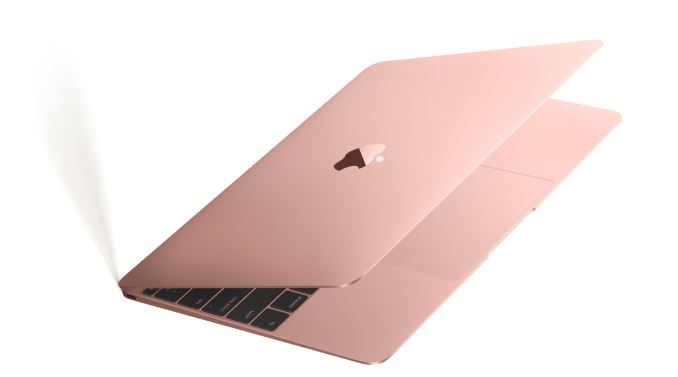
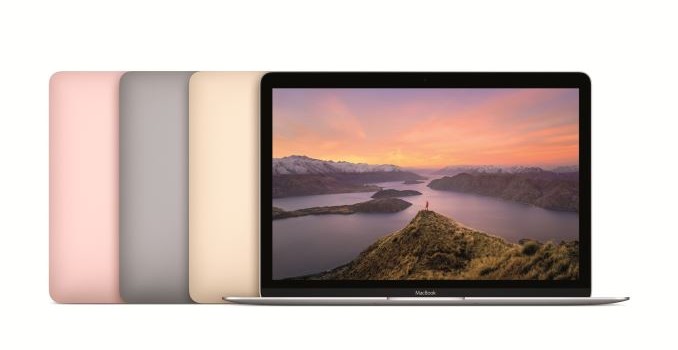
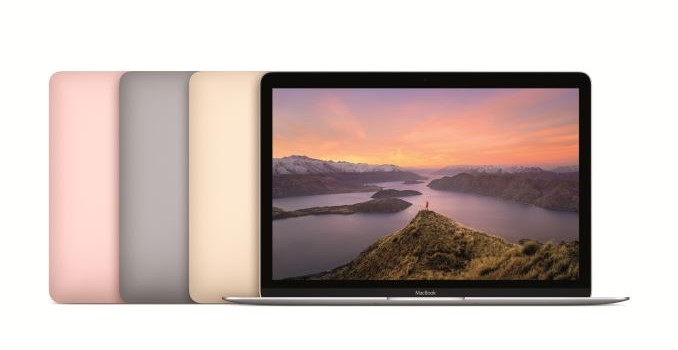
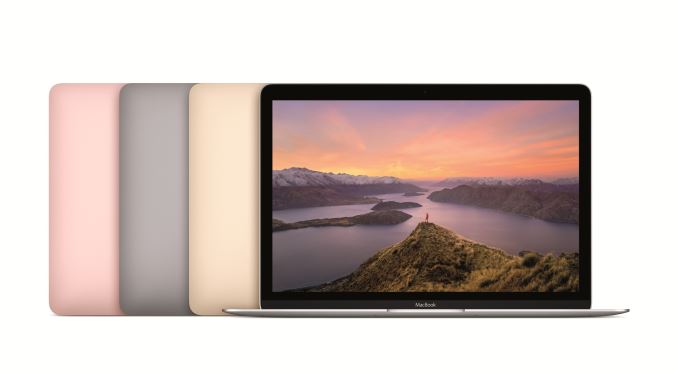
Today Apple has introduced its new generation of its MacBook laptops. On the specification sheets, this generation introduces Intel Skylake based Core m processors, updated integrated graphics, a faster storage solution (either controller or NAND), faster DRAM and bigger batteries. The new notebooks use the same thin chassis and retina-class display as the Broadwell-based MacBooks released last year, but in using the new Skylake silicon the new models are are expected faster and more energy-efficient, and combined with bigger batteries should mean longer battery life. Apple is also expanding the color options, bringing the popular Rose Gold option from the iPhone line to the Macbook.

The new Apple MacBook line is based on the dual-core Intel Core M processors based on the newest Skylake microarchitecture as well as the ninth-generation of Intel’s integrated graphics (HD 515, Gen9) with improved media playback support. The new processors are the Core m3-6Y30, the Core m5-6Y54 and the Core m7-6Y75, but are upgraded from their listed base frequencies due to Apple using them in a ‘configurable 7W TDP up’ mode. This adjusts the base frequency up by 100-200 MHz and offers more TDP headroom for longer turbo periods. The latest microarchitecture and increased frequencies should increase the base performance of the new laptops in general-purpose applications whereas hardware-accelerated playback of HEVC and VP9 video streams should improve battery life in video streaming scenarios. Just like predecessors, the new laptops use 8 GB of memory, using LPDDR3  to minimize power consumption of memory sub-system. This time, Apple uses LPDDR3-1866 memory for its MacBook, which is a tad faster than the LPDDR3-1600 DRAM it used last year. This should have a knock-on effect on the integrated graphics performance as well.

Apple MacBook Line
  2015 (Broadwell) 2016 (Skylake)
CPU SKU Intel Core
M-5Y31
Intel Core
M-5Y51
Intel Core
M-5Y71
Intel Core
m3-6Y30
Intel Core
m5-6Y54
Intel Core
m7-6Y75
cTDP Up 7W cTDP Up
Base 1.1 GHz  1.2 GHz 1.3 GHz  1.1 GHz 1.2 GHz 1.3 GHz
Turbo 2.4 GHz  2.6 GHz 2.9 GHz  2.2 GHz  2.7 GHz  3.1 GHz
GPU SKU Intel HD Graphics 5300 (GT2)
24 EUs, Gen 8
Intel HD Graphics 515 (GT2)
24 EUs, Gen 9
Base 300 MHz 300 MHz
Turbo 850 MHz  900 MHz 850 MHz 900 MHz  950 MHz
DRAM 8GB LPDDR3-1600 8GB LPDDR3-1866
PCIe SSD 256 GB 512 GB 256 GB
512 GB
256 GB 512 GB 256 GB
512 GB
PCIe 2.0 x4 PCIe 3.0 x4?
Display 12-inch 2304×1440 IPS LCD
Ports 1 x USB 3.1 (Gen 1) Type-C
3.5mm combo jack
Network 2×2:2 802.11ac with BT 4.0
Battery 39.7 Wh 41.4 Wh
Dimensions H: 0.14-0.52-inch
W: 11.04-inch
D: 7.74-inch
Weight 2.03 lbs (0.92 kg)
Colors Space Gray
Gold
Silver
Space Gray
Gold
Silver
Rose Gold
Price $1299 $1599 $1749 $1299 $1599 $1749 ?

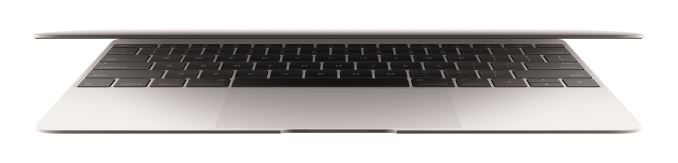
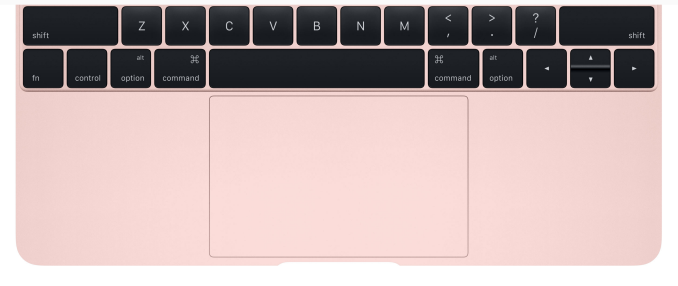
Since the chassis and the monitor essentially remained the same as last year, we are still talking about a machine with 12” IPS display panel with 2304×1440 resolution and a full-size keyboard. The maximum thickness of the new MacBook is 1.31 cm (0.52”) and the weight is 0.92 kg (2.03 pounds), similar to the first-gen model.

Apple claims that the new MacBook laptops feature upgraded solid-state storage, which relies on the PCIe bus, but it offers higher performance than the previous-gen SSD the company used on its 2015 MacBook. Last year the company essentially used its own SSD with its own controller, based on iFixit.com’s findings. Perhaps, this year Apple uses a new-gen SSD design developed in-house. Unfortunately, the company remains tight-lipped regarding the nature of its SSD improvements, but only discloses that they are faster than the predecessors. Last year’s MacBook used a PCIe 2.0 x4 NVMe interface – moving to Skylake Core M and the fact that Skylake’s PCH supports PCIe 3.0 by default means that the new drive is most likely PCIe 3.0, but we’re not sure if it is still x4, or if something else has changed. We are asking about this!

In addition to the new components, Apple also uses larger 41.4-watt-hour lithium-polymer terraced battery, compared to a 39.7 watt-hour battery used on the previous-gen model, which should enable longer battery life. Apple itself declares up to 10 hours of wireless web browsing and up to 11 hours of iTunes movie playback, which is an hour longer than before. 

The laptop still features a single USB Type-C port with 5 Gbps transfer rate, which can be used for charging, connection to an external display (up to 3840×2160 resolution at 30 Hz refresh rate is supported) and so on. The notebook also has two microphones, a TRRS connector for headsets and a 480p FaceTime camera. Wireless networking capabilities of the notebook also remained untouched: the notebook supports dual-band 2×2 802.11ac Wi-Fi as well as Bluetooth 4.0. 

One element worth noting is that the use of Skylake Core M should open up features such as Speed Shift to Apple, where the system has the ability to respond quicker to CPU demands up to 30x and finish quick tasks faster than the previous generation even recognizes the request for a high-performance mode. This becomes significant for responsiveness and user experience, but Speed Shift requires specific OS support. Intel worked closely with Microsoft to enable it for Windows 10, and at this point Apple has not stated publicly if the new MacBook will support Speed Shift out of the box or will be in a future OS update.

The new Apple MacBook laptops are available from Apple directly starting today and from its partners starting April 20, 2016. The most basic Apple MacBook model with Intel Core m3-6Y30 SoC, 8 GB of memory and 256 GB of solid-state storage costs $1299. The more advanced model featuring the Core m5-6Y54 and 512 GB of storage retails for $1599. The Core m7-based model is built-to-order and its price will be higher although we expect it to be similarly priced to the upgraded Broadwell model.

Apple Refreshes MacBook with Skylake-based Core M and New Rose Gold Color

Apple Refreshes MacBook with Skylake-based Core M and New Rose Gold Color

Today Apple has introduced its new generation of its MacBook laptops. On the specification sheets, this generation introduces Intel Skylake based Core m processors, updated integrated graphics, a faster storage solution (either controller or NAND), faster DRAM and bigger batteries. The new notebooks use the same thin chassis and retina-class display as the Broadwell-based MacBooks released last year, but in using the new Skylake silicon the new models are are expected faster and more energy-efficient, and combined with bigger batteries should mean longer battery life. Apple is also expanding the color options, bringing the popular Rose Gold option from the iPhone line to the Macbook.

The new Apple MacBook line is based on the dual-core Intel Core M processors based on the newest Skylake microarchitecture as well as the ninth-generation of Intel’s integrated graphics (HD 515, Gen9) with improved media playback support. The new processors are the Core m3-6Y30, the Core m5-6Y54 and the Core m7-6Y75, but are upgraded from their listed base frequencies due to Apple using them in a ‘configurable 7W TDP up’ mode. This adjusts the base frequency up by 100-200 MHz and offers more TDP headroom for longer turbo periods. The latest microarchitecture and increased frequencies should increase the base performance of the new laptops in general-purpose applications whereas hardware-accelerated playback of HEVC and VP9 video streams should improve battery life in video streaming scenarios. Just like predecessors, the new laptops use 8 GB of memory, using LPDDR3  to minimize power consumption of memory sub-system. This time, Apple uses LPDDR3-1866 memory for its MacBook, which is a tad faster than the LPDDR3-1600 DRAM it used last year. This should have a knock-on effect on the integrated graphics performance as well.

Apple MacBook Line
  2015 (Broadwell) 2016 (Skylake)
CPU SKU Intel Core
M-5Y31
Intel Core
M-5Y51
Intel Core
M-5Y71
Intel Core
m3-6Y30
Intel Core
m5-6Y54
Intel Core
m7-6Y75
cTDP Up 7W cTDP Up
Base 1.1 GHz  1.2 GHz 1.3 GHz  1.1 GHz 1.2 GHz 1.3 GHz
Turbo 2.4 GHz  2.6 GHz 2.9 GHz  2.2 GHz  2.7 GHz  3.1 GHz
GPU SKU Intel HD Graphics 5300 (GT2)
24 EUs, Gen 8
Intel HD Graphics 515 (GT2)
24 EUs, Gen 9
Base 300 MHz 300 MHz
Turbo 850 MHz  900 MHz 850 MHz 900 MHz  950 MHz
DRAM 8GB LPDDR3-1600 8GB LPDDR3-1866
PCIe SSD 256 GB 512 GB 256 GB
512 GB
256 GB 512 GB 256 GB
512 GB
PCIe 2.0 x4 PCIe 3.0 x2
Display 12-inch 2304×1440 IPS LCD
Ports 1 x USB 3.1 (Gen 1) Type-C
3.5mm combo jack
Network 2×2:2 802.11ac with BT 4.0
Battery 39.7 Wh 41.4 Wh
Dimensions H: 0.14-0.52-inch
W: 11.04-inch
D: 7.74-inch
Weight 2.03 lbs (0.92 kg)
Colors Space Gray
Gold
Silver
Space Gray
Gold
Silver
Rose Gold
Price $1299 $1599 $1749 $1299 $1599 $1749 ?

Since the chassis and the monitor essentially remained the same as last year, we are still talking about a machine with 12” IPS display panel with 2304×1440 resolution and a full-size keyboard. The maximum thickness of the new MacBook is 1.31 cm (0.52”) and the weight is 0.92 kg (2.03 pounds), similar to the first-gen model.

Apple claims that the new MacBook laptops feature upgraded solid-state storage, which relies on the PCIe bus, but it offers higher performance than the previous-gen SSD the company used on its 2015 MacBook. Last year the company essentially used its own SSD with its own controller, based on iFixit.com’s findings. Perhaps, this year Apple uses a new-gen SSD design developed in-house. Unfortunately, the company remains tight-lipped regarding the nature of its SSD improvements, but only discloses that they are faster than the predecessors. Last year’s MacBook used a PCIe 2.0 x4 NVMe interface – moving to Skylake Core M and the fact that Skylake’s PCH supports PCIe 3.0 by default means that the new drive is most likely PCIe 3.0, but we’re not sure if it is still x4, or if something else has changed. We are asking about this!

In addition to the new components, Apple also uses larger 41.4-watt-hour lithium-polymer terraced battery, compared to a 39.7 watt-hour battery used on the previous-gen model, which should enable longer battery life. Apple itself declares up to 10 hours of wireless web browsing and up to 11 hours of iTunes movie playback, which is an hour longer than before. 

The laptop still features a single USB Type-C port with 5 Gbps transfer rate, which can be used for charging, connection to an external display (up to 3840×2160 resolution at 30 Hz refresh rate is supported) and so on. The notebook also has two microphones, a TRRS connector for headsets and a 480p FaceTime camera. Wireless networking capabilities of the notebook also remained untouched: the notebook supports dual-band 2×2 802.11ac Wi-Fi as well as Bluetooth 4.0. 

One element worth noting is that the use of Skylake Core M should open up features such as Speed Shift to Apple, where the system has the ability to respond quicker to CPU demands up to 30x and finish quick tasks faster than the previous generation even recognizes the request for a high-performance mode. This becomes significant for responsiveness and user experience, but Speed Shift requires specific OS support. Intel worked closely with Microsoft to enable it for Windows 10, and at this point Apple has not stated publicly if the new MacBook will support Speed Shift out of the box or will be in a future OS update.

The new Apple MacBook laptops are available from Apple directly starting today and from its partners starting April 20, 2016. The most basic Apple MacBook model with Intel Core m3-6Y30 SoC, 8 GB of memory and 256 GB of solid-state storage costs $1299. The more advanced model featuring the Core m5-6Y54 and 512 GB of storage retails for $1599. The Core m7-based model is built-to-order and its price will be higher although we expect it to be similarly priced to the upgraded Broadwell model.

Western Digital Introduces WD Gold HDDs for Datacenters

Western Digital Introduces WD Gold HDDs for Datacenters

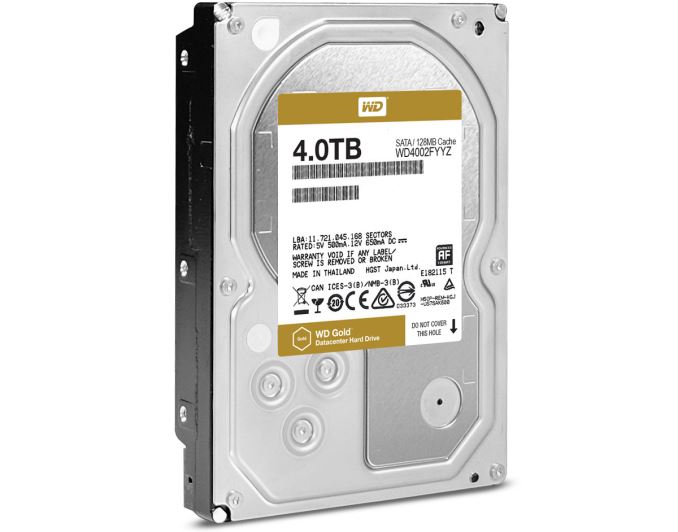
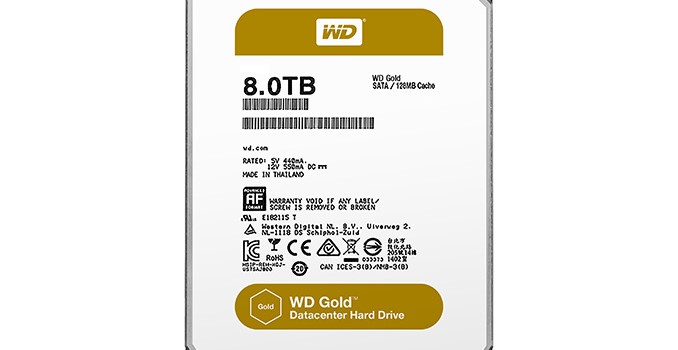
Western Digital has announced a new family of hard drives specifically for data centers. The new WD Gold HDDs will feature multiple technologies that the company uses to build other drives, including helium and large caches. The WD Gold HDDs will co-exist with the company’s WD Re drives for some time, but as the new family expands, it will eventually replace the previous-gen devices.

The initial WD Gold family will consist of three models: with 4 TB, 6 TB and 8 TB capacities. All three drives seem to be based on different platforms and on different platters, but all of them have 7200 RPM spindle speed and feature new-generation electronics, which is claimed to improve power efficiency by up to 15% according to WD. The new drives come in a 3.5” form-factor and will use SATA 6 Gbps interface exclusively at this point. The WD Gold HDDs are designed for a variety of applications, including small to medium-scale enterprise servers and storage, as well as rack-mount data center servers and storage enclosures.

Comparison of Western Digital’s WD Gold HDDs
  WD8002FRYZ WD6002FRYZ WD4002FRYZ
Capacity 8 TB 6 TB 4 TB
RPM 7200 RPM
Interface SATA 6 Gbps
DRAM Cache 128 MB
NAND Cache No Yes Unknown
Helium-Filling Yes No
MTBF 2.5 million
Rated Workload (Drive Writes Per Day) 0.189 0.251 0.377
Equivalent of 550 TB of Writes per Year
Acoustics (Seek) 36 dBA
Power Rating 7.40 W 9.10 W
Warranty 5 Years
Price $629 $499 $309
$0.0768 per GB $0.0812 per GB $0.0754 per GB
13.02 GB per $ 12.31 GB per $ 13.26 GB per $

Being data center-oriented HDDs, the WD Gold hard drives are optimized for RAID environments and they support enhanced RAFF technology that protects against vibration (by monitoring linear and rotational vibration in real time) as well as head positioning system with two actuators, which improves positional accuracy. The drives also support WD’s time-limited error recovery technology (TLER), which prevents drive fallout caused by extended HDD error recovery processes.

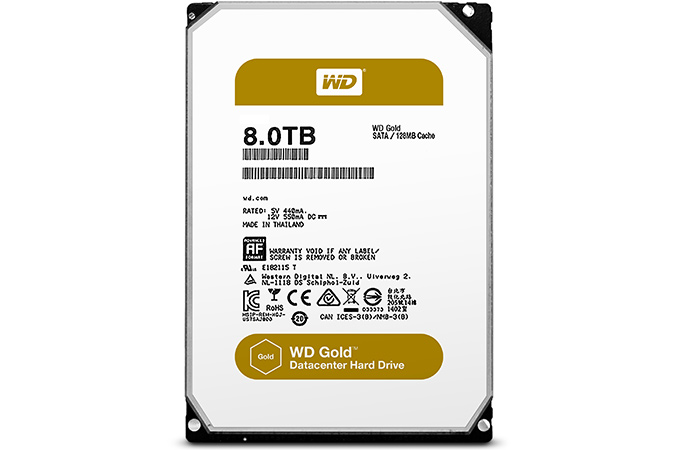
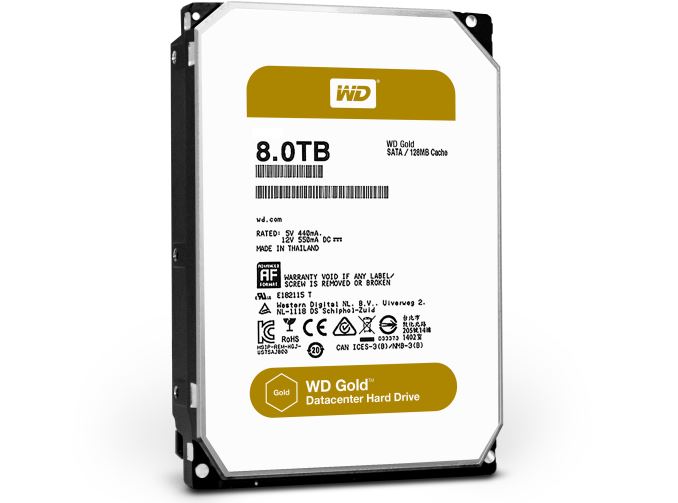
The flagship WD Gold hard drive with 8 TB capacity is Helium based, similar to the HelioSeal platform originally designed by HGST. Western Digital does not reveal the number of platters inside the drive but confirms that these are PMR (perpendicular magnetic recording) platters. Using helium rather than air between the platters helps to reduce power consumption of HDDs compared to non-helium models due to the lower drag force coefficients of helium compared to air – this allows for less friction between heads and the air, as well as platter spinning. All WD Gold HDDs are rated for 2.5 million hours MTBF to signal high reliability. 

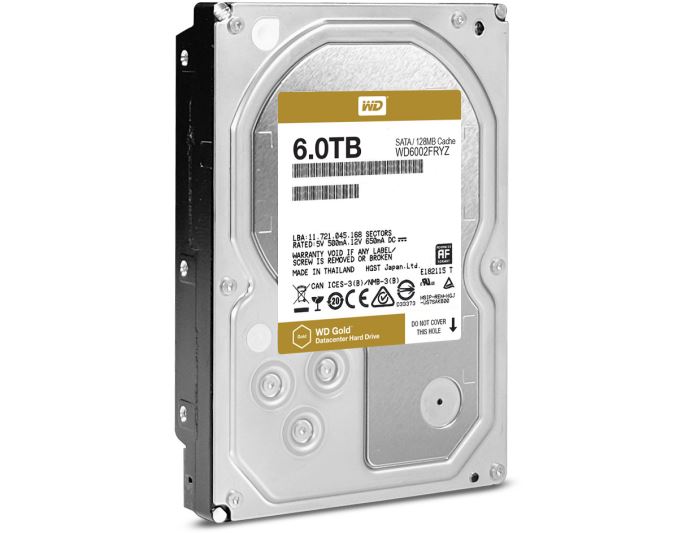
Next up is the WD Gold 6 TB HDD, which uses a more regular HDD arrangement in air, but which features a media-based cache to improve random write performance over the previous generation WD Re 6 TB hard drive. WD is claiming up to 30% better random write performance. Western Digital does not reveal a lot of details about its “media-based cache”, but it is logical to assume that it uses NAND flash memory as a write buffer which then spins down onto the platters during downtime. Unfortunately, we have no idea about its capacity or actual performance. The drive features modern PMR platters and it may be the world’s first data center-class hybrid HDD (with rotating media as well as NAND cache). It is interesting to note that also the drives are sold under the WD trademark, they have HGST’s markings, which may mean that they were developed by Western Digital’s Japan-based subsidiary.

The entry-level WD Gold 4 TB model is claimed to offer up to 18% sequential performance improvement over previous-generation WD Re 4 TB data center drives, but the company does not reveal whether the new HDDs also feature any media-based cache, or its performance advantages are a result of the new electronics, new platters, and/or a new controller. Just like the 6 TB model, the WD Gold 4 TB has HGST Japan marking.

The new family of WD Gold hard drives demonstrates how Western Digital can build HDDs that are tailored for particular needs, which is becoming more important in an industry that is seeing unit volumes decrease over time. The flagship WD Gold 8 TB is optimized for lower power consumption and higher capacity, whereas the mid-range WD Gold 6 TB is optimized for performance.

The new WD Gold HDDs are available at select distributors and resellers in the U.S. as well as from the company’s online store.

Western Digital Introduces WD Gold HDDs for Datacenters

Western Digital Introduces WD Gold HDDs for Datacenters

Western Digital has announced a new family of hard drives specifically for data centers. The new WD Gold HDDs will feature multiple technologies that the company uses to build other drives, including helium and large caches. The WD Gold HDDs will co-exist with the company’s WD Re drives for some time, but as the new family expands, it will eventually replace the previous-gen devices.

The initial WD Gold family will consist of three models: with 4 TB, 6 TB and 8 TB capacities. All three drives seem to be based on different platforms and on different platters, but all of them have 7200 RPM spindle speed and feature new-generation electronics, which is claimed to improve power efficiency by up to 15% according to WD. The new drives come in a 3.5” form-factor and will use SATA 6 Gbps interface exclusively at this point. The WD Gold HDDs are designed for a variety of applications, including small to medium-scale enterprise servers and storage, as well as rack-mount data center servers and storage enclosures.

Comparison of Western Digital’s WD Gold HDDs
  WD8002FRYZ WD6002FRYZ WD4002FRYZ
Capacity 8 TB 6 TB 4 TB
RPM 7200 RPM
Interface SATA 6 Gbps
DRAM Cache 128 MB
NAND Cache No Yes Unknown
Helium-Filling Yes No
MTBF 2.5 million
Rated Workload (Drive Writes Per Day) 0.189 0.251 0.377
Equivalent of 550 TB of Writes per Year
Acoustics (Seek) 36 dBA
Power Rating 7.40 W 9.10 W
Warranty 5 Years
Price $629 $499 $309
$0.0768 per GB $0.0812 per GB $0.0754 per GB
13.02 GB per $ 12.31 GB per $ 13.26 GB per $

Being data center-oriented HDDs, the WD Gold hard drives are optimized for RAID environments and they support enhanced RAFF technology that protects against vibration (by monitoring linear and rotational vibration in real time) as well as head positioning system with two actuators, which improves positional accuracy. The drives also support WD’s time-limited error recovery technology (TLER), which prevents drive fallout caused by extended HDD error recovery processes.

The flagship WD Gold hard drive with 8 TB capacity is Helium based, similar to the HelioSeal platform originally designed by HGST. Western Digital does not reveal the number of platters inside the drive but confirms that these are PMR (perpendicular magnetic recording) platters. Using helium rather than air between the platters helps to reduce power consumption of HDDs compared to non-helium models due to the lower drag force coefficients of helium compared to air – this allows for less friction between heads and the air, as well as platter spinning. All WD Gold HDDs are rated for 2.5 million hours MTBF to signal high reliability. 

Next up is the WD Gold 6 TB HDD, which uses a more regular HDD arrangement in air, but which features a media-based cache to improve random write performance over the previous generation WD Re 6 TB hard drive. WD is claiming up to 30% better random write performance. Western Digital does not reveal a lot of details about its “media-based cache”, but it is logical to assume that it uses NAND flash memory as a write buffer which then spins down onto the platters during downtime. Unfortunately, we have no idea about its capacity or actual performance. The drive features modern PMR platters and it may be the world’s first data center-class hybrid HDD (with rotating media as well as NAND cache) for nearline applications. It is interesting to note that also the drives are sold under the WD trademark, they have HGST’s markings, which may mean that they were developed by Western Digital’s Japan-based subsidiary.

The entry-level WD Gold 4 TB model is claimed to offer up to 18% sequential performance improvement over previous-generation WD Re 4 TB data center drives, but the company does not reveal whether the new HDDs also feature any media-based cache, or its performance advantages are a result of the new electronics, new platters, and/or a new controller. Just like the 6 TB model, the WD Gold 4 TB has HGST Japan marking.

The new family of WD Gold hard drives demonstrates how Western Digital can build HDDs that are tailored for particular needs, which is becoming more important in an industry that is seeing unit volumes decrease over time. The flagship WD Gold 8 TB is optimized for lower power consumption and higher capacity, whereas the mid-range WD Gold 6 TB is optimized for performance.

The new WD Gold HDDs are available at select distributors and resellers in the U.S. as well as from the company’s online store.