Vik


Microsoft Rolls Out Windows 10 Mobile To Windows Phone 8.1 Devices
Microsoft Rolls Out Windows 10 Mobile To Windows Phone 8.1 Devices

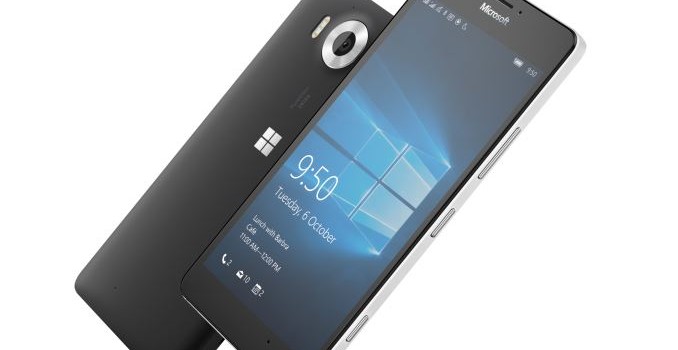
The journey of Windows 10 Mobile from announcement to release has certainly been a strange one. The OS itself was announced roughly one year ago, and around that time Microsoft stated that it would make its way to existing Windows Phone 8.1 devices in December. As December of 2015 came and went, they issued another statement which said that it would be pushed to the first part of 2016.

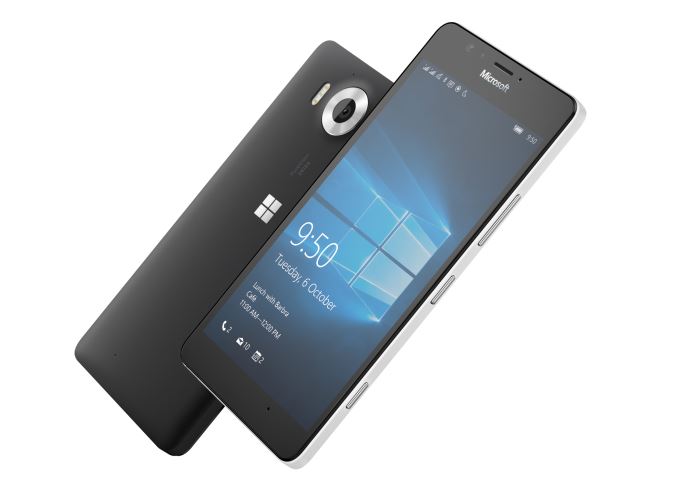
The delays with the release of the OS were fairly well understood by users participating in the Insider beta program, as there were clearly areas that needed to be improved before the software could be widely released. However, October brought about an oddity of sorts as the Lumia 950 and 950XL launched with Windows 10 Mobile while the OS still felt unfinished to users who were beta testing it. While I won’t get in to the state of Windows 10 Mobile as it launched in October, the launch of the 950 and 950XL made it clear that the OS needed to come soon to the rest of the Windows Phone user base.

Today Microsoft has made good on their promise to bring Windows 10 Mobile to select Windows Phone 8 and 8.1 devices. Getting the specifics on which devices are supported is probably the most important part of the announcement, as the update does not cover all Windows Phone 8 devices, and it doesn’t necessarily cover all devices that were originally eligible for the Windows Insider beta program. By brand, the devices that will receive the Windows 10 Mobile update are as follows:

Windows 10 Mobile Supported Update List
Brand Models
Lumia 1520
930
640
640XL
730
735
830
532
535
540
635 (1GB)
636 (1GB)
638 (1GB)
430
435
BLU Win HD w510U
Win HD LTE x150q
MCJ Madosma Q501

I have to admit that I’d never heard of the MCJ Madosma Q501, but it’s a phone for the Japanese market, so hopefully those users will be pleased with the update. As for the devices from BLU, the update is limited to the Win HD and Win HD LTE. The former of those two is a Snapdragon 200 device with two Cortex A7 cores but 1GB of RAM, which makes it clear that the limiting factor here is RAM more than processing power.

Finally, there’s the Lumia devices. The list of eligible devices is fairly substantial, but there’s again the caveat with models that came in two versions that you need the model with 1GB of RAM.

To prepare for the update to Windows 10 Mobile and confirm your phone’s eligibility Microsoft recommends that you download the Update Advisor application. They’ve also set up a support page with some more information about the upgrade.
Why an Overclockable Core i3 Might Not Exist: The Supermicro C7H170-M and Intel Core i3-6100TE Review

When a new Intel platform hits the market, there are two primary product chains – processors and chipsets. For the most part, at least in the consumer space within a particular generation, any processor should work with any chipset, with the higher end chipsets offering more functionality at an added cost. For Skylake, Z170 it’s the top model, with H170/H150, B150, Q150 and H110 filling the rest, with one more business focused. The Supermicro C7H170-M reviewed here has the H170 chipset, but also was the first to come with BCLK overclocking for non-K processors. This is our first proper look at a Supermicro motherboard in a long time, as well as our probe into the brief jump into H170 and non-K overclocking which provides some deep indicators into the current processor lineup. 

Why an Overclockable Core i3 Might Not Exist: The Supermicro C7H170-M and Intel Core i3-6100TE Review

When a new Intel platform hits the market, there are two primary product chains – processors and chipsets. For the most part, at least in the consumer space within a particular generation, any processor should work with any chipset, with the higher end chipsets offering more functionality at an added cost. For Skylake, Z170 it’s the top model, with H170/H150, B150, Q150 and H110 filling the rest, with one more business focused. The Supermicro C7H170-M reviewed here has the H170 chipset, but also was the first to come with BCLK overclocking for non-K processors. This is our first proper look at a Supermicro motherboard in a long time, as well as our probe into the brief jump into H170 and non-K overclocking which provides some deep indicators into the current processor lineup. 

ASUS Unveils the VivoMini VM65N: a NUC-Like mini-PC with GT 930M

ASUS Unveils the VivoMini VM65N: a NUC-Like mini-PC with GT 930M

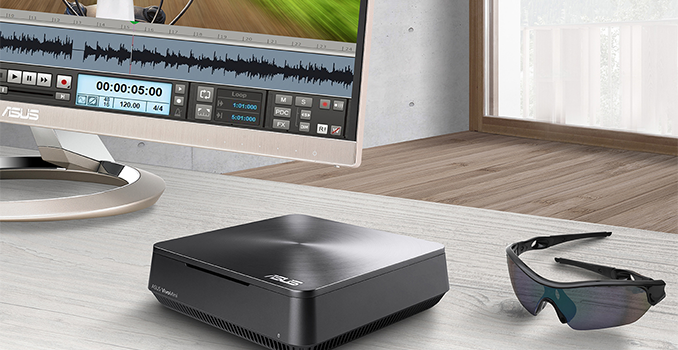
Intel’s NUC and Mini-STX form-factors are designed to build tiny PCs with decent performance with more or less standard components. However, these form-factors have traditionally not supported discrete graphics processors in any form and can integrate only one or two storage device – at present, only some of GIGABYTE’s BRIX line and Zotac’s mini-PCs are using GPUs in a larger chassis to achieve this, particularly due to the increased heat generation. ASUSTeK’s Vivo desktop personal computers are designed to fit between NUC and mini-ITX in terms of size and the company this week added two new models in to the lineup.

The new ASUS VivoMini VM65 and VM65N PCs are going to be available with either an Intel Core i3 or the Core i5-6200U, featuring the Skylake micro-architecture as well as an unnamed Intel PCH. The systems are equipped with two SO-DIMM slots for up to 16 GB of DDR4-2133 memory, space for one 3.5-inch drive (or two 2.5-inch with optional Vivo DualBay), an 802.11ac Wi-Fi module, Gigabit Ethernet, a 4-in-1 card reader, four USB 3.0 ports, two USB 3.1 type-A ports (the VM65N only), one audio output jack, an HDMI connector, one Dual-mode DisplayPort output (capable of driving DP-to-HDMI and DP-to-DVI over passive adaptors), built-in 2x2W SonicMaster speakers and a Kensington lock.

The more advanced VM65N also comes with the NVIDIA GeForce GTX 930M mobile graphics processor (384 stream processors), with 1GB of onboard DDR3 memory and running under NVIDIA’s Optimus technology. ASUS claims that this gives 56% better synthetic benchmark scores over the non-GPU version of the VivoMini. While ASUS does not position the VM65N directly as a gaming machine, it claims it could serve as a photo or video editing platform thanks to its ability to connect to three displays (one using HDMI, two using dual-mode DisplayPort). While it is noteworthy that ASUS has managed to install a discrete GPU into a tiny PC, the question is whether such a graphics chip can bring much of a benefit to a standard user beyond CUDA support.

Specifications of ASUS VivoMini VM65-Series Desktops
  ASUS VM65 ASUS VM65N
CPU Intel Core i3
Intel Core i5-6200U (2C/4T, 2.3-2.8 GHz, 1HD 520, 15 W TDP)
PCH Intel 100-series
Graphics Intel HD Graphics 520 NVIDIA GeForce GT 930M
Memory Two SO-DIMM slots, up to 16 GB of DDR4-3000
M.2 One M.2 (PCIe 3.0 x4) slot for Wi-Fi module
SATA 6 Gbps 2
Storage bays 1×3.5″
2×2.5″ with optional Vivo DualBay
Wi-Fi 802.11ac + BT 4.0
Ethernet Gigabit Ethernet
Display Outputs 1 HDMI,
1 Dual-mode DisplayPort
Audio  One mini-jack for headphones, one mini-jack for microphone
USB 4 USB 3.0 type-A 2 USB 3.1 type-A
4 USB 3.0 type-A
Dimensions 7.48 x 2.21 x 7.48 inches (18.99 x 5.61 x 18.99 cm)
PSU External

The choice of the GPU was conditioned by its TDP of around 33W. At present, the 930M is NVIDIA’s nearly most powerful mobile graphics processor at this power and is rated at 790.3 GFLOPS. The combined TDP of the CPU and the GPU of the VM65N is 48W – if we select a single Intel CPU that comes in under this limit, we get something like the Core i5-6350HQ (45W TDP), which runs with four cores and uses the Iris Pro Graphics 580 processors for $304 – $306 (up from $281 for the i5-6200U) and comes with an additional 128MB of eDRAM. The i5-6350HQ offers 1152 GFLOPS of graphics processing power, or a 46% increase in pure performance, with a combined cost lower than that of the i5-6200U plus the 930M.

The other side of the equation is CUDA support of the extra graphics chip, or a potentially better ability to drive certain display types. It has also been pointed out that splitting the power generation across two chips may be better for heat removal and heatsink/fan noise, but also makes it easier to use the same motherboard across all VivoMinis. Though it would be interesting to compare the internal designs.

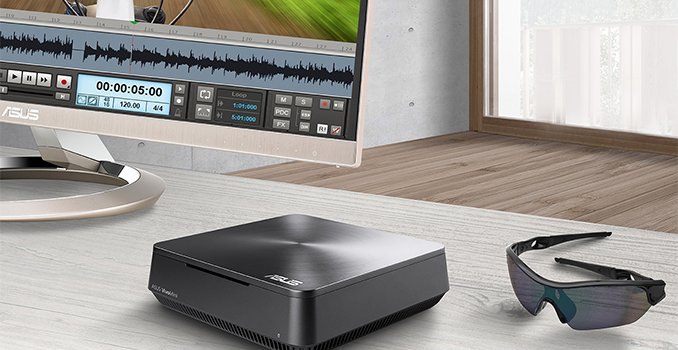
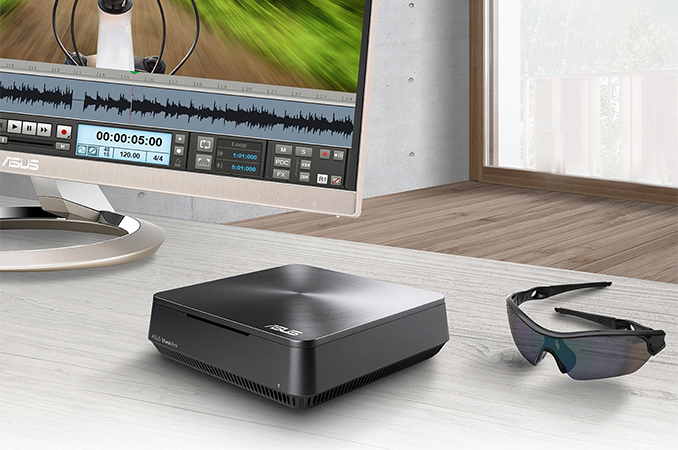
VivoMini PCs from ASUS come in sub 2-liter enclosures made of brushed aluminum. The systems are larger than Intel’s NUCs, but they are still more compact that mini-ITX PCs. They can be attached to the backside of displays using standard VESA mounts (presumably 100x100mm, not confirmed), or placed on the desk.

The exact pricing of the VivoMini VM65 and VM65N is unknown. Right now Amazon sells the previous generation models, the VM62 and VM62N, starting at $458 and $1073 respectively.

ASUS Unveils the VivoMini VM65N: a NUC-Like mini-PC with GT 930M

ASUS Unveils the VivoMini VM65N: a NUC-Like mini-PC with GT 930M

Intel’s NUC and Mini-STX form-factors are designed to build tiny PCs with decent performance with more or less standard components. However, these form-factors have traditionally not supported discrete graphics processors in any form and can integrate only one or two storage device – at present, only some of GIGABYTE’s BRIX line and Zotac’s mini-PCs are using GPUs in a larger chassis to achieve this, particularly due to the increased heat generation. ASUSTeK’s Vivo desktop personal computers are designed to fit between NUC and mini-ITX in terms of size and the company this week added two new models in to the lineup.

The new ASUS VivoMini VM65 and VM65N PCs are going to be available with either an Intel Core i3 or the Core i5-6200U, featuring the Skylake micro-architecture as well as an unnamed Intel PCH. The systems are equipped with two SO-DIMM slots for up to 16 GB of DDR4-2133 memory, space for one 3.5-inch drive (or two 2.5-inch with optional Vivo DualBay), an 802.11ac Wi-Fi module, Gigabit Ethernet, a 4-in-1 card reader, four USB 3.0 ports, two USB 3.1 type-A ports (the VM65N only), one audio output jack, an HDMI connector, one Dual-mode DisplayPort output (capable of driving DP-to-HDMI and DP-to-DVI over passive adaptors), built-in 2x2W SonicMaster speakers and a Kensington lock.

The more advanced VM65N also comes with the NVIDIA GeForce GTX 930M mobile graphics processor (384 stream processors), with 1GB of onboard DDR3 memory and running under NVIDIA’s Optimus technology. ASUS claims that this gives 56% better synthetic benchmark scores over the non-GPU version of the VivoMini. While ASUS does not position the VM65N directly as a gaming machine, it claims it could serve as a photo or video editing platform thanks to its ability to connect to three displays (one using HDMI, two using dual-mode DisplayPort). While it is noteworthy that ASUS has managed to install a discrete GPU into a tiny PC, the question is whether such a graphics chip can bring much of a benefit to a standard user beyond CUDA support.

Specifications of ASUS VivoMini VM65-Series Desktops
  ASUS VM65 ASUS VM65N
CPU Intel Core i3
Intel Core i5-6200U (2C/4T, 2.3-2.8 GHz, 1HD 520, 15 W TDP)
PCH Intel 100-series
Graphics Intel HD Graphics 520 NVIDIA GeForce GT 930M
Memory Two SO-DIMM slots, up to 16 GB of DDR4-3000
M.2 One M.2 (PCIe 3.0 x4) slot for Wi-Fi module
SATA 6 Gbps 2
Storage bays 1×3.5″
2×2.5″ with optional Vivo DualBay
Wi-Fi 802.11ac + BT 4.0
Ethernet Gigabit Ethernet
Display Outputs 1 HDMI,
1 Dual-mode DisplayPort
Audio  One mini-jack for headphones, one mini-jack for microphone
USB 4 USB 3.0 type-A 2 USB 3.1 type-A
4 USB 3.0 type-A
Dimensions 7.48 x 2.21 x 7.48 inches (18.99 x 5.61 x 18.99 cm)
PSU External

The choice of the GPU was conditioned by its TDP of around 33W. At present, the 930M is NVIDIA’s nearly most powerful mobile graphics processor at this power and is rated at 790.3 GFLOPS. The combined TDP of the CPU and the GPU of the VM65N is 48W – if we select a single Intel CPU that comes in under this limit, we get something like the Core i5-6350HQ (45W TDP), which runs with four cores and uses the Iris Pro Graphics 580 processors for $304 – $306 (up from $281 for the i5-6200U) and comes with an additional 128MB of eDRAM. The i5-6350HQ offers 1152 GFLOPS of graphics processing power, or a 46% increase in pure performance, with a combined cost lower than that of the i5-6200U plus the 930M.

The other side of the equation is CUDA support of the extra graphics chip, or a potentially better ability to drive certain display types. It has also been pointed out that splitting the power generation across two chips may be better for heat removal and heatsink/fan noise, but also makes it easier to use the same motherboard across all VivoMinis. Though it would be interesting to compare the internal designs.

VivoMini PCs from ASUS come in sub 2-liter enclosures made of brushed aluminum. The systems are larger than Intel’s NUCs, but they are still more compact that mini-ITX PCs. They can be attached to the backside of displays using standard VESA mounts (presumably 100x100mm, not confirmed), or placed on the desk.

The exact pricing of the VivoMini VM65 and VM65N is unknown. Right now Amazon sells the previous generation models, the VM62 and VM62N, starting at $458 and $1073 respectively.