Vik


Honor Launches The Honor Band Z1
Honor Launches The Honor Band Z1

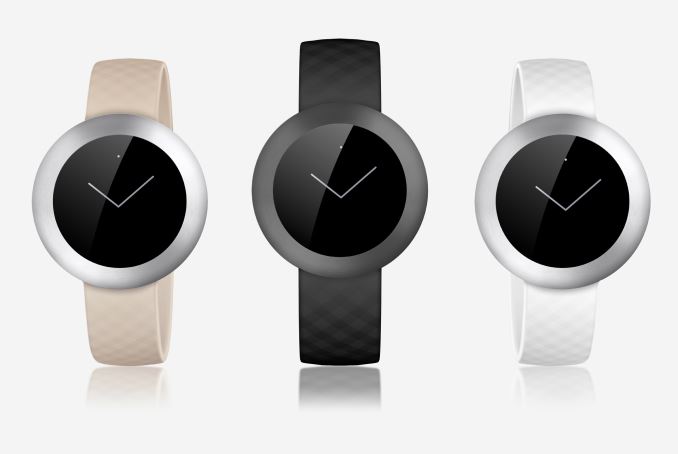
Today during their pre-CES launch event honor announced a new smartphone as well as a new fitness tracker called the honor band Z1. I found interest in the honor band Z1 because of the fact that it acts as a fitness band but doesn’t follow the rectangular form factor that many fitness devices such as the Microsoft band have adopted, while allows it to also act as something similar to a typical circular watch.

The honor band Z1 sports a 1.06″ 128 x 128 PMOLED display. This is obviously a much lower resolution than high end smartwatches, but for the intended applications of the honor band Z1 it makes sense in order to preserve battery life. The stainless steel case has a diameter of 38mm, a thickness of 9.5mm, and a mass of 25 grams. It’s powered by a Cortex M4 based STM32F411 CPU from STMicroelectronics, which is paired with a 70 mAh internal battery. Honor states that the battery will last for 3-4 days of normal use, including daytime fitness use and sleep tracking. Like most wearables, the honor band Z1 is IP68 certified.

In addition to fitness tracking, the honor band Z1 does support some forms of communication, including notification mirroring and caller ID. It connects to your smartphone via Bluetooth 4.1, and supports iOS 7.0 and newer, as well as Android 4.4.4 KitKat and newer. The bands come in black, white, and cream finishes, with the black band model also coming with a black steel finish. It will retail for $79.99 USD when it goes on sale at the end of the month.
Patriot Memory Enters PCIe Storage Market with Hellfire SSDs

Patriot Memory Enters PCIe Storage Market with Hellfire SSDs

Patriot Memory has been selling solid-state drives for about eight years now. To date, virtually all of Patriot’s SSDs have used the Serial ATA interface, which became a performance-limiting factor in the recent years. At the Consumer Electronic…

SanDisk Announces X400 Client SSD for OEMs

SanDisk Announces X400 Client SSD for OEMs

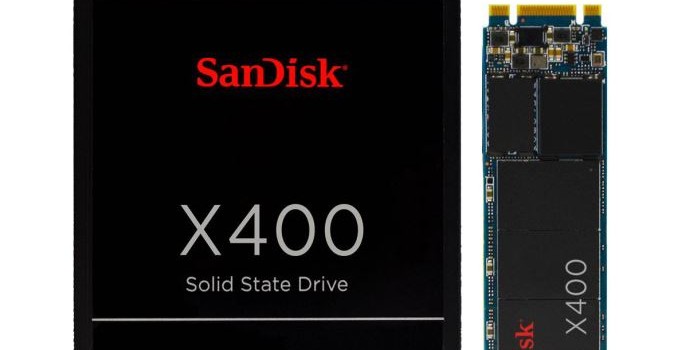
As CES gets underway, SanDisk is announcing the X400 SSD as the successor to the X300 and X300s and as the higher-performance counterpart to the Z400s. The new X400 will be the flagship of SanDisk’s line of SATA and M.2 SATA SSDs for OEMs, though by the standards of consumer SSDs sold at retail it wouldn’t quite be a high-end SATA drive.

The X300s was the Self-Encrypting Drive variant of the X300, but for the X400 SanDisk is unifying the two by making encryption a standard feature, pending a firmware update due in April to provide full TCG Opal support. The X400 improves performance in most areas, though not by any huge margins. They’re dropping the smallest capacities, leaving 128GB as the starting point, and mSATA is no longer an option. Both changes reflect a lack demand for outdated drive configurations in new product designs. Like the X300, the X400 uses TLC NAND flash and relies on SLC-mode write caching to provide competitive write speeds.

SanDisk OEM Client SSD Comparison
Drive X400 Z400s X300
Capacities 128GB, 256GB, 512GB, 1TB 32GB, 64GB, 128GB, 256GB 64GB, 128GB, 256GB, 512GB, 1TB (2.5″ only)
Sequential Read 545 MB/s 546 MB/s 530 MB/s
Sequential Write 520 MB/s 342 MB/s 470 MB/s
Random Read IOPS 95k 37k 98k
Random Write IOPS 75k 69k 70k
Form Factors 2.5″, M.2 2280 2.5″, mSATA, M.2 2242, M.2 2280 2.5″, mSATA, M.2 2280
Warranty 5 years 5 years 3 years

The X400 adds a 1TB M.2 option that SanDisk claims is the first single-sided 1TB M.2 drive. The X400 also adds LDPC ECC to the mix, which probably helped SanDisk increase the warranty period to 5 years.

The SanDisk X400 was sampling to OEMs as of late last year and is now available to OEMs and system integrators in volume.