Vik


HTC Unveils the Vive Pre Dev Kit

HTC Unveils the Vive Pre Dev Kit

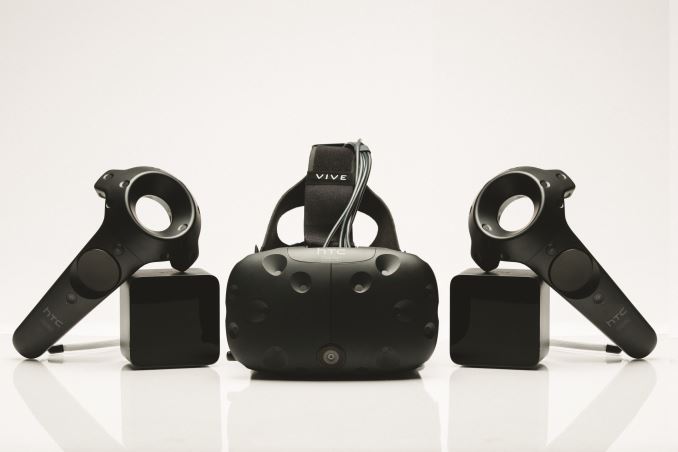
Today HTC has taken the wraps off of the second generation version of the HTC Vive. As you probably know, the HTC Vive is a virtual reality head-mounted display designed and made jointly by HTC and Valve. The consumer launch date for the Vive Pre has been pushed back a couple times now, but certain developers have had access to developer versions of the headset for some time now in order to develop new titles for it or work on adapting existing ones. The new Vive Pre is the second version of the Vive developer kit, and it comes with a number of improvements that bring the Vive closer toward its eventual commercial launch which will be occurring this year.

The Vive Pre makes some notable additions to the earlier version. First and foremost are the improvements to ergonomics. According to HTC, the headset has basically been redesigned from the ground up to be more compact and fit more comfortably onto your head while also being more stable. The displays have been made brighter and refinements to the entire display and lens stack have improved clarity over the existing model. Finally, there has been a front camera added to the headset. This may seem strange at first, but what the camera allows for is augmented reality experiences where a feed of the real world can be shown to the user and illusions can be projected onto that space by the headset.

As for the controllers, the design has been overhauled to make them more ergonomic. The buttons have been textured to make them easier to find, and the trigger has been changed to a dual stage switch which allows for interactions with multiple states, such as holding or squeezing something. There’s also haptic feedback to go along with interactions, and this is something that can really help the experience when implemented in a proper and subtle manner. Finally, the tracking stations for the controllers have been made smaller and more precise.

I had a chance to try the new Vive Pre earlier, and it marked my first experience with a virtual reality headset, with the exception of the Nintendo Virtual Boy. While I can’t make any statements that compare the new Vive to the old dev kit or to other VR headsets like the Oculus Rift, I can say that the experience with the headset and the controllers was unlike anything I’ve experienced before. The demo consisted of a virtual environment that simulated some of the challenges one would encounter when climbing Mount Everest. It included very theatrical sweeping shots where you looked over the mountains as though you were flying in the air or riding on a helicopter, as well as interactive segments that simulated crossing over a large pit, and climbing up a ladder.

What amazed me was how quickly I forgot about the fact that I was just in a hotel room wearing a rather large helmet and holding some controllers, and I found myself too frightened to look right over the edge of a cliff, and felt a strange feeling when I climbed the ladder as though I was nervous with my increasing height, even though I knew very well that I was standing on the floor the entire time. Head tracking latency was also very low, and to be honest the only thing that ever took me out of the experience was the limited resolution of the displays. That’s a technology issue that will be improved with time, but even with that barrier to total immersion the experience is still extremely compelling and unlike anything else.

As of right now, the HTC Vive is scheduled to launch commercially in April of this year. Whether or not that date will be pushed back again is unknown, but what I can say is that I think the Vive and other VR headsets will have been worth the wait. 

NVIDIA Discloses Next-Generation Tegra SoC; Parker Inbound?

NVIDIA Discloses Next-Generation Tegra SoC; Parker Inbound?

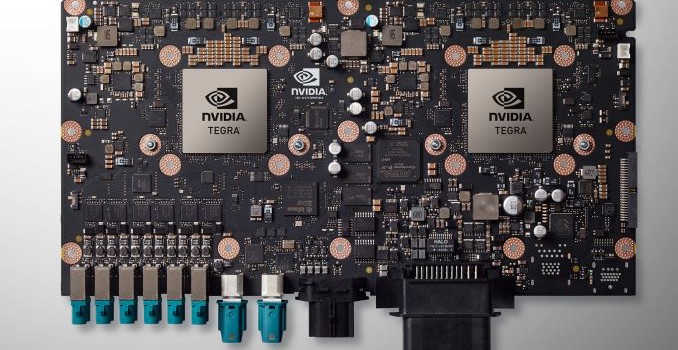
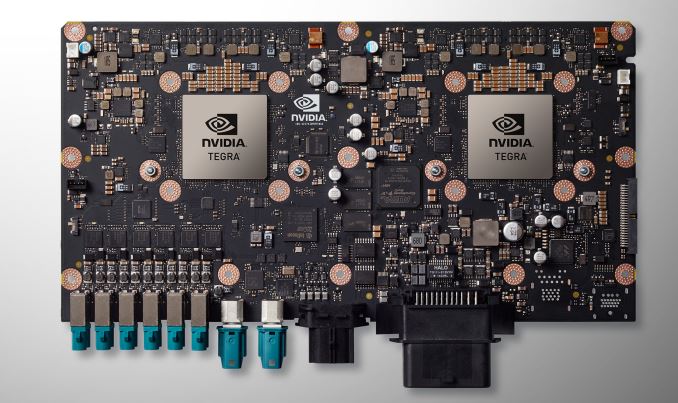
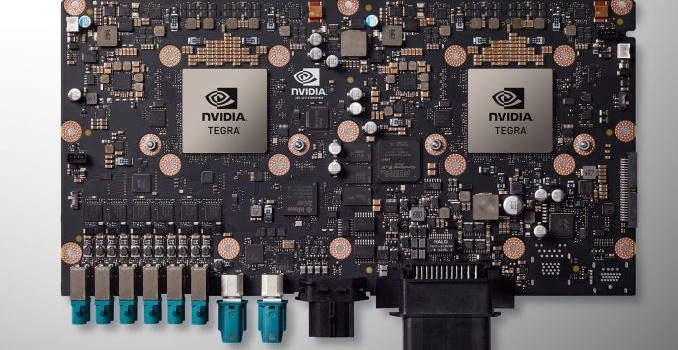
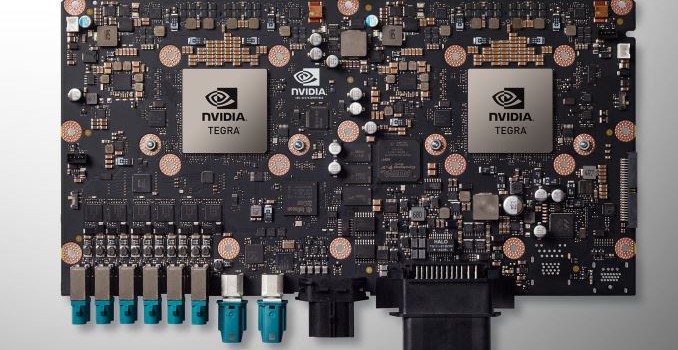
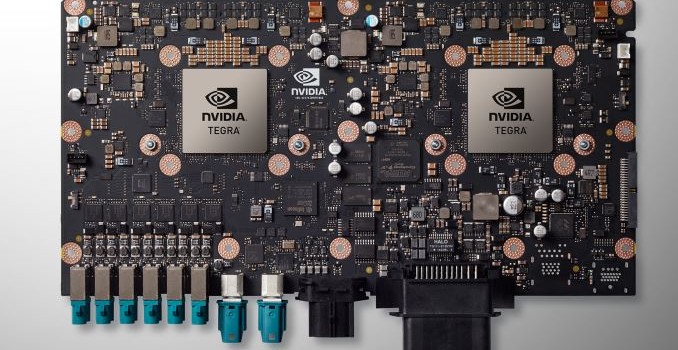
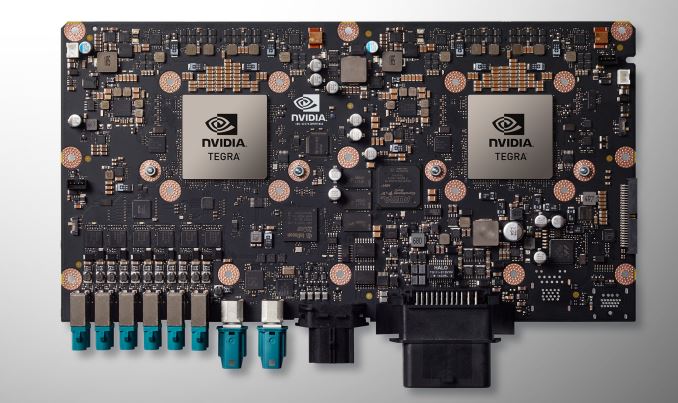
While NVIDIA has been rather quiet about the SoC portion of the DRIVE PX 2, it’s unmistakable that a new iteration of the Tegra SoC is present.

The GPUs and SoCs of the DRIVE PX 2 are fabricated on TSMC’s 16nm FinFET processes, which is something that we haven’t seen yet from NVIDIA. The other obvious difference is the CPU configuration. While Tegra X1 had four Cortex A57s and four Cortex A53s, this new SoC (Tegra P1?) has four Cortex A57s and two Denver CPUs. As of now it isn’t clear whether this is the same iteration of the Denver architecture that we saw in the Tegra K1. However, regardless of what architecture it is we’re still looking at a CPU architecture that is at least partially an ARM in-order core with a wide, out of order VLIW core that relies on dynamic code optimization to translate ARM instructions into the VLIW core ISA.

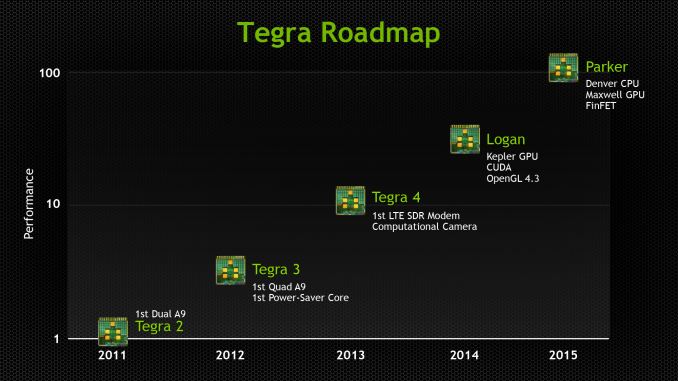
Based on the description of the SoC, while NVIDIA is not formally announcing this new SoC or giving it a name at this time, the feature set lines up fairly well with the original plans for the SoC known as Parker. Before it was bumped to make room for Tegra X1, it had been revealed that Parker would be NVIDIA’s first 16nm FinFET SoC, and would contain Denver CPU cores, just like this new SoC.


NVIDIA’s Original 2013 Tegra Roadmap, The Last Sighting of Parker

Of course Parker was also said to include a Maxwell GPU, whereas NVIDIA has confirmed that this new Tegra is Pascal based. Though with Parker’s apparent delay, an upgrade to Pascal makes some sense here. Otherwise we have limited information on the GPU at present besides its Pascal heritage; NVIDIA is not disclosing anything about the number of CUDA cores or other features.

NVIDIA Tegra Specification Comparison
  X1 2016 “Parker”
CPU Cores 4x ARM Cortex A57 +
4x ARM Cortex A53
2x NVIDIA Denver +
4x ARM Cortex A57
CUDA Cores 256 ?
Memory Clock 1600MHz (LPDDR4) ?
Memory Bus Width 64-bit ?
FP16 Peak 1024 GFLOPS ?
FP32 Peak 512 GFLOPS ?
GPU Architecture Maxwell Pascal
Manufacturing Process TSMC 20nm SoC TSMC 16nm FinFET

But for now the bigger story is the new Tegra’s CPU configuration. Needless to say, this is at least somewhat of an oddball architecture. As Denver is a custom CPU core, we’re looking at a custom interconnect by NVIDIA to make the Cortex A57 and Denver cores work together. The question then is why would NVIDIA want to pair up  Denver CPU cores with also relatively high performng Cortex A57 cores?

At least part of the answer is going to rely on whether NVIDIA’s software stack either uses the two clusters in a cluster migration scheme or some kind of HMP scheme. Comments made by NVIDIA during their press conference indicate that they believe the Denver cores on the new Tegra will offer better single-threaded performance than the A57s. Without knowing more about the version of Denver in the new Tegra, this is somewhat surprising as it’s pretty much public that Denver has had issues when dealing with code that doesn’t resemble a non-branching loop, and more troublesome yet code generation for Denver can take up a pretty significant amount of time. As we saw with the Denver TK1, Cortex A57s can actually be faster clock for clock if the code is particularly unfavorable to Denver.

Consequently, if NVIDIA is using a traditional cluster migration or HMP scheme where Denver is treated as a consistently faster core in all scenarios, I would be at least slightly concerned if NVIDIA decided to ship this configuration with the same iteration of Denver as in the Tegra K1. Though equally likely, NVIDIA has had over a year to refine Denver and may be rolling out an updated (and presumably faster) version for the new Tegra. Otherwise it also wouldn’t surprise me if the vast majority of CPU work for PX 2 is run on the A57 cluster while the Denver cluster is treated as a co-processor of sorts, in which only specific cases can even access the Denver CPUs.

NVIDIA Discloses Next-Generation Tegra SoC; Parker Inbound?

NVIDIA Discloses Next-Generation Tegra SoC; Parker Inbound?

While NVIDIA has been rather quiet about the SoC portion of the DRIVE PX 2, it’s unmistakable that a new iteration of the Tegra SoC is present.

The GPUs and SoCs of the DRIVE PX 2 are fabricated on TSMC’s 16nm FinFET processes, which is something that we haven’t seen yet from NVIDIA. The other obvious difference is the CPU configuration. While Tegra X1 had four Cortex A57s and four Cortex A53s, this new SoC (Tegra P1?) has four Cortex A57s and two Denver CPUs. As of now it isn’t clear whether this is the same iteration of the Denver architecture that we saw in the Tegra K1. However, regardless of what architecture it is we’re still looking at a CPU architecture that is at least partially an ARM in-order core with a wide, out of order VLIW core that relies on dynamic code optimization to translate ARM instructions into the VLIW core ISA.

Based on the description of the SoC, while NVIDIA is not formally announcing this new SoC or giving it a name at this time, the feature set lines up fairly well with the original plans for the SoC known as Parker. Before it was bumped to make room for Tegra X1, it had been revealed that Parker would be NVIDIA’s first 16nm FinFET SoC, and would contain Denver CPU cores, just like this new SoC.


NVIDIA’s Original 2013 Tegra Roadmap, The Last Sighting of Parker

Of course Parker was also said to include a Maxwell GPU, whereas NVIDIA has confirmed that this new Tegra is Pascal based. Though with Parker’s apparent delay, an upgrade to Pascal makes some sense here. Otherwise we have limited information on the GPU at present besides its Pascal heritage; NVIDIA is not disclosing anything about the number of CUDA cores or other features.

NVIDIA Tegra Specification Comparison
  X1 2016 “Parker”
CPU Cores 4x ARM Cortex A57 +
4x ARM Cortex A53
2x NVIDIA Denver +
4x ARM Cortex A57
CUDA Cores 256 ?
Memory Clock 1600MHz (LPDDR4) ?
Memory Bus Width 64-bit ?
FP16 Peak 1024 GFLOPS ?
FP32 Peak 512 GFLOPS ?
GPU Architecture Maxwell Pascal
Manufacturing Process TSMC 20nm SoC TSMC 16nm FinFET

But for now the bigger story is the new Tegra’s CPU configuration. Needless to say, this is at least somewhat of an oddball architecture. As Denver is a custom CPU core, we’re looking at a custom interconnect by NVIDIA to make the Cortex A57 and Denver cores work together. The question then is why would NVIDIA want to pair up  Denver CPU cores with also relatively high performng Cortex A57 cores?

At least part of the answer is going to rely on whether NVIDIA’s software stack either uses the two clusters in a cluster migration scheme or some kind of HMP scheme. Comments made by NVIDIA during their press conference indicate that they believe the Denver cores on the new Tegra will offer better single-threaded performance than the A57s. Without knowing more about the version of Denver in the new Tegra, this is somewhat surprising as it’s pretty much public that Denver has had issues when dealing with code that doesn’t resemble a non-branching loop, and more troublesome yet code generation for Denver can take up a pretty significant amount of time. As we saw with the Denver TK1, Cortex A57s can actually be faster clock for clock if the code is particularly unfavorable to Denver.

Consequently, if NVIDIA is using a traditional cluster migration or HMP scheme where Denver is treated as a consistently faster core in all scenarios, I would be at least slightly concerned if NVIDIA decided to ship this configuration with the same iteration of Denver as in the Tegra K1. Though equally likely, NVIDIA has had over a year to refine Denver and may be rolling out an updated (and presumably faster) version for the new Tegra. Otherwise it also wouldn’t surprise me if the vast majority of CPU work for PX 2 is run on the A57 cluster while the Denver cluster is treated as a co-processor of sorts, in which only specific cases can even access the Denver CPUs.

NVIDIA Announces DRIVE PX 2 - Pascal Power For Self-Driving Cars

NVIDIA Announces DRIVE PX 2 – Pascal Power For Self-Driving Cars

As has become tradition at CES, the first major press conference of the show belongs to NVIDIA. In previous years their press conference would be dedicated to consumer mobile parts – the Tegra division, in other words – while more recently the company’s conference has shifted to a mix of mobile and automobiles. Finally for 2016, NVIDIA has made a full transition over to cars, with this year’s press conference focusing solely on the subject and skipping consumer mobile entirely.

At CES 2015 NVIDIA announced the DRIVE CX and DRIVE PX systems, with DRIVE CX focusing on cockpit visualization while DRIVE PX was part of a much more ambitious entry into the self-driving vehicle market for NVIDIA. Both systems were based around NVIDIA’s then-new Tegra X1 SoC, implementing it either for its graphics capabilities or its compute capabilities respectively.

For 2016 however, NVIDIA has doubled-down on self-driving vehicles, dedicating the entire press conference to the concept and filling the conference with suitable product announcements. The headline announcement for this year’s conference then is the successor to NVIDIA’s DRIVE PX system, the aptly named DRIVE PX 2.

From a hardware perspective the DRIVE PX 2 is essentially picking up from where the original DRIVE PX left off. NVIDIA continues to believe that the solution to self-driving cars is through computer vision realized by neural networks, with more compute power being necessary to get better performance with greater accuracy.  To that while DRIVE PX was something of an early system to prove the concept, then DRIVE PX 2 is NVIDIA is thinking much bigger.

NVIDIA DRIVE PX Specification Comparison
  DRIVE PX DRIVE PX 2
SoCs 2x Tegra X1 2x Tegra “Parker”
Discrete GPUs N/A 2x Unknown Pascal
CPU Cores 8x ARM Cortex-A57 +
8x ARM Cortex-53
4x NVIDIA Denver +
8x ARM Cortex-A57
GPU Cores 2x Tegra X1 (Maxwell) 2x Tegra “Parker” (Pascal) +
2x Unknown Pascal
FP32 TFLOPS > 1 TFLOPS 8 TFLOPS
FP16 TFLOPS > 2 TFLOPS 16 TFLOPS?
TDP N/A 250W

As a result the DRIVE PX 2 is a very powerful – and very power hungry – design meant to offer much greater compute performance than the original DRIVE PX. Based around NVIDIA’s newly disclosed 2016 Tegra (likely to be Parker), the PX 2 incorporates a pair of the SoCs. However in a significant departure from the original PX, the PX 2 also integrates a pair of Pascal discrete GPUs on MXM cards, in order to significantly boost the GPU compute capabilities over what a pair of Tegra processors alone could offer. The end result is that PX 2 packs a total of 4 processors on a single board, essentially combining the two Tegras’ 8 ARM Cortex-A57 and 4 NVIDIA Denver CPU cores with 4 Pascal GPUs.
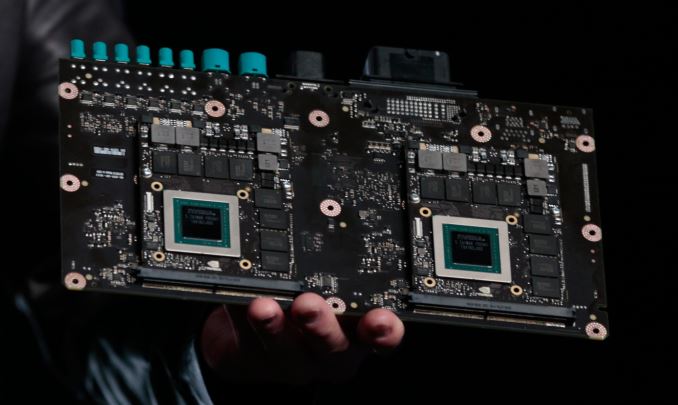
NVIDIA is not disclosing anything about the discrete Pascal GPUs at this time beyond the architecture and that, like the new Tegra, they’re built on TSMC’s 16nm FinFET process. However looking at the board held up by NVIDIA CEO Jen-Hsun Huang, it appears to be a sizable card with 8 GDDR5 memory packages on the front. My gut instinct is that this may be the Pascal successor to GM206 with the 8 chips forming a 128-bit memory bus in clamshell mode, but at this point that’s speculation on my part.

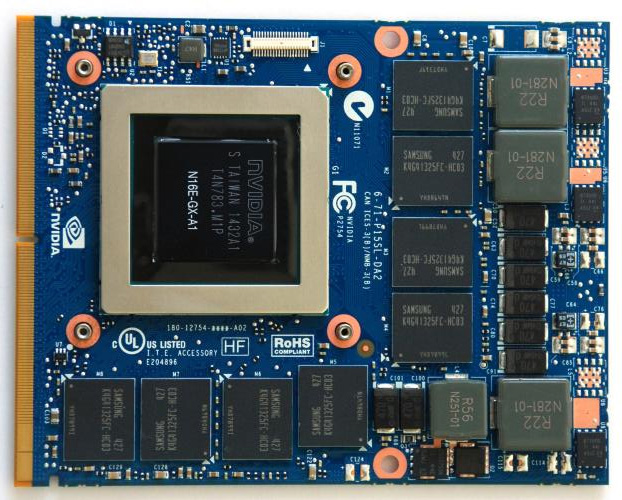
Update Kudos to our readers on this one. The MXM modules in the picture are almost component-for-component identical to the GTX 980 MXM photo we have on file. So it is likely that these are not Pascal GPUs, and that they’re merely placeholders.

What isn’t in doubt though are the power requirements for PX 2. PX 2 will consume 250W of power – equivalent to today’s GTX 980 Ti and GTX Titan X cards – and will require liquid cooling. NVIDIA’s justification for the design, besides the fact that this much computing power is necessary, is that a liquid cooling system ensures that the PX 2 will receive sufficient cooling in all environmental conditions. More practically though, the company is targeting electric vehicles with this, many of which already use liquid cooling, and as a result are a more natural fit for PX 2’s needs.  For all other vehicles the company will also be offering a radiator module to use with the PX 2.
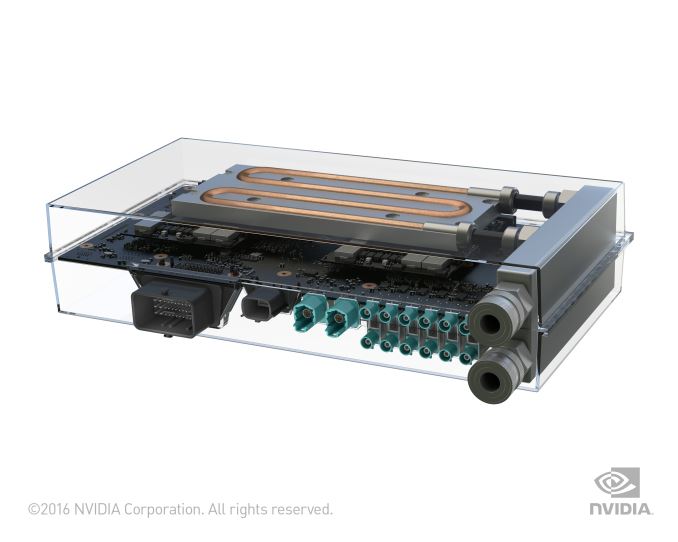
Otherwise NVIDIA never did disclose the requirements for the original PX, but it’s safe to say that PX 2 is significantly higher. It’s particularly telling that in the official photos of the board with the liquid cooling loops installed, it’s the dGPUs we clearly see attached to the loops. Consequently I wouldn’t be surprised if the bulk of that 250W power consumption comes from the dGPUs rather than the Tegra SoCs.

As far as performance goes, NVIDIA spent much of the evening comparing the PX 2 to the GeForce GTX Titan X, and for good reason. The PX 2 is rated for 8 TFLOPS of FP32 performance, which puts PX 2 1 TFLOPS ahead of the 7 TFLOPS Titan X. However while those are raw specifications, it’s important to note that Titan X is 1 GPU whereas PX 2 is 4, which means PX 2 will need to work around multi-GPU scaling issues that aren’t an issue for Titan X.

Curiously, NVIDIA also used the event to introduce a new unit of measurement – the Deep Learning Tera-Op, or DL TOPS – which at 24 is an unusual 3x higher than PX 2’s FP32 performance. Based on everything disclosed by NVIDIA about Pascal so far, we don’t have any reason to believe FP16 performance is more than 2x Pascal’s FP32 performance. So where the extra performance comes from is a mystery at the moment. NVIDIA quoted this and not FP16 FLOPS, so it may include a special case operation (ala the Fused Multiply-Add), or even including the performance of the Denver CPU cores.

On that note, while DRIVE PX 2 was the focus of NVIDIA’s presentation, it was GTX Titan X that was actually driving all of the real-time presentations. As far as I know we did not actually see any demos being powered by PX 2, and it’s unclear whether PX 2 is even ready for controlled demonstration at this time. NVIDIA mentions in their press release that the PX 2 will be available to early access partners in Q2, with general availability not occurring until Q4.

Meanwhile along with the PX 2 hardware, NVIDIA also used their conference to reiterate their plans for self-driving cars, and where their hardware and software will fit into this. NVIDIA is still aiming to develop a hardware ecosystem for the automotive industry rather than an end-to-end solution. Which is to say that they want to provide the hardware, while letting their customers develop the software.
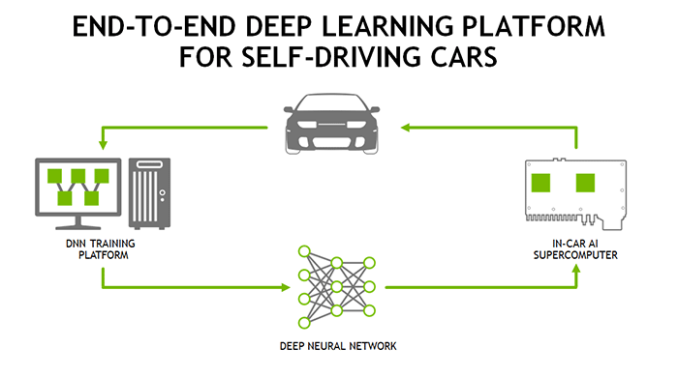
However at the same time, in an action admitting that it’s not always easy for customers to get started from scratch, NVIDIA will also be developing their complete reference platform combining hardware and software. The reference platform includes not just the hardware for self-driving cards – including the PX 2 system and other NVIDIA hardware to train the neural nets – but also software components including the company’s existing DriveWorks SDK, and a pre-trained driving neural net the company is calling DRIVENet.

Consequently while the company isn’t strictly in the process of developing its own cars, it is essentially in the process of training them.  Which means NVIDIA has been sending cars around the Sunnyvale area to record interactions, training the 37 million neuron network how to understand traffic. A significant portion of NVIDIA’s presentation was taken up demonstrating DRIVENet in action, showcasing how well it understood the world using a combination of LIDAR and computer vision, with a GTX Titan X running the network at about 50fps. Ultimately I think it’s fair to say that NVIDIA would rather their customers be doing this, building nets on top of systems like DIGITS, but they also have seen first-hand in previous endeavors that bootstrapping an ecosystem like they desire requires having all of the components already there.

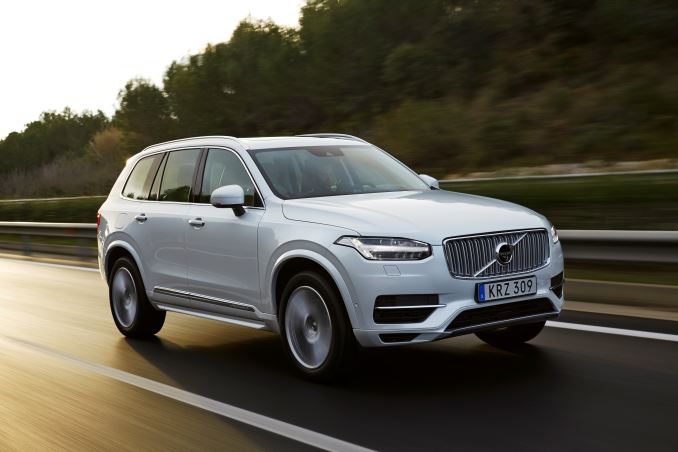
Finally, NVIDIA also announced that they have lined up their first customer for PX 2: Volvo. In 2017 the company will be outfitting 100 XC90 SUVs with the PX 2, for use in their ongoing self-driving car development efforts.

NVIDIA Announces DRIVE PX 2 - Pascal Power For Self-Driving Cars

NVIDIA Announces DRIVE PX 2 – Pascal Power For Self-Driving Cars

As has become tradition at CES, the first major press conference of the show belongs to NVIDIA. In previous years their press conference would be dedicated to consumer mobile parts – the Tegra division, in other words – while more recently the company’s conference has shifted to a mix of mobile and automobiles. Finally for 2016, NVIDIA has made a full transition over to cars, with this year’s press conference focusing solely on the subject and skipping consumer mobile entirely.

At CES 2015 NVIDIA announced the DRIVE CX and DRIVE PX systems, with DRIVE CX focusing on cockpit visualization while DRIVE PX was part of a much more ambitious entry into the self-driving vehicle market for NVIDIA. Both systems were based around NVIDIA’s then-new Tegra X1 SoC, implementing it either for its graphics capabilities or its compute capabilities respectively.

For 2016 however, NVIDIA has doubled-down on self-driving vehicles, dedicating the entire press conference to the concept and filling the conference with suitable product announcements. The headline announcement for this year’s conference then is the successor to NVIDIA’s DRIVE PX system, the aptly named DRIVE PX 2.

From a hardware perspective the DRIVE PX 2 is essentially picking up from where the original DRIVE PX left off. NVIDIA continues to believe that the solution to self-driving cars is through computer vision realized by neural networks, with more compute power being necessary to get better performance with greater accuracy.  To that while DRIVE PX was something of an early system to prove the concept, then DRIVE PX 2 is NVIDIA is thinking much bigger.

NVIDIA DRIVE PX Specification Comparison
  DRIVE PX DRIVE PX 2
SoCs 2x Tegra X1 2x Tegra “Parker”
Discrete GPUs N/A 2x Unknown Pascal
CPU Cores 8x ARM Cortex-A57 +
8x ARM Cortex-53
4x NVIDIA Denver +
8x ARM Cortex-A57
GPU Cores 2x Tegra X1 (Maxwell) 2x Tegra “Parker” (Pascal) +
2x Unknown Pascal
FP32 TFLOPS > 1 TFLOPS 8 TFLOPS
FP16 TFLOPS > 2 TFLOPS 16 TFLOPS?
TDP N/A 250W

As a result the DRIVE PX 2 is a very powerful – and very power hungry – design meant to offer much greater compute performance than the original DRIVE PX. Based around NVIDIA’s newly disclosed 2016 Tegra (likely to be Parker), the PX 2 incorporates a pair of the SoCs. However in a significant departure from the original PX, the PX 2 also integrates a pair of Pascal discrete GPUs on MXM cards, in order to significantly boost the GPU compute capabilities over what a pair of Tegra processors alone could offer. The end result is that PX 2 packs a total of 4 processors on a single board, essentially combining the two Tegras’ 8 ARM Cortex-A57 and 4 NVIDIA Denver CPU cores with 4 Pascal GPUs.

NVIDIA is not disclosing anything about the discrete Pascal GPUs at this time beyond the architecture and that, like the new Tegra, they’re built on TSMC’s 16nm FinFET process. However looking at the board held up by NVIDIA CEO Jen-Hsun Huang, it appears to be a sizable card with 8 GDDR5 memory packages on the front. My gut instinct is that this may be the Pascal successor to GM206 with the 8 chips forming a 128-bit memory bus in clamshell mode, but at this point that’s speculation on my part.

Update Kudos to our readers on this one. The MXM modules in the picture are almost component-for-component identical to the GTX 980 MXM photo we have on file. So it is likely that these are not Pascal GPUs, and that they’re merely placeholders.

What isn’t in doubt though are the power requirements for PX 2. PX 2 will consume 250W of power – equivalent to today’s GTX 980 Ti and GTX Titan X cards – and will require liquid cooling. NVIDIA’s justification for the design, besides the fact that this much computing power is necessary, is that a liquid cooling system ensures that the PX 2 will receive sufficient cooling in all environmental conditions. More practically though, the company is targeting electric vehicles with this, many of which already use liquid cooling, and as a result are a more natural fit for PX 2’s needs.  For all other vehicles the company will also be offering a radiator module to use with the PX 2.

Otherwise NVIDIA never did disclose the requirements for the original PX, but it’s safe to say that PX 2 is significantly higher. It’s particularly telling that in the official photos of the board with the liquid cooling loops installed, it’s the dGPUs we clearly see attached to the loops. Consequently I wouldn’t be surprised if the bulk of that 250W power consumption comes from the dGPUs rather than the Tegra SoCs.

As far as performance goes, NVIDIA spent much of the evening comparing the PX 2 to the GeForce GTX Titan X, and for good reason. The PX 2 is rated for 8 TFLOPS of FP32 performance, which puts PX 2 1 TFLOPS ahead of the 7 TFLOPS Titan X. However while those are raw specifications, it’s important to note that Titan X is 1 GPU whereas PX 2 is 4, which means PX 2 will need to work around multi-GPU scaling issues that aren’t an issue for Titan X.

Curiously, NVIDIA also used the event to introduce a new unit of measurement – the Deep Learning Tera-Op, or DL TOPS – which at 24 is an unusual 3x higher than PX 2’s FP32 performance. Based on everything disclosed by NVIDIA about Pascal so far, we don’t have any reason to believe FP16 performance is more than 2x Pascal’s FP32 performance. So where the extra performance comes from is a mystery at the moment. NVIDIA quoted this and not FP16 FLOPS, so it may include a special case operation (ala the Fused Multiply-Add), or even including the performance of the Denver CPU cores.

On that note, while DRIVE PX 2 was the focus of NVIDIA’s presentation, it was GTX Titan X that was actually driving all of the real-time presentations. As far as I know we did not actually see any demos being powered by PX 2, and it’s unclear whether PX 2 is even ready for controlled demonstration at this time. NVIDIA mentions in their press release that the PX 2 will be available to early access partners in Q2, with general availability not occurring until Q4.

Meanwhile along with the PX 2 hardware, NVIDIA also used their conference to reiterate their plans for self-driving cars, and where their hardware and software will fit into this. NVIDIA is still aiming to develop a hardware ecosystem for the automotive industry rather than an end-to-end solution. Which is to say that they want to provide the hardware, while letting their customers develop the software.

However at the same time, in an action admitting that it’s not always easy for customers to get started from scratch, NVIDIA will also be developing their complete reference platform combining hardware and software. The reference platform includes not just the hardware for self-driving cards – including the PX 2 system and other NVIDIA hardware to train the neural nets – but also software components including the company’s existing DriveWorks SDK, and a pre-trained driving neural net the company is calling DRIVENet.

Consequently while the company isn’t strictly in the process of developing its own cars, it is essentially in the process of training them.  Which means NVIDIA has been sending cars around the Sunnyvale area to record interactions, training the 37 million neuron network how to understand traffic. A significant portion of NVIDIA’s presentation was taken up demonstrating DRIVENet in action, showcasing how well it understood the world using a combination of LIDAR and computer vision, with a GTX Titan X running the network at about 50fps. Ultimately I think it’s fair to say that NVIDIA would rather their customers be doing this, building nets on top of systems like DIGITS, but they also have seen first-hand in previous endeavors that bootstrapping an ecosystem like they desire requires having all of the components already there.

Finally, NVIDIA also announced that they have lined up their first customer for PX 2: Volvo. In 2017 the company will be outfitting 100 XC90 SUVs with the PX 2, for use in their ongoing self-driving car development efforts.