Vik


ASUS Releases Convertible ChromeBook Flip C100
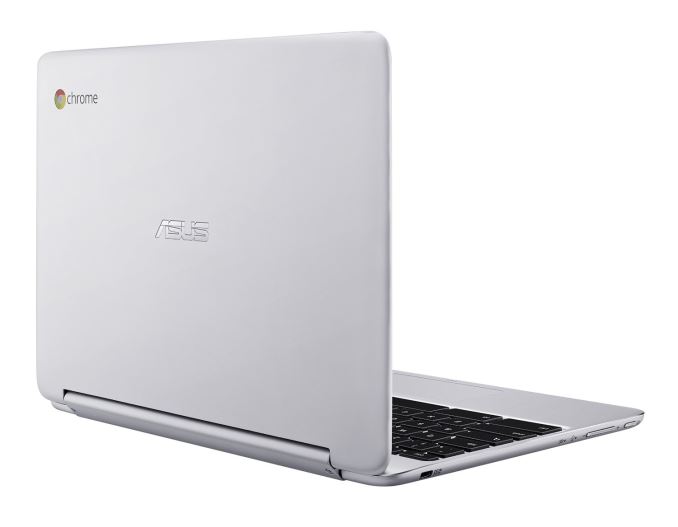
ASUS Releases Convertible ChromeBook Flip C100

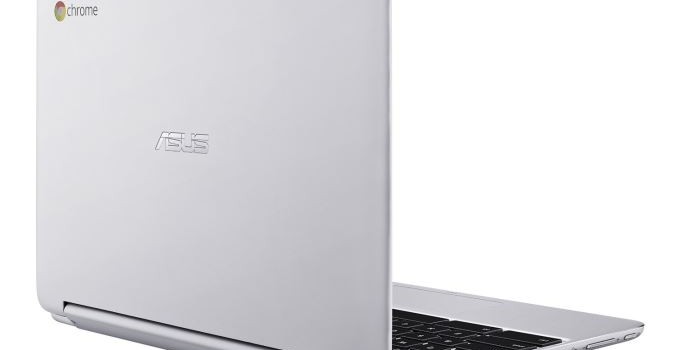
Today ASUS is launching a new Chromebook, but this one gets the flip treatment with a 360° hinge. According to ASUS, it brings together the experiences of a tablet and notebook into one device. We’ve certainly seen a lot of these on the Windows side, but for a device packing Chrome OS, this is certainly less common if not unique.

Let’s go over what is inside. ASUS turned to Rockchip for the processor on this device with the Rockchip 3288-C SoC inside. This is a quad-core design based on the Cortex A17, and clocks in at 1.8 GHz. The GPU is the ARM Mail T624, and you can get either 2 or 4 GB of system memory and 16 GB of eMMC storage. It also supports a SD/SDXC card reader if you need to add a bit more storage.
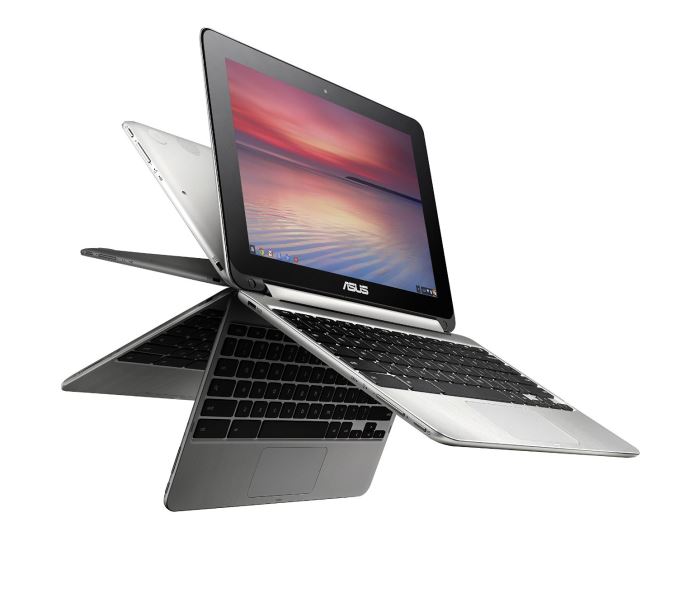
Although the internals are certainly low end, ASUS did put a multi-touch IPS display in, albeit at only 1280×800 resolution, but for the 10.1” low cost device, that is likely serviceable. There are also outputs for HDMI if necessary and of course a headset jack. There are two USB 2.0 ports for connectivity, and the battery is rated for up to nine hours.

ASUS ChromeBook Flip C100
Processor Rockchip 3288-C
Quad-core Cortex A17 @ 1.8 GHz
ARM Mali T624 GPU
Connectivity 802.11ac
Bluetooth 4.1
Memory 2G or 4GB DDR3L
Storage 16GB eMMC
Battery 2-cell up to 9 hours
I/O 2 x USB 2.0
HD webcam
micro HDMI
Headphone/mic jack
SD Card reader
Dimensions 10.35″ x 7.18″ x 0.6″ / 263 x 182 x 15.2 mm
Display 10.1″ 1280×800 IPS LCD with capacitive touch
Weight 1.96 lbs / 0.89 kg
Price $249/$299 for 2GB/4GB

The keyboard is 97% of a full-sized notebook keyboard, so despite the small size it should be reasonable to type on.

Speaking of size, the 0.6-inch body weighs in at just under two pounds, so it should be easy to tote around. That’s nothing like what an actual tablet weighs of course, but for a small notebook it is very light.

My biggest concern with the ChromeBook Flip C100 is the operating system though. Windows devices have been sporting these convertible designs for some time, but Windows 8 was built with touch as a primary input device, and although the Windows store is not as fleshed out as the iOS tablet store, it is certainly more fleshed out that Chrome OS as a tablet OS.

Gallery: ASUS Flip C100

If you are interested in kicking the tires on one of these, they are available now from the ASUS eStore, Newegg.com, and Amazon.com for $249 (2GB) or $299 (4GB).

Source: ASUS


AMD Launches the A8-7670K: Filling in the Gaps

AMD Launches the A8-7670K: Filling in the Gaps

AMD and Intel, in the last few years, have taken different approaches to how many CPUs enter the mainstream line of the market. Intel has historically had a large product stack, with processors at almost every frequency varying by 100 MHz and slowly r…

AMD Launches the A8-7670K: Filling in the Gaps

AMD Launches the A8-7670K: Filling in the Gaps

AMD and Intel, in the last few years, have taken different approaches to how many CPUs enter the mainstream line of the market. Intel has historically had a large product stack, with processors at almost every frequency varying by 100 MHz and slowly r…

Samsung Releases PM863 & SM863 Enterprise SATA SSDs: Up to 3.84TB with 3D V-NAND

Samsung Releases PM863 & SM863 Enterprise SATA SSDs: Up to 3.84TB with 3D V-NAND

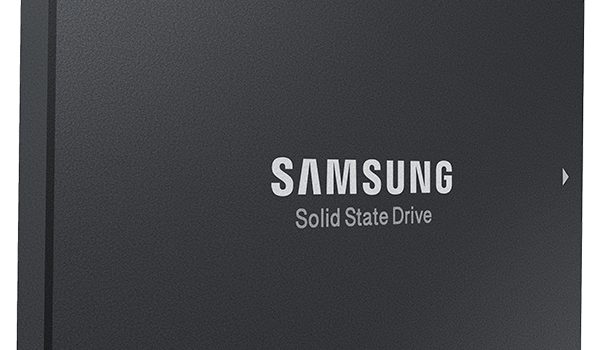
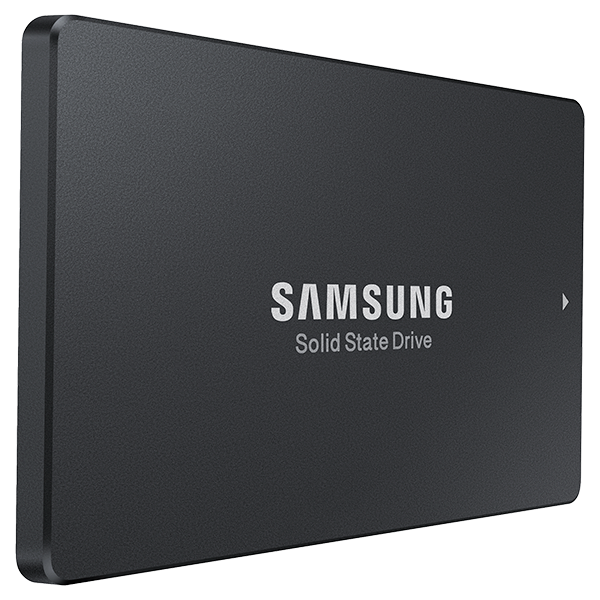
At CES, Samsung displayed a variety of new SSD solutions, including PM863 and SM863, the company’s new SATA 6Gbps enterprise drives. At the time Samsung was only sampling its key OEM customers, but with today’s announcement Samsung is making the drives available through its retail channel in early August.

The PM863 and SM863 are based on Samsung’s in-house “Mercury” controller, but unfortunately I don’t have any additional details on the controller architecture itself. I’m guessing it’s a derivative of the client-grade controllers utilizing ARM Cortex R4, but I’ll have to wait for Samsung’s reply before I know for sure.

Samsung PM863 Specifications
Capacity 120GB 240GB 480GB 960GB 1.92TB 3.84TB
Controller Samsung “Mercury”
NAND Samsung 32-layer 128Gbit TLC V-NAND
Sequential Read 380MB/s 520MB/s 525MB/s 520MB/s 510MB/s 540MB/s
Sequential Write 125MB/s 245MB/s 460MB/s 475MB/s 475MB/s 480MB/s
4KB Random Read 86K IOPS 99K IOPS 99K IOPS 99K IOPS 99K IOPS 99K IOPS
4KB Random Write 5K IOPS 10K IOPS 17K IOPS 18K IOPS 18K IOPS 18K IOPS
Read Power 2.4W 2.7W 2.9W 2.9W 3.0W 3.0W
Write Power 2.1W 2.7W 3.8W 3.8W 4.0W 4.1W
Endurance 170TB 350TB 700TB 1,400TB 2,800TB 5,600TB
MSRP $125 $160 $290 $550 $1100 $2200
Warranty Three years

The PM863 is the successor to Samsung’s 845DC EVO line and makes the switch to more durable and performant 3D V-NAND. As you will find out in our Micron M510DC review tomorrow, the 845DC is actually a very good and consistent drive despite using TLC NAND, so I’m very intrigued to see how Samsung has been able to improve performance with V-NAND. At least random write performance sees a good 40-50% upgrade and the endurance is now ~1.3 drive writes per day, whereas the 845DC EVO offered only 0.35 DWPD. 

In addition to V-NAND, the other major upgrade in the PM863 is the addition of 1.92TB and 3.84TB capacities. Higher capacities allow for further cost savings by reducing the number of racks needed to achieve a specific capacity and in terms of drive prices alone the higher capacities offer more competitive cost per gigabyte. 4TB-class SSD itself isn’t record breaking as SanDisk has been selling its Optimus Max for quite some time already, but the PM863 is a 2.5″ 7mm product built on a single PCB, whereas SanDisk’s is 15mm thick and needs multiple PCBs, giving Samsung a substantial cost advantage.

Samsung SM863 Specifications
Capacity 120GB 240GB 480GB 960GB 1.92TB
Controller Samsung “Mercury”
NAND Samsung 32-layer MLC V-NAND
Sequential Read 500MB/s 520MB/s 520MB/s 520MB/s 520MB/s
Sequential Write 460MB/s 485MB/s 485MB/s 485MB/s 485MB/s
4KB Random Read 97K IOPS 97K IOPS 97K IOPS 97K IOPS 97K IOPS
4KB Random Write 12K IOPS 20K IOPS 26K IOPS 28K IOPS 29K IOPS
Read Power 2.2W 2.2W 2.2W 2.2W 2.4W
Write Power 2.5W 2.7W 2.8W 2.9W 3.1W
Endurance 770TB 1,540TB 3,080TB 6,160TB 12,320TB
MSRP $140 $180 $330 $870 $1260
Warranty Five years

Whereas the PM863 succeeds the 845DC EVO, the SM863 is here to supersede the high-end PRO version. The 845DC PRO already made the switch to 3D V-NAND, but the SM863 upgrades the NAND from the first generation 24-layer to the latest 32-layer design for increased cost efficiency. I’m suspecting this is the same 86Gbit die that’s used in the 850 PRO, but the 2TB 850 PRO appears to use a new 128Gbit die, so at this point I’m unsure about the exact NAND used in the SM863. I’ll keep pinging Samsung for an answer, though.

The SM863 actually provides lower random write performance than the 845DC PRO, which is due to the reduced default over-provisioning as the SM863 only has 12% compared to 28% in the 845DC PRO. That said, the over-provisioning is user-configurable (Samsung even mentions that in the press release), so applications that require higher random write performance may increase the over-provisioning for higher performance. Endurance wise the SM863 is rated at about 3.5 DWPD for five years, which is again less than the 845DC PRO’s 10 DWPD but additional over-provisioning will increase that.

Due to the more durable MLC V-NAND, the SM863 is mostly aimed for write-intensive applications that includes use cases such as online transaction processing (OLTP) and financial services, whereas the PM863 is targeted at read and mixed IO workloads, such as media streaming. Both feature tantalum capacitors for full power loss protection and support end-to-end data protection. The pricing of both drives seems fairly competitive because the PM863 only carries a ~10% premium over the 850 PRO, and the SM863 carries another 10% premium over the PM863. We look forward to getting the new drives in for review and putting them through our new 2015 Enterprise SSD Suite, so stay tuned!

Samsung Releases PM863 & SM863 Enterprise SATA SSDs: Up to 3.84TB with 3D V-NAND

Samsung Releases PM863 & SM863 Enterprise SATA SSDs: Up to 3.84TB with 3D V-NAND

At CES, Samsung displayed a variety of new SSD solutions, including PM863 and SM863, the company’s new SATA 6Gbps enterprise drives. At the time Samsung was only sampling its key OEM customers, but with today’s announcement Samsung is making the drives available through its retail channel in early August.

The PM863 and SM863 are based on Samsung’s in-house “Mercury” controller, but unfortunately I don’t have any additional details on the controller architecture itself. I’m guessing it’s a derivative of the client-grade controllers utilizing ARM Cortex R4, but I’ll have to wait for Samsung’s reply before I know for sure.

Samsung PM863 Specifications
Capacity 120GB 240GB 480GB 960GB 1.92TB 3.84TB
Controller Samsung “Mercury”
NAND Samsung 32-layer 128Gbit TLC V-NAND
Sequential Read 380MB/s 520MB/s 525MB/s 520MB/s 510MB/s 540MB/s
Sequential Write 125MB/s 245MB/s 460MB/s 475MB/s 475MB/s 480MB/s
4KB Random Read 86K IOPS 99K IOPS 99K IOPS 99K IOPS 99K IOPS 99K IOPS
4KB Random Write 5K IOPS 10K IOPS 17K IOPS 18K IOPS 18K IOPS 18K IOPS
Read Power 2.4W 2.7W 2.9W 2.9W 3.0W 3.0W
Write Power 2.1W 2.7W 3.8W 3.8W 4.0W 4.1W
Endurance 170TB 350TB 700TB 1,400TB 2,800TB 5,600TB
MSRP $125 $160 $290 $550 $1100 $2200
Warranty Three years

The PM863 is the successor to Samsung’s 845DC EVO line and makes the switch to more durable and performant 3D V-NAND. As you will find out in our Micron M510DC review tomorrow, the 845DC is actually a very good and consistent drive despite using TLC NAND, so I’m very intrigued to see how Samsung has been able to improve performance with V-NAND. At least random write performance sees a good 40-50% upgrade and the endurance is now ~1.3 drive writes per day, whereas the 845DC EVO offered only 0.35 DWPD. 

In addition to V-NAND, the other major upgrade in the PM863 is the addition of 1.92TB and 3.84TB capacities. Higher capacities allow for further cost savings by reducing the number of racks needed to achieve a specific capacity and in terms of drive prices alone the higher capacities offer more competitive cost per gigabyte. 4TB-class SSD itself isn’t record breaking as SanDisk has been selling its Optimus Max for quite some time already, but the PM863 is a 2.5″ 7mm product built on a single PCB, whereas SanDisk’s is 15mm thick and needs multiple PCBs, giving Samsung a substantial cost advantage.

Samsung SM863 Specifications
Capacity 120GB 240GB 480GB 960GB 1.92TB
Controller Samsung “Mercury”
NAND Samsung 32-layer MLC V-NAND
Sequential Read 500MB/s 520MB/s 520MB/s 520MB/s 520MB/s
Sequential Write 460MB/s 485MB/s 485MB/s 485MB/s 485MB/s
4KB Random Read 97K IOPS 97K IOPS 97K IOPS 97K IOPS 97K IOPS
4KB Random Write 12K IOPS 20K IOPS 26K IOPS 28K IOPS 29K IOPS
Read Power 2.2W 2.2W 2.2W 2.2W 2.4W
Write Power 2.5W 2.7W 2.8W 2.9W 3.1W
Endurance 770TB 1,540TB 3,080TB 6,160TB 12,320TB
MSRP $140 $180 $330 $870 $1260
Warranty Five years

Whereas the PM863 succeeds the 845DC EVO, the SM863 is here to supersede the high-end PRO version. The 845DC PRO already made the switch to 3D V-NAND, but the SM863 upgrades the NAND from the first generation 24-layer to the latest 32-layer design for increased cost efficiency. I’m suspecting this is the same 86Gbit die that’s used in the 850 PRO, but the 2TB 850 PRO appears to use a new 128Gbit die, so at this point I’m unsure about the exact NAND used in the SM863. I’ll keep pinging Samsung for an answer, though.

The SM863 actually provides lower random write performance than the 845DC PRO, which is due to the reduced default over-provisioning as the SM863 only has 12% compared to 28% in the 845DC PRO. That said, the over-provisioning is user-configurable (Samsung even mentions that in the press release), so applications that require higher random write performance may increase the over-provisioning for higher performance. Endurance wise the SM863 is rated at about 3.5 DWPD for five years, which is again less than the 845DC PRO’s 10 DWPD but additional over-provisioning will increase that.

Due to the more durable MLC V-NAND, the SM863 is mostly aimed for write-intensive applications that includes use cases such as online transaction processing (OLTP) and financial services, whereas the PM863 is targeted at read and mixed IO workloads, such as media streaming. Both feature tantalum capacitors for full power loss protection and support end-to-end data protection. The pricing of both drives seems fairly competitive because the PM863 only carries a ~10% premium over the 850 PRO, and the SM863 carries another 10% premium over the PM863. We look forward to getting the new drives in for review and putting them through our new 2015 Enterprise SSD Suite, so stay tuned!