Vik


TechInsights Publishes Preliminary Analysis of 3D XPoint Memory
TechInsights Publishes Preliminary Analysis of 3D XPoint Memory

Now that the Intel Optane Memory M.2 SSDs are readily available on the open market, anyone with an electron microscope and the skills to use it can begin to probe the secrets of 3D XPoint memory that Intel and Micron have been keeping tightly under wraps since announcing the new technology in August 2015. The reverse engineering experts at TechInsights have been doing just that, and they recently published their initial findings.
Die Size

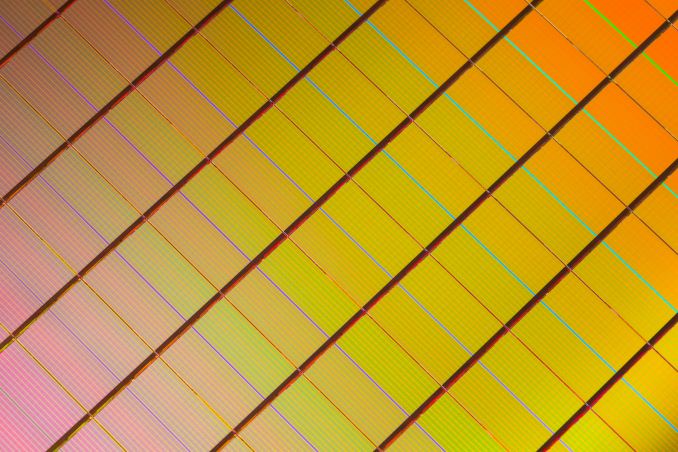
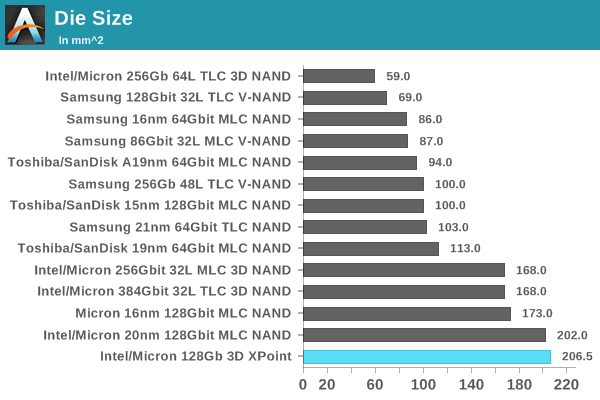
With some of the first high-resolution die photographs of 3D XPoint, TechInsights has provided precise measurements of the die size and memory density. The 128Gb 3D XPoint die is 206.5 mm2, much larger than is typical for modern NAND flash or DRAM but comparable to Intel’s 128Gb 20nm planar MLC NAND. A large total die size is typical for Intel and Micron, as they have historically not catered to the mobile market with their NAND flash while competitors like Samsung and Toshiba have strived to ensure their flash will physically fit in devices like smartphones. (That trend is changing with the introduction this year of 64-layer 3D NAND where Intel and Micron are producing both a larger 512Gb TLC part and a smaller 256Gb TLC part.)
Bit Density

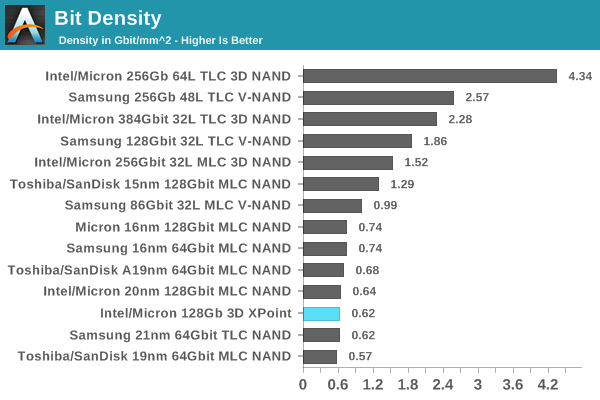
The Intel Optane SSD DC P4800X is using memory of similar density to the Intel SSD DC P3700 that it is displacing as the flagship of Intel’s SSD product line. When comparing similar chips, die size is a strong predictor of manufacturing cost, but 3D XPoint memory is quite different from NAND flash memory, both older planar NAND or newer 3D NAND. Still, there’s some value in noting that the P4800X is arriving with a price tag about 25% higher than the P3700 initially carried. This suggests that the manufacturing process for 3D XPoint is either more expensive than planar NAND or that 3D XPoint yields are not mature enough, but a lot of the markup can also be explained by the lack of high-performance competition for Optane SSDs.
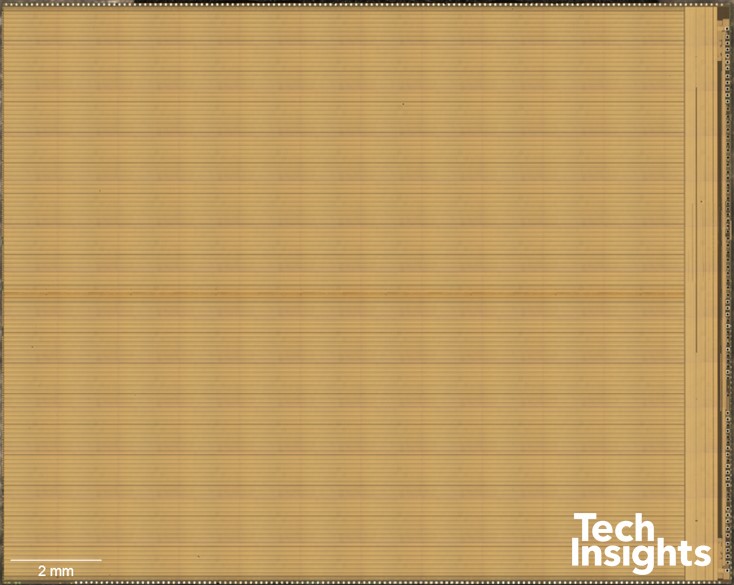
TechInsights calculates that 91.4% of the 3D XPoint die area is occupied by the memory array itself. This is a much higher figure than for NAND flash, where the record is 84.9% for Intel/Micron 3D NAND with its “CMOS under the array” design that puts a large portion of the peripheral circuitry underneath the memory array instead of alongside. Samsung’s current 48-layer 3D V-NAND manages an array efficiency of just 70%, and 3D NAND from Toshiba and SK Hynix has been comparable. This means that once Intel gets around to increasing they layer count in future generations of 3D XPoint memory, they should be able to get much closer to the ideal capacity scaling than 3D NAND memory can currently achieve.

The analysis from TechInsights confirms that 3D XPoint memory is manufactured using a 20nm process, with the same pitch in both the bitline and wordline directions of the memory array. The DRAM market is only just moving beyond this milestone, so comparing the density of 3D XPoint to current DRAM highlights the fundamental capacity advantage 3D XPoint enjoys: around 4.5 times higher density compared to typical 20nm DRAM, and about 3.3 times higher than the most advanced 1Xnm DDR4 on the market. This gap is likely to widen with future generations of 3D XPoint.
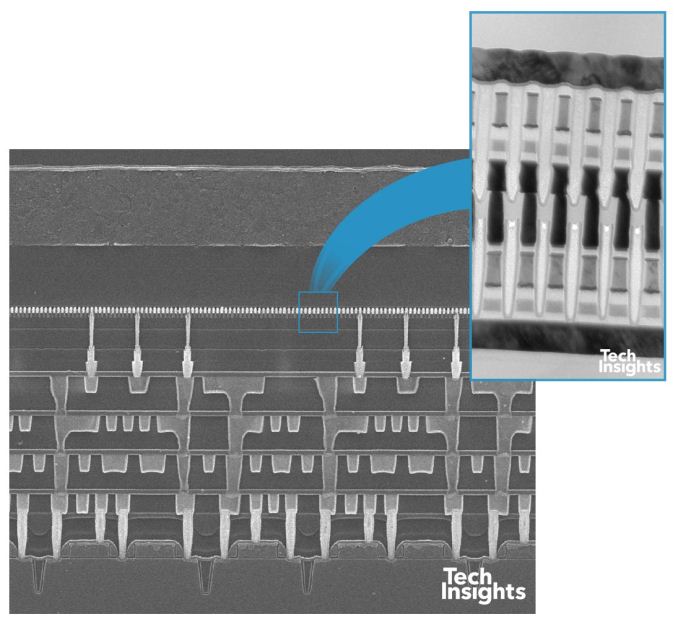
The materials and construction of an individual 3D XPoint memory cell have not been fully analyzed, but it appears to be a phase change memory element with a doped chalcogenide selector switch. The 3D XPoint memory array is constructed between the fourth and fifth metal interconnect layers above the silicon die.
TechInsights Publishes Preliminary Analysis of 3D XPoint Memory

TechInsights Publishes Preliminary Analysis of 3D XPoint Memory

Now that the Intel Optane Memory M.2 SSDs are readily available on the open market, anyone with an electron microscope and the skills to use it can begin to probe the secrets of 3D XPoint memory that Intel and Micron have been keeping tightly under wraps since announcing the new technology in August 2015. The reverse engineering experts at TechInsights have been doing just that, and they recently published their initial findings.

Die Size

With some of the first high-resolution die photographs of 3D XPoint, TechInsights has provided precise measurements of the die size and memory density. The 128Gb 3D XPoint die is 206.5 mm2, much larger than is typical for modern NAND flash or DRAM but comparable to Intel’s 128Gb 20nm planar MLC NAND. A large total die size is typical for Intel and Micron, as they have historically not catered to the mobile market with their NAND flash while competitors like Samsung and Toshiba have strived to ensure their flash will physically fit in devices like smartphones. (That trend is changing with the introduction this year of 64-layer 3D NAND where Intel and Micron are producing both a larger 512Gb TLC part and a smaller 256Gb TLC part.)

Bit Density

The Intel Optane SSD DC P4800X is using memory of similar density to the Intel SSD DC P3700 that it is displacing as the flagship of Intel’s SSD product line. When comparing similar chips, die size is a strong predictor of manufacturing cost, but 3D XPoint memory is quite different from NAND flash memory, both older planar NAND or newer 3D NAND. Still, there’s some value in noting that the P4800X is arriving with a price tag about 25% higher than the P3700 initially carried. This suggests that the manufacturing process for 3D XPoint is either more expensive than planar NAND or that 3D XPoint yields are not mature enough, but a lot of the markup can also be explained by the lack of high-performance competition for Optane SSDs.

TechInsights calculates that 91.4% of the 3D XPoint die area is occupied by the memory array itself. This is a much higher figure than for NAND flash, where the record is 84.9% for Intel/Micron 3D NAND with its “CMOS under the array” design that puts a large portion of the peripheral circuitry underneath the memory array instead of alongside. Samsung’s current 48-layer 3D V-NAND manages an array efficiency of just 70%, and 3D NAND from Toshiba and SK Hynix has been comparable. This means that once Intel gets around to increasing they layer count in future generations of 3D XPoint memory, they should be able to get much closer to the ideal capacity scaling than 3D NAND memory can currently achieve.

The analysis from TechInsights confirms that 3D XPoint memory is manufactured using a 20nm process, with the same pitch in both the bitline and wordline directions of the memory array. The DRAM market is only just moving beyond this milestone, so comparing the density of 3D XPoint to current DRAM highlights the fundamental capacity advantage 3D XPoint enjoys: around 4.5 times higher density compared to typical 20nm DRAM, and about 3.3 times higher than the most advanced 1Xnm DDR4 on the market. This gap is likely to widen with future generations of 3D XPoint.

The materials and construction of an individual 3D XPoint memory cell have not been fully analyzed, but it appears to be a phase change memory element with a doped chalcogenide selector switch. The 3D XPoint memory array is constructed between the fourth and fifth metal interconnect layers above the silicon die.
Lenovo’s Legion Gets Bigger with Y920: 17-inch G-SYNC, Core i7-K, GTX 1070, TB3

Lenovo’s Legion Gets Bigger with Y920: 17-inch G-SYNC, Core i7-K, GTX 1070, TB3

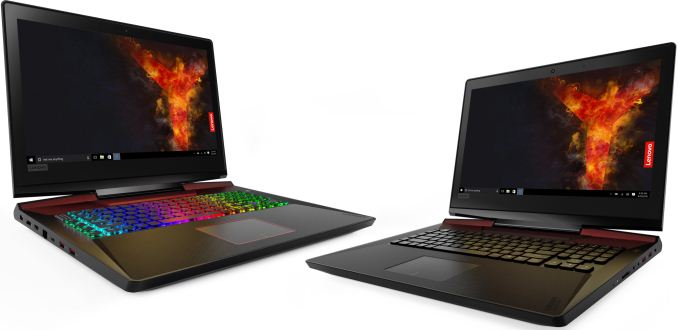
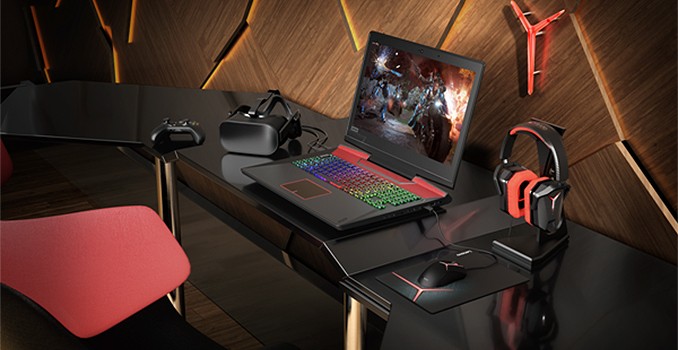
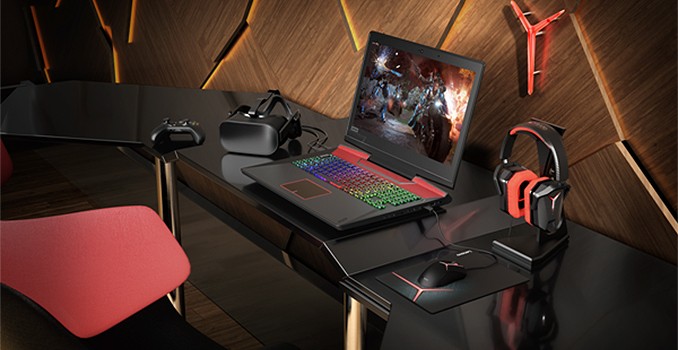
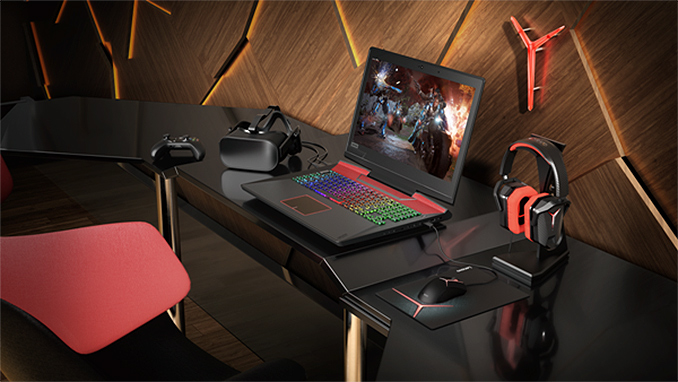
Lenovo has expanded its lineup of Legion-branded gaming laptops with a model that features a 17” display, powerful audio, a mechanical keyboard, and an overclocking-capable Intel Core i7 microprocessor. The company positions its new gaming notebook for those who need maximum performance in a portable form-factor and will want to perform additional performance tuning.

For the better part of its history, Lenovo has focused primarily on mainstream and business PCs in a bid to drive volume and become one of the largest suppliers of computers in the world. However, as sales of PCs stagnated or dropped in the recent years, Lenovo has had to find a new source for its growth. One angle to this is when the company started to build gamers-friendly machines. At first they were released under the Y-series, such as the Y-700, but earlier this year Lenovo introduced its gaming PC brand: the Legion. So far, the Legion lineup has included only two 15.6” laptop models — the Legion Y520 and the Legion Y720. This month, the company is rolling out a considerably more powerful addition to the series, the Legion Y920 with a larger screen and better hardware, targeting the higher-end segment of the gaming laptop market. The Legion Y920 may not be addressing the ultra-premium part of the market, but the machine demonstrates a clear trend where Lenovo is going with its gaming notebooks.

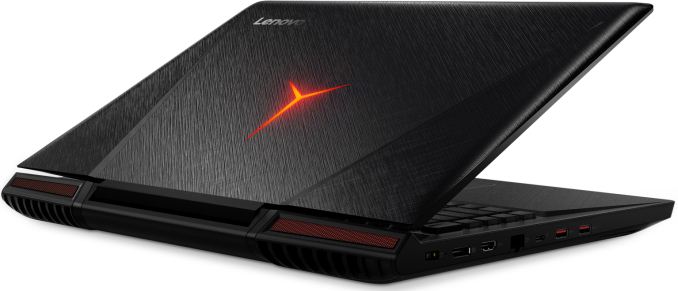
The Lenovo Legion Y920 is equipped with a 17” FHD display with NVIDIA’s G-Sync and is powered by Intel’s Core i7-7820HK or Core i7-7700HQ processor (depending on exact SKU). The former processor features unlocked multiplier and thus can be overclocked rather easily as long as it has sufficient cooling. The laptop comes with 16 GB of DDR4 RAM, it uses NVIDIA’s GeForce GTX 1070 graphics adapter with 8 GB of GDDR5 memory as well as a 512 GB PCIe SSD and/or a 1 TB 2.5” HDD. As for connectivity, the Legion Y920 is equipped with one Thunderbolt 3 port, Rivet Networks’ Killer 2×2 802.11ac Wi-Fi and GbE, four USB 3.0 Type-A headers, a card reader, an HDMI header as well as a DisplayPort.

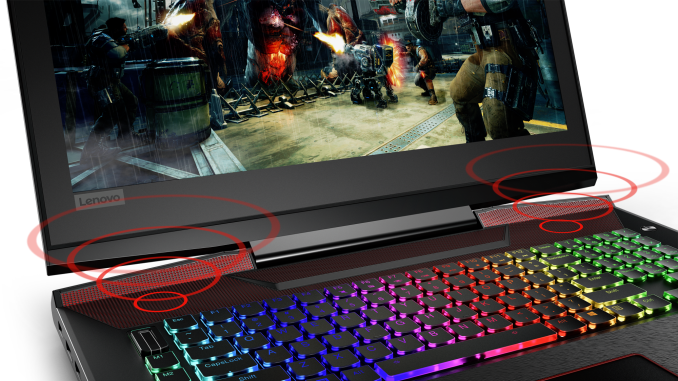
Meanwhile, two features of the Y920 that Lenovo is especially proud of are the audio sub-system featuring two JBL speakers and a subwoofer that carries the Dolby Home Theatre badge as well as an RGB LED-backlit mechanical keyboard.

Lenovo Legion Y920
  i7-7700HQ i7-7820K
Display 17.3″ IPS panel with 1920×1080 resolution and 75 Hz refresh
CPU Core i7-7700HQ (4C/8T, 6 MB, 2.8/3.8GHz) Core i7-7820HK (4C/8T, 8 MB, 2.9/3.9GHz)
Graphics NVIDIA GeForce GTX 1070 with G-Sync support
RAM 16 GB DDR4
Storage Up to 512 GB SATA SSD
1 TB HDD (optional)
Wi-Fi Rivet Killer Wireless-AC 2×2 802.11ac Wi-Fi
Bluetooth Bluetooth 4.1
Ethernet Rivet Killer E2x00 GbE controller
USB 4 × USB 3.0 Type-A
Thunderbolt × USB Type-C Thunderbolt 3 connector
Display Outputs 1 × DisplayPort
1 × HDMI
Keyboard Mechanical backlit keyboard with RGB LEDs and programmable buttons
Audio 2 × 2 W JBL speakers
1 × 3 W subwoofer
Other I/O Microphone, audio jacks, webcam (720p), card reader
Battery 90 Wh Li-Polymer
Dimensions Width: 425 mm/16.7″
Depth: 315 mm/12.4″
Thickness: 36 mm/1.41″
Weight 4.6 kilograms/10.14 lbs
Price Starts at $2700 or €2600, depending on configuration and market

With its 17” display, the Legion Y920 does not belong to what is now called ultra-portable gaming laptops category: it weighs 4.6 kilograms and its thickness is 36 mm, which is a result of using ABS plastic as the primary material for the chassis. Large dimensions enabled Lenovo to install a 90 Wh battery and could also let the manufacturer equip the laptop with a more advanced cooling system to boost overclocking potential of the Core i7-7820HK CPU. Unfortunately, Lenovo does not disclose any details about the cooling of the Legion Y920, but large dimensions, in general, mean more air.

Lenovo’s Legion Y920 will hit the market in EMEA this month and will start from €2,599.99 (including VAT). The machine will be available in the U.S. in June for the price of $2,699.99 for the base configuration.

Related Reading:

Lenovo’s Legion Gets Bigger with Y920: 17-inch G-SYNC, Core i7-K, GTX 1070, TB3

Lenovo’s Legion Gets Bigger with Y920: 17-inch G-SYNC, Core i7-K, GTX 1070, TB3

Lenovo has expanded its lineup of Legion-branded gaming laptops with a model that features a 17” display, powerful audio, a mechanical keyboard, and an overclocking-capable Intel Core i7 microprocessor. The company positions its new gaming notebook for those who need maximum performance in a portable form-factor and will want to perform additional performance tuning.

For the better part of its history, Lenovo has focused primarily on mainstream and business PCs in a bid to drive volume and become one of the largest suppliers of computers in the world. However, as sales of PCs stagnated or dropped in the recent years, Lenovo has had to find a new source for its growth. One angle to this is when the company started to build gamers-friendly machines. At first they were released under the Y-series, such as the Y-700, but earlier this year Lenovo introduced its gaming PC brand: the Legion. So far, the Legion lineup has included only two 15.6” laptop models — the Legion Y520 and the Legion Y720. This month, the company is rolling out a considerably more powerful addition to the series, the Legion Y920 with a larger screen and better hardware, targeting the higher-end segment of the gaming laptop market. The Legion Y920 may not be addressing the ultra-premium part of the market, but the machine demonstrates a clear trend where Lenovo is going with its gaming notebooks.

The Lenovo Legion Y920 is equipped with a 17” FHD display with NVIDIA’s G-Sync and is powered by Intel’s Core i7-7820HK or Core i7-7700HQ processor (depending on exact SKU). The former processor features unlocked multiplier and thus can be overclocked rather easily as long as it has sufficient cooling. The laptop comes with 16 GB of DDR4 RAM, it uses NVIDIA’s GeForce GTX 1070 graphics adapter with 8 GB of GDDR5 memory as well as a 512 GB PCIe SSD and/or a 1 TB 2.5” HDD. As for connectivity, the Legion Y920 is equipped with one Thunderbolt 3 port, Rivet Networks’ Killer 2×2 802.11ac Wi-Fi and GbE, four USB 3.0 Type-A headers, a card reader, an HDMI header as well as a DisplayPort.

Meanwhile, two features of the Y920 that Lenovo is especially proud of are the audio sub-system featuring two JBL speakers and a subwoofer that carries the Dolby Home Theatre badge as well as an RGB LED-backlit mechanical keyboard.

Lenovo Legion Y920
  i7-7700HQ i7-7820K
Display 17.3″ IPS panel with 1920×1080 resolution and 75 Hz refresh
CPU Core i7-7700HQ (4C/8T, 6 MB, 2.8/3.8GHz) Core i7-7820HK (4C/8T, 8 MB, 2.9/3.9GHz)
Graphics NVIDIA GeForce GTX 1070 with G-Sync support
RAM 16 GB DDR4
Storage Up to 512 GB SATA SSD
1 TB HDD (optional)
Wi-Fi Rivet Killer Wireless-AC 2×2 802.11ac Wi-Fi
Bluetooth Bluetooth 4.1
Ethernet Rivet Killer E2x00 GbE controller
USB 4 × USB 3.0 Type-A
Thunderbolt × USB Type-C Thunderbolt 3 connector
Display Outputs 1 × DisplayPort
1 × HDMI
Keyboard Mechanical backlit keyboard with RGB LEDs and programmable buttons
Audio 2 × 2 W JBL speakers
1 × 3 W subwoofer
Other I/O Microphone, audio jacks, webcam (720p), card reader
Battery 90 Wh Li-Polymer
Dimensions Width: 425 mm/16.7″
Depth: 315 mm/12.4″
Thickness: 36 mm/1.41″
Weight 4.6 kilograms/10.14 lbs
Price Starts at $2700 or €2600, depending on configuration and market

With its 17” display, the Legion Y920 does not belong to what is now called ultra-portable gaming laptops category: it weighs 4.6 kilograms and its thickness is 36 mm, which is a result of using ABS plastic as the primary material for the chassis. Large dimensions enabled Lenovo to install a 90 Wh battery and could also let the manufacturer equip the laptop with a more advanced cooling system to boost overclocking potential of the Core i7-7820HK CPU. Unfortunately, Lenovo does not disclose any details about the cooling of the Legion Y920, but large dimensions, in general, mean more air.

Lenovo’s Legion Y920 will hit the market in EMEA this month and will start from €2,599.99 (including VAT). The machine will be available in the U.S. in June for the price of $2,699.99 for the base configuration.

Related Reading: