Vik


Microsoft Announces That Windows 10 Will Launch On July 29
Microsoft Announces That Windows 10 Will Launch On July 29

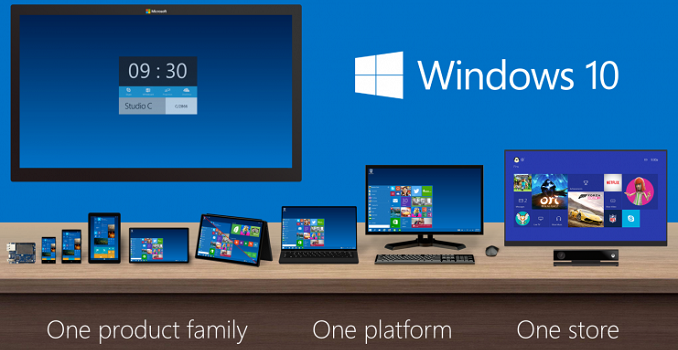
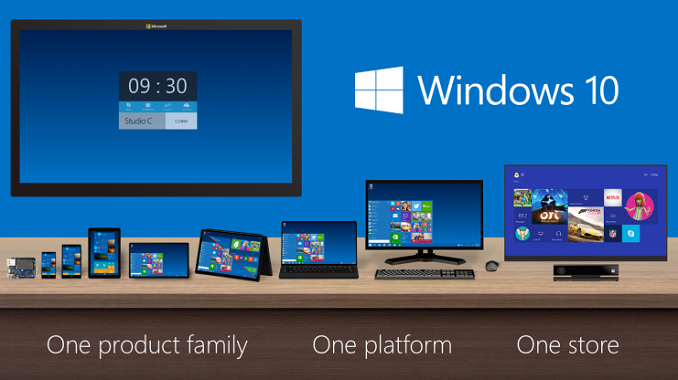
Today Microsoft formally announced the release date for Windows 10, the latest version of their Windows operating system. Up until this point, all Microsoft had said was that they were aiming for a summer release. Today’s post on the official Windows blog states the release date for Windows 10 has now been set for July 29, less than two months from now.

According to the blog post, Microsoft will be simultaniously launching Windows 10 around the globe to some 1.5 billion Windows users that currently reside in over 190 different countries, making it the widest Windows has ever been released at once. Windows 10 is Microsoft’s chance to win back users who didn’t embrace the changes made in Windows 8, and they have a lot riding on its success. Offering it as a free upgrade to existing Windows users will certainly help in gaining adoption.

Even with the free nature of the upgrade, the promise of a July release date for such a monumental update is quite a bold move on Microsoft’s part. The less than optimal state of the current Windows 10 testing builds means that Microsoft has a great deal of work ahead of them as they squash bugs and improve the stability of Windows 10 in the two months between now and release. As a user who is keen on upgrading from Windows 7 to Windows 10, I really hope they succeed.

Finally, Microsoft has revealed a few more details about how Windows 10 distribution will work. Starting today, users can “reserve” Windows 10 on Windows 7/8.1 machines. Reserving Windows will in turn flag a machine for pre-loading, with Microsoft distributing most of Windows 10 ahead of time as to get it in to customers’ hands more quickly to better balance the expected load on their server backend. According to Microsoft’s FAQ, reserving/pre-loading Windows 10 only downloads it, and users will still manually confirm the installation, or for that matter users can cancel the reservation entirely. Pre-loading has not started yet, and while Microsoft doesn’t say when it will start, I expect it won’t be until very near July 29th.

Windows 10 Upgrade Paths
Win10 Win7 Win8.1
Windows 10 Home Windows 7 Starter Windows 8.1 (Core)
Windows 7 Home Basic Windows 8.1 (Country-Specific)
Windows 7 Home Premium Windows 8.1 w/Bing
Windows 10 Pro Windows 7 Professional Windows 8.1 Pro
Windows 7 Ultimate Windows 8.1 Pro for Students
Windows 10 Mobile N/A Windows Phone 8.1

Along with detailing the reservation process, Microsoft has also confirmed the upgrade paths for various versions of Windows. As expected, all Pro/Ultimate versions of Windows 7 and 8.1 will get upgraded to Windows 10 Pro, while all other versions of desktop/tablet Windows will get upgraded to Windows 10 Home. And of course, Windows Phone 8.1 devices will upgrade to Windows 10 Mobile.
MediaTek announces Helio P10 Mainstream SoC

MediaTek announces Helio P10 Mainstream SoC

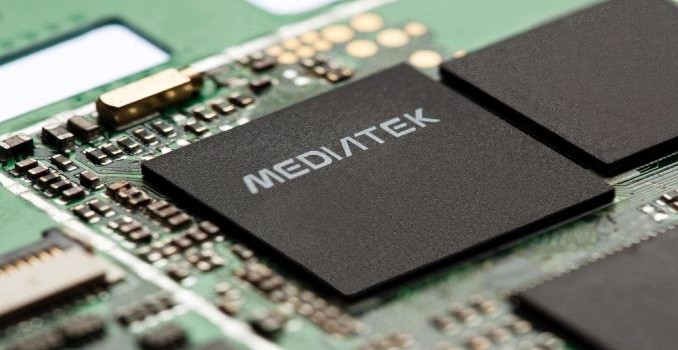
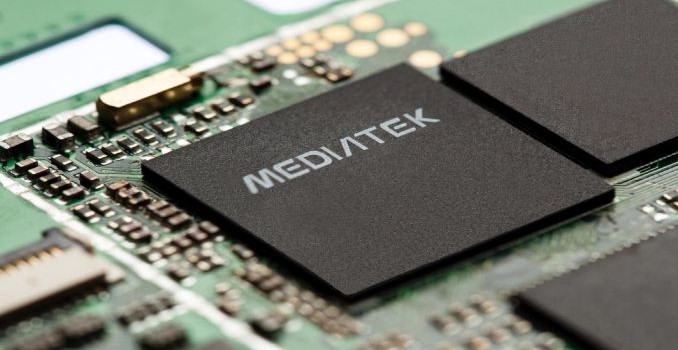
MediaTek started promoting its new Helio branding for SoCs back at MWC this year, and we had the please to cover the the new Helio X20 announcement just a few weeks ago. While the X-series is supposed to target the higher end (dubbed “eXtreme Performance”), the P-line is aimed at the budget mid-range (“Premium Performance” as MediaTek calls it). Today’s announcement of the Helio P10 marks the first SoC in the P-series to adopt the new branding.

The P10 is the direct successor to last year’s MT6752, which saw some quite widespread in adoption by Chinese vendors such as Meizu (M1 note), Gionee (Elife S7) or JiaYu (S3) and others. The P10 improves on its predecessor, the the MT6752, by taking a lot of improvements which were introduced with the X10 and X20.

On the processor side, the CPU configuration remains a dual-cluster with four A53 cores per cluster. The MT6752 clocked both clusters at the same clock, running from 1.7 up to 2.0GHz as its maximum frequency depending on the chip bin. The P10 keeps this 2.0GHz maximum clock for its performance cluster, but has a slower cluster at lower speeds which we weren’t yet able to confirm with MediaTek 1.1GHz.

MediaTek 2015 Main Lineup
SoC MediaTek
Helio X20
(MT6797)
MediaTek
Helio X10
(MT6795)
MediaTek
Helio P10
(
MT6755)
MediaTek
MT6752
CPU 4x Cortex A53 @1.4GHz

4x Cortex A53 @2.0GHz

2x Cortex A72
@2.3-2.5GHz

4x Cortex A53 @2.2GHz

4x Cortex A53 @2.2GHz

4x Cortex A53
@1.1GHz

4x Cortex A53 @2.0GHz

4x Cortex A53
@1.7-2.0GHz

4x Cortex A53
@1.7-2.0GHz

Memory
Controller
2x 32-bit @ 933MHz
LPDDR3

14.9GB/s b/w

2x 32-bit @ 933MHz
LPDDR3

14.9GB/s b/w

2x 32-bit @ 800+MHz
LPDDR3

12.8+GB/s b/w

(To be confirmed)

1x 32-bit @ 800MHz
LPDDR3

6.4GB/s b/w

GPU Mali T8??MP4
@700MHz
PowerVR G6200
@700MHz
Mali T860MP2
@700MHz
Mali T760MP2
@728MHz
Encode/
Decode
2160p30 10-bit
H.264/HEVC/VP9
decode

2160p30
HEVC w/HDR
encode

2160p30 10-bit
H.264/HEVC/VP9
decode

2160p30
HEVC
encode

1080p30
H.264 & HEVC
decode

1080p30
H.264
encode

1080p30
H.264 & HEVC
decode

1080p30
H.264
encode

Camera/ISP Dual ISP
32MP @ 24fps
21MP single or
16MP + 8MP dual
21MP single or
16MP + 8MP dual
16MP
Integrated
Modem
 LTE Cat. 6
300Mbps DL
50Mbps UL

2x20MHz C.A. 
(DL)

LTE Cat. 4 
150Mbps DL 50Mbps UL
 LTE Cat. 6
300Mbps DL
50Mbps UL

2x20MHz C.A. 
(DL)

 LTE Cat. 4 
150Mbps DL
50Mbps UL


Memory bandwidth was supposedly also increased, and I suspect, but again in need of confirmation, that we’re talking about finally switching over to a dual-channel memory controller, as the MT6752 was still sporting a single 32bit controller. The P10 is aimed at 1080p devices so it looks that MediaTek is keeping the graphics performances conservative and power efficient.

MediaTek also upgrades the GPU from a Mali T760 to a T860, but keeps the shader core count steady at 2. We again see some interesting power claims concerning the T8XX series as MediaTek claims the new GPU uses only 70% of the power of the previous T760 iteration while improving performance by 20%, but we might be not talking solely architectural improvements as the P10 comes on a brand-new silicon manufacturing node.

The P10 is the first SoC to be announced on TSMC’s 28HPC+ process. TSMC published the 28HPC process last autumn as a successor to 28HPM – with the advantages of a slight die shrink and improved power characteristics. 28HPC+ is yet another iteration that was publicly talked about last April, and promises a 15% gain in performance or a quite large 30 to 50% reduction in leakage at the same speed when compared to 28HPC.

We’ll continue to see the 28nm process to live on for a long time in the mid-range and cost-sensitive segments as it marks the sweet-spot in the transistors/$ scaling, and 28HPC(+) is one of the first enablers of this life-time extension.

The Helio P10 also takes over the modem sub-system that we’ve seen announced in the X20 – with LTE rel.11 Category 6 capability and 2x20MHz carrier aggregation on the download stream. This also includes crucial CDMA2000 support that MediaTek needs to be able to penetrate the North American and other limited markets.

The mainstream lineup is the Taiwanese company’s bread & butter and is the source of where MediaTek has seen most of its notorious successes. The P10, being part of this segment, will very likely see similar widespread adoption in low-cost devices as the Chinese smartphone boom continues to grow.

The Helio P10 is supposed to be sampling in early Q3 2015 and with phone mass-production happening towards the end of the year in the fourth quarter.

MediaTek announces Helio P10 Mainstream SoC

MediaTek announces Helio P10 Mainstream SoC

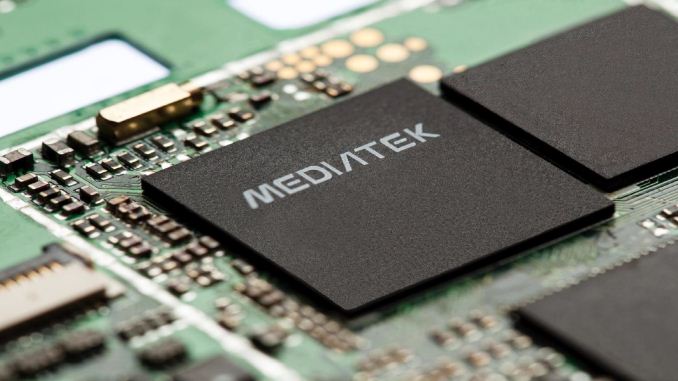
MediaTek started promoting its new Helio branding for SoCs back at MWC this year, and we had the please to cover the the new Helio X20 announcement just a few weeks ago. While the X-series is supposed to target the higher end (dubbed “eXtreme Performance”), the P-line is aimed at the budget mid-range (“Premium Performance” as MediaTek calls it). Today’s announcement of the Helio P10 marks the first SoC in the P-series to adopt the new branding.

The P10 is the direct successor to last year’s MT6752, which saw some quite widespread in adoption by Chinese vendors such as Meizu (M1 note), Gionee (Elife S7) or JiaYu (S3) and others. The P10 improves on its predecessor, the the MT6752, by taking a lot of improvements which were introduced with the X10 and X20.

On the processor side, the CPU configuration remains a dual-cluster with four A53 cores per cluster. The MT6752 clocked both clusters at the same clock, running from 1.7 up to 2.0GHz as its maximum frequency depending on the chip bin. The P10 keeps this 2.0GHz maximum clock for its performance cluster, but has a slower cluster at lower speeds which we weren’t yet able to confirm with MediaTek 1.1GHz.

MediaTek 2015 Main Lineup
SoC MediaTek
Helio X20
(MT6797)
MediaTek
Helio X10
(MT6795)
MediaTek
Helio P10
(
MT6755)
MediaTek
MT6752
CPU 4x Cortex A53 @1.4GHz

4x Cortex A53 @2.0GHz

2x Cortex A72
@2.3-2.5GHz

4x Cortex A53 @2.2GHz

4x Cortex A53 @2.2GHz

4x Cortex A53
@1.1GHz

4x Cortex A53 @2.0GHz

4x Cortex A53
@1.7-2.0GHz

4x Cortex A53
@1.7-2.0GHz

Memory
Controller
2x 32-bit @ 933MHz
LPDDR3

14.9GB/s b/w

2x 32-bit @ 933MHz
LPDDR3

14.9GB/s b/w

2x 32-bit @ 800+MHz
LPDDR3

12.8+GB/s b/w

(To be confirmed)

1x 32-bit @ 800MHz
LPDDR3

6.4GB/s b/w

GPU Mali T8??MP4
@700MHz
PowerVR G6200
@700MHz
Mali T860MP2
@700MHz
Mali T760MP2
@728MHz
Encode/
Decode
2160p30 10-bit
H.264/HEVC/VP9
decode

2160p30
HEVC w/HDR
encode

2160p30 10-bit
H.264/HEVC/VP9
decode

2160p30
HEVC
encode

1080p30
H.264 & HEVC
decode

1080p30
H.264
encode

1080p30
H.264 & HEVC
decode

1080p30
H.264
encode

Camera/ISP Dual ISP
32MP @ 24fps
21MP single or
16MP + 8MP dual
21MP single or
16MP + 8MP dual
16MP
Integrated
Modem
 LTE Cat. 6
300Mbps DL
50Mbps UL

2x20MHz C.A. 
(DL)

LTE Cat. 4 
150Mbps DL 50Mbps UL
 LTE Cat. 6
300Mbps DL
50Mbps UL

2x20MHz C.A. 
(DL)

 LTE Cat. 4 
150Mbps DL
50Mbps UL


Memory bandwidth was supposedly also increased, and I suspect, but again in need of confirmation, that we’re talking about finally switching over to a dual-channel memory controller, as the MT6752 was still sporting a single 32bit controller. The P10 is aimed at 1080p devices so it looks that MediaTek is keeping the graphics performances conservative and power efficient.

MediaTek also upgrades the GPU from a Mali T760 to a T860, but keeps the shader core count steady at 2. We again see some interesting power claims concerning the T8XX series as MediaTek claims the new GPU uses only 70% of the power of the previous T760 iteration while improving performance by 20%, but we might be not talking solely architectural improvements as the P10 comes on a brand-new silicon manufacturing node.

The P10 is the first SoC to be announced on TSMC’s 28HPC+ process. TSMC published the 28HPC process last autumn as a successor to 28HPM – with the advantages of a slight die shrink and improved power characteristics. 28HPC+ is yet another iteration that was publicly talked about last April, and promises a 15% gain in performance or a quite large 30 to 50% reduction in leakage at the same speed when compared to 28HPC.

We’ll continue to see the 28nm process to live on for a long time in the mid-range and cost-sensitive segments as it marks the sweet-spot in the transistors/$ scaling, and 28HPC(+) is one of the first enablers of this life-time extension.

The Helio P10 also takes over the modem sub-system that we’ve seen announced in the X20 – with LTE rel.11 Category 6 capability and 2x20MHz carrier aggregation on the download stream. This also includes crucial CDMA2000 support that MediaTek needs to be able to penetrate the North American and other limited markets.

The mainstream lineup is the Taiwanese company’s bread & butter and is the source of where MediaTek has seen most of its notorious successes. The P10, being part of this segment, will very likely see similar widespread adoption in low-cost devices as the Chinese smartphone boom continues to grow.

The Helio P10 is supposed to be sampling in early Q3 2015 and with phone mass-production happening towards the end of the year in the fourth quarter.

ASUS Shows Off The ZenWatch 2 At Computex

ASUS Shows Off The ZenWatch 2 At Computex

Today ASUS updated their Android Wear smartwatch offering. It wasn’t long ago that we saw the original ASUS ZenWatch at IFA, but it’s now being superseded by the ZenWatch 2. Unfortunately, details are fairly scarce about ASUS’s new watch. It’s powered by an unnamed SoC from Qualcomm, and sports a 2.5D AMOLED display of unknown size. More details about the ZenWatch 2 should come out over the course of Computex.

One area where the ZenWatch 2 is clearly improved over its predecessor is the water and dust resistance. The original ZenWatch had an IP55 rating, and this has been improved to an IP67 rating for greater water submersion protection.

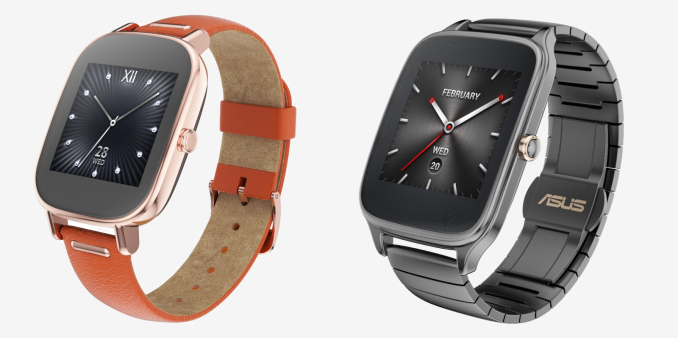
The ZenWatch 2 comes in two sizes, and both models come in silver, gunmetal, and rose-gold finishes. Straps are available in rubber, leather, and metal. One interesting feature on the larger model is that it can be used as a tiny battery power pack to charge your phone, but with the limited battery capacity of smartwatches this seems like something to only be used as a last resort.

ASUS Shows Off The ZenWatch 2 At Computex

ASUS Shows Off The ZenWatch 2 At Computex

Today ASUS updated their Android Wear smartwatch offering. It wasn’t long ago that we saw the original ASUS ZenWatch at IFA, but it’s now being superseded by the ZenWatch 2. Unfortunately, details are fairly scarce about ASUS’s new watch. It’s powered by an unnamed SoC from Qualcomm, and sports a 2.5D AMOLED display of unknown size. More details about the ZenWatch 2 should come out over the course of Computex.

One area where the ZenWatch 2 is clearly improved over its predecessor is the water and dust resistance. The original ZenWatch had an IP55 rating, and this has been improved to an IP67 rating for greater water submersion protection.

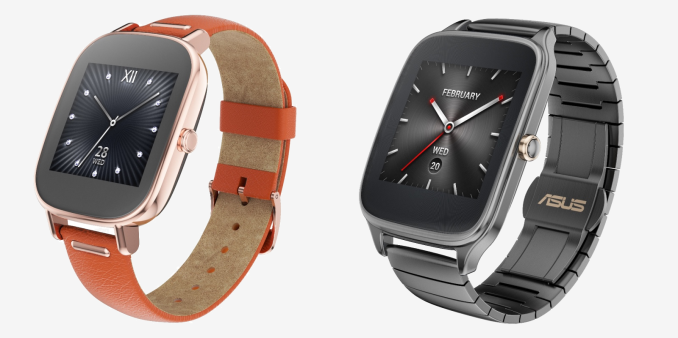
The ZenWatch 2 comes in two sizes, and both models come in silver, gunmetal, and rose-gold finishes. Straps are available in rubber, leather, and metal. One interesting feature on the larger model is that it can be used as a tiny battery power pack to charge your phone, but with the limited battery capacity of smartwatches this seems like something to only be used as a last resort.